Picture this. It’s a sunny morning, your cat is glued to the window, tail twitching, chattering at the birds outside. She wants out. But you know the yard is full of cars, coyotes, and neighbors’ dogs, so the door stays shut. Sound familiar?
A catio fixes exactly that. A catio (short for cat patio) is an enclosed outdoor space, screened or wired on all sides, that lets your cat enjoy real fresh air, sunshine, and sights without the chance of wandering off or getting hurt. Think of it as a safe little bubble of the outdoors, built just for your cat.
The good news is you don’t need to be a carpenter. Plenty of ready-made catios ship as kits you assemble in an afternoon. Below are 7 of the best cat catios worth your money, sorted by size, style, and budget, so you can match one to your space and your cat.
- A catio is an enclosed outdoor cat enclosure, wired or screened on every side, that gives an indoor cat safe access to fresh air and sunshine.
- The PawHut Catio Outdoor Multi-Cat House is our top overall pick, with room for two or three cats and multiple perch levels.
- For safety, choose a catio with secure metal latches, a weatherproof roof for shade and rain, and solid wire mesh with no gaps a cat can squeeze through.
- Vertical space matters more than floor space to cats, so look for shelves, ramps, and perches, not just a big empty box.
- Always provide shade and fresh water inside the catio, and never leave a cat out in extreme heat or cold.
Our Top Picks
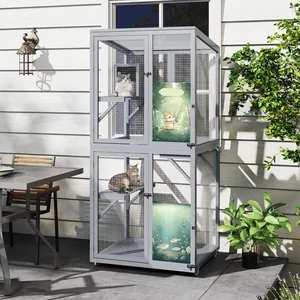
Coziwow Catio Wooden Outdoor Cat House with Wheels, Gray
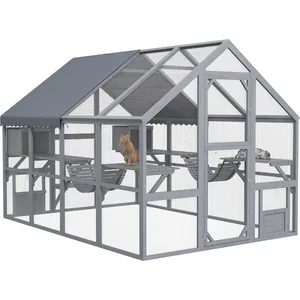
PawHut Catio Outdoor Wooden Multi-Cat House, Gray
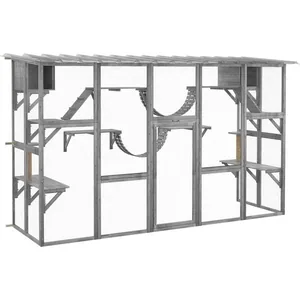
PawHut Catio Playground Cat Window Box Outdoor Cat House, Gray
Catio compared at a glance
| Catio | Best for | Type | Price |
|---|---|---|---|
| Coziwow Catio Wooden Outdoor Cat House with Wheels, Gray | Best mobile catio | On wheels | $208.99 |
| PawHut Catio Outdoor Wooden Multi-Cat House, Gray | Best multi-cat | Multi-cat | $470.99 |
| PawHut Catio Playground Cat Window Box Outdoor Cat House, Gray | Best window-box catio | Window-box | $389.49 |
| Petscosset 59-in Outdoor Wooden Catio Cat Enclosure with Platforms, Gray | Best wooden with platforms | Walk-in (59-in) | $289.99 |
| TIMHAKA Catio Outdoor Cat Enclosure, Grey | Best budget catio | Walk-in (budget) | $299.00 |
| Aivituvin Catio Outdoor Cat House | Best starter catio | Small starter | $199.99 |
| Petscosset 76-in Wooden Catio Outdoor Cat House, Gray | Best large walk-in | Large walk-in (76-in) | $429.99 |
The 7 best catio picks, reviewed
Coziwow Catio Wooden Outdoor Cat House with Wheels, Gray: best mobile catio
The Coziwow Catio Wooden Outdoor Cat House with Wheels is the pick for anyone who doesn’t want to commit a catio to one fixed spot. Four lockable wheels let you roll it from a sunny morning corner to afternoon shade, or tuck it under an awning when rain rolls in. That flexibility is genuinely useful on a small patio or balcony.
At around $209, it’s mid-range on price and best suited to one cat, maybe a bonded pair who like each other. The fir wood frame and wire mesh feel sturdy, and assembly runs about an hour with the included hardware. Just know it isn’t fully weatherproof on its own, so park it somewhere with cover and don’t leave it exposed to storms.
PawHut Catio Outdoor Wooden Multi-Cat House, Gray: best multi-cat
If you’ve got a multi-cat household, the PawHut Catio Outdoor Wooden Multi-Cat House is our top overall pick. It’s tall, roomy, and packed with platforms, ramps, and perches at different heights, which means two or three cats can share it without stepping on each other. Cats care about vertical territory, and this one delivers.
It’s the priciest on this list at roughly $471, and it’s a real project to build, so budget an afternoon and maybe a second pair of hands. The payoff is a solid, spacious enclosure with an asphalt roof that sheds rain and throws shade. For homes with more than one cat and a bit of yard or patio to spare, it’s worth the investment.
PawHut Catio Playground Cat Window Box Outdoor Cat House, Gray: best window-box catio
The PawHut Catio Playground Cat Window Box Outdoor Cat House mounts right against a wall or window so your cat can slip outside straight from indoors. That’s the dream setup for apartments and small yards where a freestanding enclosure just won’t fit. Your cat gets a private outdoor lookout without you opening a single door.
Around $389, it’s on the higher end, and it does need a suitable wall or window to attach to, so measure carefully before you buy. Weatherproofing is decent thanks to the covered roof, but wall-mounted catios ask for careful, secure installation. Get the mounting right and it’s a brilliant, space-saving way to give an indoor cat real outdoor time.
Petscosset 59-in Outdoor Wooden Catio Cat Enclosure with Platforms, Gray: best wooden with platforms
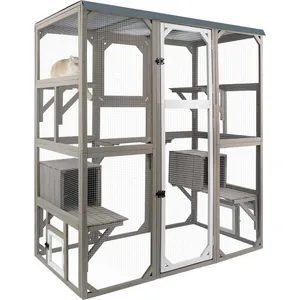
The Petscosset 59-in Outdoor Wooden Catio Cat Enclosure with Platforms hits a nice sweet spot between size and price. At 59 inches tall with several built-in platforms, it gives your cat room to climb, lounge, and survey the yard, all without taking over your whole patio. It’s a great fit for one or two cats.
Priced near $290, it’s reasonable for a wooden enclosure of this size. The fir frame and wire mesh feel solid, and the sloped roof helps with rain runoff and shade. Assembly is manageable in an afternoon. If you want a proper climbing setup without the multi-cat price tag, this is an easy one to recommend.
TIMHAKA Catio Outdoor Cat Enclosure, Grey: best budget catio
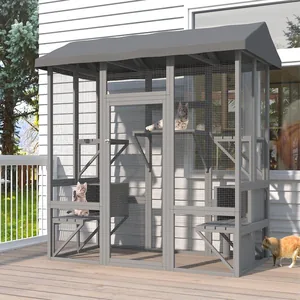
The TIMHAKA Catio Outdoor Cat Enclosure is the value pick for cat parents who want a real outdoor enclosure without overspending. At roughly $299, it delivers a walk-in-style space with wire mesh on all sides and enough room for a cat to stretch out, climb, and nap in the sun. Simple, functional, and safe.
Don’t expect the deluxe platform-tower feel of the pricier PawHut models here. It’s more of a solid, no-frills box, so you may want to add a shelf or two yourself. Weatherproofing is basic, so place it under cover and keep a shaded corner and water bowl inside. For the money, it’s a smart starting point.
Aivituvin Catio Outdoor Cat House: best starter catio
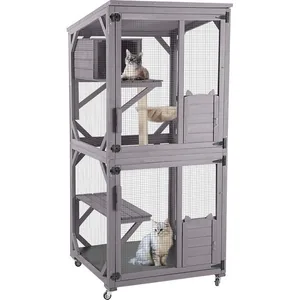
The Aivituvin Catio Outdoor Cat House is the most affordable catio on our list at about $200, and it’s a friendly entry point if you’re testing the catio waters. It’s compact and easy to assemble, ideal for a single cat, a balcony, or a small patio where space is tight. A good way to see if your cat takes to the outdoors before you size up.
Because it’s small, it suits one cat rather than a crowd, and it won’t offer much vertical climbing room. The wood-and-mesh build is sturdy for the price, but it needs a sheltered spot since weatherproofing is light. Think of it as a starter catio: low commitment, low cost, still safe.
Petscosset 76-in Wooden Catio Outdoor Cat House, Gray: best large walk-in
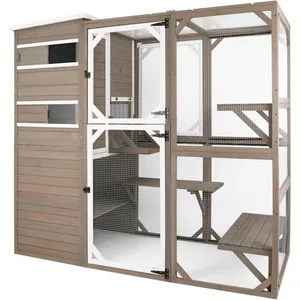
The Petscosset 76-in Wooden Catio Outdoor Cat House is the big one, and it’s the pick if you want a catio you can actually walk into to visit your cats. At 76 inches tall, it feels like a proper little outdoor room, with plenty of height for shelves, perches, and a couple of cats to spread out.
At around $430, it’s a real investment and a bigger build, so clear an afternoon and expect to follow the instructions closely. You’ll also need the yard or patio space to house it. But if you’ve got the room and want the roomiest, most enrichment-friendly option here, this large walk-in catio is hard to beat.
How to choose the best catio
Buying a catio comes down to matching the enclosure to your space, your cat, and your climate. Here’s what actually matters before you hit checkout.
Freestanding vs window or wall-mounted
Freestanding catios sit on the ground and work anywhere you have a flat spot, a patio, a deck, or a lawn. Window and wall-mounted catios attach to your house and let your cat pass straight outside from indoors, which is perfect for apartments and tight yards. Freestanding is easier to place and move; mounted saves floor space but needs a suitable wall or window and careful, secure installation.
Size vs number of cats
Bigger is better, but vertical space beats floor space for cats. One cat can be happy in a compact enclosure with a couple of perches. Two or three cats need a taller catio with multiple platforms so each one gets a level of their own. As a rough guide, give each cat enough room to stretch, climb, and get away from the others.
Secure latches and solid mesh
This is the safety part, so don’t skimp. Look for metal latches that lock firmly, not flimsy plastic clips a determined cat can nudge open. The wire mesh should be tightly spaced with no gaps a paw or head can squeeze through. Both the ASPCA and International Cat Care point to secure outdoor enclosures as a safe way to give indoor cats access to the outside world.
Weatherproof roof, shade, and ventilation
A solid, sloped roof keeps rain out and throws shade, both of which your cat needs. Make sure at least part of the catio stays shaded through the day, and that airflow is good so it doesn’t turn into a hot box. Cats overheat faster than people think, so shade and ventilation aren’t optional extras.
Flooring and placement
Some catios have open bottoms that sit on grass; others include a floor. An open bottom lets your cat feel real ground but can let in bugs or let a digger dig out, so check for a wire-mesh base or place it on a hard surface. Set the catio where your cat can watch birds and greenery, ideally near a window so she can come and go if you use a mounted model.
Assembly
Most ready-made catios ship flat and take one to three hours to build with basic tools. Read the instructions fully first, tighten every fixing, and double-check the latches before your cat goes in. A wobbly build is a safety issue, not just an annoyance.
Safety note: Always provide fresh water and a shaded spot inside the catio. Never leave your cat out in extreme heat, cold, or storms, and supervise the first few visits so she settles in calmly. Keeping cats safely contained also protects local wildlife, which is why groups like the American Bird Conservancy’s Cats Indoors program recommend enclosures over free roaming.
Is a catio worth it?
For most indoor cats, yes, a catio is worth it. It solves a real problem: your cat wants outdoor stimulation, but the open outdoors is genuinely dangerous. A catio gives her the best of both, fresh air, sunshine, birds to watch, and new smells, with none of the traffic, predators, disease, or getting-lost risk that comes with roaming free.
- It enriches your cat’s life. Outdoor sights, sounds, and sunbathing cut boredom and can ease stress-related behaviors in bored indoor cats.
- It keeps her safe. Indoor and contained cats live longer, on average, than cats who roam, largely because they avoid cars, fights, and illness.
- It protects wildlife. A contained cat can’t hunt local birds and small animals.
- It’s a one-time cost. Ready-made catios run roughly $200 to $475, a single purchase that pays off for years.
The honest caveat: a catio takes space and some assembly effort, and a shy cat may need a few gentle sessions to warm up to it. But for the vast majority of cat parents, the payoff in a happier, safer cat is well worth it.
Common mistakes to avoid
- Buying one that’s too small. A cramped catio gets ignored fast. Give your cat room to climb and stretch, and size up for multiple cats.
- Trusting weak latches. Flimsy plastic clips are an escape waiting to happen. Insist on firm metal latches that lock, and check them before every visit.
- Forgetting shade and water. A catio in full sun with no water bowl can overheat a cat quickly. Always include a shaded corner and fresh water.
- Leaving your cat out in extreme weather. Never leave a cat in a catio during heat waves, freezing cold, or storms. Bring her in and let her out again when it’s mild.
- Ignoring escape gaps. Check every seam, corner, and the base for gaps a cat could squeeze through or dig under. A wire-mesh floor or hard surface underneath stops diggers.
Related guides
Related guides:
- Want to compare more options first? See our roundup of the best outdoor cat enclosures.
- Prefer a cozy shelter over a full catio? Check the best outdoor cat houses.
- For supervised walks instead, pair a well-fitted cat harness with a sturdy cat leash.
- Keeping your cat busy indoors too? Try our picks for the best toys for indoor cats and the best cat trees.
Frequently asked questions
Q: What is a catio?
A catio is an enclosed cat patio, an outdoor cat enclosure screened or wired on all sides that lets an indoor cat safely enjoy fresh air, sunshine, and outdoor sights. It can be freestanding or attached to a window or wall of your home. The name is simply a blend of cat and patio.
Q: Is a catio worth it?
For most indoor cats, a catio is worth it. It gives your cat outdoor enrichment like fresh air and bird-watching while protecting her from cars, predators, and disease. Ready-made catios cost roughly $200 to $475, a one-time purchase that can improve a cat’s quality of life for years.
Q: Are catios safe for cats?
Yes, a well-built catio is very safe. Secure metal latches and gap-free wire mesh keep your cat from escaping and keep predators out. To stay safe, provide shade and fresh water, avoid extreme weather, and check the enclosure regularly for any loose fixings or gaps.
Q: How big should a catio be?
A catio should give each cat room to stretch, climb, and rest, with vertical space mattering more than floor space. One cat can be happy in a compact enclosure with a couple of perches, while two or three cats need a taller catio with multiple platform levels so each has its own spot.
Q: Can you leave a cat in a catio all day?
You can leave a cat in a catio for extended stretches in mild weather, as long as it has shade, fresh water, and a comfortable resting spot. Never leave a cat out in extreme heat, cold, or storms, and always be able to bring her indoors. Supervise the first few visits until she’s settled.
Q: Do you need a permit to build a catio?
Most freestanding, ready-made catios do not need a permit because they count as small, movable structures. Rules vary by city and by homeowners’ association, and a large or permanently attached build may require approval. Check your local codes and HOA guidelines before installing a big or wall-mounted catio.
Q: Can a catio attach to a window?
Yes, window-box and wall-mounted catios attach directly to your home so your cat can pass straight outside from indoors. This design is ideal for apartments and small yards. It does require a suitable window or wall and careful, secure installation, so measure your space and follow the mounting instructions closely.
Q: How much does a ready-made catio cost?
Ready-made catios generally cost between $200 and $475. Compact starter models sit near the $200 mark, mid-size wooden enclosures with platforms run about $290 to $390, and large multi-cat or walk-in catios reach roughly $430 to $475. It’s a one-time cost that lasts for years.
The bottom line
The right catio depends on your space and budget. For multi-cat homes with room to spare, the PawHut Multi-Cat Catio is our top overall pick, roomy, tall, and built to last. Tight on space? A window-box or the compact Aivituvin starter catio slots into apartments and balconies. Watching your budget, the TIMHAKA delivers a safe walk-in enclosure without the splurge, while the Petscosset 76-inch is the one to buy if you want a walk-in catio you can step into. Whichever you choose, pick a catio with secure latches, a shaded weatherproof roof, and vertical climbing room, and your indoor cat gets the outdoor world she’s been staring at, safely.

Hello and welcome to The Ideal Cat!
We are some passionate cat owners from different professions. We love our cats and have a lot of experience in how to care for our pets. We are incredibly excited to share our knowledge, experience, and research with you. So you can take good care of your loving cat. We will answer most of the common questions about owning cats, taking care of them, etc. If you have any question contact with us. Thanks for visiting! Enjoy the content.
