- Cat water fountains encourage drinking by keeping water moving, which helps prevent urinary and kidney problems.
- Stainless steel and ceramic fountains resist bacteria and biofilm better than plastic, which can cause chin acne.
- A quiet pump matters, since a noisy fountain can scare cats away from drinking.
- Match fountain capacity to your household: larger reservoirs suit multi-cat homes and need less refilling, and most cats are fine to share a water bowl or fountain.
- Clean the fountain weekly and replace filters on schedule to keep water fresh and the pump healthy.
Related reading: cordless cat water fountain. cat food bowls. automatic cat feeder.
Our Top Picks
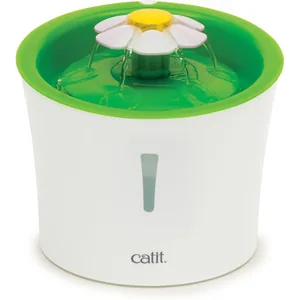
Catit Flower Plastic Cat Fountain, 100-oz
Best Overall
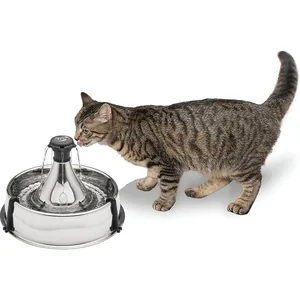
PetSafe Drinkwell 360 Stainless Steel Cat & Dog Water Fountain, 128-oz
Best for Hygiene
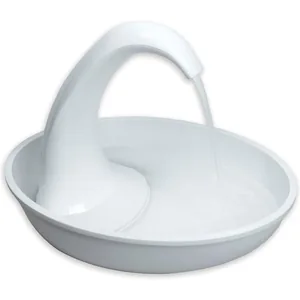
Pioneer Pet Swan Cat Drinking Fountain, White
Best for Picky Cats
Comparison Table
| Fountain | Best for | Material | Price |
|---|---|---|---|
| Catit Flower Plastic Cat Fountain, 100-oz | Best Overall | Plastic | ~$28 |
| PetSafe Drinkwell 360 Stainless Steel Cat & Dog Water Fountain, 128-oz | Best for Hygiene | Stainless steel | ~$76 |
| PetSafe Drinkwell Platinum Plastic Dog & Cat Fountain, 168-oz | Best for Multi-Cat Homes | Plastic | ~$43 |
| PetSafe Drinkwell Dog & Cat Water Fountain, 1/2-gallon + Replacement Carbon Filters, 4 count | Best Budget Pick | Plastic | ~$55 |
| Pioneer Pet Swan Cat Drinking Fountain, White | Best for Picky Cats | Plastic | ~$40 |
| PetSafe Drinkwell Pagoda Ceramic Fountain | Best Ceramic Pick | Ceramic | ~$91 |
| Cat Mate Plastic Cat Fountain, 67.6-oz | Best Ultra-Quiet Option | Plastic | ~$28 |
Does Your Cat Actually Need a Water Fountain?
Real talk: not every cat needs one. Some cats happily drink plenty from a regular bowl. But others (and this is more common than you’d think) barely sip a drop unless something interesting is happening with the water. According to Cornell’s Feline Health Center, the average 10-pound cat needs about 1 cup of water per day, roughly 4 ounces per 5 pounds of body weight. And here’s the thing: cats descended from desert ancestors. Their thirst drive is naturally weak. If your cat eats mostly dry kibble, she’s getting almost no moisture from food, which makes proper drinking even more important. A water fountain helps because cats are instinctively drawn to flowing water. In the wild, moving water meant safe water. Stagnant pools meant bacteria and parasites. That instinct hasn’t gone anywhere. You’ll genuinely benefit from a fountain if your cat:- Is on a dry-food-only diet: kibble is around 10% moisture; wet food is around 75%
- Has a history of UTIs, crystals, or kidney issues: vets often recommend fountains as part of FLUTD prevention
- Is a senior cat (10+ years): chronic kidney disease is the leading cause of death in cats over 15
- Drinks from the faucet, toilet, or shower: that’s a flowing-water preference, plain and simple
- Lives in a multi-cat household: fountains hold more water and stay fresher longer
What Actually Matters in a Cat Water Fountain
Before we get to the picks, here’s what I focused on. Skip this section if you’re in a hurry, but it’ll save you from the most common buying mistakes.1. Material (and the “Stainless Steel” Trick)
Here’s something most reviews skip: a “stainless steel” fountain often has a stainless steel top plate and plastic everything-else underneath. Water still flows through plastic for most of its journey. That plastic can scratch, harbor bacteria, and contribute to feline chin acne, which is the same reason vets tell you to ditch plastic food bowls. If hygiene is your priority, look for fountains where the reservoir, bowl, and water-touching parts are all stainless steel or ceramic. The pump itself will always be plastic, but the rest doesn’t have to be.2. Capacity
For one cat, 50 to 80 oz is plenty. For two cats, aim for 80 to 128 oz. For three or more, go straight to 128 to 168 oz so you’re not refilling every other day.3. Noise Level
This is bigger than people realize. A noisy pump in your kitchen at 3 a.m. will drive you and your cat insane. Look for pumps rated under 35 dB (whisper-level). Quiet operation also matters because anxious cats sometimes avoid loud fountains entirely.4. Filter and Pump Costs
The fountain’s sticker price is just the down payment. Most carbon filters need replacing every 2 to 4 weeks. Pumps can fail anywhere from 6 months to 4 years depending on the brand. We’ll do the actual math further down, and it’s eye-opening.5. Cleaning Access
If you can’t easily disassemble the pump and reach into every corner with a brush, the fountain will grow biofilm. Period. Pick a fountain you actually want to clean.The 7 Best Cat Water Fountains of 2026
1. Catit Flower Fountain: Best Overall
- Three flow settings most cats love
- Easy to disassemble and clean
- Affordable entry point
- Quiet pump
- Plastic build (less hygienic over time)
- Filter sits exposed and clogs faster than enclosed designs
- Smaller capacity for multi-cat homes
2. PetSafe Drinkwell 360 Stainless Steel: Best for Hygiene
- Hygienic stainless steel reservoir
- 1 to 5 adjustable water streams
- Great for households with 2 cats
- Dishwasher-safe parts
- Pump needs cleaning every 2 weeks (mandatory, not optional)
- Slight motor hum some people notice at night
- Two filter types add to ongoing costs
3. PetSafe Drinkwell Platinum (168 oz): Best for Multi-Cat Homes
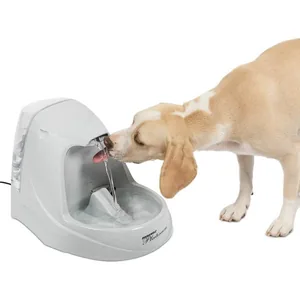
- Massive 168 oz capacity for multi-pet homes
- Combination of still and flowing water
- Adjustable flow control
- Long lifespan with proper care
- Plastic body needs frequent cleaning
- Bulky footprint needs counter or floor space
- Some users report pump issues at the 6 to 9 month mark
4. PetSafe Drinkwell Original (1/2 Gallon): Best Budget Pick
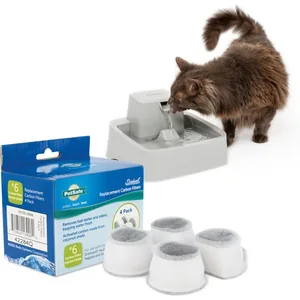
- Affordable and easy to find
- Simple to assemble and clean
- Compact footprint for small apartments
- Quiet operation
- Small capacity for multi-cat homes
- Plastic build throughout
- Frequent filter replacements add up
5. Pioneer Pet Swan Fountain: Best for Picky Cats and Faucet Lovers
- Mimics a faucet perfectly, irresistible to “tap cats”
- Slim profile fits almost anywhere
- Whisper-quiet operation
- Easy to refill from the top
- Only 60 oz, too small for multi-cat homes
- Mostly plastic construction
- Tall design can be knocked over by playful cats
6. PetSafe Drinkwell Pagoda Ceramic: Best Ceramic Pick
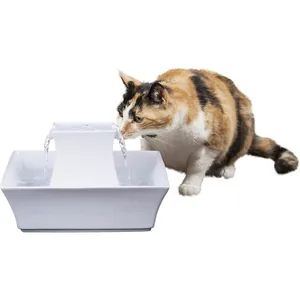
For a ceramic fountain done right, the PetSafe Drinkwell Pagoda is the one to beat. Ceramic is naturally more hygienic than plastic, it resists the slimy biofilm that builds up in cheaper fountains, and it’s dishwasher-safe. The dual free-falling streams add oxygen and tempt reluctant drinkers.
It holds about 70 ounces, enough for one or two cats, and the low, wide design feels stable and calm for shy cats. It costs more than a plastic fountain, but the easy cleaning and quiet pump make it worth it if you want one that lasts.
Pros:
- Ceramic is hygienic, resists biofilm, and is dishwasher-safe
- Dual streams add oxygen and attract picky drinkers
- 70-oz capacity suits one to two cats
- Low, stable design that shy cats accept
Cons:
- Pricier than plastic fountains
- Ceramic is heavier and can chip if dropped
7. Cat Mate Pet Fountain: Best Ultra-Quiet Option
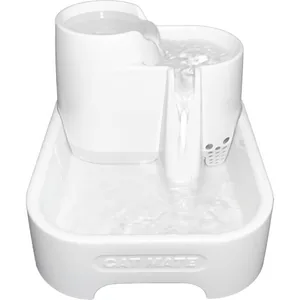
- Genuinely near-silent pump
- Three drinking levels for variety
- Quick and simple assembly
- Good for anxious or skittish cats
- Many small crevices that trap grime
- Filters are expensive relative to quality
- Plastic build limits long-term hygiene
Stainless Steel vs. Ceramic vs. Plastic: The Honest Truth
Here’s the breakdown nobody seems to give you straight: Stainless steel is the most hygienic. Bacteria struggles to colonize the surface, it doesn’t scratch easily, and it’s dishwasher-safe. Downsides: it shows water spots and fingerprints, and many “stainless steel” fountains only have a steel top plate while the actual reservoir is plastic. Always check the spec sheet. If the reservoir is plastic, you’re paying steel prices for plastic hygiene. Ceramic is the middle ground. Naturally bacteria-resistant, attractive, and easy to clean. It’s heavier and more breakable than steel, and it amplifies the sound of trickling water. Great if hygiene matters but you also want something that actually looks nice in your home. Plastic (BPA-free) is the cheapest option and easiest to find. The honest catch: plastic surfaces scratch over time, and those scratches harbor bacteria. This contributes to feline chin acne (those little black scabby bumps under your cat’s chin). If your cat already has acne issues, switch away from plastic. If she doesn’t, plastic works fine as long as you commit to cleaning it every week without fail.The True Cost of Owning a Cat Fountain (Nobody Tells You This)
Here’s the math that almost no review site bothers to do. Let’s compare a cheap plastic fountain ($30) vs. a mid-range stainless steel fountain ($70) over 2 years of ownership. Cheap plastic fountain ($30 upfront):- Initial cost: $30
- Carbon filters every 2 to 4 weeks at $4 each: roughly $70/year x 2 years = $140
- Pump replacement after about 12 months: $10
- Likely full fountain replacement at the 18 to 24 month mark: $30
- 2-year total: around $210
- Initial cost: $70
- Carbon filters every month at $5 each: roughly $60/year x 2 years = $120
- Foam pre-filters: about $15/year x 2 years = $30
- Pump still working at year 2: $0
- 2-year total: around $220
My Cat Won’t Drink From the Fountain. Now What?
Don’t panic. This happens more often than you’d think, and most of the time it’s fixable. Some cats are weirded out by the sound, the motion, or just the new object sitting in their space. Cats are creatures of habit, and a brand-new water source can take a week or two to feel safe. Try these steps in order:- Leave the old water bowl in place. Don’t force the switch. Give your cat both options for at least 1 to 2 weeks. Most cats explore on their own terms.
- Place the fountain near (but not directly next to) the food bowl. Cats actually prefer their water source slightly separate from food, but in the same general zone.
- Adjust the flow. If the stream is too loud or too forceful, dial it back. Many cats prefer the gentlest setting available.
- Wait 24 hours before judging it. The pump runs slightly louder when first set up. It quiets down once the water cycles fully through the filter.
- Move the fountain to a quieter spot. Loud, busy areas spook timid cats. Try a hallway or a calm corner they already spend time near.
- Run a vinegar rinse. If the fountain has any residual plastic smell from packaging, that alone can put off picky cats. Fill it with a 1:3 vinegar-to-water solution, let it run for 20 minutes, then rinse thoroughly.
- Add a few drops of low-sodium chicken broth or tuna juice. This works almost every time for stubborn cats. It makes the water too interesting to ignore. Just rinse the fountain well after 24 hours.
How to Clean a Cat Water Fountain (The Right Way)
This is the step most people get wrong, which is why so many people complain about fountains getting “slimy.” That slime has a name: biofilm. It’s a thin layer of bacteria, saliva, and mineral residue that forms on any wet surface. It builds up in days, not weeks. Cats can taste it, and they start avoiding the fountain as soon as it shows up. Here’s the cleaning routine that actually works:Daily (30 seconds)
- Top off the water level
- Wipe any visible debris off the upper bowl with a clean damp cloth
Weekly (about 10 minutes)
- Unplug the fountain and dump out the old water
- Take apart all the pieces: bowl, top, pump, filter housing
- Wash everything with warm water and a small amount of pet-safe dish soap
- Use a small brush or old toothbrush to scrub crevices and corners
- Rinse thoroughly until no soap residue remains
- Refill with fresh water and reassemble
Every 2 Weeks (15 minutes, and yes, most people skip this part)
- Disassemble the pump (the small unit that drives the water)
- Pop out the impeller (the little propeller-shaped piece inside the pump)
- Scrub it with a toothbrush and rinse well
- Run a 1:3 vinegar-to-water solution through the pump for a few minutes to dissolve mineral buildup
- Rinse everything one more time before reassembling
Filter Replacement
Replace carbon filters every 2 to 4 weeks, depending on the brand and how many cats use the fountain. If your filter looks dark gray or has visible gunk before the 2-week mark, replace it early. Placement matters too: if there’s no outlet where your cat likes to drink, a cordless fountain solves it.Full Fountain Replacement
Most fountains last 2 to 4 years before the body gets too scratched or stained to clean properly. When the bowl starts looking permanently cloudy or the pump fails for the second time, it’s time for a new fountain rather than another repair.When You Should Skip the Fountain Entirely
Real talk: fountains aren’t right for every household. Skip the fountain if:- You can’t commit to weekly cleaning. A neglected fountain is dirtier than a daily-refilled bowl. Be honest with yourself before you buy.
- Your cat already drinks plenty from a regular bowl. If she’s hydrated, peeing normally, and her vet says she’s fine, don’t fix what isn’t broken.
- Your cat is genuinely scared of the noise. Some sensitive cats will avoid water altogether near a humming pump, which is worse than just using a bowl.
- You travel constantly without a pet sitter. Fountains running dry can damage the pump. A regular bowl with a backup is safer for frequent travelers.
- Your cat eats almost exclusively wet food. Cats on a wet-food diet get most of their water from meals, making a fountain nice but not essential.
Hydration matters: the Cornell Feline Health Center links good water intake to urinary and kidney health. The ASPCA has more on keeping cats hydrated.
Frequently Asked Questions
Q: How often should I clean my cat’s water fountain?
Clean the fountain fully every week, with a daily quick wipe and water top-off. The pump itself needs deep cleaning every 2 weeks, and most people skip this part entirely, which is why they end up with slime and pump failures. Multi-cat households should clean every 3 to 5 days instead of waiting a full week.Q: Are cat water fountains worth the money?
Yes, for cats with low water intake, urinary issues, kidney concerns, or a dry-food diet. They encourage cats to drink significantly more water in many cases. They’re not necessary for cats who already drink plenty from a regular bowl. A fountain costs roughly $30 to $100 upfront, plus $60 to $120 per year in filters and replacements.Q: What’s the quietest cat water fountain?
The Cat Mate Pet Fountain is widely considered one of the quietest options, with a near-silent pump. The PETKIT Eversweet 2 is another ultra-quiet choice. Both run below 30 dB, which is quieter than a whisper. If noise sensitivity is your main concern, avoid fountains with tall waterfall heights, as the splash creates additional sound.Q: How long do cat water fountains last?
A well-maintained cat water fountain lasts 2 to 4 years on average. The pump usually fails first, typically somewhere between 12 and 36 months, and most pumps can be replaced for $10 to $15. The fountain body itself can last a decade if it’s stainless steel or ceramic and gets cleaned consistently.Q: Can I leave a cat water fountain on all the time?
Yes, cat water fountains are designed to run 24/7. Just keep the water level above the pump’s minimum line (usually about 1 inch of water) or the pump can burn out. Most modern pumps are sealed and energy-efficient, using less power than a small night-light.Q: Why is my cat water fountain getting slimy?
The slime is biofilm, a layer of bacteria, saliva, and minerals that forms on any wet surface. It usually means you’re not cleaning the fountain often enough or thoroughly enough. Disassemble the entire fountain every week, scrub all surfaces with a small brush, and clean the pump impeller every 2 weeks to keep it from coming back.Q: Stainless steel or plastic: which is better for cats?
Stainless steel is more hygienic, doesn’t scratch, and resists bacteria better than plastic. Plastic is cheaper and lighter but develops tiny scratches over time that harbor bacteria, which can contribute to feline chin acne. If your cat has chin acne or you have multiple pets sharing one fountain, choose stainless steel or ceramic.Q: How much water should my cat drink per day?
According to Cornell’s Feline Health Center, a cat needs about 4 ounces of water per 5 pounds of body weight daily. So a 10-pound cat needs roughly 1 cup of water per day. This includes water from food: wet food contains about 75% moisture, while dry kibble has only around 10%.The Final Verdict: Which Fountain Should You Buy?
Here’s the quick decision guide:- For the safest all-around pick: Catit Flower Fountain. Most cats love it and it’s easy on the budget.
- If hygiene matters most: PetSafe Drinkwell 360 Stainless Steel. Better material, fully dishwasher-safe.
- If you have 3 or more cats: PetSafe Drinkwell Platinum 168 oz. It’s the only fountain with enough capacity.
- If your cat loves the bathroom faucet: Pioneer Pet Swan Fountain. The tap-style design cats go crazy for.
- If you want something that looks nice in your home: Pioneer Pet Raindrop Ceramic. It actually belongs on a kitchen floor.
- If you’re noise-sensitive: Cat Mate Pet Fountain. Genuinely near-silent.
- If you’re testing whether your cat will use one at all: PetSafe Drinkwell Original 1/2 Gallon. Cheap entry point, no regrets if it doesn’t work out.

Hello and welcome to The Ideal Cat!
We are some passionate cat owners from different professions. We love our cats and have a lot of experience in how to care for our pets. We are incredibly excited to share our knowledge, experience, and research with you. So you can take good care of your loving cat. We will answer most of the common questions about owning cats, taking care of them, etc. If you have any question contact with us. Thanks for visiting! Enjoy the content.
)