- Automatic wet food feeders use ice packs or sealed timed compartments to keep food fresh for hours.
- Wet cat food should not sit at room temperature longer than 2 to 4 hours, so cooling is the key feature.
- Multi-meal feeders like the Cat Mate C500 handle several small meals a day for most single-cat homes.
- Microchip wet-food feeders stop other pets from stealing a cat’s portion.
- Clean wet-food feeders thoroughly between uses to prevent bacteria and odor.
Related reading: automatic cat feeder. cat food bowls. how long wet cat food can sit out.
Our Top Picks
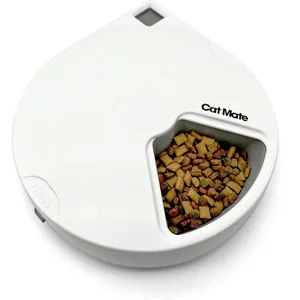
Cat Mate C500 Digital 5 Meal Automatic Dog & Cat Feeder
Best Overall
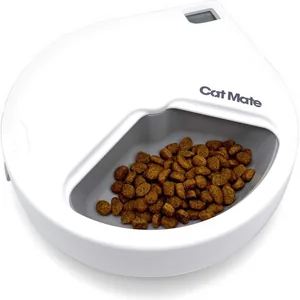
Cat Mate C300 Automatic Dog & Cat Feeder, 3-cup
Best for a Normal Schedule
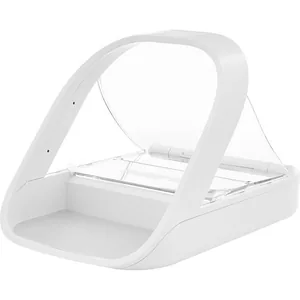
SureFeed Microchip Small Dog & Cat Feeder, 1 count
Best for Multi-Cat Homes
Comparison Table
| Feeder | Best for | Meals | Price |
|---|---|---|---|
| Cat Mate C500 Digital 5 Meal Automatic Dog & Cat Feeder | Best Overall | 5 meals | ~$46 |
| Cat Mate C300 Automatic Dog & Cat Feeder, 3-cup | Best for a Normal Schedule | 2 meals | ~$43 |
| SureFeed Microchip Small Dog & Cat Feeder, 1 count | Best for Multi-Cat Homes | 1 meal (microchip) | ~$170 |
First, the Unfun Truth About Wet Food and Automatic Feeders
Before you spend a dime on any feeder, you need to know this: wet cat food spoils fast. Like, really fast. The standard food safety rule from vets and pet food brands is the 2-hour rule. Wet cat food sitting at room temperature should be tossed after 2 hours. In a warm room (above 80°F), drop that to 1 hour. After that, bacteria multiply quickly enough to cause vomiting, diarrhea, and in worst cases, real illness. That single fact changes everything about how you should think about an automatic wet cat food feeder. A regular timed feeder that just dumps kibble into a bowl? Useless for wet food. What you actually need is one of these three things:- A feeder with covered compartments that only open at scheduled mealtimes (so the food isn’t exposed until it’s time to eat)
- Ice packs or built-in cooling (to slow bacterial growth between when you load it and when it serves)
- A short time window between meals (so the served food gets eaten quickly, not left sitting)
How to Match a Feeder to Your Actual Situation
Before we get to the picks, take 30 seconds to figure out which scenario sounds most like your life. The “best” feeder is the one that fits YOUR routine, not some generic top pick.Scenario 1: You work a normal 8-hour day
You leave at 8am, get home around 6pm. Your cat needs lunch in between. You want one mid-day meal kept fresh until then. A 2-meal or 3-meal feeder with an ice pack is your sweet spot.Scenario 2: You’re gone all day plus you want to sleep past 5am
Your cat treats your face as an alarm clock. You need an early-morning meal so they leave you alone, plus a lunchtime feeding while you’re at work. A 3-meal or 5-meal feeder gives you breakfast on a schedule and a mid-day refill.Scenario 3: You travel overnight or for a weekend
You’re gone 24 to 48 hours. A 5-meal feeder with strong ice packs is the minimum. Honestly, for trips longer than 24 hours, also have a friend or sitter check in once a day. Wet food simply doesn’t stay safe that long in most rooms.Scenario 4: You have multiple cats and one is a food thief
One cat eats too fast, finishes their bowl, then bullies the other cat off their food. Or you have a diabetic or kidney-disease cat on a prescription diet and a sibling who keeps stealing it. A microchip feeder is the only real solution here. It opens only for the cat whose chip it recognizes.Scenario 5: Your cat eats 4 to 6 tiny meals a day (diabetic, senior, picky, or just a grazer)
Some cats need small meals spaced out, especially diabetics. A 5-meal rotating feeder is your friend, paired with portions small enough that each one gets eaten within an hour or two. Got your scenario? Good. Now here are the picks.The 3 Best Automatic Wet Cat Food Feeders on Chewy Right Now
These are the only three feeders I’d put my own cat in front of. They all handle wet food, they’re all available on Chewy as of this writing, and they each solve a specific problem.1. Cat Mate C500 Digital 5 Meal Automatic Feeder (Best Overall)
2. Cat Mate C300 3-Cup Automatic Feeder (Best for a Normal Work Day)
3. SureFeed Microchip Feeder (Best for Multi-Cat Homes and Food Stealers)
Ice Pack vs Refrigerated vs Microchip: Which Type Is Right for You?
The wet food feeder market basically splits into three categories. Knowing which one fits your situation saves you from buying the wrong tool for the job.| Feeder Type | How It Works | Best For | Watch Out For |
|---|---|---|---|
| Ice Pack Rotating Feeder (Cat Mate C300, C500) | Multiple sealed compartments rotate to expose one meal at a time. Frozen ice packs sit underneath the tray. | Scheduled meals, standard work days, occasional overnight trips. | Ice packs only stay cold 6 to 8 hours indoors. Useless in hot rooms. |
| Refrigerated Wet Food Feeder (various brands) | Built-in thermoelectric cooling keeps food chilled like a mini fridge. Connected to an app. | Long days, hot climates, owners who want app control. | Pricey, needs constant power and Wi-Fi, mixed reliability reports. Worth waiting for the tech to mature. |
| Microchip Feeder (SureFeed) | Sealed lid that opens only when your specific cat walks up (reads their microchip or RFID tag). | Multi-cat homes, prescription diets, food stealers. | No scheduling, no cooling. Still follow the 2-hour rule. |
7 Setup Tips That Will Save Your Sanity (and Your Cat’s Stomach)
Buying the right feeder is half the battle. Setting it up well is the other half. Here are the tips that the box doesn’t tell you.- Freeze your ice packs for at least 6 hours before use. 12 hours is better. A barely-frozen ice pack will be useless by lunchtime.
- Always have a backup set of ice packs in the freezer. When one set is in the feeder, the other set is freezing for tomorrow. This is the single biggest hack from long-time owners.
- Load the feeder with cold food, not room-temperature food. Pulling a can straight from the fridge and spooning it in buys you an extra hour of safe time. If you’re loading from a fresh can, refrigerate the leftover portions immediately.
- Place the feeder in the coolest spot in your home. Away from sunlight, away from radiators, away from the kitchen if you cook. A tile floor in a north-facing room is ideal.
- Push the feeder against a wall. This keeps clever cats from getting behind it and prying the lid. It also helps anxious cats feel safer eating.
- Set portions smaller than you think. Better to set 4 small meals than 2 big ones. Smaller portions get eaten faster, which means less food sitting exposed past the 2-hour mark.
- Do a test run before you actually rely on it. Set it for 30 minutes from now, watch what happens. Make sure your cat isn’t scared of the rotation noise and that the timer works the way you think.
When You Should NOT Use an Automatic Wet Food Feeder
I’ll be honest with you, because this is the part most affiliate roundups skip. There are situations where an automatic wet cat food feeder is not the right answer, and you should know them. Skip the feeder if:- You’re going away for more than 48 hours. Even a great feeder with fresh ice packs can’t safely cover three days of wet food. Hire a pet sitter or use a service like Rover.
- Your room temperature regularly goes above 80°F. Ice packs lose effectiveness fast in heat. If your house gets warm in summer, a feeder is risky for wet food (consider running the AC, or use dry food for those days).
- You feed raw food. Most feeder manufacturers (including Petlibro and Cat Mate) specifically don’t recommend raw food in their feeders. The spoilage risk is too high.
- Your cat has a sensitive stomach and you’re new to wet food feeders. Test the feeder on a healthy weekend at home first. Watching your cat react to a feeder for the first time tells you a lot.
- You’re feeding a kitten under 4 months old. Kittens need more frequent monitoring than a feeder can provide. Wait until they’re older.
- Your cat is on a critical medication that’s mixed with their food. Talk to your vet first. If the timing or portion has to be exact, you may need a human checking in.
The ASPCA has general guidance on safe cat feeding. The Cornell Feline Health Center explains why food freshness matters.
Frequently Asked Questions
Q: Can you actually put wet food in an automatic feeder?
Yes, but only in feeders specifically designed for wet food. Those have sealed compartments and ice packs (like the Cat Mate C300 and C500) or a sealed microchip-activated lid (like SureFeed). A standard dry kibble dispenser is not safe for wet food because the food sits exposed in the bowl the whole time.Q: How long does wet food stay fresh in an automatic feeder with ice packs?
Indoors at normal room temperature, ice packs keep wet food fresh for roughly 6 to 8 hours in a sealed compartment. Once the compartment opens and food is exposed, the standard 2-hour rule kicks in. In warmer rooms, the ice pack timeline drops significantly.Q: Is it safe to leave wet cat food in a feeder overnight?
It can be, but only in a sealed feeder with fresh ice packs at the start, and only if the food gets eaten within 2 hours of the compartment opening. Don’t leave a bowl of wet food open all night. If you need overnight feeding, set the feeder to dispense food right before you go to bed and again early in the morning.Q: Will an automatic feeder scare my cat?
Maybe for the first few days. Most cats are wary of the rotation sound or the lid mechanism at first, then quickly learn it means food. Place the feeder in a quiet spot, do a few practice rotations while you’re home, and reward your cat for approaching it. Most cats are fully comfortable within a week.Q: Can my cat break into an automatic wet food feeder?
Determined cats can sometimes pry open feeder lids, especially smart breeds like Maine Coons and Bengals. The Cat Mate C500’s snap-lock lid is genuinely tamper-resistant for most cats. If yours is a Houdini, place the feeder against a wall, secure it to a board, or upgrade to a microchip feeder where the lid is mechanically locked.Q: How do I clean an automatic wet food feeder?
Wash the bowl, lid, and tray after every use. Most feeders have dishwasher-safe parts (top rack only). The base unit with the electronics should be wiped down with a damp cloth, never submerged. Dried-on wet food is where bacteria thrive, so cleaning matters as much as the feeder itself.Q: Do automatic wet food feeders work in hot weather?
Their effectiveness drops sharply above 80°F. Ice packs that last 8 hours in a 70°F room may only last 3 or 4 hours in a warm summer room. In hot weather, consider running your AC, moving the feeder to the coolest room in the house, or switching to dry food temporarily.Q: Are automatic wet food feeders worth the money?
For working pet parents, cats on multi-meal schedules, diabetic cats, and multi-cat homes with food drama, yes, absolutely. The Cat Mate C300 costs about the same as one vet visit and saves you years of dawn alarm wake-up calls and missed lunch breaks. For people who are home most of the day or feed only dry food, you may not need one.The Bottom Line
Choosing the best automatic wet cat food feeder isn’t about finding the fanciest gadget. It’s about finding the one that fits your life, your cat, and the basic food safety rules wet food demands. For most cat parents, the Cat Mate C500 is the easiest yes (5 sealed compartments, ice packs, tamper-proof, dishwasher safe). For lighter daily use, the C300 covers it for less. For multi-cat households with food stealing, the SureFeed Microchip Feeder is in a class of its own. Whichever one you pick, remember the 2-hour rule, freeze a backup set of ice packs, and do a test run before you actually rely on it. Your future self (and your cat’s stomach) will thank you. Now go enjoy your work day without that little voice in your head whispering “did I feed the cat?” That’s what these feeders are really for.
Hello and welcome to The Ideal Cat!
We are some passionate cat owners from different professions. We love our cats and have a lot of experience in how to care for our pets. We are incredibly excited to share our knowledge, experience, and research with you. So you can take good care of your loving cat. We will answer most of the common questions about owning cats, taking care of them, etc. If you have any question contact with us. Thanks for visiting! Enjoy the content.
