- Waterless shampoo cleans a cat without water, which is ideal for cats who hate baths.
- Foams and sprays handle light dirt, odor, and dander, but not heavy grease or a flea infestation.
- Look for cat-safe, no-rinse formulas that are free of alcohol and essential oils.
- Work the product in with a towel or brush and let your cat groom off the rest.
- For medicated skin conditions or a real flea problem, you’ll still need a proper bath or vet treatment.
Related reading: best cat shampoo. cat dandruff shampoo. best cat brush.
Our Top Picks
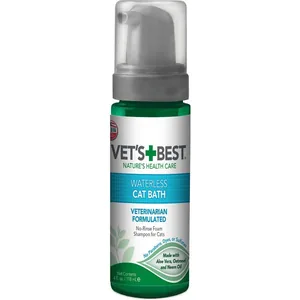
Vet’s Best Waterless Cat Bath, 4-fl oz bottle
Vet’s Best Waterless Cat Bath – Best Ove
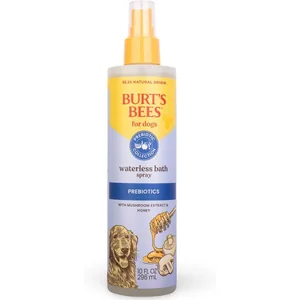
Burt’s Bees Prebiotic & Mushroom Waterless Dog Bath Spray, 10-fl oz bottle
Burt’s Bees Waterless Shampoo for Cats –
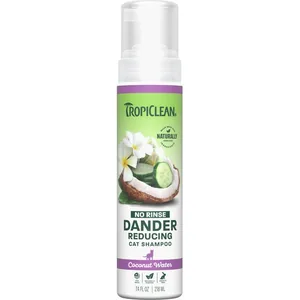
TropiClean Dry No Rinse Waterless Dander Reducing Cat Shampoo, 7.4-fl oz bottle
TropiClean Dry No Rinse Dander Reducing
Does Waterless Cat Shampoo Actually Work? An Honest Answer
You’ve probably seen breathless reviews calling waterless shampoo a “miracle in a bottle.” You’ve also probably seen pro groomers on Reddit calling it a glorified perfume spray. So which is it? Here’s the truth, and it sits somewhere in the middle. Waterless cat shampoo does work for what it’s designed to do: freshen up a coat, lift surface dirt, reduce dander, soothe dry skin, and clean spots your cat can’t reach (like a senior cat’s back or that one stubborn smelly patch). It’s a fantastic tool for cats who panic at the sight of running water, senior cats who’ve stopped grooming themselves, Sphynx cats prone to oily skin, and quick clean-ups between full baths. What waterless shampoo doesn’t do? Replace a real bath when your cat is genuinely dirty. If your kitty rolled in something foul outside, got into a flea infestation, or stepped through her own litter box mess, no foam is going to lift that out. The National Cat Groomers Institute is brutally honest about this: a real bath with water and shampoo cleans the skin and coat far more deeply than any spray ever can. So think of waterless cat shampoo as a tool, not a miracle. Used right, it’ll save you a ton of stress and keep your cat smelling great between proper baths. Used wrong (or instead of a real bath when one is needed), it’ll just mask problems instead of fixing them.What to Look for in a Waterless Cat Shampoo
Before you grab the first bottle on Chewy, here’s a quick checklist that separates the good from the sketchy:- Made specifically for cats. Cat skin has a pH around 6, which is more acidic than dog skin (about 7.5). Dog or human shampoo can dry out your cat’s skin and trigger irritation.
- Lick-safe ingredients. Your cat will groom herself the moment you put her down. The product must be safe to ingest in small amounts.
- No alcohol, no parabens, no harsh sulfates. These dry out the skin and aren’t safe for cats to lick.
- No essential oils that are toxic to cats. Tea tree, peppermint, citrus, eucalyptus, and pennyroyal can all be dangerous for felines.
- pH-balanced for cats. Look for this on the label, not “pH-balanced for pets” (which often means dogs).
- Won’t interfere with flea/tick treatments. A soap-free formula is your friend if your cat is on spot-on protection.
The 4 Best Waterless Cat Shampoos in 2026
1. Vet’s Best Waterless Cat Bath – Best Overall
2. Burt’s Bees Waterless Shampoo for Cats – Best Budget Spray
3. TropiClean Dry No Rinse Dander Reducing Cat Shampoo – Best for Dander & Cat Allergies
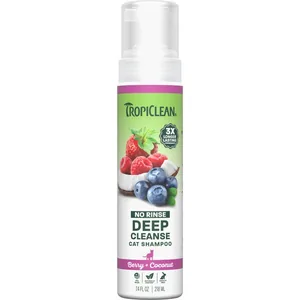
4. TropiClean Deep Cleaning Berry Fresh Cat Shampoo – Best for Oily or Stinky Coats
Spray vs Foam: Which Works Better for Your Cat?
Most waterless cat shampoos come in one of two formats, and the difference matters more than you’d think. Sprays are quick to apply and great for spot cleaning, but the “psst” sound can terrify anxious cats. Foam goes on quieter, spreads more evenly, and gives you more control, but it takes a few extra seconds to massage in. Here’s a quick way to choose:| If your cat is… | Choose | Why |
|---|---|---|
| Calm and tolerant | Spray | Faster, easier to target spots |
| Easily startled or anxious | Foam | Quiet application, no scary noises |
| Long-haired or thick-coated | Foam | Spreads more evenly through dense fur |
| Short-haired and you want quick touch-ups | Spray | One spritz covers small areas fast |
| A senior who needs full-body help | Foam | Gentler, less stressful, easier on you |
How to Use Waterless Cat Shampoo (Without Getting Scratched)
Even the best product fails if your cat won’t sit still. Here’s the technique that actually works:- Wait for the right moment. Don’t try this when your cat is wound up or in the middle of zoomies. The best time is after a meal or during a relaxed petting session.
- Pre-brush your cat. A quick brushing first lifts loose hair and lets the shampoo reach the skin underneath. This step alone makes the whole process twice as effective.
- Apply to your hand first, not directly to the cat. This is a vet-approved trick. Pump or spray the product into your palm or onto a soft washcloth, then rub it gently into your cat’s fur. You avoid the startling noise and have way more control.
- Work from neck to tail, avoiding the face. Never apply waterless shampoo to your cat’s face, ears, or near her eyes. Use a damp washcloth (just plain water) to wipe her face if needed.
- Massage it in for 30 seconds. Pretend you’re giving a spa massage. Most cats start purring. Yours might too.
- Towel off the excess. Use a soft, dry towel to gently absorb any leftover product. This reduces what your cat will lick later.
- Let it air dry, then brush again. Once dry, a final brush-out leaves the coat soft, shiny, and free of any residue.
- Reward your cat. Treats. Lots of them. Build positive associations so next time goes even smoother.
When Waterless Shampoo Won’t Cut It
Being real with you here: there are times when no waterless shampoo, no matter how good, will get the job done. Skip the foam and go for a proper bath (or call a groomer or vet) when:- Your cat is visibly soiled. Mud, feces, urine, food residue, or anything sticky needs water.
- There’s a flea or tick infestation. Waterless shampoos aren’t pesticides. You’ll need a vet-recommended flea treatment.
- Your cat got into a toxic substance. Motor oil, paint, anti-freeze, or anything you’d worry about her licking? Call your vet immediately, don’t try to clean it yourself.
- Your kitten is under 12 weeks old. Most waterless shampoos aren’t safe for very young kittens. Check the label carefully.
- Your cat is pregnant or nursing. Unless the product label specifically says it’s safe, skip it during this time.
- Your cat has open wounds, severe skin infection, or is asthmatic. Consult your vet first.
- The fur is matted. Waterless shampoo won’t fix mats. You’ll need combing, scissors, or a clipper, and sometimes a professional groomer.
Ingredients to Avoid in Cat Shampoo
Remember, your cat will absolutely lick whatever you put on her fur. That means the ingredients list matters more than the marketing on the front of the bottle. Here’s what should be a hard no:- Alcohol (especially isopropyl alcohol). Dries out skin and is toxic if ingested in any meaningful amount.
- Tea tree oil (melaleuca). Toxic to cats even in small doses.
- Pennyroyal, peppermint, citrus, and eucalyptus oils. All can cause severe reactions in cats.
- Sodium lauryl sulfate (SLS). Harsh, drying, and your cat shouldn’t ingest it.
- Phthalates and synthetic fragrances. Linked to skin irritation and respiratory issues.
- Permethrin. Found in some dog flea products. Highly toxic to cats. Always double-check that any “pet” product is explicitly cat-safe.
- Artificial dyes. No purpose other than looking pretty in the bottle.
Best Picks by Cat Type
Different cats have different needs. Here’s how the picks break down by situation:For Senior Cats Who Can’t Groom Themselves
Go with Vet’s Best Waterless Cat Bath. The foam is gentle, the oatmeal soothes dry senior skin, and the formula doesn’t require your cat to tolerate spraying or aggressive rubbing.For Sphynx and Other Oily-Coated Breeds
Sphynx cats produce more skin oil than fur-covered breeds, and need more frequent freshening. TropiClean Deep Cleaning Berry Fresh handles oil well, but use it weekly, not daily.For Long-Haired Cats (Maine Coon, Persian, Ragdoll)
Foam is your friend here because it penetrates dense coats better than spray. Vet’s Best works beautifully. Just remember: waterless shampoo won’t fix mats, so brush regularly to prevent them in the first place.For Anxious Cats Who Hate Everything
The quietest application possible is key. Apply Vet’s Best foam to your hand first, then work it in slowly. Talk softly. Treats afterwards. Build trust over multiple short sessions instead of one stressful long one.For Households With Cat Allergies
Without question, TropiClean Dander Reducing. The coconut-cucumber-oatmeal blend specifically targets the dander that triggers human allergies. Use it 1-2 times a week for noticeable results.For Kittens (Over 12 Weeks)
Burt’s Bees Waterless Shampoo is gentle enough, but always patch-test first by applying a tiny amount to a small area and waiting 24 hours before doing a full application.How Often Should You Use Waterless Cat Shampoo?
For most cats, once a week is plenty. Healthy cats groom themselves constantly, and over-bathing (even with waterless products) can strip the natural oils their skin needs. The exceptions:- Senior cats who’ve stopped grooming: 2-3 times a week, focusing on hard-to-reach areas.
- Sphynx and other oily breeds: 1-2 times a week to manage oil buildup.
- Cats with allergies in the household: 2 times a week with a dander-reducing formula.
- Healthy adult cats: Once a week or less, as needed.
The ASPCA and International Cat Care have guidance on safe cat grooming products.
FAQ
Q: Is waterless cat shampoo safe to lick?
Yes, if it’s made specifically for cats. Reputable cat waterless shampoos use lick-safe, non-toxic ingredients because manufacturers know your cat will groom herself the moment you put her down. Just avoid products made for humans or dogs, which can contain alcohol or other ingredients that are dangerous when ingested.Q: Can I use waterless dog shampoo on my cat?
Generally no. Dog shampoo has a higher pH (around 7.5) than cat skin needs (about 6), and many dog products contain permethrin, which is highly toxic to cats. Always use a product clearly labeled for cats or “for cats and dogs” with cat-safe pH and ingredients.Q: How long does waterless cat shampoo take to dry?
Most foam waterless shampoos dry in 5-15 minutes depending on coat length. Long-haired cats may take up to 30 minutes for full dry. Don’t let your cat go outside or onto delicate furniture until completely dry, since damp fur attracts dust.Q: Will waterless shampoo affect my cat’s flea treatment?
Most cat-specific waterless shampoos are soap-free and won’t strip flea or tick spot-on treatments. Vet’s Best, Burt’s Bees, and TropiClean all confirm their products are safe to use alongside topical flea protection. If you’re unsure, wait at least 48 hours after applying flea treatment before using any shampoo.Q: Can I use waterless shampoo on my kitten?
Only if she’s over 12 weeks old and the product specifically says it’s safe for kittens. Vet’s Best Waterless Cat Bath and Burt’s Bees Waterless Shampoo are both safe for kittens 12 weeks and up. Always patch-test on a small area first.Q: Does waterless cat shampoo reduce shedding?
Indirectly, yes. The brushing that comes with application lifts a lot of loose fur, and a moisturized coat sheds less than a dry, brittle one. Don’t expect miracles, but regular use combined with consistent brushing visibly reduces hair around the house.Q: My cat hates the spray sound. What can I do?
Two options. First, switch to a foam-based formula like Vet’s Best or TropiClean. Foam pumps make virtually no noise. Second, with any spray product, dispense it into your palm or onto a damp washcloth first, then apply it to your cat’s fur with your hand. The cat never hears the spray sound at all.Q: Can waterless shampoo help with cat dandruff?
It can help mask and reduce mild dandruff, especially formulas with oatmeal, aloe, and neem. But chronic dandruff often points to a deeper issue: greasy skin, dehydration, allergies, or even hyperthyroidism in older cats. If dandruff doesn’t improve after 2-3 weeks of regular grooming, see your vet to rule out underlying conditions.The Bottom Line
Waterless cat shampoo isn’t a magic potion, but it’s also not a scam. When you pick the right product for the right job, it genuinely makes your life (and your cat’s) easier. For most cat parents, the best waterless cat shampoo is Vet’s Best Waterless Cat Bath, which strikes the perfect balance of gentle ingredients, vet formulation, and ease of use. If allergies are your main concern, go with TropiClean Dander Reducing. For budget-friendly freshening between baths, Burt’s Bees is hard to beat. Whatever you choose, remember the golden rule: waterless cat shampoo is a complement to good grooming, not a replacement for one. Pair it with regular brushing, the occasional real bath when needed, and lots of treats, and your cat will stay clean, happy, and (mostly) willing to let you near her with a bottle. Now if you’ll excuse me, my cat is staring at me suspiciously. She knows I just wrote 3,000 words about washing her. Wish me luck.
Hello and welcome to The Ideal Cat!
We are some passionate cat owners from different professions. We love our cats and have a lot of experience in how to care for our pets. We are incredibly excited to share our knowledge, experience, and research with you. So you can take good care of your loving cat. We will answer most of the common questions about owning cats, taking care of them, etc. If you have any question contact with us. Thanks for visiting! Enjoy the content.
