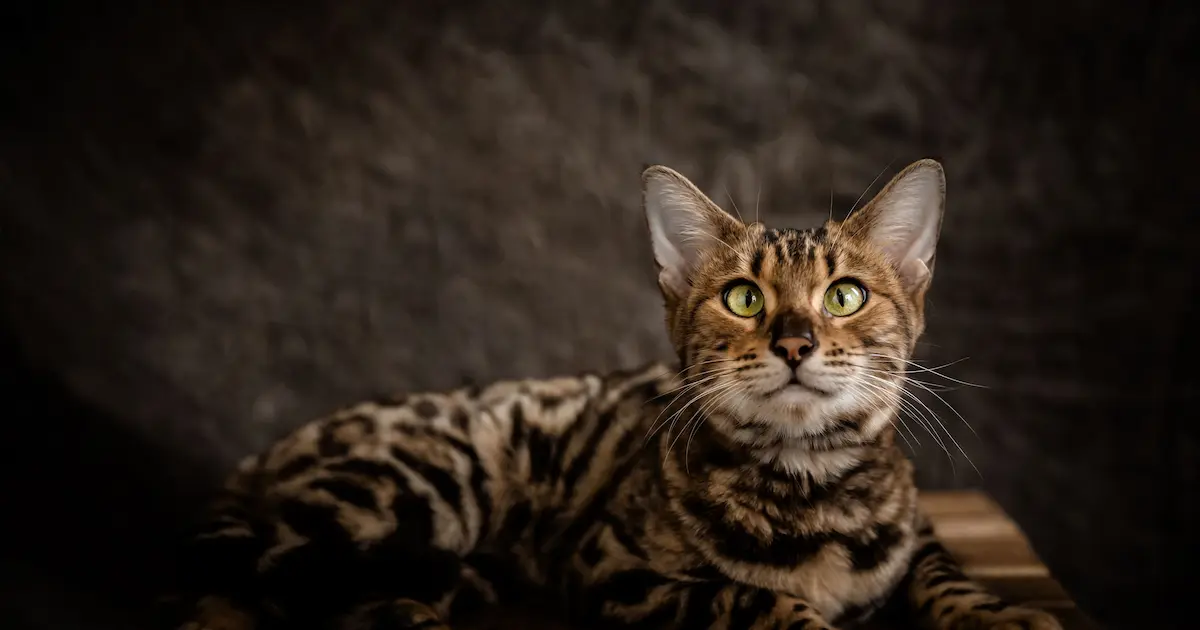
Picture this. You wake up at 3 a.m. to a strange sound. You stumble into the kitchen and find every lower cabinet wide open, the bathroom faucet running, and a spotted cat sitting on top of the fridge staring at you like you’re the one being weird.
Welcome to life with a Bengal cat.
These cats are stunning. They look like someone shrank a leopard and gave it a personality the size of a Labrador. But here’s the thing: that gorgeous coat comes attached to one of the busiest, smartest, most demanding cats you can bring home. Before you fall in love with the pictures, let’s talk about what owning one actually looks like, what it costs, whether it’s even legal where you live, and the health facts most breed sites quietly skip.
What Exactly Is a Bengal Cat?
A Bengal is a hybrid breed. It started as a cross between a domestic cat and the Asian leopard cat, a small wild feline native to parts of Asia. That wild parent is where the spots, the athleticism, and the love of water all come from.
Today’s pet Bengals are several generations down from that wild ancestor, so they behave like domestic cats while keeping the jungle looks. The breed’s name even nods to the leopard cat’s scientific name, Prionailurus bengalensis. So no, your Bengal is not part leopard in any meaningful day-to-day sense. It’s a house cat that cosplays as one.
A Quick History: From Backyard Experiment to Living Room Star
The Bengal we know today traces back to one determined woman in California. Jean Mill made the first documented cross between an Asian leopard cat and a domestic cat in 1963. The real breeding program took shape through the 1970s and 1980s, with other breeds like the Egyptian Mau, Abyssinian, and Burmese added along the way to soften the temperament.
The International Cat Association accepted the Bengal in 1983 and granted it championship status in 1991. For a breed that barely existed 60 years ago, that’s a rocket-ship rise. The Bengal went from a genetics project to one of the most sought-after cats on the planet in a single human lifetime.
What a Bengal Actually Looks Like
This is the part everyone falls for. And honestly, it’s earned.
Bengals have a short, dense, unusually soft coat. Run your hand down one and it feels almost like a pelt. Some Bengals even have a “glitter” gene that gives the fur a faint metallic shimmer in sunlight, like someone dusted them with gold.
The pattern comes in two main styles. Spotted or rosetted cats have the classic leopard look, with rosettes shaped like donuts, arrowheads, paw prints, or pancakes. Marbled Bengals have flowing, swirling stripes instead of spots, almost like poured caramel. Both can be jaw-dropping.
For color, The International Cat Association recognizes brown, silver, and snow (which splits into lynx, mink, and sepia) as standard. You’ll also see charcoal, blue, and solid black cats out there, but those fall outside the show standard. Look for the little extras too: dark “mascara” lines around the eyes, leg striping, and usually a black-tipped tail.
Size-wise, females usually run about 6 to 12 pounds and males about 9 to 15 pounds. They look bigger than they weigh because they’re long and ropey with muscle. One heads-up for new owners: Bengal kittens go through an ugly-duckling “fuzzy” stage where the coat looks dull and grayish. Don’t panic. The clear, high-contrast pattern usually arrives by several months old.
Bengal Personality: What Living With One Is Really Like
Let’s drop the brochure talk. Here’s what you’re signing up for.
Bengals are relentlessly active and scary smart. They open cabinets, fish toys out of drawers, flip light switches, and figure out how to turn on faucets. Many owners joke that they adopted a raccoon by mistake. If a regular cat is a houseplant that occasionally moves, a Bengal is a toddler with grappling-hook reflexes.
They’re also intensely people-focused. A Bengal wants to be wherever you are, supervising your every move. They’ll follow you room to room, “talk” to you constantly in chirps and yowls, and let you know loudly when they’re bored or ignored. The good news is they bond hard and they’re genuinely affectionate. The catch is they don’t really do “leave me alone.”
And yes, the water thing is real. Plenty of Bengals will paw at the shower, hop in the tub, or sit guard at the sink waiting for a drip. If you have a fish tank, secure the lid.
One honest note: Bengals can have a bossy, take-charge streak. A bored or under-stimulated one may get mouthy, swat, or treat your curtains like a climbing wall. Their behavior is almost always a direct read-out of how much enrichment they’re getting. A tired Bengal is a sweet Bengal.
The F1 to F5 Question, Explained Simply
You’ll see Bengals labeled F1, F2, F3, and so on. This trips up a lot of first-time buyers, so here’s the plain-English version.
The “F” number tells you how many generations a cat is removed from its wild Asian leopard cat ancestor.
- F1: the direct child of a leopard cat and a domestic cat. Roughly 50% wild. Big, intense, often unpredictable. Males are usually sterile.
- F2: about 25% wild. Still quite wild in temperament.
- F3: about 12.5% wild.
- F4 and beyond: these are called SBT (Stud Book Tradition) Bengals and are considered fully domestic. This is what almost every pet owner actually wants.
Here’s the part people miss: a stunning, wild-looking, heavily rosetted coat does not require a low generation. Gorgeous F5 cats win shows all the time. You can get the leopard look without taking on a half-wild animal. For a pet, go F4 or later. Full stop.
Are Bengals Even Legal Where You Live?
This is the question that catches buyers off guard, sometimes after they’ve already paid a deposit.
Because Bengals have wild ancestry, ownership is regulated in some places. The rules vary a lot by state and even by city, and they often hinge on generation. As a general pattern, early generations (F1 through F3 or F4) face the tightest restrictions, while later SBT generations are treated more like ordinary house cats.
A few examples to show how wide the range is: some places ban Bengals outright, some allow only later generations, some require permits for early ones, and some have no special rules at all. Hawaii is famously strict, and a number of large cities have their own limits on early-generation hybrids.
Please don’t take any blog’s word as final here, including this one. Laws change. Before you commit, call your state’s wildlife or agriculture department and your city’s animal control, and ask specifically about your generation. Get the answer in writing if you can. A reputable breeder will happily provide pedigree paperwork proving the cat’s generation.
Is a Bengal Right for You?
Time for a gut check. A Bengal is probably a great fit if you nod along to most of these:
- You’re home a fair amount, or you work from home.
- You actually enjoy playing with a cat daily, not just having one nearby.
- You’re okay with a vocal, opinionated, into-everything companion.
- You can cat-proof your home and accept some chaos.
- You’re not a first-time cat owner, or you’ve done serious homework.
A Bengal is probably the wrong call if:
- You’re gone 10 hours a day with no other pet at home.
- You want a calm cat that sleeps on your lap while you read.
- You’re houseproud and the idea of a knocked-over vase ruins your week.
- You want low effort and low cost.
There’s no shame in either answer. The saddest Bengals are the ones bought for their looks by people who needed a quieter cat. Be honest with yourself now and you’ll both be happier.
Health Issues to Know About (and the Lifespan Truth)
Bengals are generally robust, but the breed carries a handful of genetic conditions worth knowing before you buy. A good breeder screens for these.
- Hypertrophic cardiomyopathy (HCM): a thickening of the heart muscle. It’s the most serious concern in the breed. Responsible breeders have their cats scanned by a veterinary cardiologist.
- Progressive retinal atrophy (PRA-b): a genetic eye disease that slowly leads to blindness. There’s a reliable DNA test for it, so breeders can avoid producing affected kittens.
- Pyruvate kinase deficiency (PK-Def): a genetic cause of anemia, also detectable by DNA test.
- Patellar luxation and hip issues: kneecap and joint problems that can show up in some lines.
- Lymphoma: Bengals appear somewhat more prone to this cancer than the average cat.
Now the part most sites tiptoe around. You’ll see “12 to 16 years” repeated everywhere as the Bengal lifespan. That’s the optimistic figure. A large 2024 UK study that built life tables for cats found Bengals had a notably shorter average life expectancy than that range suggests, shorter than many other breeds in the data.
What does this mean for you? Not that your cat is doomed. Plenty of well-bred, indoor, well-cared-for Bengals live long, healthy lives into their teens. But it does mean two things. First, where you buy matters enormously, because health-tested lines and careful breeding stack the odds in your favor. Second, keep your Bengal indoors or in safe enclosed outdoor space, since roaming is one of the biggest preventable risks. Go in with eyes open, not with a fantasy number in your head.
Grooming and Care
Here’s a rare bit of good news. Bengals are one of the easiest coats to maintain out there.
That short, dense fur doesn’t mat and doesn’t need much help. A quick brush once a week keeps loose hair down and gives you bonding time, but you could honestly skip it some weeks and the cat wouldn’t suffer. Many Bengals enjoy the attention anyway.
The rest of the care routine is standard cat stuff done consistently: trim nails every couple of weeks, brush teeth to fend off dental disease, check ears, and stay on top of vet visits. Because Bengals like water, the occasional bath is genuinely easy, which is more than most cat owners can say.
Feeding and Diet
Bengals are obligate carnivores, like all cats, which means meat protein needs to be the backbone of their diet. Look for a quality food where a named meat (chicken, turkey, fish) leads the ingredient list, with high protein and not a lot of filler.
Because Bengals are so active, many burn through calories easily, but that’s not a license to free-feed. Measured meals keep weight in check, and an overweight Bengal loses the very athleticism that makes the breed special. If your cat has a sensitive stomach (some Bengals do), introduce new foods slowly and ask your vet before making big changes.
A small practical tip: puzzle feeders and lick mats are a gift for this breed. They turn mealtime into a brain workout, which a bored Bengal sorely needs.
Exercise and Enrichment (Or Else)
If you remember one section, make it this one. With a Bengal, enrichment isn’t a nice extra. It’s the difference between a delightful cat and a destructive one.
Plan on real daily play, ideally close to an hour broken into sessions. Wand toys, fetch (yes, many Bengals fetch like dogs), and food puzzles all help. Vertical space is huge, so a tall cat tree, wall shelves, and high perches let them climb and survey their kingdom. Leash training works well for this breed too, since they’re curious and confident outdoors.
Skip the enrichment and a Bengal will invent its own, usually at your expense. Shredded furniture, unrolled toilet paper, and 4 a.m. zoomies are the classic signs of an under-stimulated cat. Tire them out on purpose and you’ll both sleep better.
Living With Kids, Dogs, and Other Cats
Good news for busy households: Bengals usually do well with company, as long as everyone matches their energy.
With kids, Bengals tend to be playful and tolerant, especially older children who can join the games. Toddlers should always be supervised, since a Bengal’s idea of play can be a bit rough and fast.
With dogs, Bengals often thrive, particularly with confident, friendly dogs who enjoy a chase buddy. The wild-cat caution doesn’t usually translate to fear of dogs once introductions go well.
With other cats, slow introductions are your friend, but Bengals genuinely benefit from a feline companion. Which brings up the most common question new owners ask: can I leave one home alone while I work full time? Honestly, a single Bengal home alone all day is a recipe for boredom and trouble. If your schedule keeps you out for long stretches, seriously consider getting two, or pairing your Bengal with another active pet. They are not a breed that does well in an empty house.
Lifespan and Aging Tips
Through kittenhood, your job is play, play, and more play, plus locking down anything breakable or swallowable. The teenage years (roughly one to three) are peak energy, so lean hard into enrichment.
As your Bengal moves into the senior years, you’ll notice the chaos mellow into something gentler. Keep up annual vet visits, and bump to twice a year once they’re older, since early detection of heart or kidney issues makes a real difference. Soften their world a little with easy-access perches and warm sleeping spots, and keep their mind engaged with lighter play. A senior Bengal is still a curious Bengal.
How Much Does a Bengal Really Cost?
Let’s talk real numbers, because the kitten price is only the opening bid.
In 2026, a pet-quality SBT (F4 or later) Bengal kitten from a reputable breeder typically runs about $1,500 to $3,000, with the average landing near $2,000. Early generations cost dramatically more. F2 cats often run several thousand dollars, and F1 cats can climb into five figures. Coat quality, color, and champion bloodlines all push the price up.
One firm rule: if you see a Bengal kitten advertised for $300 or $500, something is wrong. That price usually signals a scam, an unhealthy backyard operation skipping health tests, or a spotted tabby being passed off as a Bengal. Cheap is the most expensive mistake you can make here.
Then come the ongoing costs. Bengals tear through toys and climbing structures faster than calmer cats, so budget for replacements. They can also be hard on furniture and carpets, so factor in occasional repairs. Add quality food, litter, routine vet care, and ideally pet insurance given the breed’s heart and cancer risks. Realistically, you’re looking at a meaningful annual budget on top of that first big check, every year for well over a decade.
Where to Find a Bengal Ethically
Because this breed attracts a lot of money, it also attracts a lot of bad actors. Here’s how to source one responsibly.
Start with a breeder registered with The International Cat Association who health-tests their cats. Good breeders welcome questions, show you the kitten’s living conditions, provide pedigree and generation paperwork, screen parents for HCM, and DNA-test for PRA-b and PK-Def. They won’t let kittens leave too young, and they’ll ask you plenty of questions too.
Walk away from these red flags: prices that seem too good to be true, no health testing, refusal to show the cattery, pressure to pay fast, kittens available “right now” with no questions asked, or vague answers about generation. And don’t forget rescue. Bengal-specific rescues exist, and plenty of Bengals end up needing homes precisely because someone underestimated the breed. An adult rescue can be a wonderful, lower-cost way in, with the bonus that the kitten chaos is behind you.
Similar Breeds to Consider
Love the look or the energy but not sure the Bengal fits? A few alternatives worth a look:
- Savannah cat: another wild-look hybrid, even taller and more dog-like, with similar legal considerations.
- Egyptian Mau: naturally spotted, athletic, and fully domestic with no hybrid baggage.
- Ocicat: all the wild spotted looks with zero wild ancestry, and a friendly, social streak.
- Abyssinian: not spotted, but matches the Bengal’s curiosity and busy energy in a smaller package.
- Toyger: bred to look like a tiny tiger, with a striped coat and a calmer temperament than the Bengal.
Common Myths and Misconceptions
Let’s clear up the big ones, because the internet is full of confident nonsense about this breed.
“Bengals are hypoallergenic.” Nope. This one gets repeated even by breeders, but it’s false. No cat is truly hypoallergenic. Bengals shed less than some breeds and groom themselves a lot, which can mean fewer airborne allergens, but they still produce the allergy-triggering protein every cat does. If you have a serious cat allergy, spend real time around one before committing.
“They’re basically wild animals.” Not the ones you’ll buy as pets. SBT Bengals (F4 and up) are domestic cats. They’re energetic and bold, but they’re not leopards in disguise.
“They’re aggressive.” A well-bred, well-stimulated Bengal is affectionate and playful, not mean. “Aggression” in this breed is almost always boredom or poor breeding talking.
“Low generations make prettier cats.” Coat quality comes from selective breeding, not from being closer to the wild ancestor. Plenty of show-stopping Bengals are later-generation pets.
Frequently Asked Questions
Q: Are Bengal cats good for first-time owners?
Usually not the easiest choice. Bengals are high-energy, high-need cats that demand daily play and mental stimulation. A motivated first-timer who does the homework can absolutely succeed, but a calmer breed is a gentler starting point.
Q: Do Bengal cats really like water?
Many do, yes. It traces back to their Asian leopard cat ancestry. Expect some Bengals to paw at the faucet, join you in the shower, or dunk toys in their water bowl. Not every individual loves it, but the trait is common.
Q: How much does a Bengal kitten cost in 2026?
A pet-quality SBT Bengal from a reputable breeder typically costs $1,500 to $3,000, averaging around $2,000. Early generations like F1 and F2 cost far more. Anything advertised under about $1,500 should make you suspicious.
Q: Are Bengal cats legal everywhere?
No. Ownership is regulated in some states and cities, often based on the cat’s generation. Early generations face the most restrictions. Always check with your local and state authorities before buying.
Q: How long do Bengal cats live?
The commonly quoted range is 12 to 16 years, though a 2024 UK study found average life expectancy notably lower. Good breeding, an indoor lifestyle, and regular vet care all improve your cat’s odds of a long life.
Q: Do Bengal cats shed a lot?
Not much. Their short, dense coat sheds less than many breeds and needs only weekly brushing. Just remember low shedding does not mean hypoallergenic.
Q: Can I leave a Bengal home alone while I work?
A single Bengal alone all day tends to get bored and destructive. If you work long hours, strongly consider getting two cats or pairing your Bengal with another active pet so they have company and an outlet for their energy.
Q: What’s the difference between spotted and marble Bengals?
Spotted (or rosetted) Bengals have leopard-style spots, while marble Bengals have flowing, swirling stripes. Both are recognized patterns, and it comes down to personal taste. Coat quality and contrast matter more than which pattern you pick.
Final Verdict: Should You Get a Bengal?
Here’s the honest bottom line. A Bengal cat is a spectacular companion for the right person. They’re beautiful, brilliant, loyal, and genuinely fun in a way few cats match. Living with one feels less like having a pet and more like sharing your home with a tiny, opinionated roommate who happens to look like a leopard.
But they ask a lot in return. Your time, your attention, your money, and a tolerance for chaos. If you can give all that, you’ll get one of the most rewarding cats on earth. If you can’t, a calmer breed will make both of you far happier. Choose with your real life in mind, not just those gorgeous photos, and the Bengal can be the best decision you ever make.

Hello and welcome to The Ideal Cat!
We are some passionate cat owners from different professions. We love our cats and have a lot of experience in how to care for our pets. We are incredibly excited to share our knowledge, experience, and research with you. So you can take good care of your loving cat. We will answer most of the common questions about owning cats, taking care of them, etc. If you have any question contact with us. Thanks for visiting! Enjoy the content.
