If your cat has ever backed out of a harness like a furry little Houdini, or you are eyeing the backyard wondering if a leashed stroll is even possible, you are in the right place. Walking a cat is absolutely doable. The whole thing rises or falls on one purchase: the harness. Get a snug, well-shaped one and your cat stays put. Grab a loose, flimsy one and you are chasing a panicked cat down the street.
The best cat harness in 2026 is one that fits snug, spreads pressure across the chest instead of the neck, and is hard for a startled cat to wriggle out of. Below are 5 picks, each chosen for a specific cat, from the all-around best to escape artists, kittens, anxious cats, and tight budgets.
- A cat harness should be snug enough that you can slide only two fingers underneath, since cats escape loose harnesses by backing out of them.
- Never clip a leash to a cat’s collar for walks, because a breakaway collar will release and a non-breakaway one can injure the neck.
- Vest and H-style harnesses hold cats more securely than figure-8 designs, which are the easiest for a cat to wriggle out of.
- Most cats need one to two weeks of wearing the harness indoors, with treats, before they are ready to go outside.
- Some cats simply never accept a harness, and forcing a panicked cat outdoors does more harm than good.
Related reading: best cat leash. best cat collar. best cat backpack.
Our Top Picks
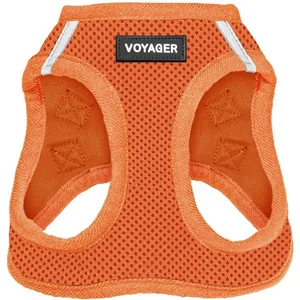
Best Pet Supplies Voyager Step-in Air Dog Harness, Orange with Matching Trim, X-Large
Best Overall
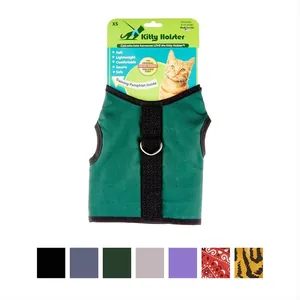
Kitty Holster Cat Harness, Hunter Green, X-Small
Best Escape-Proof
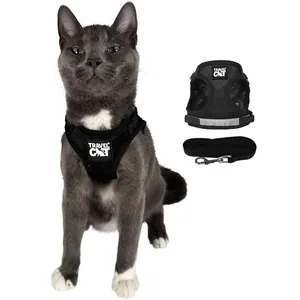
Travel Cat The True Adventurer Reflective Cat & Kitten Harness & Leash, Black, Medium
Best for Kittens
Best Cat Harness Comparison Table
| Harness | Best For | Style | Chest Range | Rating |
|---|---|---|---|---|
| Best Pet Supplies Voyager Step-in Air | Best Overall | Step-in mesh vest | ~11 to 19 in (size range) | 4.6 stars |
| Kitty Holster Cat Harness | Best Escape-Proof | Cotton wrap vest, Velcro | XS to XL (neck/chest) | 4.2 stars |
| Travel Cat The True Adventurer | Best for Kittens | Adjustable strap, reflective | XS ~9.5 to 11.8 in and up | 4.3 stars |
| PetSafe Come With Me Kitty Nylon | Best Budget | H-style, bungee leash | 9 to 18 in across sizes | 4.1 stars |
| Travel Cat The Pathfinder (GPS pocket) | Best for Anxious & Adventurous Cats | Reflective vest, tracker pocket | 14 to 16 in (S) and up | 4.1 stars |
The Two Rules That Matter Most Before You Buy
Two safety rules decide whether walking your cat goes well or badly, so read these before you pick a harness. First, you always walk a cat on a harness, never by attaching the leash to a collar. A collar concentrates a sudden pull on the throat, which can injure a cat’s neck and windpipe. A harness spreads that force across the chest and shoulders, which is far safer if your cat bolts or freezes.
Second, a cat harness has to fit snug. The simple test: you should be able to slide two fingers between the harness and your cat’s body, but no more. If you can fit a whole hand under there, a frightened cat will reverse straight out of it. Honestly, no harness on earth is 100% escape-proof, so a correct fit matters more than any feature on the box.
One more, just as important: never leave a harnessed cat alone outdoors. A cat tied up or left unsupervised can tangle the leash, panic, or fall victim to a dog or car. Stay with your cat the entire time, every time. If your cat loves being outside but panics on a leash, a cat stroller gives her the view without the risk.
How We Picked the Best Cat Harnesses
We evaluated cat harnesses the way a worried cat parent would, not the way a brand would. The big factors were real fit and escape resistance, how the harness spreads pressure away from the neck, how quickly you can get it on a squirmy cat, and the materials against sensitive skin. We leaned on aggregated verified owner reviews at scale on Chewy, on feline-care and humane-society guidance about safe leash walking, and on each design’s track record with escape artists and anxious cats.
Every harness here is currently sold on Chewy, holds a 4.0-star rating or higher, and carries a healthy pile of customer reviews, with one new-release exception flagged below. We also made sure each pick fills a different need, because the right harness for a six-pound kitten is not the right harness for a bruiser who treats the backyard like a personal expedition.
The 5 Best Cat Harnesses of 2026, Reviewed
Best Pet Supplies Voyager Step-in Air: Best Overall
Verdict: The best all-around cat harness for most cats and most owners, especially first-timers.
Mini-spec: soft air-mesh step-in vest, back-clip D-ring, hook-and-loop plus buckle closure, sizes from XXXS up through small-dog sizes, multiple colors. Rating: 4.6 stars with 67,000-plus reviews.
The Voyager Step-in Air is the harness we point most people to first because it solves the part everyone dreads: getting it on. Your cat steps two front paws into the leg openings, you fold the mesh over the back, and you close it with Velcro and a buckle in seconds. The padded air mesh sits wide across the chest, so pressure stays off the throat, and it breathes well in warm weather. It originally took off with small dogs, and that scale is exactly why the fit and stitching are so dialed in.
- Pros: Goes on fast with minimal wrestling, soft and breathable for long sessions, back clip keeps the leash off the neck, huge color and size range.
- Pros: Backed by tens of thousands of reviews, so quality is consistent batch to batch.
- Cons: The step-in shape can be escaped by a determined contortionist if you size up even slightly, so fit it snug.
- Cons: Sizing skews toward small dogs, so measure your cat’s chest and check the chart instead of guessing.
Best for: first-time cat walkers who want an easy on-and-off vest that most cats tolerate well.
Kitty Holster Cat Harness: Best Escape-Proof
Verdict: The pick for the cat who has already escaped a harness and given you a heart attack.
Mini-spec: 100% cotton wrap vest with soft muslin lining, two wide industrial-strength Velcro closures, reflective options, sizes XS, S/M, M/L, XL. Rating: 4.2 stars with 586-plus reviews. Vet-recommended and made in the USA.
The Kitty Holster is the closest thing to escape-proof we trust for cats, and that reputation is earned. Instead of thin straps, it wraps a wide band of fabric around the chest and shoulders and locks down with two large Velcro panels, leaving almost no slack for a cat to reverse out of. The cotton lining is gentle on cats with sensitive skin or allergies, and the full coverage doubles as a security blanket for skittish cats. It has shown up on CBS Sunday Morning and earned a nod from Jackson Galaxy’s work, which tells you it has real staying power.
- Pros: Wide wrap design is genuinely hard for cats to back out of, soft breathable cotton suits sensitive skin, full coverage calms nervous cats.
- Pros: Vet-recommended with a long track record since 2009, plus reflective versions for low light.
- Cons: The Velcro can collect fur and lose grip over time, so check and clean it.
- Cons: Pricier than basic strap harnesses, and the broad fabric can feel warm in summer heat.
Best for: escape artists and anxious cats who need maximum coverage and security.
Travel Cat The True Adventurer Reflective Harness & Leash: Best for Kittens
Verdict: The right starter set for kittens and small cats you want to train early.
Mini-spec: lightweight adjustable harness with reflective trim, includes a matching 6-foot nylon leash, XS fits roughly 9.5 to 11.8-in chest and sizes go up from there. Rating: 4.3 stars with 537-plus reviews.
The True Adventurer earns the kitten spot because it comes tiny. The XS chest range starts low enough to fit a young kitten properly, which matters because a harness that swallows your kitten is a harness your kitten escapes. The fabric is light and soft so a small cat barely notices it, the straps adjust as your kitten grows, and the reflective trim keeps a dark-furred adventurer visible at dawn and dusk. It ships as a complete set with a matching leash, so there is nothing else to buy to get started.
- Pros: Small sizing genuinely fits kittens, lightweight so it does not overwhelm a tiny cat, reflective trim for low-light visibility.
- Pros: Comes with a matching leash, so it is a true starter kit out of the box.
- Cons: Light build is less escape-resistant than a wide wrap vest, so supervise closely.
- Cons: Kittens grow fast, so you may size up within a few months.
Best for: kittens and small cats starting harness training young.
PetSafe Come With Me Kitty Nylon Harness & Bungee Leash: Best Budget
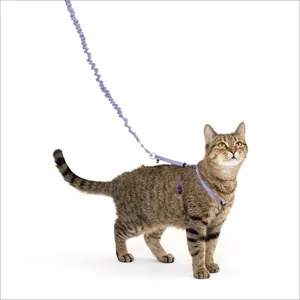
Verdict: The affordable H-style pick for owners testing the waters without overspending.
Mini-spec: nylon H-style harness with two quick-snap buckles, included bungee (stretchy) leash, sizes Small (9 to 11-in chest), Medium (10.5 to 14-in), and Large (13 to 18-in). Rating: about 4.1 stars, with the most popular variant carrying 1,838-plus reviews.
The Come With Me Kitty is the budget choice and the classic H-style harness, the figure-eight of straps that loops the neck and chest with an adjustable bar across the back. What sets it apart at this price is the bungee leash, which has stretch built in so a sudden dash does not yank your cat to a hard stop. Two quick-snap buckles make it easy to get on, and it adjusts at four points to dial in that snug fit. It hovers right at the 4.0-star line, and the reason is simple: a loose H-style is the easiest type to escape, so fit is everything here.
- Pros: Inexpensive and widely available, the bungee leash softens sudden lunges, four-point adjustment for a custom fit.
- Pros: Quick-snap buckles make it fast to put on a cooperative cat.
- Cons: H-style is the easiest design to back out of if it is even slightly loose.
- Cons: Thin straps offer less coverage and security than a vest for nervous cats.
Best for: budget-minded owners trying leash walking for the first time with a calm, cooperative cat.
Travel Cat The Pathfinder Reflective Harness with GPS Tracker Pocket: Best for Anxious & Adventurous Cats
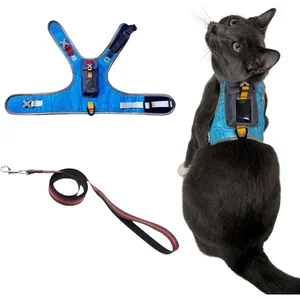
Verdict: The pick for nervous escape-risk cats and serious adventure cats who go off the beaten path.
Mini-spec: reflective vest-style harness with a secure clear pocket sized for a GPS tracker (tracker not included), matching 6-foot leash, Small fits 14 to 16-in chest with larger sizes available. Rating: about 4.1 stars across reviews. Note: this is a newer release, so confirm the live Chewy review count before publishing.
The Pathfinder stands out for one feature no other pick has: a built-in clear pocket that holds a small GPS tracker like the Tractive Cat Mini. That is huge peace of mind for an anxious cat who might bolt, because if your cat ever does slip free, you can actually find it. The vest gives broad coverage that helps timid cats feel secure, and the reflective trim keeps your cat visible in low light. It is more harness than a beginner needs, but for adventure cats and worriers, the tracker pocket is the whole point.
- Pros: GPS tracker pocket adds real recovery insurance if your cat escapes, broad vest coverage reassures anxious cats, reflective for low-light walks.
- Pros: Comes with a matching 6-foot leash, ready for the trail out of the box.
- Cons: The GPS tracker is sold separately, so budget for that too.
- Cons: As a newer product, it has fewer reviews than the established picks here.
Best for: anxious cats with a flight risk and committed adventure-cat owners.
How to Choose the Right Cat Harness
The right cat harness comes down to style, fit, and your cat’s temperament. Here is how to weigh the factors that actually change your walks.
H-style vs vest vs jacket: which shape is right?
Cat harnesses come in three main shapes, and the shape matters more than the color. An H-style harness (also called a figure-eight) uses thin straps that form an H or 8 around the neck and chest with an adjustable back bar. It is light and cheap, but it is the easiest type for a cat to back out of. A vest harness covers more of the chest and shoulders with fabric or mesh, spreading pressure wider and making escape harder. A jacket harness covers even more of the body, almost like a little coat, which gives the most security and the snuggest “hugged” feeling for nervous cats. For most cats, a vest or jacket beats an H-style on escape resistance.
Getting the fit right: the two-finger rule
A correctly fitted cat harness lets you slide two fingers between the straps and your cat’s body, and no more than two. Measure your cat’s girth around the chest just behind the front legs, then match it to the size chart instead of eyeballing it. Too loose and a startled cat reverses out in a heartbeat. Too tight and it restricts breathing or chafes. When you are between sizes, size down and use the adjusters.
How escape-proof does it really need to be?
No cat harness is truly 100% escape-proof, so treat “escape-proof” as “escape-resistant” and lean on fit. A wide vest or jacket with multiple secure closures, like the Kitty Holster, is the hardest to slip out of. If your cat has already escaped one harness, skip the thin H-style entirely and go straight to full coverage. Then keep your cat on a short leash and stay behind it, because cats escape by backing up.
Material, comfort, and visibility
Soft mesh and cotton sit best against fur and skin, especially for cats with allergies, and they breathe better in warm weather. Reflective trim is worth it if you walk at dawn, dusk, or after dark. Lightweight builds suit kittens and small cats who fuss at anything heavy. And quick closures, whether buckles or Velcro, save you a wrestling match every single outing.
Common Cat Harness Mistakes to Avoid
A few mistakes turn cat walking from fun into a fiasco, and they are easy to dodge once you know them.
- Buying it too loose: The single biggest mistake. A harness you can fit a hand under is an escape waiting to happen. Snug to two fingers, always.
- Clipping the leash to the collar: Never walk a cat off a collar. A sudden pull on a collar can injure the neck. The leash clips to the harness, period.
- Going straight outside: Skipping indoor acclimation overwhelms most cats. Let your cat wear the harness indoors first, for short, happy, treat-filled sessions, before you ever open the door.
- Leaving a harnessed cat unattended: A tied-up or unsupervised cat can tangle, panic, or get hurt. Stay with your cat the whole walk.
- Forcing a cat that hates it: Some cats simply never enjoy leash walking, and that is okay. If your cat freezes, flops, or stays stressed after patient training, let it go.
How to Acclimate Your Cat to a Harness
Acclimating a cat to a harness is a slow, treat-powered process, and rushing it is why most attempts fail. Take it in stages and let your cat set the pace.
- Introduce the harness: Leave it near your cat’s food and bed for a few days so it smells safe. Reward any sniff or touch with a treat.
- Put it on, briefly: Drape and fasten the harness, then immediately give treats and play. Start with just a minute or two.
- Build up indoor wear: Over several days, let your cat wear it longer around the house. Pair it with meals so the harness predicts good things.
- Add the leash indoors: Clip on the leash and let your cat drag it, then practice gentle indoor walks. Stay behind your cat and keep the leash short.
- Step outside: Only when your cat is relaxed indoors, try a quiet, enclosed outdoor spot. Keep the first trips short and calm, and end on a good note.
If your cat freezes or flops at any stage, that is normal at first. Back up a step, slow down, and never drag a frozen cat forward.
Walking a cat safely takes patience: the ASPCA and International Cat Care both stress slow, treat-led introductions.
Frequently Asked Questions About Cat Harnesses
Q: What is the best cat harness?
The best cat harness overall is the Best Pet Supplies Voyager Step-in Air, a soft mesh step-in vest that is easy to put on and holds a 4.6-star rating across tens of thousands of reviews. For escape artists, the Kitty Holster wrap vest is the hardest to slip out of. The right harness for your cat is one that fits snug and covers enough chest to prevent escape.
Q: Are cat harnesses really escape-proof?
No cat harness is 100% escape-proof, so think of them as escape-resistant. The most escape-resistant designs are wide vest or jacket styles with multiple secure closures, like the Kitty Holster. The biggest factor is fit, not features. A snug harness fitted to the two-finger rule is what actually keeps a startled cat from backing out.
Q: How tight should a cat harness be?
A cat harness should be snug enough that you can slide only two fingers between the straps and your cat’s body. More than two fingers and a frightened cat can reverse out of it. Less than two and it may restrict breathing or chafe. Measure your cat’s chest girth behind the front legs and match the size chart for the best fit.
Q: H-style vs vest harness, which is better for cats?
A vest harness is usually better than an H-style for cats because it covers more of the chest and is much harder to escape. H-style (figure-eight) harnesses are lighter and cheaper but easiest to back out of. Vest and jacket harnesses spread leash pressure wider and give nervous cats a more secure, hugged feeling, which is why they suit escape artists and anxious cats.
Q: Can I attach the leash to my cat’s collar instead of a harness?
No, never walk a cat by clipping the leash to a collar. A sudden pull on a collar concentrates force on the cat’s neck and can injure the throat or windpipe. A harness spreads that force across the chest and shoulders, which is far safer. Collars are for holding ID tags, while harnesses are for walking.
Q: At what age can a kitten start wearing a harness?
Kittens can start gentle harness acclimation around 8 to 12 weeks, once they are settled into your home and confident. Use a small, lightweight harness like the Travel Cat True Adventurer in its XS size. Keep early sessions short, indoors, and full of treats. Kittens often adapt faster than adult cats, but you may need to size up as they grow.
Q: Why does my cat flop over when I put the harness on?
Cats flop over in a harness because the unfamiliar pressure and weight confuse them, a reaction sometimes called learned helplessness or simply freezing. It is common and usually passes with patient, gradual acclimation. Build up wear time indoors with treats, and never drag a flopped cat forward. Most cats start walking normally once the harness feels safe.
Q: Is it safe to leave a cat outside in a harness?
No, never leave a harnessed cat unattended outdoors, even briefly. A tied-up or unsupervised cat can tangle the leash, panic, climb and get stuck, or be threatened by dogs or traffic. Always stay with your cat for the entire walk, and bring your cat back inside the moment it seems stressed.
The Bottom Line on the Best Cat Harness
The best cat harness for most cats in 2026 is the Best Pet Supplies Voyager Step-in Air, an easy-on mesh vest that keeps pressure off the neck and tolerates well across tens of thousands of reviews. If your cat is a proven escape artist, spend up for the Kitty Holster wrap vest instead, since wide coverage is the closest you get to escape-proof. On a budget, the PetSafe Come With Me Kitty H-style does the job, as long as you fit it snug.
Whichever you choose, remember the two rules that keep your cat safe: walk on a harness fitted to the two-finger rule, never on a collar, and never leave a harnessed cat alone outside. Get the fit right, take acclimation slow, and you and your cat can enjoy the outdoors together, one calm step at a time.

Hello and welcome to The Ideal Cat!
We are some passionate cat owners from different professions. We love our cats and have a lot of experience in how to care for our pets. We are incredibly excited to share our knowledge, experience, and research with you. So you can take good care of your loving cat. We will answer most of the common questions about owning cats, taking care of them, etc. If you have any question contact with us. Thanks for visiting! Enjoy the content.
)