
Picture this: your cat knocks a glass of water off the counter, jumps back like it’s lava, then glares at the puddle as if it personally offended her. Sound familiar? Most cats treat water like a mortal enemy, so it’s fair to wonder if they’d even survive falling into a pool or a pond.
Here’s the good news. Cats are actually capable swimmers. They just don’t advertise it, because wading through a lake isn’t exactly their idea of a fun Saturday. Let’s get into why cats can swim, why most won’t, and which cats break every rule on this list.
- Cats can swim instinctively thanks to a natural paddling reflex, even if they’ve never been in water before.
- Most cats avoid water because their coat traps water and gets heavy, which drags them down and makes them cold.
- The Turkish Van is nicknamed the “swimming cat” and is known for wading and playing in shallow water.
- Bengal, Maine Coon, Turkish Angora, and Savannah cats are also more likely than average to tolerate or enjoy water.
- A cat that falls into a pool can usually swim to the edge, but exhaustion, cold, and slippery walls make an escape ramp or supervision important.
Can cats actually swim?
Yes, cats can swim, and they don’t need lessons to do it. Like most land mammals, cats are born with an instinctive paddling reflex called the mammalian diving reflex, which kicks in the moment their body hits water. Their legs start moving in a doggy-paddle motion almost automatically, even for a cat who has never touched water in her life.
Being able to swim and wanting to swim are two very different things, though. Swimming for a cat is a backup plan for survival, not a form of play. Think of it the way you might think of climbing a fence to escape a dog: you could do it if you had to, but you’re not signing up for fence-climbing as a weekend activity.
Why do most cats hate water so much?
Most cats avoid water because a wet coat becomes heavy, cold, and hard to move in, which triggers a deep sense of vulnerability. A soaked cat can’t run fast, can’t groom herself properly, and loses the layer of trapped air that normally keeps her warm. That combination feels genuinely unsafe to a cat’s brain, not just unpleasant.
A few other reasons stack on top of that discomfort:
- Evolutionary history: the domestic cat’s ancestor, the African wildcat, evolved in arid desert regions with little standing water, so there was never much evolutionary pressure to love swimming.
- Slow drying time: a cat’s coat isn’t built to shed water and dry fast the way a duck’s or an otter’s is, so being wet lingers uncomfortably.
- Loss of control: cats like to feel in charge of their body and their exits. Water takes both away, and that alone is enough to spook most of them.
- A bad early experience: a cat who once slipped into a bathtub or got dunked as a kitten often stays wary of water for life.
Cats also spend around a third of their waking hours grooming themselves, according to International Cat Care, and that grooming keeps natural oils spread through the coat to help it repel light moisture. Dunking a cat in water undoes all that careful upkeep in seconds, which is part of why the reaction is so dramatic.
Which cat breeds actually like water?
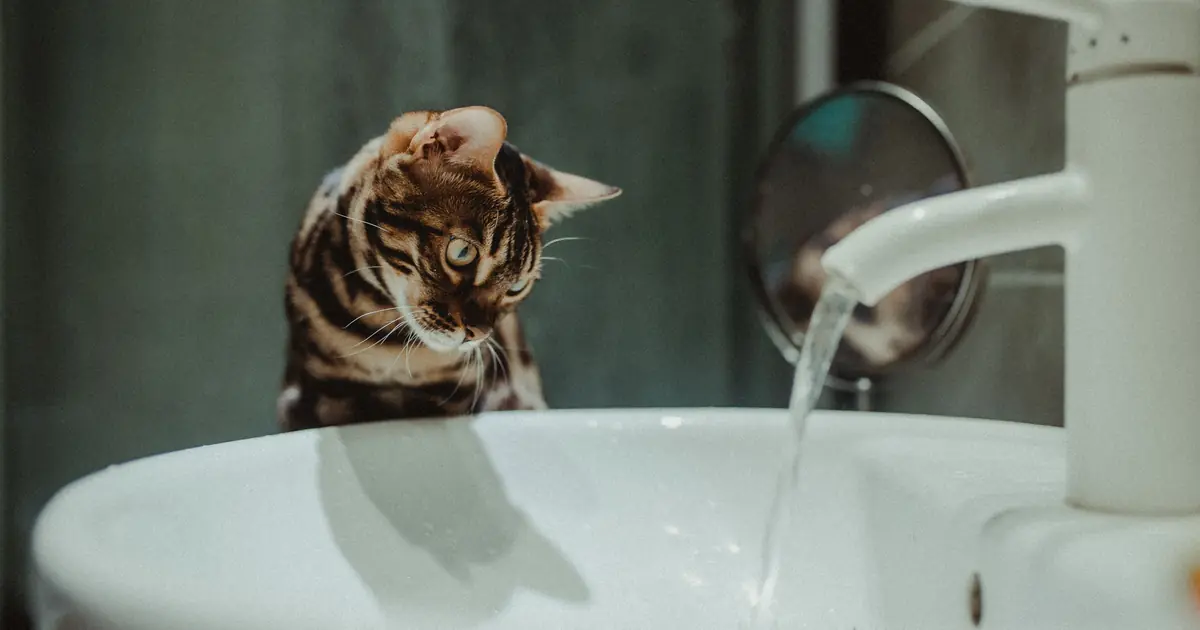
A small group of breeds genuinely enjoy water instead of merely tolerating it, and the Turkish Van tops that list. Bred near Lake Van in Turkey, the Turkish Van has earned the nickname “the swimming cat” for generations of wading, splashing, and paddling in shallow water for fun. Other breeds known for a stronger-than-average interest in water include the Bengal, Maine Coon, Turkish Angora, and Savannah.
| Breed or type | Typical attitude toward water |
|---|---|
| Average house cat | Avoids water, dislikes being wet, tolerates a bath at best |
| Turkish Van | Genuinely enjoys wading and swimming, nicknamed “the swimming cat” |
| Bengal cat | Curious about running water and puddles, sometimes joins owners in a shallow pool or on a boat |
| Maine Coon | Semi-water-resistant coat, often plays in the sink or tub, tolerates water well |
Why the difference? For the Bengal cat, a spotted or marbled coat pattern comes from a wild ancestor, the Asian leopard cat, which lived near streams and rivers and passed down a fascination with moving water. Bengals often paw at faucets and jump into sinks well before they ever try full-on swimming. The Maine Coon, one of the largest domestic breeds, carries a semi-water-resistant coat that developed to handle damp New England winters, which makes getting wet far less miserable for this breed than for most.
Is it safe for a cat to swim?
Swimming can be safe for a cat, but only briefly and only under close supervision. A short dip is usually fine for a healthy adult cat, but the risks climb the longer she’s in the water. Chlorine and other pool chemicals can irritate skin and eyes, cold water saps body heat fast, and a panicked cat can tire out or struggle to find a way out of a pool with steep, slippery sides.
Cats that have never swum before are also more likely to panic than paddle calmly, which burns energy fast and raises the risk of exhaustion. According to PetMD, a cat that once fell into a full bathtub and struggled to escape can develop a lasting fear of water from that single scary moment. That’s a good reminder that even a “safe” swim can turn into a bad memory fast if a cat can’t find her footing.
Should you ever put a cat in water on purpose?
Only put a cat in water when there’s a real reason, like a medicated bath prescribed by your vet, never for fun or to see what happens. Most healthy cats don’t need baths at all, since their own grooming keeps the coat clean. Exceptions include cats with skin conditions, cats who can’t groom well due to age or mobility issues, or cats who’ve gotten into something sticky or toxic that needs rinsing off right away.
If you do need to bathe a cat who hates it, go slow, use lukewarm water, keep sessions short, and never force her head under. If your cat turns bath time into a wrestling match every time, our guide on how to bathe a cat that hates water walks through a calmer, step-by-step approach. And if you’re curious why so many cats specifically flinch at cold water from the tap or a bowl, we cover that in our post on whether cats like cold water.
How do you keep a cat safe around pools and open water?
Keep cats safe around water by covering pools when not in use, blocking unsupervised access to ponds or hot tubs, and making sure there’s always an easy way out of any water a cat could fall into. A cat that tumbles into a pool can usually paddle, but steep tile walls with nothing to grip make it hard for her to climb back out, and panic sets in fast when she can’t find an exit.
A few habits go a long way:
- Use a pool cover or fence when the pool isn’t in use, especially overnight.
- Add a ramp or float near the pool edge if your cat has outdoor access, so there’s always a climb-out point.
- Keep the bathroom door shut around a full tub, and never leave a cat alone near a running faucet on a sink or tub filling up.
- Watch cats closely around ponds, creeks, or the ocean on outdoor adventures, since currents and cold water are a different challenge than a calm backyard pool.
The Vetstreet guide on water-loving breeds notes that even cats who enjoy splashing in a water bowl usually aren’t looking to fully submerge, so don’t assume a cat who likes puddles is ready for a swim.
What should you do if a cat falls into water?
If a cat falls into water, stay calm, help her find the fastest route out, and dry her off completely once she’s safe. Most cats will instinctively paddle toward the nearest edge, so lower a towel, a ramp, or your arm to give her something to grab onto or climb. Once she’s out, towel dry her thoroughly and keep her somewhere warm, since a wet coat pulls heat away from the body fast.
Watch for signs of shock or distress afterward, like excessive shivering, weakness, or trouble breathing, and call your vet right away if you see any of those. A single accidental dunk usually resolves with nothing more than a grumpy cat and a long grooming session, but it’s worth keeping an eye on her for the rest of the day just in case.
A quick safety note
This article is educational and not a substitute for advice from your veterinarian. Never throw a cat into water or leave one unsupervised near a pool, bathtub, or open water. Forcing a cat to swim can cause real panic, scratches or bites from a frightened cat, and physical injury from thrashing against a hard surface. Cold water and pool chemicals can also affect a cat’s skin and body temperature, so any swim should be brief, warm, and closely watched. If your cat shows ongoing fear, aggression, or health changes around water or bathing, talk to your vet.
Frequently Asked Questions
Q: Do cats know how to swim naturally, without being taught?
Yes. Cats have an instinctive paddling reflex, so a cat’s legs start moving in a swimming motion the moment she’s in water, even if she’s never swum before or had any practice.
Q: Why does my cat hate water so much?
Most cats hate water because a wet coat becomes heavy, cold, and slow to dry, which makes a cat feel vulnerable and out of control. This instinct traces back to the domestic cat’s desert-dwelling ancestors, who rarely encountered deep water.
Q: What is the “swimming cat” breed?
The Turkish Van is known as the swimming cat. This breed developed near Lake Van in Turkey and has a long-standing reputation for wading, splashing, and paddling in shallow water for fun, unlike most other cat breeds.
Q: Are Bengal cats good swimmers?
Bengal cats tend to be curious about water and often play in sinks, tubs, and puddles thanks to their wild ancestor, the Asian leopard cat. Many Bengals will wade or paddle in shallow water, though not every individual cat enjoys it.
Q: Can a cat drown if it falls into a pool?
A cat can drown if she can’t find a way out of the water, even though most cats can paddle instinctively. Steep pool walls with nothing to grip are the biggest risk, so a ramp or float near the edge gives a cat a real chance to climb out.
Q: Should I ever force my cat to swim?
No, never force a cat to swim or throw her into water to “help her get used to it.” Forced swimming causes panic, raises the risk of injury or exhaustion, and can create a lasting fear of water that makes future baths and vet visits harder.
Q: Do Maine Coon cats like water?
Maine Coons tend to tolerate and even enjoy water more than most breeds, thanks to a semi-water-resistant coat that developed to handle damp winters. Many Maine Coons play in sinks or tubs, though this varies by individual cat.
Q: What should I do if my cat accidentally falls in water?
Help your cat find the fastest way out using a towel, ramp, or your arm, then dry her off completely and keep her warm. Watch for shivering, weakness, or breathing trouble afterward, and call your vet if anything seems off.

Hello and welcome to The Ideal Cat!
We are some passionate cat owners from different professions. We love our cats and have a lot of experience in how to care for our pets. We are incredibly excited to share our knowledge, experience, and research with you. So you can take good care of your loving cat. We will answer most of the common questions about owning cats, taking care of them, etc. If you have any question contact with us. Thanks for visiting! Enjoy the content.
