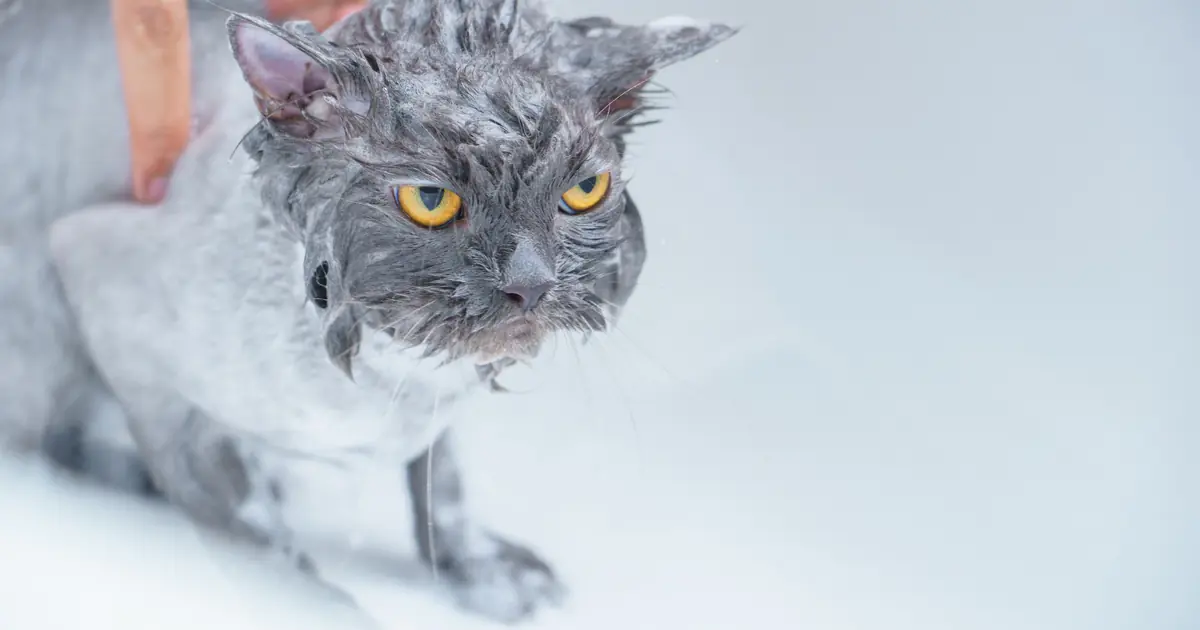
If you’ve ever watched your sweet cat turn into a wet, yowling octopus the second a paw touches water, you already know the fear. Learning how to bathe a cat that hates water feels less like grooming and more like a wrestling match. The good news is that most cats almost never need a full bath, and when yours does, a calm step-by-step plan makes it far safer for both of you.
- Most healthy cats self-groom and rarely need a bath; the ASPCA notes cats keep themselves clean on their own.
- Cat baths should not happen more than every 4 to 6 weeks, since over-bathing dries out a cat’s skin and coat.
- Use lukewarm water around 100°F (38°C) and only cat-specific shampoo; human and dog shampoo can irritate a cat’s skin.
- A nonslip mat, 3 to 4 inches of water, a calm voice, and avoiding the face make a bath far less scary for a cat that hates water.
- Waterless cat shampoo and cat grooming wipes are safe, low-stress alternatives when a full bath isn’t worth the panic.
Does your cat actually need a bath?
Most healthy cats do not need regular baths, because cats are expert self-groomers that keep their own coats clean. A cat spends a big chunk of its waking hours licking and grooming, which spreads natural oils and removes loose dirt and fur. So before you brave the tub, ask whether a bath is truly needed or whether a quick spot-clean will do.
A cat genuinely needs a bath in a handful of situations:
- Your cat got into something sticky, greasy, smelly, or possibly toxic that it shouldn’t lick off.
- Your cat is a long-haired or senior cat that can no longer groom every spot, leading to grease or mats.
- Your cat is a hairless breed like the Sphynx, which builds up skin oils and often needs regular bathing.
- A vet recommended a medicated bath for fleas, allergies, or a skin condition.
- Your cat is overweight or arthritic and can’t reach its lower back, belly, or rear.
If none of those apply, a healthy indoor cat may go its whole life without a single bath. When you do bathe, keep it rare. Vets generally advise bathing a cat no more than every 4 to 6 weeks, since washing too often strips natural oils and dries out the skin.
Why do cats hate water so much?
Cats hate water mostly because their coats aren’t built for it and getting wet feels deeply uncomfortable to them. Unlike dogs, domestic cats descended from desert-dwelling ancestors that rarely encountered deep water, so they never evolved a love of swimming. A wet cat coat soaks up water, gets heavy, takes a long time to dry, and leaves a cat feeling cold and out of control.
A few specific things make bath time stressful for water-averse cats:
- Heavy, slow-drying fur: a cat’s coat absorbs water and takes ages to dry, which feels unpleasant and chilly.
- Sensitive whiskers: whiskers are packed with nerve endings, so a wet face is overstimulating and unsettling.
- Loss of control: being held in slippery water removes a cat’s ability to flee, which triggers panic.
- Unfamiliar sounds: running taps, sprayers, and dryers are loud and threatening to a cat.
Understanding why cats hate water matters, because it tells you how to lower the stress: keep the face dry, give solid footing, work fast, and stay calm and quiet throughout.
What do you need before you bathe a cat that hates water?
Before you bathe a cat that hates water, gather every supply within arm’s reach so you never have to leave a wet, frightened cat to grab something. A scrambling cat plus a missing towel is how people get scratched. Set up the whole station first, then bring in your cat.
Here’s your bath-day checklist and what each item does.
| Supply | Why it matters |
|---|---|
| Cat-specific shampoo | Matches a cat’s skin pH; human and dog shampoo can dry out or irritate cat skin. |
| Nonslip mat or folded towel | Gives secure footing so your cat doesn’t slip and panic in the tub or sink. |
| 2 to 3 towels | One under the mat, the rest for wrapping and drying afterward. |
| Plastic pitcher or cup | Lets you pour gentle, controlled rinses without a loud sprayer. |
| Washcloth | Cleans the face safely without splashing water near the eyes and ears. |
| Cotton balls (optional) | Can gently keep water out of the ear canals if your cat tolerates them. |
| Treats | Reward calm behavior before, during if possible, and right after. |
Pick a small space like a bathroom sink or a closed bathroom, not a big open tub in an echoey room. A snug space helps a nervous cat feel less exposed and gives you fewer escape routes to chase.
Use a shampoo made for cats, never human or dog shampoo, since a cat’s skin pH is different.
Burt’s Bees Hypoallergenic Cat Shampoo
This is a gentle, pH-balanced cat shampoo made with shea butter and honey, with no added fragrance, sulfates, or colorants. The mild formula suits cats with sensitive or itchy skin and rinses out easily, which keeps bath time shorter. Best for routine baths and cats prone to skin irritation.
How do you bathe a cat that hates water, step by step?
To bathe a cat that hates water, prep its coat first, use shallow lukewarm water on a nonslip surface, wash quickly with cat shampoo while keeping the face dry, then rinse and dry thoroughly. Working in this order keeps the bath short, which is the single best way to reduce a cat’s stress. Here are the 9 steps.
Step 1: Trim the claws a day or two ahead
Trim your cat’s claws one to two days before the bath to limit scratches if it panics. A bath is not the moment for sharp claws and a slippery, frightened cat. Doing it ahead of time keeps the two stressful events separate.
Step 2: Brush out the coat first
Brush your cat thoroughly before any water touches it, because wet fur tangles fast and mats tighten when they get wet. Brushing removes loose hair and any small knots so the shampoo can reach the skin. If you find a mat, deal with it before the bath, not after.
Step 3: Pick a calm moment and set up everything
Schedule the bath when your cat is naturally mellow, ideally after a good play session that’s burned off some energy. Lay the nonslip mat in the sink or tub, line up your towels, pitcher, washcloth, and shampoo, and close the door. A tired cat in a fully prepped room is your best-case scenario.
Step 4: Add 3 to 4 inches of lukewarm water
Fill the sink or tub with only 3 to 4 inches of lukewarm water before you bring your cat in. Aim for around 100°F (about 38°C), close to a cat’s body temperature, so it’s neither chilly nor hot. Test it on the inside of your wrist; it should feel comfortably warm, never hot.
Step 5: Lower your cat in gently and talk softly
Bring your cat in calmly and lower its back legs into the water first, holding it securely but gently. Keep a soft, steady voice the whole time, since a reassuring tone helps a scared cat settle. If you’ve got a helper, one person can support the cat while the other washes.
Step 6: Wet and shampoo the body, never the face
Wet your cat from the neck down using the pitcher, then massage in cat shampoo from head to tail in the direction of the fur. The ASPCA suggests diluting cat shampoo about 1 part shampoo to 5 parts water so it spreads and rinses out easily. Keep water and suds well away from the eyes, ears, and nose.
Step 7: Clean the face with a damp washcloth
Clean your cat’s face with a damp washcloth instead of pouring water over it, because a wet face is what most cats hate most. Use plain lukewarm water on the cloth and wipe gently around the cheeks and chin. Skip the eyes and the inside of the ears entirely.
Step 8: Rinse until the water runs completely clear
Rinse your cat fully with clean lukewarm water until no shampoo residue remains. Leftover shampoo irritates the skin and makes the coat sticky, so rinse longer than you think you need to. Pour slowly down the body and check the belly, armpits, and base of the tail.
Step 9: Wrap, towel dry, and keep your cat warm
Lift your cat straight into a dry towel and wrap it like a gentle burrito to soak up the worst of the water. Pat, don’t rub, then swap to a second dry towel. Keep your cat in a warm, draft-free room until it’s fully dry, since a damp cat gets cold and uncomfortable fast.
When should you stop the bath and try something else?
Stop the bath immediately if your cat is in genuine distress, gasping, hissing nonstop, or scratching and biting hard enough to hurt you. A bath is never worth a serious injury to you or a panic attack for your cat. Wrap your cat in a towel, let it calm down, and switch to a no-water method instead.
Watch for these signs that it’s time to abort and regroup:
- Open-mouth breathing, drooling, or frantic, exhausted struggling.
- Aggression that puts you at real risk of deep scratches or bites.
- A cat that goes limp and shut-down rather than calm.
If your cat reacts this strongly every time, a professional groomer or your vet’s team can bathe it more safely, and a vet can rule out pain or anxiety that’s making things worse. There’s no shame in handing a panicked-cat bath to the pros.
Educational note: this guide isn’t a substitute for your vet
This article is educational and not a replacement for advice from a licensed veterinarian. If your cat needs a bath because of fleas, a skin condition, a wound, or possible exposure to something toxic, call your vet first. Get same-day veterinary help if your cat has been covered in a chemical, motor oil, antifreeze, or any substance it may have swallowed while grooming, since some of these are medical emergencies.
What if your cat truly won’t tolerate water?
If your cat truly won’t tolerate water, you can keep it clean with no-water options like waterless cat shampoo and cat grooming wipes. These low-stress alternatives handle most everyday dirt, light grease, and dander without a single drop in the tub. For many water-hating cats, a no-water routine is the realistic, kinder long-term answer.
| No-water option | Best for | How to use |
|---|---|---|
| Waterless (dry) cat shampoo | Light dirt, oily spots, freshening a full coat | Massage foam or spray into the coat, then towel off or brush through; use only cat-formulated products. |
| Cat grooming wipes | Paws, rear, quick spot-cleaning, dander | Wipe in the direction of the fur; choose unscented, cat-specific wipes. |
| Damp washcloth | Faces, small messes, daily touch-ups | Wipe gently with plain lukewarm water, avoiding eyes and ears. |
| Regular brushing | Long-haired cats, shedding, oil distribution | Brush several times a week to spread natural oils and prevent mats. |
One safety note on wipes: stick to wipes made for cats. Many human and baby wipes contain fragrances or ingredients that aren’t meant for a cat that licks its coat, so cat-specific wipes are the safer pick. When in doubt, a plain damp washcloth is always fine.
How do you make the next bath less scary?
You can make future baths less scary by slowly getting your cat used to the bathroom, water sounds, and being handled, well before a real bath day. Cats relax around things that feel familiar and predictable. A little desensitization over days or weeks turns a nightmare bath into a merely annoying one.
- Let your cat hang out in the bathroom with treats so the room feels safe, not scary.
- Run the tap at low volume nearby and reward calm behavior so the sound stops meaning danger.
- Touch and gently hold your cat’s paws and body during normal cuddles to build handling tolerance.
- Place your cat on the nonslip mat in a dry, empty sink with treats so the surface feels normal.
- Practice the towel wrap now and then so being bundled up isn’t a fresh surprise on bath day.
Go at your cat’s pace and never force a step. The whole point of learning how to bathe a cat that hates water is to lower the fear over time, so each bath gets a little easier and a lot safer for both of you.
Frequently Asked Questions
Q: How often should you bathe a cat that hates water?
Bathe a cat no more than every 4 to 6 weeks, and most healthy indoor cats need far fewer baths than that, often none. Cats self-groom and keep their own coats clean, so bathing too often dries out their skin. Bathe only when your cat is genuinely dirty, greasy, or your vet advises it.
Q: Can I use human shampoo or dog shampoo on my cat?
No, you should not use human shampoo or dog shampoo on a cat. A cat’s skin has a different pH, and human or dog products can dry out, irritate, or harm your cat, especially since cats lick their coats afterward. Always use a shampoo made specifically for cats.
Q: What water temperature is right for a cat bath?
Lukewarm water around 100°F (about 38°C) is right for a cat bath, since that’s close to a cat’s natural body temperature. Test it on the inside of your wrist; it should feel comfortably warm and never hot or cold. Cold water will make a water-averse cat panic faster.
Q: How do I dry a cat that hates water after a bath?
Dry a cat by wrapping it snugly in a towel and patting, then swapping to a second dry towel, all in a warm, draft-free room. Most cats prefer towel drying to a noisy blow dryer. If you use a dryer, only use the lowest, coolest setting, hold it at least 12 inches away, and stop if your cat is scared.
Q: Are baby wipes safe to clean my cat?
Baby wipes are not the safest choice for cats, because many contain fragrances or ingredients not meant for an animal that licks its fur. Use cat-specific grooming wipes instead, which are formulated for feline skin. For a quick clean, a plain damp washcloth is always a safe option.
Q: How do I bathe a cat by myself without getting scratched?
To bathe a cat alone safely, trim its claws a day or two ahead, prep all supplies first, and use a nonslip mat for secure footing. Work quickly, keep a calm voice, and hold your cat gently but securely from behind. If it panics badly, stop the bath and switch to a waterless option.
Q: Do indoor cats ever need a bath?
Most indoor cats rarely or never need a bath, since they stay clean through self-grooming and don’t get exposed to outdoor messes. An indoor cat may need a bath if it gets into something sticky or toxic, develops a skin issue, or can’t groom itself due to age, weight, or arthritis.
Q: Can I just spray my cat down with water instead of a full bath?
Spraying a cat down is usually a bad idea, because a sprayer’s sound and sensation often scare water-averse cats more than gentle pouring. For most cats, a pitcher of lukewarm water or a no-water method like waterless shampoo or grooming wipes is calmer and just as effective for everyday cleaning.
Learning how to bathe a cat that hates water really comes down to two things: only bathe when you truly need to, and keep every bath short, warm, and calm. Trim, brush, use lukewarm water and cat shampoo, protect the face, rinse fully, and dry your cat warm. And when water just isn’t worth the panic, waterless shampoo and cat wipes keep your water-hating cat clean and your bond intact.

Hello and welcome to The Ideal Cat!
We are some passionate cat owners from different professions. We love our cats and have a lot of experience in how to care for our pets. We are incredibly excited to share our knowledge, experience, and research with you. So you can take good care of your loving cat. We will answer most of the common questions about owning cats, taking care of them, etc. If you have any question contact with us. Thanks for visiting! Enjoy the content.
