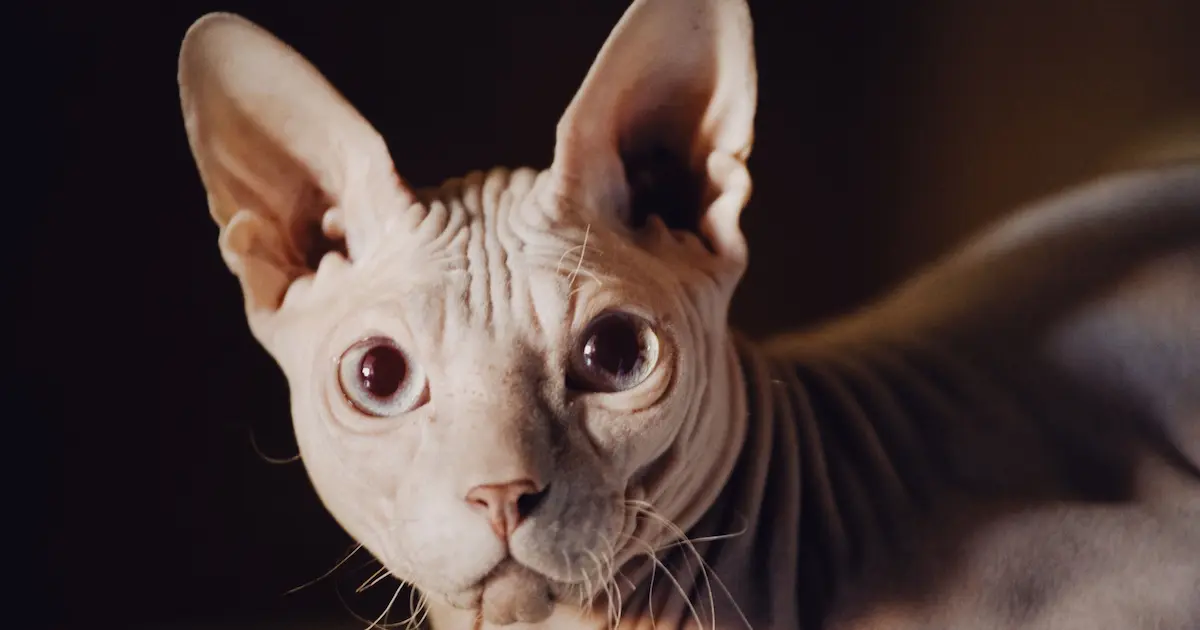
Picture this. You sit down with a cup of coffee, and within ten seconds a warm, wrinkly, suede-skinned cat has climbed into your lap, pressed itself against your stomach, and started purring like it owns the place. Welcome to life with a Sphynx cat.
People fall for the Sphynx because of the look. The big ears, the bare skin, the wrinkly little face that looks part alien and somehow circles all the way back to adorable. Then they bring one home and discover the look was never the point. The personality is. And so is the maintenance.
Here’s the thing nobody tells you at the kitten viewing: a Sphynx is not a low-effort cat just because it doesn’t shed all over your couch. It’s a velcro companion with oily skin, a fast metabolism, a real risk of heart disease, and a budget to match. This guide gives you the honest version, the warm parts and the hard parts, so you know exactly what you’re signing up for.
| Origin | Canada, 1960s |
| Weight (Male) | 8 to 12 lbs |
| Weight (Female) | 6 to 8 lbs |
| Lifespan | 9 to 15 years |
| Coat | Nearly hairless, fine downy fuzz |
| Colors | Any color or pattern (shown in the skin) |
| Energy Level | Moderate to High |
| Grooming Needs | High (yes, really) |
| Good With Kids | Yes |
| Good With Other Pets | Yes |
| Average Price | $1,800 to $3,500 from breeders |
Where Did the Sphynx Cat Come From?
Despite the Egyptian-sounding name, the Sphynx is Canadian through and through. The breed traces back to 1966 in Toronto, when a regular black and white house cat gave birth to a litter that included one hairless kitten. That kitten was named Prune, and he kicked off the whole story.
Hairlessness here is a natural genetic mutation, not something invented in a lab. It rides on a recessive gene, which is why Prune’s early litters were a mix of furry and bare kittens. Breeders later crossed these cats with the Devon Rex to widen the gene pool and strengthen the breed’s health.
The name nods to the ancient Egyptian Sphinx statues, all smooth lines and watchful poise. The Cat Fanciers’ Association, TICA, and Europe’s FIFe all recognize the Sphynx today as an established breed with a full standard. So while the look feels ancient and exotic, the modern Sphynx cat is barely older than your grandparents.
What a Sphynx Actually Looks Like (Hint: Not Bald)
Run your hand over a Sphynx and you’ll be surprised. They’re not slick or rubbery. Most are covered in a fine, downy fuzz that feels like warm suede or a peach. Truly hairless ones exist, but a soft haze is more typical.
Here’s a fun detail. A Sphynx still has a coat color, you just see it in the skin instead of the fur. The pigment maps out whatever pattern the cat would have worn. You’ll find solid black Sphynx, pink-toned whites, tabby-striped skin, tortoiseshell, and two-tone cats. The wrinkles, which gather around the shoulders, muzzle, and between the ears, are part of the charm.
Body-wise, think medium and sturdy. Males usually run 8 to 12 pounds, females a touch smaller. They’re more muscular than they look, with a round little pot belly, long toes, and those famous oversized ears. Whiskers are often sparse or missing entirely, which matters more than it sounds (more on that later).
Kittens look even more wrinkled than adults because they have growing to do before the skin catches up. A Sphynx isn’t fully filled out until around two to three years old, so that gangly teenage stage lasts a while.
Living With a Sphynx: The Personality Nobody Warns You About
If you want an aloof cat that ignores you, keep scrolling. The Sphynx is the opposite. These cats are famous for being clingy in the best and most demanding way, and one large owner survey even ranked them among the friendliest cat breeds out there.
People call them dog-like, and it fits. Your Sphynx will follow you room to room, greet you at the door, learn its name, and happily ride around on your shoulder. Many will play fetch, and most will try to help with whatever you’re doing, whether you asked or not.
They’re also heat-seeking missiles. With no fur to trap warmth, a Sphynx is always hunting for the coziest spot, which is usually you, under a blanket, pressed to your skin. Trust me, you will share your bed.
The flip side of all that love is that they hate being alone. A Sphynx left by itself for long days can get bored, lonely, and a little destructive. They’re smart, they’re busy, and they need company and stimulation. Some owners get a second cat just so their Sphynx has a friend during work hours.
Is a Sphynx Cat Right for You?
This is the section most breed sites skip, and it’s the most useful one. A Sphynx is a wonderful cat for the right person and a frustrating mismatch for the wrong one. Be honest with yourself here.
A Sphynx is a great fit if you:
- Are home a lot, or have other pets to keep one company
- Want a deeply affectionate, interactive companion
- Don’t mind regular skin care and the occasional bath
- Can keep your home comfortably warm
- Have room in the budget for heart screening and good food
A Sphynx is probably the wrong choice if you:
- Work long hours and travel often
- Want a hands-off, independent cat
- Run a cold house or love an open window in winter
- Are on a tight budget for vet care
- Expected hairless to mean low-maintenance (it really doesn’t)
None of this is meant to scare you off. It’s meant to make sure that if you get one, you both end up happy.
Sphynx Health Issues: The Honest Version
Most Sphynx cats are robust and live full, happy lives. But this breed carries a few real health risks, and one of them is serious enough that you need to understand it before you buy. Let’s go through them plainly.
Hypertrophic cardiomyopathy (the heart issue that matters)
Hypertrophic cardiomyopathy, or HCM, is a thickening of the heart muscle that makes the heart work harder and pump less efficiently. Over time it can lead to heart failure, dangerous blood clots, or sudden death. In Sphynx cats it often shows up young, sometimes between two and three years old, though some cats don’t develop it until much later.
Here’s the part competitors get wrong. There’s a genetic variant linked to HCM in the Sphynx (it sits in a gene called ALMS1), and you’ll see breeders advertise that they test for it. Testing is good. But the science is messier than a simple yes or no. The variant is incredibly common in the breed, and plenty of cats carry it without ever getting sick, while some cats develop HCM without the variant at all. In other words, a clean genetic test does not promise a healthy heart.
HCM in this breed also follows a dominant pattern, which means a single copy of the variant can be enough to put a cat at risk. So what should you actually look for? Two things. A breeder who runs the genetic test, and a breeder whose breeding cats get regular heart scans (echocardiograms) from a veterinary cardiologist. The scan is what catches real, present-day disease. And if you own a Sphynx, annual heart checks as your cat ages are the smartest insurance you can buy.
Skin problems
No fur means the skin is exposed and busy. Sphynx cats make normal skin oils, but without a coat to soak them up, that oil sits on the surface and collects grime. This can lead to clogged pores, blackheads (yes, cat acne is real, usually on the chin and tail), and yeast infections in the warm folds, which often smell faintly sweet or musty. A skin condition called urticaria pigmentosa can cause crusty little sores in some cats too.
The good news is that most of this is manageable with a sensible routine, which we’ll cover next.
Dental disease
Sphynx cats are prone to gum disease and dental problems, partly because they groom constantly and their oily saliva builds up on the teeth. Get your cat used to tooth brushing early, and stay on top of dental checks.
Ear wax and kitten sniffles
With little to no hair inside the ears, wax builds up fast, so ears need regular cleaning. Sphynx kittens can also be a bit prone to respiratory infections while they’re small, which is one more reason to buy from someone who raises kittens carefully and doesn’t send them home too young.
A big appetite and the obesity trap
Because they burn so much energy staying warm, Sphynx cats eat more than most cats and have hearty appetites to match. That’s normal. But a hungry cat plus a generous owner can tip into weight gain, and extra pounds strain that already at-risk heart. Feed to a plan, not to the meow.
The Sphynx Skin-Care Routine (And Why Weekly Baths Might Be Wrong)
You’ve probably read that Sphynx cats need a bath every week. Here’s a more honest take: it depends, and over-bathing can backfire. Wash too often and you strip the skin’s natural barrier, which can push the skin to produce even more oil to compensate. That’s the opposite of what you want.
For most adult Sphynx cats, a bath every two to four weeks is plenty, with light wipe-downs in between. Some oily cats genuinely need more, some need less. Watch your individual cat and let their skin tell you. Lighter-colored Sphynx make it easy because you can literally see when they’re due.
Here’s a simple, kind routine:
- Bathing: lukewarm water, a gentle fragrance-free cat shampoo, quick and calm, then dry thoroughly so your cat doesn’t get cold.
- Between baths: wipe the oily spots (chin, paws, tail base, skin folds) with a damp soft cloth or unscented pet wipe.
- Ears: clean weekly with a vet-approved cleaner on a cotton ball, and never push anything into the ear canal.
- Nails: oil collects around the nail beds, so wipe and trim regularly.
- Laundry: wash their bedding and your shared blankets often, since oil transfers to fabric.
Two more things the fur-free life demands. Sun protection, because a Sphynx can sunburn right through a sunny window, so keep nap spots out of direct rays. And warmth, because they get cold easily. A heated bed, soft blankets, and yes, those tiny cat sweaters all help your cat stay comfortable.
Feeding a Sphynx: Why They Eat Like Linebackers
That fast metabolism we keep mentioning has a delicious side effect: Sphynx cats love to eat. They need more calories than a typical cat their size, simply to keep their body temperature up. A bit of a belly is normal and healthy on this breed, so don’t panic about the pudge.
Focus on a high-quality, protein-rich diet built around real animal protein, since cats are true carnivores. Many owners do well with a mix of wet and dry food, and fresh water should always be available. If your cat’s skin seems extra oily, it’s worth chatting with your vet about diet, because nutrition and skin health are linked.
The balancing act is portion control. Big appetite plus free feeding can lead to obesity, and excess weight is hard on the heart and joints. Measure meals, go easy on treats, and weigh your cat now and then to catch any creep early.
How Much Exercise and Play Does a Sphynx Need?
Sphynx cats are little athletes. They climb, they leap, they sprint around the house at midnight for no reason at all. Plan on a couple of good play sessions a day with wand toys, balls, and puzzle feeders to keep that clever brain busy.
Give them vertical space too. A tall cat tree or some wall shelves near a warm, sunny (but not scorching) window will be a favorite hangout. Because they need protecting from cold, sunburn, and the dangers of the outdoors, Sphynx cats should live as indoor cats. The upside is that an enriched indoor home keeps them safe and happy, and keeps you entertained.
Sphynx Cats With Kids, Dogs, and Other Cats
This is one of the most sociable cats you can own, which makes the Sphynx a strong pick for busy households. They generally adore kids and thrive on the attention, though as with any cat, teach children to be gentle and to respect the cat’s space.
Dogs? Usually no problem. That confident, dog-like temperament means many Sphynx cats happily live with friendly dogs and even seem to enjoy the company. Other cats are typically a yes as well, especially since a second pet helps with their fear of being alone. Always do slow, proper introductions, but the odds are good. Honestly, the bigger your happy chaos, the better a Sphynx tends to like it.
How Long Do Sphynx Cats Live? Plus Aging Tips
With good care, Sphynx cats commonly live somewhere in the range of 9 to 15 years, and plenty reach the upper end of that. Their lifespan runs a touch shorter than some breeds, largely because of the heart risk we talked about, which is exactly why screening matters so much.
As your Sphynx moves into the senior years, lean into prevention. Keep up annual (or twice-yearly) vet visits, ask about heart checks, watch their weight, and stay on top of dental and skin care. Older cats feel the cold even more, so extra warm bedding becomes a real kindness. Catch problems early and you give your cat the best shot at a long, comfortable life.
What Does a Sphynx Cat Really Cost?
Let’s talk money, because the kitten price is only the beginning. A Sphynx kitten from a reputable breeder usually runs from about $1,800 to $3,500, and rare colors or top show lines can climb higher. If you see a Sphynx going for a couple hundred dollars, treat that as a warning sign, not a bargain.
The ongoing costs are where people get caught off guard. Here’s a realistic picture for a healthy Sphynx:
- Food: more than the average cat, thanks to that metabolism
- Skin and grooming supplies: gentle shampoo, wipes, ear cleaner
- Heating and cozy gear: sweaters, heated beds, the occasional bump in your heating bill
- Vet care: routine visits plus cardiac screening, which adds up
- Pet insurance: well worth considering for a breed with known heart risk
None of it is wild, but it’s more than a typical short-haired cat. Go in with a budget that includes the surprises, and you’ll never resent the bills.
Are Sphynx Cats Cruel to Breed? The Welfare Debate
This is a conversation most breed guides won’t touch, and you deserve to know it exists. The Sphynx is a polarizing cat. Some people see a loving, unique companion. Others argue that breeding a cat to be hairless creates avoidable problems.
The concerns are real and worth understanding. Many Sphynx have few or no whiskers, and whiskers help a cat sense and navigate the world. The lack of a coat means trouble regulating body temperature, a genuine risk of sunburn and skin cancer, more yeast infections, and ears that need constant cleaning. Because of all this, some regions have started restricting hairless breeds. The Netherlands, for example, moved in late 2025 to limit breeds whose looks come at a welfare cost, and a German court once ruled against breeding a whiskerless Sphynx.
You don’t have to land firmly on one side to be a responsible owner. But you should go in with your eyes open. If you choose a Sphynx, commit to the care these cats genuinely need, and support breeders who put health and temperament ahead of novelty. That’s the honest middle ground.
Where to Find a Sphynx Cat Ethically
Where you get your Sphynx matters more with this breed than most, because of the heart and skin issues. A good breeder is worth the wait and the price.
Look for a breeder who:
- Screens breeding cats for HCM with both genetic tests and heart scans
- Lets you meet the kittens and see how they’re raised
- Keeps kittens until they’re at least twelve to fourteen weeks old
- Provides a health guarantee and is happy to answer hard questions
- Is registered with a body like CFA or TICA
Walk away if you see:
- No proof of any health screening
- Kittens offered very young or very cheap
- Pressure, secrecy, or refusal to show you the home
- Big upcharges for “rare” colors used as the main selling point
One scam to watch for: shaved cats sold as Sphynx. It has genuinely happened, where a regular kitten is shaved or plucked to look hairless and sold at a premium. A real Sphynx feels like warm suede, not stubble, and a trustworthy breeder will have the paperwork to prove the breed.
And don’t rule out rescue. Sphynx cats do turn up in breed-specific rescues and occasionally in shelters. Adopting an adult means you skip the wild kitten phase and often get a cat whose health and personality are already known.
Similar Breeds to Consider
Love the idea of a Sphynx but not totally sure? A few other breeds scratch a similar itch:
- Devon Rex: a little pixie-faced cat with soft, wavy fur and the same playful, people-loving energy.
- Cornish Rex: curly-coated, low-shedding, slim, athletic, and very affectionate.
- Peterbald: an elegant hairless or partly hairless breed from Russia, sweet and graceful.
- Donskoy (Don Sphynx): another hairless cat, sturdy and friendly, with a different genetic background.
- Bambino: a short-legged cousin of the Sphynx for anyone who wants hairless plus tiny.
Common Sphynx Myths, Busted
Myth: Sphynx cats are hypoallergenic. Sadly, no. Allergies come mostly from a protein called Fel d1 in a cat’s saliva and skin, not from fur, and a hairless cat still makes it. Some allergy sufferers do react less to a Sphynx, but there’s no guarantee, so spend time with one before committing.
Myth: hairless means low-maintenance. The exact opposite. You trade brushing and shedding for baths, wipe-downs, ear cleaning, and warmth management. It’s hands-on grooming, just a different kind.
Myth: they’re from Egypt. Pure marketing magic. The name nods to Egyptian statues, but the breed was born in 1960s Canada.
Myth: they’re always freezing and fragile. They do feel the cold and need warm spaces, but a well-cared-for Sphynx is an energetic, sturdy little athlete, not a delicate flower.
Myth: they’re dirty cats. Not at all. The visible oil is just skin doing its job without fur to hide it. With a simple routine, your Sphynx stays clean and comfy.
Sphynx Cat FAQ
Q: Are Sphynx cats hypoallergenic?
No. The main cat allergen, Fel d1, comes from saliva and skin rather than hair, so a hairless Sphynx still produces it. Some people with mild allergies tolerate them better, but always test your own reaction in person first.
Q: How much does a Sphynx cat cost?
Expect roughly $1,800 to $3,500 for a kitten from a reputable breeder, with rare colors and show lines costing more. Budget for ongoing costs too, including extra food, skin care, and heart screening.
Q: Do Sphynx cats really need baths?
Yes, because their skin oils have no fur to absorb them. Most adults do well with a bath every two to four weeks plus wipe-downs in between. Over-bathing can actually make the skin oilier, so don’t overdo it.
Q: How long do Sphynx cats live?
Most Sphynx cats live around 9 to 15 years with good care. Their lifespan is slightly shorter than some breeds, mainly due to heart disease risk, which makes regular cardiac checks important.
Q: Are Sphynx cats high-maintenance?
In care terms, yes. They need regular bathing, ear cleaning, warmth, more food, and heart monitoring. The trade-off is one of the most loving, interactive cats you’ll ever meet.
Q: Do Sphynx cats get cold?
They do. Without fur, they lose heat quickly and seek out warm spots constantly, usually your lap or your bed. Keep your home comfortable and offer cozy blankets, heated beds, and even cat sweaters.
Q: Are Sphynx cats healthy?
Generally they’re robust, but the breed is prone to hypertrophic cardiomyopathy (a heart condition), plus skin, dental, and ear issues. Buying from a breeder who screens for heart disease makes a real difference.
Q: Are Sphynx cats good pets for families?
Very much so. They’re social, playful, and tolerant, and they tend to love kids and get along with dogs and other cats. They do best in homes where someone is around often, since they hate being left alone.
Final Verdict: Should You Get a Sphynx?
If you’ve made it this far, you already know the Sphynx cat isn’t a casual pick. It’s a warm, wrinkly, deeply affectionate companion that asks for real commitment in return: baths and skin care, a cozy home, a bigger food bowl, and a watchful eye on that heart.
For the right person, it’s one of the most rewarding cats on the planet. A Sphynx will love you with its whole, hairless heart, follow you everywhere, and turn an ordinary day into something a little funnier and a lot snugglier. If you can give one the care and the budget it needs, you’ll never want another kind of cat.
So be honest about your lifestyle, choose your breeder with care, and go in with open eyes. Do that, and a Sphynx cat just might be the best, oddest, most loving decision you ever make.

Hello and welcome to The Ideal Cat!
We are some passionate cat owners from different professions. We love our cats and have a lot of experience in how to care for our pets. We are incredibly excited to share our knowledge, experience, and research with you. So you can take good care of your loving cat. We will answer most of the common questions about owning cats, taking care of them, etc. If you have any question contact with us. Thanks for visiting! Enjoy the content.
