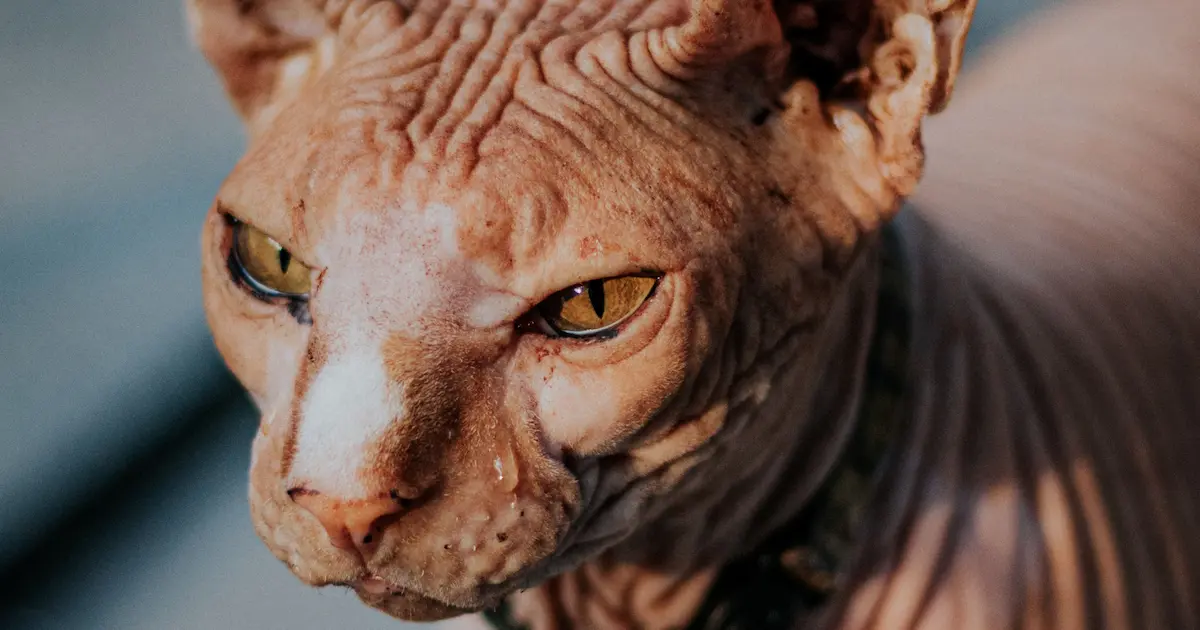
Picture this. You sit down after a long day, and before you’ve even kicked your shoes off, a warm, wrinkly little body has climbed into your lap and pressed itself against your chest like a tiny heater. That’s a Donskoy. People expect a hairless cat to feel cold and strange. Instead you get something that feels like a warm suede hot water bottle with opinions.
The Donskoy, also called the Don Sphynx or Russian Hairless, is one of the most affectionate cats you’ll ever share a home with. They follow you room to room, chat at you, and flop on your keyboard the second you look busy.
Here’s the thing though: that bald skin comes with a care list most breed sites gloss over. So before you fall head over heels, let’s walk through what living with a Donskoy cat is really like, the good and the honestly-kind-of-demanding.
| Origin | Russia (Rostov-on-Don), late 20th century |
| Weight (Male) | 9 to 15 lbs |
| Weight (Female) | 6 to 9 lbs |
| Lifespan | 12 to 15 years |
| Coat | Hairless (four types: rubber bald, flocked, velour, brush) |
| Colors | Skin shows blue, black, red, cream, and more |
| Energy Level | High |
| Grooming Needs | High (skin care, not fur care) |
| Good With Kids | Yes |
| Good With Other Pets | Yes |
| Average Price | $500 to $2,500 (US), more for show lines |
Where the Donskoy Came From
The whole breed traces back to one rescued kitten, which is a pretty wild origin story for a cat.
Back in the late 1980s in the Russian city of Rostov-on-Don, a professor named Elena Kovaleva came across a group of boys tormenting a kitten on the street. She took the little one home and named her Varvara. Within a few months, Varvara started losing her fur in patches.
Naturally, everyone assumed something was wrong. Kovaleva tried treatment after treatment to get the coat back, but nothing worked. The hair was simply not coming back, and at the time nobody understood why.
The mystery cleared up when Varvara had a litter. Some kittens were born bald, and the ones born with fur soon shed it just like their mom. That was the clue: this wasn’t a disease. It was genetic, and it was passing straight down the family line.
A professional breeder named Irina Nemikina took one of those kittens and started a careful breeding program. She’s the person who shaped the modern breed. She called it the Don Sphynx, after the nearby Don River and its resemblance to the already-famous Sphynx. The World Cat Federation recognized it in the 1990s, and The International Cat Association followed in 2005, registering it as the Donskoy.
One quick note worth remembering: the Donskoy later became the building block for another breed, the Peterbald, which was created by crossing a Donskoy with Oriental-type cats. So this rescued street kitten didn’t just start one breed. She helped launch two.
What a Donskoy Actually Looks Like
The first thing people notice is the skin. It’s soft, warm, and covered in those signature wrinkles, especially around the face, neck, and front legs. Run your hand over one and it feels a bit like warm, slightly tacky suede. They tend to run hotter than furred cats, so they really do feel like a living heating pad.
Body-wise, the Donskoy is medium-sized and surprisingly muscular under all that loose skin. They’ve got a wedge-shaped head, big wide-set ears, almond eyes with a slight slant, and long, slender toes that are webbed and almost finger-like. Those toes let them grab and hold things in a way that genuinely surprises new owners.
Here’s a detail that throws people: many Donskoys have no whiskers, or only short broken ones. It’s part of the same hairless package.
The Four Coat Types (and Why They Matter to You)
“Hairless” isn’t one single look. The Donskoy comes in four recognized coat types, and knowing the difference helps you understand what you’re actually bringing home.
- Rubber Bald: Born totally bald and stays that way for life. The most “classic” hairless look.
- Flocked: Looks bald but has a faint, soft fuzz like a peach. The fuzz often fades over time.
- Velour: Born with a bald patch on the head and a wavy coat that mostly disappears within the first year.
- Brush: Has a wiry, wavy coat that only partly sheds out, so these cats keep more fur than the others.
One thing that catches owners off guard: some Donskoys grow a thin bit of fuzz in winter and shed it again when it warms up. So your “hairless” cat might get slightly fuzzy in January. It’s normal, and kind of charming.
Living With a Donskoy: The Personality
If you want an aloof, do-its-own-thing cat, close this tab now. The Donskoy is the opposite of that.
These cats are intensely people-focused. They want to be wherever you are, doing whatever you’re doing. Cooking? There’s a cat supervising. Working? There’s a cat on the keyboard. Sleeping? There’s a cat burrowed under the blanket against your side, because remember, they get cold.
People compare them to dogs a lot, and for once it’s not just marketing fluff. They’re loyal, they learn fast, and many will play fetch or come when called. They’re also chatty, so expect commentary throughout your day.
The flip side is real and you should hear it now. A Donskoy left alone for long stretches gets lonely and stressed. This is not a cat for someone who works twelve-hour days and travels often. If your home is empty a lot, you’d be doing the cat a kindness by getting a second pet for company, or by choosing a more independent breed.
Is a Donskoy Right for You?
Let’s be honest with each other. This breed is a joy for the right person and a struggle for the wrong one. Run yourself through this quick gut-check.
A Donskoy is a great fit if you:
- Are home a lot, or have other pets to keep it company
- Love a cat that’s involved in everything you do
- Don’t mind a weekly skin-care routine and the occasional bath
- Keep your home comfortably warm
- Want a playful, trainable, sociable companion
You might want to reconsider if you:
- Travel constantly or are away for long days
- Want a hands-off, independent cat
- Got a hairless cat purely because you think it’s allergy-free (more on that myth below)
- Keep a cool home and don’t want to manage temperature
- Have a tight budget for ongoing care
Health Issues to Know About
Donskoys are generally sturdy cats, but the same gene that makes them special is also the one to understand carefully. This is the part I really want you to read.
The Donskoy’s hairlessness comes from a dominant gene. That’s a key difference from the Sphynx, whose baldness comes from a recessive gene. In plain terms, a dominant gene passes on more easily, which makes the breed easy to propagate but introduces a specific risk.
When a kitten inherits two copies of that gene (the homozygous form), it can develop feline ectodermal dysplasia. This can affect more than fur. It’s linked to poor teeth, trouble with sweat glands, and reduced ability to nurse in mother cats. This is exactly why a responsible breeder pairs their cats thoughtfully, and it’s the single biggest reason to never buy from a careless one.
A few other things to keep on your radar:
- Hypertrophic cardiomyopathy (HCM): a heart condition seen across many breeds, where the heart muscle thickens. Reputable breeders screen for it, and you should ask about it.
- Dental problems: dental issues are common, partly tied to that same gene. Regular brushing and cleanings matter more here than with the average cat.
- Skin troubles: sunburn, dryness, and oil buildup are all on the table. Bathe too much and the skin overproduces oil; bathe too little and it gets grimy. Finding the balance is the game.
- Temperature sensitivity: no fur means no insulation. They chill easily in cold and burn easily in strong sun.
None of this should scare you off. It should just make you a smart, prepared owner.
Grooming and Skin Care: The Part Nobody Warns You About
Funny thing about hairless cats: people assume zero fur means zero grooming. It’s actually the reverse.
A furred cat’s coat soaks up the natural oils its skin produces. A Donskoy has no coat to do that job, so the oil just sits on the skin and collects dust, lint, and grime. Skip the upkeep and you’ll find your cat leaving little greasy smudges on your nice white duvet.
Your routine will look something like this:
- Weekly wipe-downs with a gentle, pet-safe cloth to lift oil and debris
- Occasional baths with a mild cat shampoo, not too often or you’ll trigger more oil
- Ear cleaning, because those big open ears collect wax fast
- Nail trims on a regular schedule
- Sun protection, using shade and pet-safe sunscreen for any sunbathing spots
- Warmth, meaning sweaters, heated beds, and cozy blankets for the cold months
It’s not hard work, but it is consistent work. Think of it as a small weekly ritual rather than a chore, and both of you will be happier.
Feeding and Diet
Here’s a fact that surprises new owners: a Donskoy often eats more than a furred cat its size. Their bodies run warm, and keeping that internal furnace going burns extra calories, especially in cooler weather.
Go for a high-quality, protein-rich food with real meat like chicken or fish near the top of the ingredient list. Cats are obligate carnivores, so protein isn’t optional, it’s the backbone of the diet.
Match the food to their life stage, since kittens, adults, and seniors all have different needs. And watch portions as they age. Even an active breed can put on weight when the activity slows down later in life. Keep treats to a sensible share of daily calories and always have fresh water available.
Exercise and Enrichment
This is a high-energy, high-intelligence cat, which is a fun but demanding combination. A bored Donskoy will invent its own entertainment, and you may not love its choices.
Plan for daily active play. Wand toys, balls, puzzle feeders, and a tall cat tree all help burn energy and keep that clever brain busy. Their grabby, webbed toes mean they actually enjoy toys they can hold and manipulate.
Picture this: you set up a simple puzzle feeder before work, and instead of a sulky cat by the door, you come home to one that’s been happily problem-solving for treats. That’s the difference enrichment makes with this breed.
Living With Kids, Dogs, and Other Cats
Good news here. The Donskoy’s social, easygoing nature makes it one of the more adaptable breeds for a busy household.
They generally do well with respectful children, and their playful streak means they often enjoy the attention. As always, teach kids to handle gently, and give the cat a high perch to retreat to when it wants quiet time.
They also tend to get along with dogs and other cats, often bonding quickly once introductions are done properly. Go slow with new pets, use scent swapping first, and let everyone meet on their own terms. A Donskoy’s friendliness actually works in your favor during these introductions.
Lifespan and Aging Tips
With good care, Donskoys typically live 12 to 15 years. Plenty reach the upper end and beyond when their health is well managed.
As your cat ages, a few things help a lot. Keep up with vet visits so issues like heart or dental trouble get caught early. Support aging joints with a warm, soft sleeping spot. Adjust portions as activity drops to prevent weight gain. And keep that skin and warmth routine going, since older hairless cats feel the cold even more.
How Much Does a Donskoy Cost?
Donskoys aren’t cheap, and the rarity is a big reason why. In the US, kitten prices usually land somewhere between $500 and $2,500, with show-quality and rare-color lines climbing higher. Some breeders who include extended health guarantees price well above that.
But the sticker price is just the start. Budget realistically for:
- Initial vaccinations, deworming, microchipping, and spay or neuter
- Regular vet checkups and dental cleanings
- Quality food (and a bit more of it than average)
- Skin care supplies, sweaters, and heated beds
- An emergency fund, because hairless breeds can need extra vet attention
A red flag worth burning into your memory: a suspiciously cheap “Donskoy” usually means corners were cut on health testing and parent care. With a dominant gene that carries real risks, those corners can become your heartbreak and your vet bills later.
Where to Find a Donskoy Ethically
Because they’re rare, you’ll most likely go through a breeder rather than a shelter. That makes choosing the right one everything.
A good breeder will happily show you health screening results, let you meet or video-call the parents, raise kittens inside the home rather than in cages, and ask you plenty of questions in return. They’ll talk openly about the homozygous gene risk and how they pair their cats to avoid it. They won’t rush you or pressure a deposit.
Walk away if a breeder dodges health questions, won’t show you the living conditions, has kittens always available on demand, or prices well below the norm. Those are the signs of someone breeding for profit, not for healthy cats.
And do check rescues and breed-specific groups too. Donskoys occasionally turn up when an owner couldn’t manage the care or the allergy situation didn’t work out. Adopting one of those cats is a wonderful thing to do.
Donskoy vs. Sphynx, and Similar Breeds
People mix up the Donskoy and the Sphynx constantly, so let’s settle it. They look alike but they’re genetically different breeds. The Sphynx is hairless because of a recessive gene; the Donskoy because of a dominant one. Donskoys also tend to have more wrinkled skin and webbed, grabby toes, while the Sphynx skin feels a touch more like soft chamois.
If the Donskoy isn’t quite your match, here are a few alternatives worth a look:
- Sphynx: the famous hairless cat, similarly affectionate, with no dominant-gene concern.
- Peterbald: the Donskoy’s elegant relative, more slender and Oriental in build.
- Cornish Rex: not hairless, but a short, curly, low-shed coat with the same playful, clingy energy.
- Oriental Shorthair: chatty and people-obsessed like the Donskoy, but fully furred.
Common Myths and Misconceptions
This breed attracts more myths than most, so let’s clear the big ones.
“Donskoys are hypoallergenic.” This is the big one, and it’s false. No cat is truly hypoallergenic. The allergen is a protein called Fel d 1, found in saliva and skin secretions, not in fur itself. A Donskoy still produces it. Some allergy sufferers do react less to hairless cats since there’s no fur flinging the protein around, but “less” is not “none.” Always spend real time with the breed before committing if allergies are your reason.
“Hairless means low maintenance.” Already covered, but worth repeating. No fur actually means more skin care, not less.
“They’re related to wild Sphinxes or some exotic cat.” Nope. The name just nods to the Egyptian Sphinx statue’s bald look. The Donskoy is an ordinary domestic cat with an extraordinary gene.
“Hairless cats are cold and sickly.” They feel warm, not cold, and they’re generally healthy when bred and cared for well. The “sickly” idea comes from that original assumption about poor Varvara, which turned out to be wrong.
Frequently Asked Questions
Q: Are Donskoy cats hypoallergenic?
No. They still produce the Fel d 1 allergen in their saliva and skin. Some people with mild allergies tolerate them better than furred cats since there’s no shedding fur, but they are not allergy-proof.
Q: Is a Donskoy the same as a Sphynx?
No, they’re separate breeds. The Donskoy’s hairlessness comes from a dominant gene and originated in Russia, while the Sphynx’s comes from a recessive gene and originated in Canada.
Q: How much does a Donskoy cat cost?
In the US, expect roughly $500 to $2,500 from a breeder, with show-quality or rare-color kittens costing more. The rarity of the breed drives the higher prices.
Q: Do Donskoy cats need a lot of grooming?
Yes, just not fur grooming. Their skin produces oil that has no coat to absorb it, so they need regular wipe-downs, occasional baths, ear cleaning, and sun and cold protection.
Q: Are Donskoy cats good with children and other pets?
Generally yes. They’re highly social and playful, which makes them adaptable to families, dogs, and other cats when introductions are done gradually and gently.
Q: How long do Donskoy cats live?
Typically 12 to 15 years with good care. Regular vet visits, dental care, proper warmth, and a quality diet all help them reach the upper end of that range.
Q: Why does my Donskoy feel so warm?
Hairless cats tend to run a higher body temperature, and without fur there’s nothing between their warm skin and your hand. It also means they get cold easily and often eat more to fuel that warmth.
Q: Do Donskoy cats have health problems?
They’re generally healthy but can be prone to dental issues, skin and sun sensitivity, and HCM. The dominant hairless gene can also cause ectodermal dysplasia in its homozygous form, which is why ethical breeding matters so much.
Final Verdict: Should You Get a Donskoy?
The Donskoy is a remarkable cat, and I don’t say that lightly. It’s loyal in a way that feels almost canine, endlessly affectionate, clever, and genuinely fun to share a home with. That warm little body pressing into you at the end of the day is something owners fall hard for.
But it asks for a lot in return. Your time, your attention, a steady skin-care routine, a warm home, and a willingness to source your kitten responsibly. This is not a cat you can admire from a distance. It’s a cat that wants to live your life with you.
If that sounds like exactly what you’ve been missing, the Donskoy cat might just be the most rewarding companion you’ll ever have. Go meet one in person, ask the breeder the hard questions, and trust your gut. The right hairless wonder is worth every bit of the effort.

Hello and welcome to The Ideal Cat!
We are some passionate cat owners from different professions. We love our cats and have a lot of experience in how to care for our pets. We are incredibly excited to share our knowledge, experience, and research with you. So you can take good care of your loving cat. We will answer most of the common questions about owning cats, taking care of them, etc. If you have any question contact with us. Thanks for visiting! Enjoy the content.
