It’s 2am. You’re asleep. Somewhere near your face, a sound that lands halfway between a duck and a foghorn announces that your cat has thoughts. Loud ones. This is your introduction to life with an Oriental Shorthair.
People fall for this breed because of the look. Those enormous ears, the long legs, the green eyes that seem to read your mind. Then the cat moves in, and they discover they’ve adopted a chatty, clingy, scary-smart roommate who treats silence as a personal insult.
Here’s the thing: that’s not a warning to scare you off. For the right person, an Oriental Shorthair is the most devoted cat they’ll ever own. This guide tells you the whole truth so you can figure out if that person is you.
| Origin | England, 20th century (1950s–60s) |
| Weight (Male) | 9 to 12 lbs |
| Weight (Female) | 8 to 10 lbs |
| Lifespan | 12 to 15 years (often longer) |
| Coat | Short, fine, sleek, close-lying |
| Colors | Around 300 color and pattern combinations |
| Energy Level | High |
| Grooming Needs | Low |
| Good With Kids | Yes, with supervision |
| Good With Other Pets | Yes, with a proper slow intro |
| Average Price | $600 to $3,000 from breeders |
Where the Oriental Shorthair Came From
This is a fairly young breed with a very old family tree. The Oriental Shorthair was built by British breeders in the years after World War II, mostly through the 1950s and 1960s. The goal was simple and a little cheeky: take the famous Siamese body and personality, then free it from the rule that says it can only wear pointed colors.
To do that, breeders crossed Siamese cats with other shorthaired cats of the day. The result was a cat with the same elegant frame and big opinions, but in a rainbow of solid colors and patterns the Siamese was never allowed to have. Early members of the family included the solid-brown Havana and the Foreign White.
The breed reached the United States in the 1970s and caught on fast. Today it’s recognized by the major registries, including the Cat Fanciers’ Association, TICA, the Governing Council of the Cat Fancy in the UK, and FIFe in Europe. So while the cat looks like something out of an ancient Egyptian wall painting, it’s really a modern creation with roots that trace back through the Siamese to Thailand.
What an Oriental Shorthair Actually Looks Like
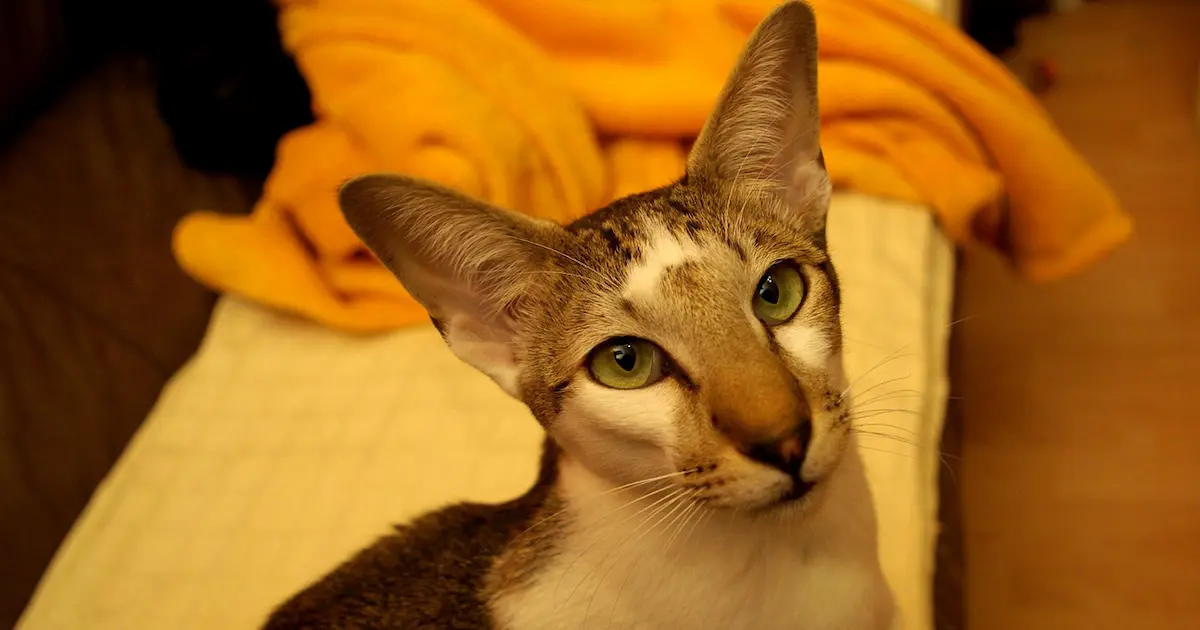
Picture a cat designed entirely out of triangles and you’re close. The head is a long wedge, the ears are huge and flare out like satellite dishes, and the eyes are almond-shaped and usually a striking green. The body is long, tubular, and surprisingly muscular under all that elegance.
The legs deserve their own paragraph. They’re long, fine, and a little comical, which is why owners affectionately call them things like “salad tongs.” When your cat stands up against the kitchen counter, it can reach places you’d swear were safe.
Now the fun part: the coat. Oriental Shorthairs come in roughly 300 color and pattern combinations, which is why fans nicknamed them “Ornaments” and the “Rainbow Cat.” You’ll find solid ebony, blue, lilac, cinnamon, fawn, and red, plus tabby, tortoiseshell, smoke, and bicolor patterns. The fur itself is short, fine, and lies flat against the body, so it feels less like fur and more like warm satin.
Kittens look like grown cats that someone shrank in the wash. The ears arrive first and seem two sizes too big, and the body fills out and lengthens over the first couple of years. They stay slim for life, so don’t panic when your adult cat feels feather-light. That’s the breed, not a problem.
Living With an Oriental Shorthair: The Personality
If you want a cat that ignores you and naps on a high shelf all day, keep scrolling. This is not that cat.
Oriental Shorthairs are intensely people-focused. They pick a favorite human (sometimes the whole household) and then attach themselves like a shadow. Your cat will follow you to the bathroom, supervise your cooking, sit on your keyboard during work calls, and curl up against your neck at night. Owners often describe them as “velcro cats,” and it’s an honest label.
They’re also genuinely brilliant. Many people rank them among the smartest cat breeds, and that intelligence cuts both ways. The good news is they learn tricks, play fetch, walk on a harness, and figure out puzzle feeders with ease. The bad news is they also figure out how to open cabinets, doors, and anything else standing between them and what they want.
Trust me, you’ll never be bored. These cats are mischievous in the way a clever toddler is mischievous. They knock things off tables to watch them fall, they redecorate your shelves, and they invent games you didn’t sign up for. A tired Oriental is a sweet Oriental, so the trick is keeping that big brain busy.
Let’s Talk About the Noise
Most breed guides mention that Oriental Shorthairs are “chatty” and move on. That’s like describing a fire alarm as “a sound.” You deserve the full picture before you commit.
These cats talk constantly, and not just with normal meows. Owners report a whole sound library: classic Siamese-style yowls, tiny squeaks, raspy “crispy” mews, baby-like cries, and a bizarre nasal noise that fans literally call a “honk.” Some kittens sound like a squeaky toy. Some adults sound like they’re arguing a court case.
They use all of this to comment on your life. Hungry? Honk. You left the room? Wail. You came back? A whole speech. You’re mopping the floor instead of paying attention to them? Expect a dramatic protest worthy of an opera.
Here’s my honest take: if you live in a thin-walled apartment, work night shifts, or simply crave a quiet home, this trait will wear on you. If you find a talkative cat charming and want a pet that “answers” you, you’ll love it. There’s no in-between, and you can’t train the voice out of them. It’s wired in.
Why Your Oriental Shorthair Is Always Cold
This one surprises almost every new owner, and you’ll rarely see it covered well. Put that short, thin coat together with a lean, low-fat body and you get a cat that gets cold easily.
You’ll notice the signs fast. Your cat burrows under blankets, hogs the warmest spot in the house, presses against radiators and space heaters, and climbs into your lap the second you sit down. That’s not just affection. Your cat is using you as a heater.
The good news is this is easy to manage. Keep a few cozy beds in sunny spots, offer a heated cat bed in winter, and don’t be shy about a soft sweater on truly cold days (yes, the sweater photos all over social media are partly practical). Just make sure your home doesn’t get too chilly while you’re out. Your cat will thank you by becoming an even bigger cuddler, if that’s somehow possible.
Is the Oriental Shorthair Right for You?
Let’s be real with each other. This breed is amazing for some homes and a genuine mismatch for others. Run yourself through this honest check before falling for those ears.
You’re a great match if you: work from home or have a flexible schedule, want a cat that’s deeply involved in your life, enjoy a talkative pet, can offer daily play and enrichment, and either have another pet for company or plenty of human traffic in the house.
You should think twice if you: are gone 10-plus hours a day, want an independent, low-maintenance cat, need a quiet home for sleep or work, get frustrated by neediness, or want a pet you can essentially leave alone for a weekend with a feeder.
That last point matters most. Oriental Shorthairs are prone to separation anxiety. A bored, lonely one can become destructive, depressed, or even more vocal (hard to imagine, but true). Many breeders suggest adopting two so they keep each other company, and honestly, that advice is worth taking seriously.
Health Issues to Watch For
Overall, this is a fairly hardy, long-lived breed. Still, because it shares a gene pool with the Siamese, it shares some of the same inherited risks. Knowing them helps you choose a responsible breeder and catch problems early.
Amyloidosis. This is the big one to understand. It’s an inherited condition where an abnormal protein builds up in organs, especially the liver and thyroid. Studies on Siamese and Oriental lines describe it as a serious, often fatal disease, with signs usually showing up between roughly 1 and 7 years of age. Watch for sudden tiredness, appetite loss, vomiting, or a swollen belly, and get to a vet quickly if you see them.
Progressive retinal atrophy (PRA). This causes gradual vision loss and can lead to blindness. There’s a genetic variant (linked to the CEP290 gene) tied to late-onset blindness, and one survey found it in about a third of Orientals tested. The upside is there’s now a DNA test, so good breeders screen for it.
Feline hyperesthesia syndrome. Cats with this become extra sensitive to touch along the back, with episodes of skin rippling, sudden agitation, frantic grooming, and vocalizing. It’s manageable with veterinary help once diagnosed.
Other things to know: the breed can be prone to asthma-style bronchial issues, dental crowding because of that narrow wedge-shaped head, flat-chested kitten syndrome in young litters, and the occasional heart concern. None of this should scare you off. It just means yearly vet visits and a health-tested breeder are non-negotiable.
Grooming and Care
Here’s where the breed gives you a break. That short, sleek coat is about as low-maintenance as cat fur gets.
A quick once-a-week brush with a soft rubber grooming mitt or a fine comb keeps the coat shiny and cuts down on the little hair they do shed. Many owners just use a damp hand to smooth the coat and pick up loose fur. Bathing is rarely needed.
Pay attention to two specific spots. Those giant ears collect wax and debris, so check and gently wipe them every week or two. And because of the dental crowding risk, brushing your cat’s teeth (or using vet-approved dental treats and regular cleanings) really pays off over a long life. Trim nails every couple of weeks and you’re basically done.
Feeding and Diet
Feed an Oriental Shorthair a high-quality, protein-rich diet built around real animal protein. Their lean, athletic bodies run hot and active, so they need good fuel, but portion control still matters. Because they’re so slim, weight gain shows up fast as a little belly hanging below those skinny legs.
Go easy on treats. These cats are smart enough to perform elaborate affection routines just to con you out of a snack, and the calories sneak up. A mix of wet and dry food works well, and fresh water should always be available.
One breed-specific heads-up: Asian-derived breeds, including this one, can be prone to pica, which is the urge to chew or swallow non-food items like wool, plastic, or string. It sounds quirky but it’s a real safety risk, since swallowed objects can cause poisoning or dangerous blockages. Keep tempting items out of reach, and call your vet if your cat starts eating things it shouldn’t.
Exercise and Enrichment
Remember that high energy and that big brain? You have to give them somewhere to go. An under-stimulated Oriental Shorthair becomes a tiny agent of chaos.
Daily interactive play is the baseline, not a bonus. Wand toys, feather teasers, and fetch sessions burn energy and strengthen your bond. Puzzle feeders and treat balls keep the mind working. Many of these cats happily learn to walk on a harness, which is a great outlet if you want to give yours safe outdoor time.
Give them vertical space, too. A tall cat tree or some wall shelves lets your cat climb, perch, and survey its kingdom, which it very much believes it rules. Indoors is the safest home for this trusting, people-loving breed, so make the indoors interesting.
Living With Kids, Dogs, and Other Cats
This is one of the most social cat breeds you’ll meet, which makes it a strong fit for busy, full households.
With kids, they’re playful and tolerant, and they often love the extra attention and activity. Just teach children to handle them gently, since the breed’s fine bones and slim build deserve respect. Supervise young kids the way you would with any cat.
With dogs and other cats, Orientals usually do beautifully, because they crave company and hate being alone. Do the introductions slowly and properly, give everyone their own space at first, and most of the time you’ll end up with a cat that has a whole crew of friends. In fact, a confident, friendly dog can be the perfect companion for the hours you’re away.
Lifespan and Aging Tips
With good care, you’re signing up for a long relationship. Oriental Shorthairs commonly live 12 to 15 years, and plenty sail past that into their late teens.
To get those extra years, lean into prevention. Yearly vet checks (twice yearly for seniors) catch issues early, especially given the breed’s inherited risks. Keep your cat lean, keep its teeth clean, and keep its mind engaged at every age.
As your cat gets older, watch for changes in appetite, weight, energy, or litter box habits, and mention anything new to your vet. Senior Orientals stay surprisingly playful, so keep offering gentle play and warm, easy-to-reach napping spots. Their love of being close to you never fades.
How Much Does an Oriental Shorthair Cost?
Let’s talk money, because this breed isn’t cheap and the surprises are usually ongoing, not just upfront.
From a reputable, health-testing breeder, expect to pay roughly $600 to $3,000, with show-quality or champion-line kittens climbing toward $3,500. Adoption through a rescue or shelter is far cheaper, usually $30 to $350, and that fee often includes spay/neuter and vaccines. The catch is that this breed is uncommon, so adoptable ones (especially kittens) can be hard to find and may require travel.
Then there’s the rest of life. Plan for ongoing costs like food, litter, and routine vet care, plus the occasional bigger bill, which can add up to somewhere around $120 to $500 a month depending on your choices. Pet insurance is worth a serious look here, given the breed’s inherited health risks.
Ethical sourcing red flags: a “breeder” with kittens always available, no health testing, no questions for you, no contract or health guarantee, prices that seem too good to be true, or anyone willing to ship a kitten with no vetting. Walk away from all of it.
Where to Find an Oriental Shorthair Ethically
You have two solid paths, and both can be great.
A responsible breeder is the most common route. Look for someone registered with a recognized body (like CFA or TICA), who screens their cats for conditions like PRA, lets you see where the kittens are raised, asks you plenty of questions, provides a health guarantee, and won’t release kittens before about 12 weeks. Good breeders often have a waitlist, and that’s a green flag, not an inconvenience.
Rescue is the other path, and it’s a wonderful one. Breed-specific rescues sometimes have Orientals or Siamese mixes who need homes, and general shelters occasionally do too. You may need patience and a willingness to travel, but giving an adult cat a second chance is deeply rewarding. Either way, prioritize health and ethics over speed or a bargain.
Similar Breeds to Consider
Not totally sure the Oriental Shorthair is your match? These cousins and look-alikes are worth a look:
- Siamese: The original. Same body, same big personality, same chatter, but limited to pointed colors.
- Oriental Longhair: Literally the same cat with a flowing, semi-long coat and a plume tail.
- Balinese: A long-haired Siamese, elegant and talkative, slightly softer in volume for some owners.
- Cornish Rex: Another slim, active, people-obsessed breed with a wavy coat and goofy charm.
- Devon Rex: Big-eared, playful, deeply bonded, and a good pick if you love quirky, dog-like cats.
Common Myths and Misconceptions
This breed collects myths the way it collects your attention. Let’s clear up a few.
“They’re hypoallergenic.” Nope. No cat truly is. Their short coat and lower shedding may bother some allergy sufferers a little less, but they still produce the Fel d 1 protein that triggers reactions. Spend time around one before assuming you’ll be fine.
“They’re an ancient Egyptian breed.” They look the part, but they’re a modern breed developed in England last century. The ancient vibe comes from the Siamese lineage and that statuesque shape.
“They’re aloof, like most cats.” The opposite is true. This is one of the most affectionate, attention-hungry cats you can own. Aloof is not in their vocabulary (and they have a large vocabulary).
“Short hair means no grooming and no shedding.” Low grooming, yes. Zero shedding, no. They drop a little hair year-round, they just hide it well.
Frequently Asked Questions
Q: Are Oriental Shorthair cats really that loud?
Yes, and then some. They’re among the most vocal cat breeds, with a wide range of sounds from yowls to honks to baby-like cries. They talk to communicate with you throughout the day, and you can’t train it away.
Q: Are Oriental Shorthairs hypoallergenic?
No cat is truly hypoallergenic, including this one. They shed less than long-haired breeds, which may help mildly, but they still produce allergy-triggering proteins. Always test your reaction in person first.
Q: How long do Oriental Shorthair cats live?
Most live 12 to 15 years, and many reach their late teens with good care. Regular vet visits and a healthy weight go a long way toward the upper end of that range.
Q: Do Oriental Shorthairs need a companion?
They strongly prefer company and are prone to separation anxiety. If you’re away for long hours, a second cat or a friendly dog can make a real difference to their happiness.
Q: How much does an Oriental Shorthair cost?
Expect roughly $600 to $3,000 from a reputable breeder, with champion lines higher. Adoption runs about $30 to $350 but availability is limited because the breed is uncommon.
Q: Why is my Oriental Shorthair always cold?
Their short, fine coat and lean, low-fat body don’t hold heat well. They seek out warm spots, blankets, and your lap. Heated beds and a cozy home help, and sweaters are fine on cold days.
Q: Are Oriental Shorthairs good with kids and dogs?
Generally yes. They’re highly social and often thrive in busy homes. Supervise young children because of the cat’s fine build, and introduce other pets slowly for the best results.
Q: What’s the difference between an Oriental Shorthair and a Siamese?
They share the same body type and personality. The main difference is color: Siamese wear pointed patterns only, while Oriental Shorthairs come in around 300 color and pattern combinations.
Final Verdict: Should You Get an Oriental Shorthair?
Here’s the honest bottom line. The Oriental Shorthair is not a low-effort cat, and it was never meant to be. It’s loud, it’s needy, it’s cold, and it will insert itself into every single thing you do.
It’s also one of the most loving, entertaining, and genuinely bonded companions in the cat world. If you’re home a lot, you want a pet that truly shares your life, and the sound of a honking cat makes you smile instead of sigh, you’ll adore this breed for 15 wonderful years.
If you need quiet and independence, choose another cat, and you’ll both be happier. But if everything above made you grin? Go meet one. That clingy, chatty shadow might be exactly the friend you’ve been looking for.

Hello and welcome to The Ideal Cat!
We are some passionate cat owners from different professions. We love our cats and have a lot of experience in how to care for our pets. We are incredibly excited to share our knowledge, experience, and research with you. So you can take good care of your loving cat. We will answer most of the common questions about owning cats, taking care of them, etc. If you have any question contact with us. Thanks for visiting! Enjoy the content.
