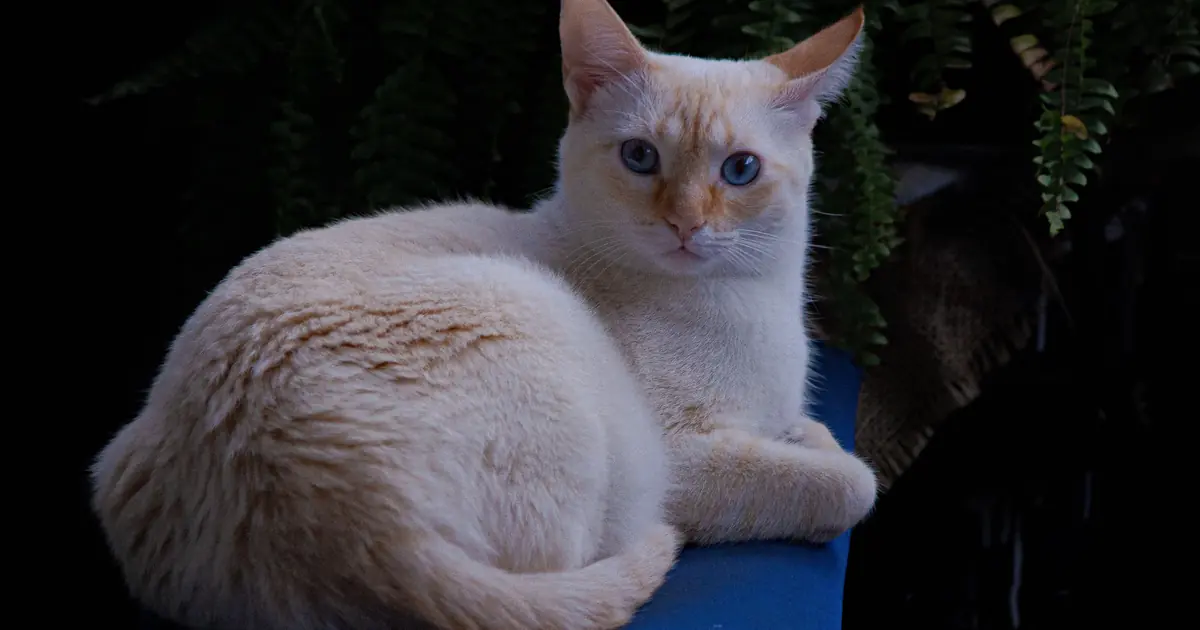
Picture a Siamese cat. The deep blue eyes, the dark points on the ears and paws, the running commentary on everything you do. Now add a soft, silky coat and a tail like an ostrich feather.
That’s a Balinese cat. Same brain, same big opinions, longer hair.
And here’s the surprise most people don’t expect: all that hair barely sheds. The Balinese is a genuinely beautiful long-haired cat that won’t bury your black sweater in fluff. If you’ve been quietly looking for a chatty, clever, velcro cat that’s a little easier on cat allergies, keep reading. This one might be your match.
- The Balinese is simply a long-haired Siamese, with the same body type, blue eyes, and color points.
- The four traditional Balinese colors recognized by the CFA are seal, blue, chocolate, and lilac point.
- Balinese cats have a single, silky coat with no thick undercoat, so they shed very little for a long-haired cat.
- Balinese cats are low-allergen, not non-allergenic. They produce less Fel d 1 but can still trigger allergies.
- This is a vocal, attention-hungry “velcro” breed that hates being left alone for long stretches.
- Balinese kittens from reputable breeders usually cost $800 to $2,000.
Balinese Cat Breed Stats at a Glance
Here’s the quick reference card on the Balinese cat. Use it to compare the breed against others you’re considering.
| Origin | United States, 1940s to 1950s (from long-haired Siamese) |
| Weight (Male) | 8 to 12 pounds |
| Weight (Female) | 6 to 10 pounds |
| Lifespan | 12 to 15 years (some reach 18 to 20+) |
| Coat | Single, silky, medium-long, no thick undercoat, plumed tail |
| Colors | Seal, blue, chocolate, and lilac point (traditional four) |
| Energy Level | High; active, playful, and curious |
| Grooming Needs | Low to moderate; weekly brushing |
| Good With Kids | Yes, great with respectful, gentle kids |
| Good With Other Pets | Yes, including cat-friendly dogs |
| Average Price | $800 to $2,000 from a reputable breeder |
Where Did the Balinese Cat Come From?
The Balinese cat started as a happy accident inside Siamese litters. Every so often, two short-haired Siamese parents produced a kitten with longer, silkier hair, thanks to a recessive gene riding along in the breed since Siamese cats first arrived in the West in the 1800s.
For decades, breeders treated these fluffy kittens as oddities and placed them as pets. Then, in the 1940s and 1950s, a few Siamese breeders in the U.S. (names like Marion Dorsey, Helen Smith, and Sylvia Holland come up again and again) decided these long-haired cats were too lovely to ignore. They started breeding them on purpose.
So why “Balinese”?
The name has nothing to do with the island of Bali. Breeder Helen Smith reportedly chose “Balinese” because the cats’ graceful movements reminded her of Balinese temple dancers. It just sounded prettier than “long-haired Siamese.” Honestly, hard to argue.
The Cat Fanciers’ Association (CFA) accepted the Balinese for championship competition in 1970, recognizing the four traditional Siamese colors. The International Cat Association (TICA) recognizes the breed too. We’ll get to the Javanese connection in a minute, because that’s where things get interesting.
What Does a Balinese Cat Look Like?
A Balinese cat looks like a Siamese that grew its hair out. Same long, slim, athletic body. Same wedge-shaped head, big ears, and those unmistakable deep blue almond eyes. The difference is the coat: medium-long, fine, and silky, finished off with a gorgeous plumed tail.
The coat and points
The Balinese coat is single-layered, meaning there’s no thick, woolly undercoat underneath. That’s why it lies flat against the body instead of poofing out, and why it sheds so little. The hair is longest on the tail, which fans out into that signature plume.
Like all pointed cats, Balinese are born almost pure cream or white. The color “develops” on the cooler parts of the body as they grow: the ears, face (the mask), legs, paws, and tail. The four traditional Balinese colors are:
| Color | What it looks like |
|---|---|
| Seal point | Pale fawn body with deep dark brown, almost black, points |
| Blue point | Bluish-white body with slate-gray points |
| Chocolate point | Ivory body with warm milk-chocolate points |
| Lilac point | Glacial white body with soft pinkish-gray points |
Kitten vs adult
Balinese kittens are slow growers. Most don’t reach their full adult size and coat until around 18 to 24 months. So a young Balinese can look surprisingly short-haired at first, with the full plume and longer body hair filling in over the first year or two. Patience pays off.
What Is the Balinese Cat’s Personality Like?
The Balinese cat is chatty, clever, affectionate, and almost comically devoted to its people. If you want a quiet, independent cat that does its own thing, this is not your breed. If you want a furry shadow that talks back, you’ve found gold.
They will talk to you. A lot.
Like their Siamese cousins, Balinese cats are vocal. They’ll greet you, comment on your cooking, and tell you exactly how they feel about the closed bathroom door. Most owners say the Balinese voice is a touch softer and sweeter than the Siamese yowl, but make no mistake: this cat has things to say, and it will say them.
Velcro cat energy
Balinese cats bond hard. They follow you room to room, supervise your laptop, and curl up against you at night. People call them “dog-like” for a reason. They greet you at the door, learn to fetch, and can even walk on a harness. That devotion is the best part of living with one. It’s also the catch: a bored, lonely Balinese can get clingy, loud, or mildly destructive.
Smart enough to outwit you
The Balinese is often called one of the smartest long-haired breeds. They learn tricks, open cabinets, and figure out puzzle feeders fast. Give that brain a job, or it’ll invent one (usually involving your countertops).
Is the Balinese Cat Right for You?
The Balinese cat suits people who are home a lot, love an interactive pet, and don’t mind a talkative companion. It’s a poor fit for someone who’s gone 12 hours a day and wants a low-key cat. Here’s the honest breakdown.
You’ll love a Balinese if you…
- Want a cat that’s genuinely involved in your life
- Enjoy training, play, and back-and-forth “conversation”
- Work from home or have another pet for company
- Want a striking long-haired look without the heavy shedding
Think twice if you…
- Need a quiet cat (the vocalizing is real)
- Are away from home most of the day with no other pets
- Want a cat that’s content being ignored
- Can’t commit to daily play and attention
Do Balinese Cats Have Health Problems?
Balinese cats are generally healthy and often long-lived, but they share some inherited conditions with the Siamese. The big ones to know are progressive retinal atrophy, amyloidosis, heart disease, and dental issues. None of this means your cat will get sick, but it’s worth knowing what to watch for.
This section is educational, not a diagnosis. Always work with a licensed veterinarian for your cat’s health, and ask any breeder about genetic testing in their lines.
| Condition | What to know |
|---|---|
| Progressive retinal atrophy (PRA) | An inherited eye disease that slowly causes blindness. Affected cats often show signs around 7 months and may lose sight by 3 to 5 years. A DNA test exists. |
| Amyloidosis | Abnormal protein builds up in organs, often the liver or kidneys. Seen in Siamese-related breeds. Severity varies widely. |
| Hypertrophic cardiomyopathy (HCM) | The most common feline heart disease, a thickening of the heart muscle. Manageable with medication when caught early. |
| Dental disease | Gingivitis and periodontal disease are common. Regular brushing and vet cleanings help a lot. |
| Respiratory sensitivity | The same lean, refined head shape that makes them elegant can come with mild upper-respiratory sensitivity in some lines. |
The good news: a reputable breeder screens for the conditions they can test for (PRA and HCM especially), and routine vet care catches most of the rest early. Watch for changes in vision, energy, appetite, breathing, or weight, and call your vet if anything seems off.
How Do You Groom a Balinese Cat?
Grooming a Balinese cat is refreshingly easy for a long-haired breed. Because they have a single coat with no dense undercoat, they rarely mat. A weekly once-over with a comb is usually all you need.
The weekly routine
- Comb once a week. Use a fine-tooth comb or soft slicker, paying attention to the tail plume, armpits, and behind the ears where stray tangles hide.
- Brush the teeth. Aim for a few times a week with cat-safe toothpaste to head off dental disease.
- Trim the nails. Every couple of weeks keeps them comfortable and your furniture safer.
- Check the ears. Wipe gently with a vet-approved cleaner if you see wax buildup.
A soft stainless steel cat comb works well on the fine Balinese coat without pulling. It’s the one tool most Balinese owners actually reach for.
What Should You Feed a Balinese Cat?
Feed your Balinese cat a high-quality, protein-rich diet built around real animal protein, since cats are obligate carnivores. There’s no special “Balinese formula” needed. A complete, balanced food appropriate for your cat’s life stage covers the bases.
Feeding tips that matter
- Protein first. Look for a named meat as the first ingredient.
- Watch the portions. Balinese are active, but they can still gain weight if free-fed all day. Measure meals.
- Mix in wet food. Extra moisture supports kidney and urinary health, which matters given the amyloidosis risk in the breed line.
- Fresh water always. A fountain often tempts these curious cats to drink more.
Talk to your vet about the right calorie target for your individual cat, especially as kittens, adults, and seniors all have different needs.
How Much Exercise Does a Balinese Cat Need?
Balinese cats need daily active play to burn off their high energy and busy minds. Two or three solid play sessions a day, plus things to climb and explore, keeps a Balinese happy and out of trouble.
These cats love a challenge. Wand toys, fetch, puzzle feeders, and clicker training all go over well. A tall cat tree gives them a perch to survey their kingdom, and many Balinese genuinely enjoy leash walks.
Here’s the thing: a Balinese without an outlet doesn’t get calmer. It gets louder. Mental stimulation isn’t optional for this breed, it’s the difference between a delightful companion and a frustrated one.
How Do Balinese Cats Do With Kids, Dogs, and Other Cats?
Balinese cats are social butterflies that usually do well with kids, cat-friendly dogs, and other cats. Their people-loving nature extends to the whole household, as long as introductions are calm and everyone respects the cat.
With kids
Balinese cats are playful and tolerant, which makes them a good fit for families with gentle children. Teach kids to handle the cat respectfully, and you’ve got a built-in playmate that fetches.
With dogs and other cats
Because Balinese hate being alone, a second pet can be a real gift, especially if you work outside the home. They generally get along with dogs that like cats and with other social cats. Go slow with introductions and let relationships build at their own pace.
How Long Do Balinese Cats Live, and How Do You Help Them Age Well?
Balinese cats typically live 12 to 15 years, and many reach their late teens or even past 20 with good care. Their long lifespan is one of the breed’s quiet perks.
Senior care tips
- Twice-yearly vet visits once your cat hits about 8 to 10, to catch kidney, heart, and dental issues early.
- Watch the weight in both directions; sudden loss can signal kidney trouble.
- Keep playing, just gentler. Mental engagement keeps senior Balinese sharp.
- Easy access to litter, food, and favorite perches as joints stiffen with age.
How Much Does a Balinese Cat Cost?
A Balinese kitten from a reputable breeder usually costs $800 to $2,000 in the U.S. Show-quality kittens from champion bloodlines can run higher. Rescue or adoption, when you can find one, costs far less.
| Source | Typical price |
|---|---|
| Pet-quality kitten (reputable breeder) | $800 to $1,500 |
| Show-quality kitten (champion lines) | $1,500 to $2,500+ |
| Adoption or rescue | $75 to $250 (adoption fee) |
And don’t forget the ongoing costs: food, litter, vet care, insurance, and toys add up to a few hundred to over a thousand dollars a year. A purebred cat is a long commitment to the wallet, not just the heart.
Where Can You Find a Balinese Cat Ethically?
To find a Balinese cat ethically, start with CFA- or TICA-registered breeders who health-test their cats, or check breed-specific and Siamese rescues. Avoid kitten mills, pet stores, and any seller who can’t show you health records.
Signs of a good breeder
- Tests breeding cats for PRA and HCM and shares results
- Raises kittens underfoot in a clean home, not in cages
- Asks you plenty of questions before selling
- Provides a health guarantee and won’t release kittens before 12 weeks
Don’t overlook adoption. Siamese and Balinese cats do end up in rescues, and a Petfinder search by breed can surface one near you. An older cat can be every bit as loving as a kitten.
What Cat Breeds Are Similar to the Balinese?
If the Balinese cat appeals to you, a few related breeds share its looks or personality. Here’s how the closest cousins compare.
| Breed | How it compares to the Balinese |
|---|---|
| Siamese | Same body, voice, and personality, just short-haired. The Balinese is, quite literally, a long-haired Siamese. |
| Javanese | The colorpoint cousin. In CFA, the Javanese is the Balinese division covering non-traditional colors and patterns like lynx and tortie points. |
| Oriental Longhair | Same elegant build and silky coat, but in a huge range of solid colors and patterns, often with green eyes instead of blue. |
| Tonkinese | A Siamese-Burmese blend; sociable and chatty like the Balinese, with a softer, mink-style coat color. |
If you love the Balinese look but want more color variety than the traditional four, the Javanese is the natural next stop. It’s the same wonderful temperament in a wider palette.
Common Myths About Balinese Cats
A few myths follow the Balinese cat around. Let’s clear up the big ones.
Myth: “Balinese cats are hypoallergenic.”
This is the one to get right. No cat is truly hypoallergenic. Balinese cats are reported to produce less Fel d 1, the main cat allergen, than the average cat, and their light shedding means less allergen floating around your home. For some allergy sufferers, that’s a real, noticeable difference. But “less” isn’t “none.” If allergies are a concern, spend time with an adult Balinese before committing, and don’t expect a zero-reaction cat.
Myth: “Long hair means heavy shedding and constant matting.”
Not with this coat. The single-layer Balinese coat sheds lightly and mats rarely. Weekly combing usually does the trick.
Myth: “Balinese are just fluffy Siamese with no real differences.”
Coat aside, true. The temperament, body type, and voice are essentially the same. That’s not a knock; it’s the whole appeal.
Myth: “They’re high-maintenance divas.”
They’re high-attention, not high-maintenance. Grooming is easy. What they really need is your time and engagement, not fancy upkeep.
Balinese Cat FAQ
Q: Are Balinese cats hypoallergenic?
No cat is fully hypoallergenic, including the Balinese. Balinese cats are considered low-allergen because they tend to produce less Fel d 1, the main cat allergen, and shed lightly. Many allergy sufferers tolerate them better than other breeds, but reactions are still possible. Spend time with one first.
Q: Do Balinese cats shed a lot?
Balinese cats shed very little for a long-haired breed. Their single, silky coat has no thick undercoat, so there’s no heavy seasonal blowout. Expect light, year-round shedding that’s easy to manage with weekly combing.
Q: Are Balinese cats vocal?
Yes, Balinese cats are vocal and love to “talk.” Like their Siamese ancestors, they comment on everything, though many owners find their voice a bit softer and sweeter than a Siamese. If you want a silent cat, this isn’t the breed.
Q: What’s the difference between a Balinese and a Siamese?
The main difference is coat length. The Balinese is a long-haired Siamese with a silky medium-long coat and plumed tail, while the Siamese is short-haired. Body type, blue eyes, color points, intelligence, and chatty personality are essentially the same in both breeds.
Q: How much does a Balinese cat cost?
A Balinese kitten from a reputable breeder usually costs $800 to $2,000 in the U.S. Show-quality kittens from champion lines can cost more. Adoption through a rescue is far cheaper, often $75 to $250, if you can find one available.
Q: How long do Balinese cats live?
Balinese cats typically live 12 to 15 years, and many reach their late teens. Some live past 20 with good genetics and care. Regular vet visits, dental care, and a quality diet all help them live a long, healthy life.
Q: Are Balinese cats good for first-time owners?
Balinese cats can suit first-time owners who are home often and want an interactive pet. Grooming is easy and they’re affectionate and trainable. The catch is their need for attention and play. They’re not a good match for someone away from home all day.
Q: Can Balinese cats be left alone?
Balinese cats don’t do well alone for long stretches. They’re highly social and can become anxious, loud, or destructive when bored or lonely. A second pet, puzzle toys, and a predictable routine all help if you work outside the home.
The Final Verdict on the Balinese Cat
The Balinese cat is, in the simplest terms, a Siamese with flowing hair and a softer voice. You get the same razor-sharp intelligence, the same deep devotion, the same nonstop conversation, wrapped in a silky, low-shedding coat that’s far easier to live with than its length suggests.
This isn’t a cat for everyone. If you crave quiet and independence, look elsewhere. But if you want a companion that learns tricks, walks on a leash, greets you at the door, and genuinely wants to be part of your day, the Balinese cat delivers in spades. Give it your time and attention, and it’ll give you 12 to 15 years (maybe many more) of the most affectionate company a cat can offer.
Spend an afternoon with one, and don’t be surprised if you’re hooked before you finish your coffee.

Hello and welcome to The Ideal Cat!
We are some passionate cat owners from different professions. We love our cats and have a lot of experience in how to care for our pets. We are incredibly excited to share our knowledge, experience, and research with you. So you can take good care of your loving cat. We will answer most of the common questions about owning cats, taking care of them, etc. If you have any question contact with us. Thanks for visiting! Enjoy the content.
