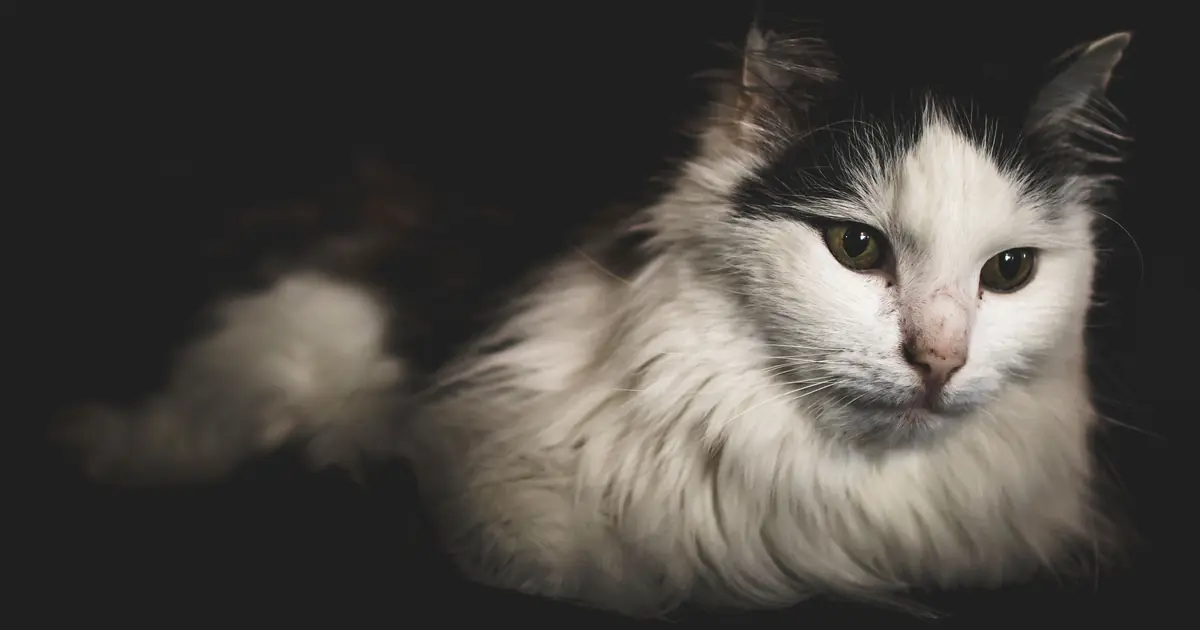
Picture a cat built like a ballerina. Long legs, a slim tubular body, a wedge-shaped face, and ears so big they look borrowed from a much larger animal. Now drape a fine, silky, flowing coat over all of it and add a tail that fans out like an ostrich feather.
That’s the Oriental Longhair. And the second you sit down, it will tell you, loudly, exactly how its day went.
Here’s the surprise most people don’t expect. This is a long-haired cat that barely sheds and rarely mats. The Oriental Longhair carries a single coat with no fluffy undercoat, so the grooming most folks dread with longhairs mostly doesn’t apply. If you’ve been scared off long fur, keep reading. This breed rewrites the rules.
| Origin | United Kingdom, 1950s to 1960s (longhair line once called the British Angora) |
| Weight (Male) | 8 to 12 lbs |
| Weight (Female) | 6 to 9 lbs |
| Lifespan | 12 to 15 years (some reach 18 to 20+) |
| Coat | Fine, silky, semi-long, single coat with no undercoat; plumed tail |
| Colors | Solid, tabby, tortie, smoke, shaded, bicolor; 300+ color and pattern combinations claimed |
| Energy Level | High |
| Grooming Needs | Low to Moderate (surprisingly easy for a longhair) |
| Good With Kids | Yes, with gentle, interactive kids |
| Good With Other Pets | Yes, often prefers company (slow intros still help) |
| Average Price | $600 to $1,500 (pet); $1,500 to $3,000 (show/breeding lines) |
Where Does the Oriental Longhair Come From?
The Oriental Longhair traces back to a British breeding project that started in the 1950s. Breeders wanted the elegant Siamese body and big personality, but in colors and patterns the Siamese rules didn’t allow. So they crossed Siamese with cats like Russian Blues, British Shorthairs, Abyssinians, and ordinary domestic cats, then bred back toward the Siamese type.
The result was a non-pointed cat that looked Siamese in every way except color. That became the Oriental Shorthair. The long-coated version came along through the same gene pool, since some foundation cats carried the recessive long-hair gene.
Here’s the fun bit of trivia. In the UK, the long-haired Oriental was once called the British Angora. British cat fanciers renamed it the Oriental Longhair around 2002 to stop people confusing it with the Turkish Angora, a totally separate breed. So if you stumble on an old pedigree or article using “British Angora,” it’s talking about this same cat.
The Cat Fanciers’ Association recognizes the Oriental as a single breed with a longhair division, and The International Cat Association groups it together with the Siamese, Balinese, and Oriental Shorthair. Same body, same wedge head, same enormous ears. The differences come down to coat and color.
What Does an Oriental Longhair Look Like?
An Oriental Longhair looks like someone stretched a Siamese and gave it a feather duster for a tail. The body is long, tube-shaped, and athletic, with fine bones, slim legs, and dainty oval paws. People nickname these cats the greyhounds of the cat world, and once you see one trot across a room, the name sticks.
The head is a long, flat triangle. The ears are huge and set wide, almost bat-like. The eyes are almond-shaped and usually green, though white cats can have blue or odd eyes. There’s nothing chunky or soft about the silhouette. It’s all elegant lines.
The Coat and That Famous Tail
The Oriental Longhair coat is fine, silky, and semi-long, not the heavy fluff you picture with a Persian. The key detail: it’s a single coat with no dense undercoat. That’s why the fur lies close to the body and the cat looks sleeker than other longhairs. The longest hair shows up on the tail, which carries a gorgeous spreading plume.
So this isn’t a big poofy cat. It’s a fine-coated cat with a dramatic tail and a little extra length around the body. Honestly, it reads as “elegant” more than “fluffy.”
How Many Colors? A Lot.
The Oriental family is famous for color, so much that fans call them “Ornamentals.” Under the various registry standards, more than 300 color and pattern combinations are possible. TICA lists hundreds of recognized colors across the Oriental group. You’ll find solids (ebony, blue, chestnut, lavender, red, cream, white), tabbies, tortoiseshells, torbies, smokes, shadeds, and bicolors.
One thing the Oriental Longhair is not: pointed. Pointed coloring (dark face, ears, legs, and tail on a pale body) belongs to its cousins the Siamese and Balinese. If a long-coated cat has those classic dark “points,” it’s a Balinese, not an Oriental Longhair.
Kitten vs Adult
Oriental Longhair kittens often look almost short-haired at first. The full coat and that signature tail plume develop slowly, sometimes not reaching their best until the cat is two years old or more. So a young one can look a bit plain, then bloom into a glamorous adult. Patience pays off here.
Oriental Longhair Personality and Temperament
If you want a quiet, independent cat that ignores you for hours, walk away now. The Oriental Longhair is the opposite of aloof. This is a velcro cat that wants to be in your business at all times, on your lap, on your keyboard, in the bathroom, under the covers at night.
They are loud. Really loud. The Oriental voice has a distinctive raspy, almost nasal tone owners call a “honk,” and your cat will use it to greet you, demand dinner, complain about closed doors, and narrate the entire day. Some owners adore the constant chatter. Some find it exhausting. Know which one you are before you commit.
They’re also frighteningly smart. Oriental Longhairs learn to open cupboards, fetch toys, walk on a harness, and figure out exactly which behavior gets your attention fastest. A bored Oriental invents its own entertainment, and you won’t love the results.
The Velcro-Cat Reality
These cats bond hard with their people. They follow you room to room and want to be involved in whatever you’re doing. That devotion is the breed’s best feature and its biggest catch. An Oriental Longhair left alone all day, every day, gets genuinely lonely and stressed. This is not a cat for an empty house from 8 to 6 with no companion.
The good news: they usually do great with a second cat or a cat-friendly dog. Many owners get them in pairs for exactly this reason.
Is the Oriental Longhair Right for You?
The Oriental Longhair is a brilliant fit for some homes and a poor fit for others. Be honest with yourself before you fall for the photos.
You’ll probably love this breed if you:
- Want a cat that’s deeply involved in your life, not a piece of furniture
- Are home a lot, work from home, or can provide a feline companion
- Enjoy a chatty, interactive cat and don’t mind a loud voice
- Like the look of a longhair but dread heavy grooming
- Want an athletic, playful cat into its senior years
You should think twice if you:
- Need a calm, quiet, low-demand cat
- Are gone long hours with no other pet at home
- Want a lap cat that mostly sleeps and asks for little
- Get irritated by constant meowing
- Have zero time for daily play and attention
Here’s my honest take. A single Oriental Longhair in a quiet house where everyone works long hours is a recipe for a stressed, over-vocal, sometimes destructive cat. Match the breed to your lifestyle and it’s one of the most rewarding cats you’ll ever share a couch with.
Oriental Longhair Health Issues to Know About
The Oriental Longhair is generally a hardy, long-lived breed, but it shares some genetic risks with the wider Siamese family. None of this should scare you off. It just means you buy from a breeder who health-tests, and you keep up with vet checkups. This section is educational, not a diagnosis, so always talk to your own veterinarian about your cat.
| Condition | What It Is | Signs to Watch For |
|---|---|---|
| Progressive Retinal Atrophy (PRA) | An inherited degeneration of the retina linked to a gene mutation found in Oriental and Siamese lines | Night blindness first, then daytime vision loss, often progressing between ages 3 and 5 |
| Amyloidosis | Abnormal protein deposits in organs like the liver, seen more often in Siamese-related breeds | Lethargy, poor appetite, jaundice; signs can appear before age 5 |
| Heart disease (HCM/DCM) | Thickening (HCM) or weakening (DCM) of the heart muscle reported in Oriental breeds | Fast breathing, low energy, sudden weakness; often silent until advanced |
| Dental disease | Crowding and gum issues linked to the narrow, wedge-shaped head | Bad breath, drooling, pawing at the mouth, trouble eating |
A responsible breeder screens breeding cats for PRA with DNA testing and watches their lines for heart and liver issues. Ask for proof. And get pet insurance early, before any condition shows up, because the Siamese-family risks are real even if uncommon.
Red flags that mean call the vet now: labored or open-mouthed breathing, sudden hind-leg weakness, yellow gums or eyes, or a cat that stops eating for more than a day.
Grooming and Care: Easier Than You Think
This is the section that surprises everyone. The Oriental Longhair is one of the lowest-maintenance “long-haired” cats around. Because the coat is single-layered with no thick undercoat, it doesn’t pack down into mats or shed in dramatic clumps the way a double-coated cat does.
A quick brush once or twice a week keeps the coat glossy and the tail plume tidy. That’s pretty much it. A soft slicker or a fine comb works well, and your cat will likely treat brushing as one more chance to be near you. During seasonal shifts you might add an extra session, but you won’t be fighting daily mats.
The rest of the routine is standard cat care:
- Brush teeth a few times a week, since this breed is prone to dental issues
- Trim nails every couple of weeks
- Check the big ears now and then and wipe gently if needed
- Keep an eye on the tail plume, which catches the most loose hair
For a gentle daily-driver brush, a soft slicker like the Hertzko Self-Cleaning Slicker Brush works nicely on a fine single coat without dragging or pulling, and the retractable bristles make cleanup quick. It’s a good fit for owners who want a low-effort, once-or-twice-a-week routine.
Feeding and Diet
The Oriental Longhair has no exotic dietary needs, but its lean, athletic build does best on quality protein. Cats are obligate carnivores, so look for a food where real meat leads the ingredient list, fed in portions that keep your cat slim rather than skinny or pudgy.
These cats run hot, energy-wise, and they tend to stay naturally slender. Don’t panic if your Oriental looks lean. That’s the breed. But do keep an eye on the scale, because even slim breeds can sneak on weight if you free-feed an enthusiastic eater.
Given the dental tendencies, talk to your vet about whether a mix of wet food and dental-friendly options suits your cat. Fresh water always available, ideally a fountain, since many Orientals love running water.
Exercise and Enrichment
An Oriental Longhair is a high-energy athlete in a glamorous coat. These cats climb, leap, chase, and explore, and they need daily outlets or they’ll find their own (usually the top of your bookshelf or the inside of a cabinet).
Give them a tall cat tree, plenty of vertical space, puzzle feeders, and at least two solid play sessions a day. Wand toys, fetch, and clicker training all land well with this brainy breed. Many Oriental Longhairs happily learn to walk on a harness, too.
Picture this: it’s 9pm, you finally sat down, and your cat sprints past with a toy mouse, jumps the couch, and stares at you expectantly. That’s the breed asking for its evening game. Skip it too often and the energy comes out as yowling or mischief.
Living With Kids, Dogs, and Other Cats
The Oriental Longhair is one of the more social breeds you’ll meet, which makes it a strong pick for busy, multi-pet households. It generally does well with respectful children who play gently and don’t grab. The fine build means rough handling can hurt, so supervise little kids.
With dogs, the breed usually thrives as long as the dog is cat-friendly. An Oriental will often boss a good-natured dog around and recruit it as a playmate. Slow, calm introductions still matter.
With other cats, this breed often prefers company to solitude. A second cat, especially another Oriental or Siamese-type, can keep yours happy while you’re out. Do proper gradual introductions and you’ll likely end up with a bonded, tangled pile of cats on the sofa.
Lifespan and Aging Tips
Oriental Longhairs typically live 12 to 15 years, and plenty stretch into their late teens or beyond with good care. The Siamese family is known for longevity, so a well-bred, well-cared-for Oriental can be a very long commitment.
As your cat ages, a few things help:
- Twice-yearly vet visits once your cat passes about age 8
- Watch for weight loss, increased thirst, or changes in litter box habits
- Keep up dental care, since older Orientals are prone to gum issues
- Add ramps or steps so an aging athlete can still reach favorite perches
- Keep the brain busy; this breed stays playful and curious into old age
The upside of a clingy cat is you’ll notice subtle changes fast, because you’re together so much. Use that. Early vet attention is what turns many Siamese-family health risks into manageable ones.
How Much Does an Oriental Longhair Cost?
A pet-quality Oriental Longhair kitten from a reputable, health-testing breeder usually runs $600 to $1,500. Show or breeding-quality cats from proven lines can reach $1,500 to $3,000. Adoption through a rescue, when you can find one, is far cheaper, often $75 to $200.
| Source / Cost Type | Typical Price |
|---|---|
| Pet-quality kitten (reputable breeder) | $600 to $1,500 |
| Show or breeding-quality kitten | $1,500 to $3,000 |
| Rescue or rehome adoption | $75 to $200 |
| First-year setup (gear, vet, neuter) | $500 to $1,000+ |
| Ongoing yearly costs (food, litter, vet) | $600 to $1,200+ |
Why the wide range? Color and pedigree drive a lot of it. Rare patterns and top show lines cost more. But price is no guarantee of health, so don’t assume the most expensive kitten is the healthiest. Health testing and a clean, social cattery matter far more than a fancy price tag.
Where to Find an Oriental Longhair Ethically
Oriental Longhairs aren’t as common as mainstream breeds, so you may need to join a waitlist with a registered breeder. A good breeder is worth the wait.
Look for a breeder who:
- Registers with CFA, TICA, or your national cat fancy
- DNA-tests breeding cats for PRA and screens for heart and liver issues
- Raises kittens underfoot in the home, well socialized
- Won’t release kittens before about 12 to 14 weeks
- Asks you plenty of questions and offers a health guarantee
Walk away if you see:
- No health testing or vague answers about it
- Kittens always available, multiple litters at once, “rare” upsells
- Pressure to pay fast or meet in a parking lot
- Kittens leaving the litter very young
And don’t overlook rescue. Breed-specific Siamese and Oriental rescues sometimes have longhairs needing homes, and adult cats let you skip the chaos of kittenhood while still getting that famous Oriental devotion.
Similar Breeds to Consider
If the Oriental Longhair has caught your eye, a few close cousins are worth a look:
- Oriental Shorthair: The exact same cat in a sleek, short, wash-and-wear coat. Same body, ears, voice, and clingy personality, just without the plume. If you love everything but the longer fur, this is your match.
- Balinese: Essentially the pointed, long-coated Siamese. Same silky single coat and plumed tail as the Oriental Longhair, but always in pointed colors (dark face, ears, legs, tail) with blue eyes.
- Siamese: The famous pointed ancestor of the whole group. Short-coated, pointed, blue-eyed, and just as loud and people-obsessed.
- Javanese: A pointed long-haired Oriental-type cat recognized in some registries, sitting right between Balinese and Oriental Longhair in the family tree.
Oriental Longhair vs Oriental Shorthair: What’s the Difference?
This is the question most people land here for, so let’s settle it. The Oriental Longhair and Oriental Shorthair are the same breed in CFA’s eyes, split only by coat length. They share an identical body, head shape, ear size, color range, voice, and personality. The single real difference is the fur.
| Feature | Oriental Longhair | Oriental Shorthair |
|---|---|---|
| Coat length | Semi-long, fine, silky | Short, sleek, close-lying |
| Undercoat | None (single coat) | None (single coat) |
| Tail | Full feathery plume | Thin, whip-like |
| Grooming | Brush 1 to 2x a week | Occasional brush, barely needed |
| Shedding | Low | Low |
| Body, ears, voice | Identical | Identical |
| Personality | Loud, clingy, smart | Loud, clingy, smart |
| Price | Similar range | Similar range |
Bottom line: pick based on the look you love and how much brushing you want to do. The longhair gives you that gorgeous plume and a little glamour for the cost of a quick weekly brush. Everything else about the two cats is the same.
Common Myths and Misconceptions
The Oriental Longhair collects more myths than most breeds, mostly because people assume “longhair” means “high-maintenance.” Let’s clear a few up.
Myth: “A longhair coat means constant grooming and mats.”
Not for this breed. The Oriental Longhair has a single coat with no dense undercoat, so it rarely mats and only needs brushing once or twice a week. It’s one of the easiest long-coated cats to maintain.
Myth: “Oriental Longhairs are hypoallergenic.”
No cat is truly hypoallergenic, and that includes this one. The breed sheds less and spreads less dander, so some allergy sufferers tolerate it better. But the real allergy trigger is a protein called Fel d 1, which every cat produces regardless of coat. Spend time with one before assuming you’ll be fine.
Myth: “It’s just a fluffy Siamese.”
Close, but no. The Oriental Longhair shares the Siamese body and personality, but it comes in hundreds of solid and patterned non-pointed colors. A pointed long-haired cat is a Balinese, not an Oriental Longhair.
Myth: “They’re quiet because they’re elegant.”
Ha. No. These cats are among the chattiest you can own, with a distinctive raspy “honk” of a voice they use all day long.
Frequently Asked Questions
Q: Do Oriental Longhairs shed a lot?
No, Oriental Longhairs are low shedders. Their single coat has no dense undercoat, so they shed far less than most long-haired breeds and rarely leave clumps of fur around the house. A quick weekly brush keeps loose hair under control.
Q: Are Oriental Longhairs hypoallergenic?
No cat is fully hypoallergenic, including the Oriental Longhair. They shed less and produce less dander, so some allergy sufferers tolerate them better, but they still make the Fel d 1 protein that triggers cat allergies. Always spend time with one first.
Q: Are Oriental Longhair cats vocal?
Yes, Oriental Longhairs are very vocal. They have a raspy, nasal voice owners call a “honk” and use it constantly to greet you, ask for food, and narrate their day. If you want a quiet cat, this is not the breed for you.
Q: How much is an Oriental Longhair?
A pet-quality Oriental Longhair kitten from a reputable, health-testing breeder typically costs $600 to $1,500. Show or breeding-quality cats run $1,500 to $3,000, while rescue adoption, when available, costs roughly $75 to $200.
Q: What’s the difference between an Oriental Longhair and an Oriental Shorthair?
The only real difference is coat length. The Oriental Longhair has a semi-long, silky coat with a plumed tail, while the Oriental Shorthair has short, sleek fur. Their body, ears, voice, color range, and clingy personality are identical.
Q: How long do Oriental Longhair cats live?
Oriental Longhairs typically live 12 to 15 years, and many reach their late teens with good care. The Siamese family is known for longevity, so some individuals live to 18 to 20 years or more.
Q: Are Oriental Longhairs good with other pets?
Yes, Oriental Longhairs are very social and usually do well with other cats and cat-friendly dogs. They often prefer company and can get lonely if left alone for long hours, so many owners keep them in pairs.
Q: Do Oriental Longhairs need a lot of grooming?
No, grooming is surprisingly easy for a long-haired cat. Because the Oriental Longhair has a single coat with no undercoat, a brush once or twice a week keeps the coat and tail plume tidy and mat-free.
The Final Verdict: Should You Get an Oriental Longhair?
The Oriental Longhair is a stunning, brilliant, deeply affectionate cat that gives you longhair glamour without the grooming headache. If you want a chatty, devoted companion who treats you like the center of the universe, and you can give it company and daily play, you’ll be smitten.
But be honest about the loud voice, the neediness, and the need for company. This is not a low-effort cat. Get it for the wrong house and both of you will be frustrated.
Match it to the right home, though, and the Oriental Longhair becomes one of the most rewarding cats you’ll ever live with: a silky, plume-tailed shadow that never lets you feel alone, and tells you so, loudly, every single day.

Hello and welcome to The Ideal Cat!
We are some passionate cat owners from different professions. We love our cats and have a lot of experience in how to care for our pets. We are incredibly excited to share our knowledge, experience, and research with you. So you can take good care of your loving cat. We will answer most of the common questions about owning cats, taking care of them, etc. If you have any question contact with us. Thanks for visiting! Enjoy the content.
