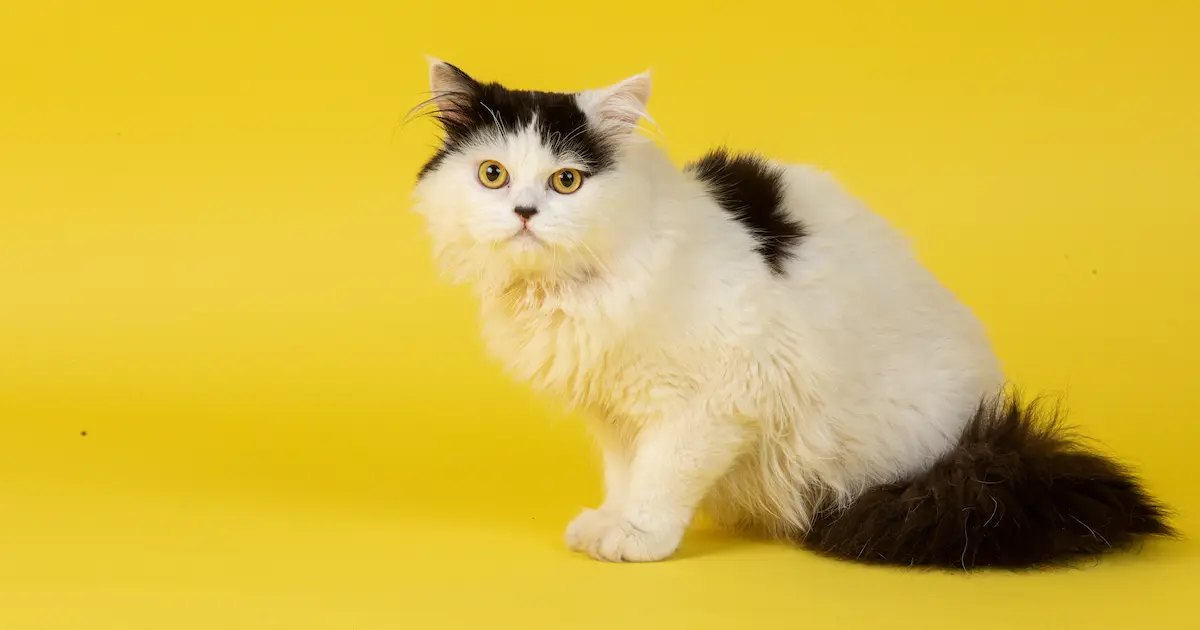
Florence Nightingale shared her home with more than sixty Persian cats. Sixty. Imagine the lint roller budget.
Her obsession makes sense once you’ve met one. There’s something about a Persian that pulls you in: the round face, the silly little legs, the way they settle into your lap like a small, breathing pillow that purrs.
Here’s the thing most breeder websites won’t tell you, though. The Persian sitting on Florence’s velvet cushions in the 1800s looked very different from most Persians today. The breed has shifted. Some of those shifts are charming. Some cause real problems. And if you’re thinking about bringing one home, you deserve the full picture, not just the glossy parts.
This guide walks you through both.
| Origin | Persia (modern-day Iran), pre-1600s |
| Weight (Male) | 9 to 14 lbs |
| Weight (Female) | 7 to 11 lbs |
| Lifespan | 12 to 17 years |
| Coat | Long, dense double coat |
| Colors | 80+ colors across 7 CFA divisions |
| Energy Level | Low |
| Grooming Needs | High (daily) |
| Good With Kids | Yes, with gentle handling |
| Good With Other Pets | Yes, with slow introductions |
| Average Price | $1,200 to $4,000 from breeders |
The Persian Cat’s Story
Persians have been around longer than most countries you can name. References to longhaired cats in the region we now call Iran trace back to roughly 1684 BC. The modern story usually picks up in 1626, when an Italian traveler named Pietro della Valle brought a few longhaired cats home from a trip through Persia.
Europe went bananas for them. Royalty especially. Queen Victoria adored Persians, and her enthusiasm helped turn the breed into a status symbol across Britain. By the late 1800s, Persians were stars of England’s first cat shows.
Then the Americans got involved, and Persians spread across the Atlantic. They’ve stayed wildly popular ever since. The breed you’d see today is the result of selective breeding choices made over the last century, especially after a random genetic mutation in the 1940s produced cats with much flatter faces. Some breeders chased that look hard. The breed effectively split into two looks as a result, which we’ll get into in a minute.
The Cat Fanciers’ Association recognizes the Persian across seven color divisions, with more than 80 color and pattern combinations between them. So whatever shade catches your eye, there’s almost certainly a Persian wearing it.
What a Persian Actually Looks Like
Picture a small, sturdy cat shaped a bit like a furry loaf of bread. That’s your Persian.
They’re medium-sized but look bigger thanks to all that fur. Most males land between 9 and 14 pounds. Females are usually 7 to 11. Their legs are short and thick, their bodies are wide and low, and their tails are short and bushy.
The face is what most people notice first. Round head, big round eyes (copper, blue, green, or odd-eyed depending on the coat), small ears, and a snub nose. The expression often reads as either deeply sweet or mildly offended, depending on the day.
The coat is double-layered, long, and silky. It’s the kind of fur that looks magazine-perfect when groomed and absolute disaster when not. We’ll get into that further down.
Persian kittens are basically furry tennis balls when they’re little. They don’t grow into their full adult coat until around 18 to 24 months old.
Doll-Face vs Peke-Face: Which Persian Should You Get?
This is the conversation almost no breeder-friendly site has honestly. Let me try.
Persians come in two distinct looks today, even though they’re technically the same breed.
The doll-face Persian, sometimes called traditional or old-fashioned, has a longer nose that sticks out from the face like a regular cat’s nose. This is what Florence Nightingale’s Persians would have looked like.
The peke-face Persian, sometimes called show-style or ultra-typed, has the very flat face you see in Instagram photos and cat shows. The nose sits almost between the eyes. This look came from a spontaneous genetic mutation in the 1940s, and breeders selected hard for it.
Here’s the part that matters: the flatter the face, the more breathing, tear-drainage, and dental problems your cat is likely to have. International Cat Care, the UK’s leading welfare charity for cats, has flagged severe brachycephaly in Persians as a real welfare concern.
So which should you choose?
If you’re a first-time Persian owner: get a doll-face. They’re easier to live with, healthier on average, and still unmistakably Persian. Their eyes water less. Their breathing is quieter. Their vet bills tend to be lower.
If you’re set on the show-cat look: at least find a breeder whose cats have open nostrils, no deep facial folds, and parents that don’t snore or pant at rest. The CFA breed standard actually states the forehead, nose, and chin should align vertically, and that the face shouldn’t be overly pronounced. Plenty of ethical breeders avoid the most extreme version of the look.
Either way, the personality is identical. You’re not trading sweetness for moderation. You’re just choosing the version of Persian that breathes a little easier.
The Persian Personality: What Living With One Is Really Like
Here’s a typical Persian afternoon. They wake up. They walk three feet. They sit down. They stare meaningfully at a sunbeam. They walk three more feet. They lie down on top of the sunbeam. They nap.
That’s it. That’s the day.
Persians are calm to the point of philosophical. They’re not the cat that streaks across the room chasing a fake mouse for two hours. They’re the cat that watches you make breakfast from the same spot they were in yesterday and the day before.
What they lack in athleticism, though, they make up for in devotion. A Persian who trusts you is a Persian who wants to be near you, all the time. They tend to pick a favorite human and follow that person from room to room at a dignified, slow walk.
They’re quiet too. Most Persians have a soft, melodic chirp instead of a loud meow. You’ll know what they want, but you probably won’t be woken at 5 AM by demands.
A few honest notes about Persian temperament:
- They’re shy with strangers. Don’t expect your Persian to greet your guests. They’ll probably hide until the dinner party is over.
- They take weeks to warm up to a new home. Give them time, not pressure.
- They hate chaos. Loud houses, lots of foot traffic, and unpredictable schedules stress them.
- Separation anxiety is real with this breed. More than with most cats. We’ll cover what to do about it.
If you wanted a velcro cat that loves to cuddle but doesn’t demand entertainment, you’ve found your match.
Is a Persian Cat Right for You?
Honestly? Skip this breed if any of these sound like you:
- You’re out of the house 9+ hours a day with no other pets at home. Persians get genuinely sad when left alone too long. Two Persians can keep each other company, but a single Persian in an empty house all day is a recipe for stress.
- You can’t commit to 15 to 20 minutes of grooming every single day. Not “most days.” Every day. If you skip, the coat mats. Mats hurt. Severe ones require professional removal, sometimes under sedation.
- You’re on a tight first-year budget. Between the kitten price, supplies, and vet bills, expect to spend $3,000 to $5,000 in year one. More if a health issue surfaces.
- You want a playful cat that fetches and zooms. Get a Bengal or an Abyssinian. Your Persian will look at you like you’ve lost your mind.
- You live somewhere very hot without air conditioning. Flat-faced cats overheat fast.
This is the right breed if you’re a quieter, home-based person who wants a beautiful, calm, affectionate companion and you’re willing to put in the daily care. Retirees, work-from-home folks, and small quiet households tend to thrive with Persians.
Persian Cat Health Issues You Need to Know About
I’m going to be specific here because most breed guides aren’t.
Polycystic Kidney Disease (PKD)
This is the big one. About one in three Persians worldwide carries the PKD gene. The disease causes fluid-filled cysts to grow in the kidneys, which can lead to kidney failure as the cat ages.
The good news: there’s a reliable DNA test for it. Any breeder selling you a Persian should be able to show you a PKD-negative certificate for both parents. If they can’t or won’t, walk away. No exceptions.
Signs to watch for in an adult Persian include increased thirst, frequent urination, weight loss, and vomiting. Symptoms often appear around age 7.
Brachycephalic Airway Syndrome
The flat face that makes Persians cute also narrows their airways. Common signs: snoring, noisy breathing, mouth-breathing during light activity, and heat intolerance. Severe cases need surgery to widen the nostrils or shorten the soft palate.
If your Persian is breathing with their mouth open at rest, that’s a vet emergency, not a quirk.
Eye Issues
Big round eyes plus a flat face equals constant drainage problems. Most Persians produce excess tears (epiphora). The flat face also makes them prone to entropion, where the eyelid rolls inward and lashes rub the cornea.
Daily eye wiping with a clean damp cloth is non-negotiable.
Hypertrophic Cardiomyopathy (HCM)
A heart condition where the heart walls thicken. Persians are predisposed. Symptoms can be subtle. Annual vet checkups with cardiac screening matter, especially after age 5.
Dental Crowding
A flat face means a small jaw with normal-sized teeth crammed in. This leads to misalignment, plaque buildup, and gum disease. Daily brushing helps, but most Persians need professional dental cleanings every two to three years.
Other Conditions Worth Knowing
Polycystic liver disease, progressive retinal atrophy (PRA), and hip dysplasia all turn up in Persian lines occasionally. Good breeders screen for the genetic ones before pairing parents.
Grooming a Persian: The Real Daily Time Commitment
Let’s get specific. Here’s what you’re actually signing up for.
Daily (15 to 20 minutes):
- Wide-toothed metal comb through the coat, with extra attention behind the ears, in the armpits, on the belly, and on the back legs (these mat first)
- Quick face wipe with a damp cloth or vet-approved eye cleaner
- Quick check for tangles starting to form anywhere
Weekly (about 30 minutes):
- Nail trim
- Deeper comb through the whole coat in sections
- Ear check and cleaning if needed
Every 4 to 6 weeks:
- Bath with cat-safe shampoo (Persians actually tolerate baths better than most cats, since they get used to it young)
- Professional groom optional but helpful if mats keep forming
The tools that matter most: a stainless steel wide-toothed comb (not a brush, because brushes skim the surface and miss the mat-forming layer underneath), a quality cat-safe shampoo, and a pair of rounded-tip scissors for trimming around sensitive areas.
If you skip a few days, you’ll feel it. Mats form fast on a Persian, and they hurt the cat. Severe matting can pull the skin and cause sores. If you fall behind, ask a groomer about a “lion cut,” where the body is shaved short and the head, legs, and tail are left full. It looks ridiculous. It works.
Feeding Your Persian
Standard cat nutrition rules apply, with a few breed-specific tweaks worth knowing.
Pick a food with real animal protein listed first (chicken, turkey, fish, not “meat by-product”). Persians do well on a mix of wet and dry food.
The flat face does affect eating. Persians struggle with normal kibble shapes because picking up small round pieces with a flat muzzle is awkward. Look for kibble designed for Persians or brachycephalic breeds, which uses larger, almond-shaped pieces. Many owners find their Persian eats neater from a wide, shallow bowl placed at chest height.
Hairball control matters too. All that grooming means swallowed fur, and Persians have a lot of fur to swallow. A high-fiber food or weekly hairball gel can keep the issue manageable.
Watch the weight. Persians are couch potatoes by design, and they put on weight fast. An overweight Persian struggles with breathing even more than a healthy-weight one. Free-feeding rarely works for this breed. Measured meals do.
Exercise and Enrichment
Persians are low-energy, but they’re not no-energy. They need play.
Aim for two short play sessions a day, about 10 minutes each. Wand toys with feathers work well. Skip laser pointers if you can, because they can frustrate Persians (they never get to “catch” the prey). Small soft mice they can bat around suit them better than fast rolling balls.
Cat trees with low, wide platforms work better than tall, narrow ones. Persians aren’t natural climbers. They’d rather lounge on a tower than scale one.
Keep them indoors. Always. A Persian’s coat picks up debris like a magnet, their flat face makes them poor hunters, and their calm nature makes them easy prey or theft targets. A screened catio is a lovely compromise if you want them to see some sky.
Persians With Kids, Dogs, and Other Cats
The honest version of this conversation:
With kids: Persians do well with gentle, calm children. Older kids who understand “let the cat come to you” will get a lovely companion. Toddlers who chase and grab will stress a Persian fast. The breed isn’t aggressive, but they’ll hide and avoid kids who don’t read their signals.
With dogs: Yes, if the dog is calm and the introduction is slow. A boisterous Lab puppy and a Persian is not a recipe for happiness. A senior Cavalier and a Persian could be best friends.
With other cats: Generally yes, especially with another Persian or another low-energy breed. Two Persians in one home tend to keep each other emotionally regulated, which helps with separation anxiety. Avoid pairing with a high-energy breed like a Bengal or Abyssinian. Your Persian will spend its life hiding under the couch.
Lifespan and Aging Tips
A well-cared-for Persian usually lives 12 to 17 years. Some reach 20. Those numbers depend heavily on genetics (PKD-tested lines live longer), weight (lean Persians outlive overweight ones), and routine vet care.
Kittenhood (0 to 1 year): Vaccinations, socialization, and starting the daily grooming habit early. The sooner they accept brushing, the better the rest of their life goes.
Adulthood (1 to 7 years): Annual vet visits, weight monitoring, dental care, and watching for early signs of breathing trouble or heart issues.
Senior years (7+): Twice-yearly vet visits. Senior bloodwork and ultrasounds to catch PKD progression. Watch for changes in thirst, urination, appetite, and activity. A senior Persian may need a softer bed, an easier-to-step-into litter box, and gentler grooming sessions.
The hardest part of owning a Persian is the goodbye. They’re affectionate, gentle, and deeply attached. Plan for the financial and emotional weight of an aging Persian before you bring home a kitten.
How Much Does a Persian Cat Really Cost?
Let me break this down properly, because vague “they’re expensive” answers help no one.
Kitten purchase:
- Reputable CFA or TICA-registered breeder, pet quality: $1,200 to $2,500
- Show quality with championship lines: $2,500 to $4,000+
- Rescue or surrender adoption: $50 to $300
- “Cheap kitten online for $400”: run
First-year setup costs ($800 to $1,500):
- Initial vet visits, vaccinations, spay/neuter: $300 to $600
- Litter box, scratching post, beds, carriers: $200 to $400
- Grooming tools (comb, scissors, shampoo, eye cleaner): $80 to $150
- Food for the first year: $400 to $700
Ongoing annual costs ($1,500 to $2,500):
- Food: $400 to $700
- Litter: $200 to $400
- Routine vet care: $300 to $500
- Dental cleanings every 2 to 3 years: $400 to $1,000 when due
- Pet insurance for a breed this health-prone: $400 to $800
Estimated lifetime cost: $25,000 to $40,000 over a healthy Persian’s life. More if a chronic health issue surfaces.
This isn’t to scare you off. It’s to make sure you know.
Where to Find a Persian Ethically
Green flags in a breeder:
- PKD and HCM testing on both parents, with paperwork you can see
- They want to meet you and ask you questions before they sell to you
- They keep kittens until at least 12 weeks old
- They show you the parents and the kittens’ living space
- They offer a written contract and a health guarantee
- They’re registered with CFA, TICA, or another recognized registry
Red flags:
- They’ll ship a kitten anywhere if you pay extra
- They won’t let you visit
- The kitten is younger than 12 weeks old
- They have multiple breeds and constant litters available
- They can’t or won’t show health testing
- The price feels too good to be true
The rescue option: Persians do end up in rescues. The UK’s RSPCA reported that Persians take more than twice as long to rehome as regular shorthairs, an average of 68 days versus 29 days. People underestimate the grooming, and Persians often need new homes through no fault of their own. Check Persian-specific rescues like Persian and Himalayan Cat Rescue in the US, or your country’s equivalent. Adopting an adult Persian skips the kitten chaos and saves a life.
Similar Breeds to Consider
If a Persian sounds almost right but not quite, here are five close cousins worth a look:
- Exotic Shorthair. A Persian in a short coat. Same sweet personality, half the grooming. Often called “the lazy person’s Persian.”
- Himalayan. A Persian crossed with a Siamese, with color points on the face, ears, and tail. Same look and structure, slightly more vocal.
- British Longhair. Calmer than most cats, less extreme face than a Persian, with a similarly plush coat.
- Ragdoll. Bigger and more relaxed when handled (they go floppy when picked up). Better fit for families with kids.
- Birman. Silky coat without the flat face, very affectionate, easier health profile overall.
Persian Cat Myths and Misconceptions
Myth 1: Persians are aloof and snobby.
Reserved with strangers, devoted to family. Not the same thing.
Myth 2: Persians can’t play.
They can. They just play in short, dignified bursts and then go back to their nap.
Myth 3: All Persians have flat faces.
False. Doll-face Persians have proper noses. They’re still purebred Persians.
Myth 4: Persians are hypoallergenic.
Definitely not. The long coat actually carries more dander around your home. If allergies are a concern, look at the Siberian or Russian Blue instead.
Myth 5: Persians don’t need much exercise, so they’re easy.
They don’t need running. They need grooming. The hours add up.
Myth 6: A cheap kitten from a backyard breeder will save you money.
Cheap upfront usually means expensive at the vet. A PKD-positive Persian can rack up $10,000+ in lifetime care.
Persian Cat FAQ
Q: Are Persian cats high maintenance?
Yes, in a specific way. They don’t need lots of attention or training. They need lots of daily grooming, eye care, and vet vigilance. Plan on 20 minutes of care every day and you’ll be fine.
Q: Do Persian cats shed a lot?
Yes, more than most breeds. The double coat sheds year-round and blows out twice a year in spring and fall. Daily brushing catches most of it before it lands on your couch.
Q: Are Persian cats hypoallergenic?
No. Persians produce average levels of the Fel d 1 protein, and their long coat spreads more dander around. If you have allergies, spend time around an adult Persian before committing.
Q: How long do Persian cats live?
12 to 17 years on average, with some reaching 20 with great genetics and care. Lifespan drops sharply in cats with untreated PKD or severe brachycephalic issues.
Q: Are Persian cats good for apartments?
Excellent for apartments. They’re quiet, calm, low-exercise, and indoor-only by design. Just make sure the apartment has good ventilation and stays cool in summer.
Q: Can Persian cats be left alone all day?
Not really. Persians are prone to separation anxiety more than most breeds. A few hours is fine. Eight-plus hours daily without a companion animal is rough on them emotionally.
Q: Why do Persian cats have flat faces?
A spontaneous genetic mutation in the 1940s produced flatter-faced kittens, and breeders selected for the look over the following decades. Doll-face Persians, which look closer to the original breed, still exist if you prefer them.
Q: Do Persian cats like to be held?
Most do, but on their own terms. They prefer being held briefly and gently, then set down near you rather than carried around. They’d rather you sit while they choose to climb into your lap.
Final Verdict: Should You Get a Persian?
A Persian is a beautiful, gentle, deeply affectionate cat who’ll change the energy of your home. They settle you down. They reward patience. They make even hard days feel softer.
But they’re not a casual pet. They need daily grooming, breed-aware vet care, a calm household, and a budget that can absorb their health needs. If you can offer all that, you’re in for one of the most rewarding companions in the cat world.
If you can’t, that’s okay. Choose a breed that fits your real life, not your Pinterest board. The kindest thing you can do for any cat is to know what you’re saying yes to before you say it.
And if you still want a Persian after reading all this? Welcome to the club. Florence would approve.

Hello and welcome to The Ideal Cat!
We are some passionate cat owners from different professions. We love our cats and have a lot of experience in how to care for our pets. We are incredibly excited to share our knowledge, experience, and research with you. So you can take good care of your loving cat. We will answer most of the common questions about owning cats, taking care of them, etc. If you have any question contact with us. Thanks for visiting! Enjoy the content.
