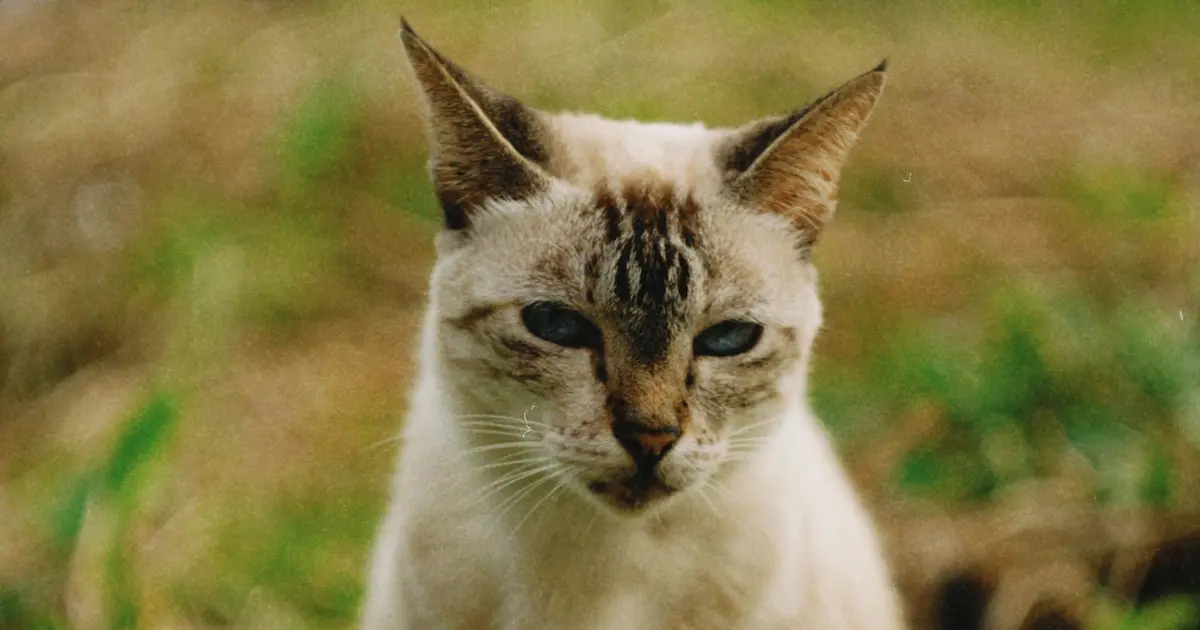
You shut the bathroom door. Three seconds later, a paw appears underneath it. Then a meow. Then a longer meow with real opinions in it. Welcome to life with a Javanese cat.
If you want a cat that treats your home like a shared apartment and you as its favorite roommate, this might be the one. The Javanese cat is smart, talkative, athletic, and almost comically attached to its people.
But here’s the thing nobody tells you up front: depending on where you live, the word “Javanese” might point to two completely different cats. Let’s untangle all of it, the good, the loud, and the genuinely tricky.
Javanese Cat at a Glance
| Origin | United States, 20th century (1970s) |
| Weight (Male) | 8 to 12 lbs |
| Weight (Female) | 5 to 8 lbs |
| Lifespan | 10 to 15 years (some reach 18+) |
| Coat | Single-layer, medium-long, silky, no undercoat |
| Colors | Red, cream, seal, chocolate, blue, lilac, tortie and lynx (tabby) points |
| Energy Level | High |
| Grooming Needs | Low to Moderate |
| Good With Kids | Yes |
| Good With Other Pets | Yes, with proper intros |
| Average Price | $800 to $1,500 from breeders |
Wait, Is the Javanese Even Its Own Breed?
This is the part most guides skip, and it matters before you spend a dollar. So let’s get it straight.
In the United States, “Javanese” was the name the Cat Fanciers’ Association gave to a Balinese cat that showed up in non-traditional point colors. Think red, cream, tortoiseshell, and tabby (lynx) points instead of the classic seal or blue. The CFA recognized it as its own breed back in the 1980s.
Then in 2008, the CFA folded the Javanese into the Balinese as a color division. So in registry terms, an American “Javanese” today is really a Balinese wearing fancier colors. Same cat, different paperwork.
Now travel to Europe and the word flips meaning entirely. Several European registries use “Javanese” to describe an Oriental Longhair: a solid-colored, non-pointed cat with green eyes, not the blue-eyed pointed look at all.
For this guide, we’re focusing on the cat most American readers picture: the long-haired, blue-eyed, color-pointed Siamese cousin. That’s the Javanese we’ll talk about from here on.
History and Origin of the Javanese Cat
Despite the exotic name, the Javanese cat has zero connection to the Indonesian island of Java. The cat never set a paw there.
Breeders simply liked the tradition of naming Siamese-related cats after Southeast Asian places. The Siamese came first. Then the long-haired version got called Balinese, after Balinese dancers. Java sits right next to Bali, so the name was an easy, pretty fit for the next cousin in the family.
The actual origin is North American. In the 1970s, breeders crossed Balinese cats with Colorpoint Shorthairs to bring longer hair together with a wider rainbow of point colors. The Colorpoint Shorthair itself came from mixing Siamese with American Shorthairs, which is how those extra colors entered the gene pool.
So the Javanese is a hybrid of hybrids, bred on purpose for a specific look: the elegant Siamese silhouette, a flowing single coat, and points in colors the original Siamese never had. It’s a relatively young breed, which is part of why it stays fairly rare.
What a Javanese Cat Actually Looks Like
Picture a Siamese that decided to grow its hair out and raid the paint store. That’s the Javanese in a sentence.
They have a long, tubular body that’s slender but surprisingly muscular. These are athletic cats, not delicate ones. The head forms a long wedge, the ears are big and set wide to extend that triangle, and the eyes are almond-shaped and a deep, vivid blue in the pointed cats.
The coat is the headline feature. It’s medium-long, fine, and silky, lying close to the body rather than puffing out. Here’s the bonus: it’s a single coat with little to no undercoat. That means less bulk, less matting, and a graceful plume of a tail. The legs and ears often carry a little feathering too.
Coat Colors and Points
This is where the Javanese shows off. You’ll find points in red, cream, seal, chocolate, blue, and lilac, plus tortoiseshell and lynx (tabby) patterns layered on top. That lynx point look, with faint stripes on the face and legs, is a real charmer.
One quirky genetic trait: point color is temperature-sensitive. Cooler parts of the body (ears, face, paws, tail) grow darker fur, while the warm core stays pale. It’s the same reason Siamese cats are lighter in the middle.
Kitten vs Adult
Javanese kittens are often born almost white, with their points coming in slowly over weeks and months. So that pale fluffball will deepen into its real colors as it grows. The full silky adult coat and final point shade can take a year or more to settle in.
Personality: Living With a Four-Legged Commentator
If the Siamese is famous for being chatty, the Javanese is its slightly more polite sibling. Slightly. These cats talk. A lot.
And it’s not random noise. A Javanese will look you in the eye, meow like it’s making a point, then wait for your reply. Answer back and you’ve started a conversation that can go on for a while. Honestly, it’s one of the most charming things about them, once you adjust to the volume.
They’re scary smart. Javanese cats figure out cupboards, drawers, and door handles fast. Leave treats in a closed cabinet and assume it’s a temporary arrangement. This intelligence makes them easy to train: leash walking, fetch, and simple tricks are all on the table if you keep sessions fun.
The other defining trait is attachment. This is a velcro cat. It wants to be wherever you are, supervising your every move, often from your shoulder or your laptop keyboard. The good news is you’ll never feel ignored. The catch is they don’t do well alone for long stretches and can get genuinely unhappy if left by themselves day after day.
Is a Javanese Cat Right for You?
This is the question that saves both you and the cat from heartbreak. Let’s be honest about it.
A Javanese is a great match if you:
- Are home often, or have other pets so the cat isn’t alone all day
- Actually enjoy a talkative, interactive pet
- Want a cat you can train, play with, and engage daily
- Like the idea of a shadow that follows you room to room
- Have vertical space (cat trees, shelves) for a born climber
A Javanese is probably the wrong cat if you:
- Work long hours away from home with no other company for the cat
- Want a quiet, low-key, independent pet
- Are sensitive to noise or need silence to focus
- Prefer a cat that asks for affection on a schedule, not constantly
- Travel a lot and can’t bring the cat or arrange real company
Trust me on this: the number one regret people have with this breed is underestimating how much attention it needs. A bored, lonely Javanese can become loud, destructive, or withdrawn. Match the cat to your actual lifestyle, not your ideal one.
Health Issues You Should Actually Know About
Javanese cats are generally healthy and long-lived. But because they share ancestry with the Siamese and Balinese, they carry a few of the same risks. Going in informed is the kindest thing you can do.
Liver amyloidosis. This is the one to take seriously. Abnormal protein deposits build up in the liver and can eventually cause it to fail or bleed. The hard part: it can strike young cats, sometimes before age five, and there’s no genetic test for it yet. Signs include jaundice, pale gums, vomiting, and sudden weakness. Ask any breeder directly whether it has appeared in their lines.
Progressive retinal atrophy (PRA). This causes a gradual loss of vision. The good news here is real: there’s a DNA test for it. A responsible breeder should be able to show you that the parents are clear.
Heart disease. Both hypertrophic and dilated cardiomyopathy can show up in the breed. Watch for lethargy, poor appetite, and weakness, and keep up with vet checkups so a murmur gets caught early.
Crossed eyes (strabismus). Common in Siamese-type cats and mostly cosmetic. It looks unusual but typically doesn’t bother the cat or its quality of life.
Hyperesthesia. A sensitivity syndrome that can cause sudden skin twitching, frantic grooming, and odd episodes. It’s usually managed by lowering stress and isn’t fatal.
Other things to watch: dental and gum disease (brush those teeth), asthma, and overgrooming triggered by stress or boredom. Their slim build also means weight creeps up fast if activity drops, so portion control matters.
Grooming and Coat Care
Here’s a pleasant surprise: that gorgeous coat is low-maintenance. Because the Javanese has a single coat with no dense undercoat, it sheds less than most long-haired breeds and rarely mats.
A weekly brush with a stainless-steel comb is usually plenty. It keeps the silk smooth, spreads natural oils, and gives you a moment to check for any skin issues. Most Javanese cats actually enjoy the attention, since it’s one more chance to be near you.
The rest is standard cat housekeeping: trim nails every couple of weeks, peek in the ears, and brush the teeth regularly since dental issues run in the family. Bathing is rarely needed unless your cat finds something it shouldn’t.
Feeding and Diet
The Javanese has no exotic dietary demands, but its lean, athletic body runs on quality fuel. Go for a high-protein food with real meat or fish listed as the first ingredient.
These are active cats with quick metabolisms when young, but they slow down with age. As the energy drops, the weight can climb, and extra pounds make every other health risk worse. Measure meals instead of free-feeding, and adjust portions as your cat matures.
Fresh water always, and a mix of wet and dry food works well for most. Wet food helps with hydration, which is good news for the kidneys over a long life. If you’re unsure about amounts, your vet can set a target weight and portion plan for your specific cat.
Exercise and Enrichment: The “Vertical Cat”
Javanese cats are climbers. People sometimes call them a vertical cat because they’d rather be on top of the bookshelf than under it. A leap to the fridge or the top of a door is nothing to them.
So give them height. A tall cat tree, wall shelves, and a window perch will make a Javanese genuinely happy and keep your countertops a little safer. Anything breakable should live behind closed doors.
Mentally, they need as much exercise as physically. Puzzle feeders, wand toys, fetch, and short training sessions all burn that bright, busy brain. A Javanese with nothing to do will invent a job, and you may not like its choice of project.
Aim for a couple of real play sessions a day. Ten or fifteen minutes of chasing a feather wand does wonders for both their body and their mood.
Living With Kids, Dogs, and Other Cats
Good news for busy households: the Javanese is one of the more social breeds out there.
With kids, they’re playful and patient, especially with children old enough to handle a cat gently. Their energy actually pairs well with a household that has plenty going on, since boredom is their real enemy.
With dogs and other cats, a Javanese usually does fine, as long as you do slow, proper introductions. They like company and often prefer not being the only pet, particularly if you’re out of the house regularly. A second friendly animal can be the perfect cure for their fear of being alone.
One honest note: because they crave so much attention, an existing shy or grumpy resident pet may find the newcomer a bit much at first. Give everyone time and separate spaces during the transition.
Lifespan and Aging Tips
Most Javanese cats live 10 to 15 years, and plenty sail well past that with good care. Like other Oriental-type cats, they tend to be long-lived.
In the kitten and young-adult years, your job is enrichment and keeping that amyloidosis and PRA awareness in the back of your mind. Middle age is when weight management becomes the main event, since a slowing cat plus the same portions equals a chubby cat.
In the senior years, watch for stiffness, changes in appetite or thirst, and any shift in litter box habits. Older cats benefit from easier-to-reach perches, cozy warm spots, and more frequent vet visits. The earlier you catch the small stuff, the longer and comfier their twilight years will be.
How Much Does a Javanese Cat Cost?
From a reputable breeder, expect to pay roughly $800 to $1,500 for a Javanese kitten. Price moves with lineage, coloring, region, and how much health testing the breeder has done.
Adoption is far cheaper, often $50 to $300 through a shelter or rescue, with that fee usually covering the first vet exam, vaccines, microchipping, and spay or neuter.
Don’t forget the ongoing costs, because the sticker price is only the start. Budget for quality food, litter, annual vet care, the occasional emergency, and pet insurance worth considering given the breed’s hereditary risks. Over a lifetime, the cat costs far more than the kitten.
Red flags that should make you walk away: a “breeder” with kittens always available, no health records, no questions about you, no chance to meet the parents, or pressure to pay fast and meet in a parking lot. Cheap and rushed almost always means trouble later.
Where to Find a Javanese Ethically
Because the Javanese is rare and tangled up with the Balinese in the registries, finding one takes patience. That’s actually a good filter, since the people worth buying from often have waitlists.
A responsible breeder will happily show you health clearances (including that PRA test), let you meet the mother and see where the kittens are raised, keep kittens until around 12 weeks, and ask you plenty of questions back. They care where their cats land.
Don’t rule out rescue. Siamese and Balinese rescues sometimes have Javanese or Javanese-type cats, and adult cats come with the bonus of a known personality. Searching breed-specific rescues and reputable referral lists beats random online listings every time.
Similar Breeds to Consider
- Balinese: Essentially the Javanese’s sibling, just in the traditional Siamese point colors. Same elegant, chatty, long-haired package.
- Siamese: The short-haired original. Same brains and big voice, with even more intensity and less coat.
- Oriental Longhair: Solid-colored, green-eyed, and (confusingly) called “Javanese” in parts of Europe. Same personality, different palette.
- Colorpoint Shorthair: A short-haired cat in the Javanese rainbow of point colors. Great if you love the look but want less grooming.
- Tonkinese: A softer, slightly more easygoing take on the talkative Siamese family. Affectionate without quite as much volume.
Common Myths and Misconceptions
This breed attracts a lot of half-truths. Let’s clear a few up.
Myth: Javanese cats come from Java. Nope. They were developed in North America. The name is just a nod to their Siamese family’s Southeast Asian theme.
Myth: They’re hypoallergenic. No cat truly is. The Javanese has a single coat and sheds less, which can mean fewer allergens floating around, but it still produces the Fel d 1 protein that triggers allergies. Spend time with one before committing if you’re sensitive.
Myth: The long coat is high-maintenance. Actually one of the easier long coats to manage, thanks to the lack of undercoat. Weekly combing usually does it.
Myth: They’re just Siamese with fluffier hair. Close cousins, yes, but the Javanese tends to be a touch less demanding than the Siamese, and comes in colors the Siamese never wears.
Myth: A Javanese is happy home alone. This is the dangerous one. They are not. Loneliness genuinely affects this breed, so plan for company.
Frequently Asked Questions About Javanese Cats
Q: Are Javanese cats rare?
Yes, fairly. They’re a young breed, and most registries now treat them as a color division of the Balinese, so dedicated breeders are limited. Finding a kitten often means joining a waitlist.
Q: Do Javanese cats meow a lot?
Very much so. They’re among the more vocal breeds and will hold real back-and-forth “conversations.” If constant chatter would drive you up the wall, this isn’t your cat.
Q: Are Javanese cats good for first-time owners?
They can be, as long as the owner is home often and ready for a high-attention pet. They’re easy to train and very affectionate, but they need real daily engagement.
Q: How big does a Javanese cat get?
They stay slender and medium-sized. Males typically reach 8 to 12 pounds and females stay smaller, often under 8 pounds, on a long, athletic frame.
Q: Are Javanese cats hypoallergenic?
No. No cat is fully hypoallergenic. Their single, low-shedding coat may stir up fewer allergens, but they still produce the protein that causes reactions.
Q: How long do Javanese cats live?
Usually 10 to 15 years, and many live longer with good care. Like other Oriental-type cats, they tend toward long, healthy lives when well looked after.
Q: Can Javanese cats be left alone all day?
Not ideally. They bond hard with their people and can become stressed or depressed when alone too long. A companion pet or a midday visitor helps a lot.
Q: What’s the difference between a Javanese and a Balinese?
Mostly color. The Balinese wears traditional Siamese points, while the Javanese shows non-traditional colors like red, cream, tortie, and lynx points. In the US, registries now group them together.
Final Verdict: Should You Get a Javanese Cat?
The Javanese cat is for people who want a relationship, not just a pet. You get a brilliant, beautiful, endlessly chatty companion that will be involved in every part of your day, whether you asked for input or not.
In return, you owe it your time. A Javanese left lonely is a sad, loud, sometimes destructive cat. But a Javanese with attention, vertical space, and a play schedule? That’s one of the most rewarding cats you’ll ever share a home with.
So picture your real life, not your fantasy one. If your home is busy, warm, and full of company, the Javanese cat will fit right in and probably narrate the whole experience. If you crave quiet and independence, love this breed from afar and pick a calmer cousin. Either way, now you actually know what you’re signing up for.

Hello and welcome to The Ideal Cat!
We are some passionate cat owners from different professions. We love our cats and have a lot of experience in how to care for our pets. We are incredibly excited to share our knowledge, experience, and research with you. So you can take good care of your loving cat. We will answer most of the common questions about owning cats, taking care of them, etc. If you have any question contact with us. Thanks for visiting! Enjoy the content.
