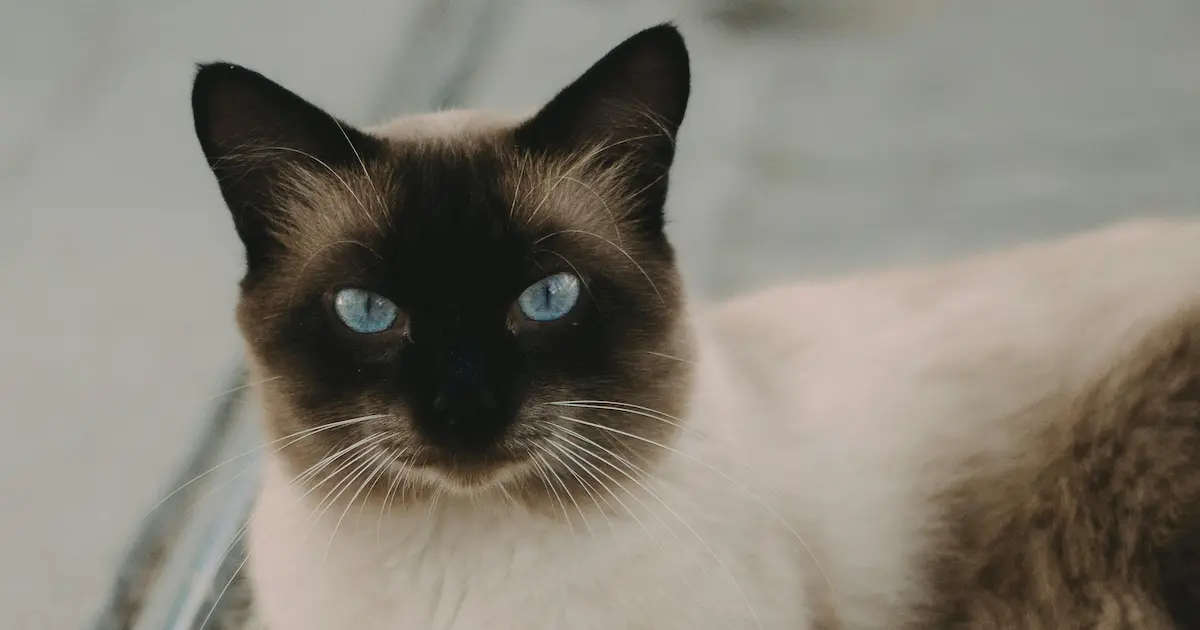
It’s 3 a.m. You’re dead asleep. And then it starts: a long, raspy, almost human-sounding meow right next to your ear, followed by a slow blink and a paw on your face.
Welcome to life with a Siamese cat.
If that scene made you grin, you might be exactly the kind of person this breed is looking for. If it made you flinch, keep reading anyway, because there’s a lot more to these blue-eyed talkers than the noise. They’re one of the oldest pedigreed cat breeds in the world, ridiculously smart, and so attached to their humans that vets sometimes call them “dog-like.” They’re also opinionated, demanding, and definitely not for everyone.
Here’s everything you actually need to know before you bring one home.
Siamese Cat at a Glance
| Origin | Thailand (formerly Siam), 14th century or earlier |
| Weight (Male) | 8 to 12 lbs |
| Weight (Female) | 6 to 10 lbs |
| Lifespan | 12 to 20 years |
| Coat | Short, fine, close-lying |
| Colors | Seal, chocolate, blue, and lilac point (more in some registries) |
| Energy Level | High |
| Grooming Needs | Low |
| Good With Kids | Yes, especially older kids |
| Good With Other Pets | Yes, with proper introductions |
| Average Price | $400 to $2,500 from breeders |
The Two Types of Siamese: Applehead vs Wedgehead
Before anything else, you need to know this. Not all Siamese cats look the same. The breed has basically split into two body types over the last century, and the differences matter for your daily life.
The applehead Siamese (also called traditional or old-style) is the rounder, sturdier cat. Bigger bones, a chunkier body, and a softer head shape that looks a bit like, well, an apple. This is closer to what the original Thai temple cats actually looked like. They tend to be a touch calmer, slightly quieter (though still vocal by normal cat standards), and they generally live longer, often hitting 15 to 20 years.
The wedgehead Siamese (also called modern, show, or extreme) is the long, lean, sharply triangular cat you see in cat shows and old movie posters. Very slim body, oversized ears, slanted blue eyes, a head that points forward like an arrow. This is the current breed standard for the CFA and TICA show ring. They’re stunning, but the extreme structure can come with higher rates of dental, respiratory, and heart issues, so some lines run shorter on lifespan.
Both are real Siamese cats. Both have the same brain and core personality. But if longevity matters most to you, a well-bred applehead from a careful breeder is the safer pick. If you love the dramatic show-cat look and you’ve found a breeder who screens hard for health, the wedgehead is still a wonderful cat.
Where Did the Siamese Cat Come From?
The Siamese is genuinely ancient. Manuscripts from old Siam (now Thailand) show pointed cats that look unmistakably Siamese going back to at least the 1300s. They lived in temples and royal palaces, where they were treated like minor celebrities. Some Thai families still consider them lucky.
The first one to land in the United States arrived in 1879 as a diplomatic gift to President Rutherford B. Hayes and his wife. Her name was Siam, and she became a favorite in the White House before falling sick a few months later. The Cat Fanciers’ Association officially recognized the breed in 1906, making it one of the very first pedigreed cats in America.
From there, the breed split. British and American breeders in the mid-1900s started selecting for sleeker, more extreme features, which created the modern wedgehead look. A smaller group of breeders held onto the older, rounder appearance, which became the traditional applehead. Both lines are alive and well today.
What a Siamese Cat Actually Looks Like
You’ll know one when you see one. The body is sleek, long, and athletic, built more like a dancer than a couch potato. The legs are slim with the back ones slightly longer than the front, the tail is long and tapered, and the ears are oversized (especially on the wedgehead).
And those eyes? Always blue. Every single Siamese, in every color point, has blue eyes. No exceptions.
The coat is short, glossy, and so fine it almost feels like silk. The classic pattern is a pale body with darker “points,” meaning the face mask, ears, paws, and tail are richer in color than the rest. The CFA officially recognizes four point colors for the Siamese:
- Seal point: Dark brown, almost black points on a cream body. The original and most common.
- Chocolate point: Warm milk-chocolate points on an ivory body.
- Blue point: Cool slate-gray points on a bluish-white body.
- Lilac point: Pale frosty-pink points on an off-white body. The rarest of the four.
Other registries and related breeds accept more colors like red (flame), cream, lynx (tabby), and tortie points. In the CFA, those cats are usually classified as Colorpoint Shorthairs rather than Siamese, but to most pet parents, they’re functionally the same animal.
Here’s a fun fact most articles skip: every Siamese kitten is born pure white. The color doesn’t appear until they’re about a week or two old. That’s because the pigment is heat-sensitive. Cooler body parts (ears, face, paws, tail) develop dark pigment, while the warmer torso stays light. Older Siamese cats actually darken all over as they age, because their body temperature drops slightly.
The Siamese Personality, No Sugarcoating
Let’s be honest. Most breed sites describe the Siamese as “social and chatty” the way real estate listings describe a 200-square-foot studio as “cozy.” Technically true. Not the whole story.
Siamese cats are intensely social. They want to be where you are. If you’re in the kitchen, they’re on the counter. If you’re in the bathroom, they’re somehow already in the bathroom. They follow you around like a small, opinionated assistant who has notes about everything you’re doing.
They’re also smart, almost too smart. A bored Siamese will figure out how to open cabinets, turn on faucets, and unlatch screen doors. You can teach them to fetch, walk on a leash, sit, and respond to their name. Some seem to learn a handful of human words, or at least convince you that they have.
And yes, they talk. A lot. The voice is famously loud and a bit raspy, often compared to a hoarse baby crying. They’ll meow at you when they want food, when they want attention, when they see a bird, when they remember a bird from yesterday, and when they have no apparent reason at all. The Siamese is widely considered the most vocal of all pedigreed cat breeds.
The flip side of all this love is real separation anxiety. A Siamese left alone 10 hours a day will often develop unwanted behaviors: excessive grooming until bald patches appear, destructive scratching, depression, or even refusing to eat. This isn’t a cat you can “set and forget” while you travel for work.
Is a Siamese Cat Right for You?
Here’s the honest decision framework most breed sites won’t give you.
A Siamese is a great match if:
- You work from home, are retired, or someone is around most of the day
- You actually enjoy talking to your cat and being followed everywhere
- You want a pet that interacts more like a small dog than a typical cat
- You’re committed to play sessions every single day
- You’re open to getting two cats so they can keep each other company
A Siamese is probably the wrong choice if:
- You work long hours away from home and live alone
- You’re a light sleeper who can’t tolerate any nighttime noise
- You want a quiet, independent, low-touch pet
- Your household has a strict “no cat on the counter, no cat on the bed” rule (good luck)
- You’re not ready for a 15-to-20-year commitment to a high-need animal
None of this means a Siamese is “too much.” It just means they’re a specific kind of cat for a specific kind of person. Matching that right is half the work of being a good owner.
Siamese Cat Health Issues to Watch For
Siamese cats are generally hardy, but the breed carries a handful of genetic conditions you should know about before buying. A responsible breeder will screen for these and show you the test results. If they can’t, walk away.
Progressive Retinal Atrophy (PRA)
This is the big one. It’s a genetic eye disease that gradually destroys the retina and leads to blindness. In Siamese cats, it’s most often caused by a mutation in the CEP290 gene. The UC Davis Veterinary Genetics Laboratory offers a simple DNA test for it, and the mutation runs in about a third of all Siamese, which is high.
Early signs include night blindness and dilated pupils that don’t shrink in bright light. There’s no cure, but cats adapt remarkably well to vision loss in familiar homes. The fix is prevention: only buy from breeders who test their breeding pairs for CEP290 and show you N/N (clear) results.
Amyloidosis
This is a hereditary disease where abnormal proteins build up in the organs, especially the liver in Siamese cats (it tends to hit the kidneys in other breeds). It usually shows up between ages 1 and 7. Warning signs include vomiting, weight loss, loss of appetite, and yellowing of the gums or eyes. There’s no cure, but supportive care and dietary changes can help slow it down.
Feline Asthma
Siamese are one of the breeds most prone to asthma. The signs look a lot like a hairball that won’t come up: hunched posture, neck stretched out, dry coughing or wheezing. Triggers include cigarette smoke, scented candles, dusty litter, and harsh cleaning sprays. Vets can manage it with inhalers (yes, cat inhalers exist) and oral meds.
Dental Disease
The narrow jaw of the wedgehead Siamese makes them prone to crowded teeth, plaque buildup, and gingivitis. Brushing your cat’s teeth a few times a week and getting professional cleanings yearly can save you thousands in extractions later.
Certain Cancers
The breed has a slightly elevated risk of mediastinal lymphoma (a cancer affecting the chest), mast cell tumors, and intestinal adenocarcinoma. Yearly vet checkups (twice a year for seniors) catch most issues early, when treatment options are best.
Feline Hyperesthesia Syndrome
This one’s weird. The skin along the cat’s back becomes hypersensitive, leading to rippling skin, sudden episodes of intense grooming or tail-biting, and dashing around the house. It’s not life-threatening, but it’s stressful for the cat. Vets manage it with behavior changes and sometimes medication.
Grooming and Coat Care
This is one of the easier parts of Siamese ownership. The coat is short, lies flat, and doesn’t mat. Most Siamese cats are happy with a once-a-week brush using a soft slicker brush or a rubber grooming mitt, which catches loose hair before it ends up on your couch.
The basics that matter:
- Nails: Trim every 2 to 3 weeks. Siamese cats use their paws a lot, and long nails snag on fabric.
- Teeth: Brush 2 to 3 times a week with cat-specific toothpaste. Especially important for wedgehead types.
- Ears: Check weekly. Those big ears collect dust faster than you’d think.
- Eyes: Wipe gently with a damp cloth if you see any discharge.
Siamese cats do shed, but lightly. You’ll notice a slightly heavier shed twice a year in spring and fall, and that’s about it.
Feeding Your Siamese Cat
Siamese cats are lean, athletic, and built to run on protein. They do best on a diet that’s high in animal protein, moderate in fat, and low in fillers. Look for foods where real meat (chicken, turkey, fish, rabbit) is the first ingredient.
A few things to keep in mind:
- Most adult Siamese eat about 4 to 6 ounces of wet food a day, or roughly 1/3 to 1/2 cup of high-quality dry food, split into two meals
- Wet food is great for hydration, since Siamese can be prone to urinary issues as they age
- Free-feeding works for some cats but leads to weight gain in others, especially indoor-only ones
- Some Siamese are famously picky and will boycott a new food for days. Switch foods gradually over a week
- Always have fresh water available, ideally in a fountain since this breed often prefers running water
If you’re feeding a kitten, look for a food labeled “growth” or “all life stages” until they’re about a year old.
Exercise, Play, and Beating Boredom
A bored Siamese is a destructive Siamese. These cats have energy, brains, and free time, which is a recipe for disaster if you don’t give them outlets. Plan on at least two 15-minute interactive play sessions a day. Wand toys, feather teasers, and laser pointers are favorites.
They also love to climb. A tall cat tree (the kind that reaches near the ceiling, not the squat little ones) gives them a place to perch, scratch, and survey their kingdom. Window seats and wall-mounted cat shelves are worth installing if you can.
Puzzle feeders and food-dispensing toys keep their brains busy. Many Siamese can be trained to fetch and will bring you the same crumpled paper ball for an hour straight. A lot of them also do great on a harness and leash if you want to take them on slow outdoor adventures.
Living With Kids, Dogs, and Other Cats
Siamese cats are generally fantastic family pets, but the relationship works best when expectations are clear on both sides.
With kids: Older kids who understand “don’t yank tails” do beautifully with Siamese. The cats are sturdy, playful, and tolerant. Toddlers and Siamese cats can coexist too, but supervise early interactions until both parties figure out the boundaries.
With dogs: Many Siamese actually prefer the company of a friendly, calm dog over being alone all day. Slow introductions over a few days work best. A dog that wants to chase or rough-play is a problem. A dog that wants a friend is a gift.
With other cats: Most Siamese love having another cat around, especially another Siamese or a similarly active breed like an Abyssinian. Plenty of breeders flat-out recommend getting two if you work outside the home, because a second cat fills the gap when you can’t be there.
With small pets: Birds, hamsters, and fish are at risk. The Siamese is a hunter at heart, and a very curious one. Keep cages secure and out of reach.
Lifespan and Aging Tips
Most Siamese cats live 15 to 20 years, with traditional appleheads often hitting the higher end. Some make it past 20 with great genetics and great care. Wedgehead types average a bit shorter, partly because of breed-related health issues tied to their extreme build.
To help your Siamese hit the upper range:
- Keep them indoor-only, or only outside on a harness
- Schedule vet checkups twice a year once they hit age 10
- Brush their teeth and get professional cleanings done
- Don’t let them get overweight (it’s the single biggest predictor of a shorter cat lifespan)
- Switch to a senior diet around age 11, with more moisture and joint support
- Watch for subtle changes like drinking more water, hiding, or losing muscle, which can signal kidney or thyroid issues
How Much Does a Siamese Cat Cost in 2026?
The Siamese isn’t the most expensive cat breed out there, but it’s not cheap either, and the price varies a lot depending on where you get one.
From a registered breeder: Pet-quality kittens from CFA or TICA breeders run roughly $400 to $1,000. Show-quality kittens from champion bloodlines can hit $1,500 to $2,500, with the median in 2026 sitting around $1,950 per recent breeder surveys. Higher prices reflect mandatory genetic testing, full vaccinations, microchipping, and early socialization.
From a rescue: Adoption fees usually fall between $75 and $200, and that often includes spay or neuter, vaccines, and a vet check. Siamese-specific rescues like the Siamese Cat Rescue Center take in surrendered adults and mixes regularly.
First-year setup costs: Plan for around $750 to $1,500 in one-time costs (carrier, litter boxes, scratching posts, cat tree, beds, toys, initial vet visits, spay/neuter if not already done).
Monthly costs: Expect $80 to $200 a month for food, litter, routine vet care, and pet insurance. Premium food and insurance push it higher.
Across a 15-year life, the realistic total cost of ownership often lands between $20,000 and $35,000. Cats are expensive. Knowing that upfront is the kindest thing you can do for yourself and for the cat.
Where to Find a Siamese Cat Ethically
Don’t buy from pet stores or random sellers advertising “Siamese kittens, ready to go, $200” on Craigslist. That’s how you end up with a sick kitten and a $4,000 vet bill three months later.
A good Siamese breeder will:
- Be registered with CFA or TICA
- Test breeding pairs for CEP290 (PRA) and show you the results
- Let you visit the cattery in person or by video call and meet the parents
- Keep kittens with their mom until at least 12 to 14 weeks old
- Provide vaccination records, a health guarantee, and a written contract
- Ask you questions, not just the other way around
Red flags to avoid:
- Multiple breeds available at the same time, year-round
- Refusal to let you visit in person or video call
- Pressure to pay through nontraceable methods
- Kittens offered before 8 weeks old
- No health testing documentation
- “Pure Siamese for $150” (no real breeder can cover their costs at that price)
Rescue is also a real option. Siamese cats end up in shelters more often than you’d think, especially adolescents whose owners didn’t expect the noise level. Check Petfinder, Adopt-a-Pet, and breed-specific rescues. An adult Siamese is a wonderful pet to take home, and you’ll skip the chaotic kitten phase entirely.
Siamese Cousins: Breeds to Consider Instead
If the Siamese is close but not quite right, look at one of these related breeds:
- Balinese: Basically a long-haired Siamese. Same personality, slightly softer voice, plumed tail.
- Oriental Shorthair: A Siamese in every color and pattern except points. Over 300 possible color combinations. Just as chatty.
- Colorpoint Shorthair: A Siamese with non-traditional point colors like flame (red), lynx (tabby), and tortie. Classified separately by the CFA but identical in temperament.
- Tonkinese: A cross between Siamese and Burmese. Softer voice, rounder face, aqua or green eyes, still social.
- Ragdoll: A great pick if you want the pointed coat and big personality without the volume. Calmer, larger, more laid back.
Common Myths About Siamese Cats
Myth 1: “All Siamese cats are crossed-eyed.” They used to be. The crossed-eye trait was tied to the same gene that produces the points. Modern breeders have largely bred it out, and a clearly crossed-eyed Siamese is now considered a fault in the show ring.
Myth 2: “Siamese cats are aloof and mean.” Almost the exact opposite. They’re one of the most affectionate cat breeds you can find. The “mean” reputation came from old cartoons (looking at you, Lady and the Tramp), not real life.
Myth 3: “Siamese cats are hypoallergenic.” No cat is truly hypoallergenic. All cats produce the Fel d 1 protein that triggers most allergies. Siamese may produce slightly less than some breeds and shed lightly, but they’re not allergy-proof.
Myth 4: “Siamese kittens are born with their dark points.” Nope. They’re born pure white. The color develops over the first few weeks because of how their pigment reacts to body temperature.
Myth 5: “All Siamese sound the same.” Even their voices vary. Traditional appleheads tend to be quieter and softer. Modern wedgeheads tend to be louder and raspier. Individual cats also have very different chat levels.
Frequently Asked Questions
Q: Are Siamese cats good for first-time owners?
Yes, with one big caveat. They’re easy to care for grooming-wise and friendly with everyone, but their high-energy, high-need personality can overwhelm someone expecting a quiet, low-maintenance pet. First-time owners who want lots of interaction will love them. First-timers who want a calm, independent cat should look elsewhere.
Q: Why is my Siamese cat so loud at night?
Siamese cats are crepuscular, meaning they’re most active at dawn and dusk. Nighttime meowing usually means hunger, boredom, attention-seeking, or sometimes a medical issue. Try a late-night play session followed by a meal before bed, and keep them mentally stimulated during the day so they actually sleep at night.
Q: How long do Siamese cats actually live?
The breed average is 12 to 20 years, with traditional applehead Siamese often reaching the higher end and occasionally hitting their early 20s. Modern wedgehead types tend to live a bit shorter on average due to dental, heart, and respiratory issues tied to their extreme build.
Q: Are Siamese cats hypoallergenic?
No cat is fully hypoallergenic. Siamese cats produce the Fel d 1 protein that triggers most cat allergies, just like every other breed. That said, their short single coat and light shedding may make them tolerable for some people with mild allergies. Always spend time with a Siamese in person before buying if you have allergies.
Q: Do Siamese cats get along with dogs?
Most do, yes. Siamese cats often prefer the company of a friendly, calm dog over being alone all day. Introduce them slowly over a few days, give the cat vertical escape routes, and avoid pairing them with high-prey-drive dog breeds that want to chase.
Q: How much should I feed my Siamese cat?
An average adult Siamese needs around 200 to 280 calories a day, split into two meals. That usually works out to 4 to 6 ounces of high-quality wet food, or 1/3 to 1/2 cup of premium dry food. Adjust based on weight, age, and activity level. Senior cats and indoor-only cats generally need less.
Q: Why are some Siamese cats crossed-eyed?
The crossed-eye trait is linked to the same albinism gene that creates the pointed coat pattern. It’s a developmental quirk in the optic pathway. Selective breeding has mostly eliminated it from modern show lines, but occasional crossed-eyed Siamese still pop up, especially in older or traditional lines. The cats themselves see just fine.
Q: Should I get one Siamese or two?
If you work outside the home or travel often, get two. Siamese cats genuinely struggle with loneliness, and a feline buddy (ideally another Siamese or an active breed like an Abyssinian) prevents the worst of the separation anxiety. If you’re home most of the day, one Siamese is plenty.
Final Verdict: Should You Get a Siamese?
Here’s the truth. The Siamese is one of the most rewarding cats you can ever live with, if you match it with the right home. They’re funny, loyal, brilliant, and so deeply bonded to their humans that life with one feels like sharing your house with a small, opinionated roommate who happens to have fur and very blue eyes.
But they’re not a quiet, easygoing breed. They need attention. They need playtime. They need a person who actually wants to be talked to all day. Give them that, and they’ll give you 15 to 20 years of the most personality-rich relationship you’ve ever had with an animal.
If you’ve read this whole guide and you’re still smiling at the idea of a 3 a.m. paw on your cheek, you might be exactly the home a Siamese cat is hoping for.
Go meet one. You’ll know.

Hello and welcome to The Ideal Cat!
We are some passionate cat owners from different professions. We love our cats and have a lot of experience in how to care for our pets. We are incredibly excited to share our knowledge, experience, and research with you. So you can take good care of your loving cat. We will answer most of the common questions about owning cats, taking care of them, etc. If you have any question contact with us. Thanks for visiting! Enjoy the content.
)