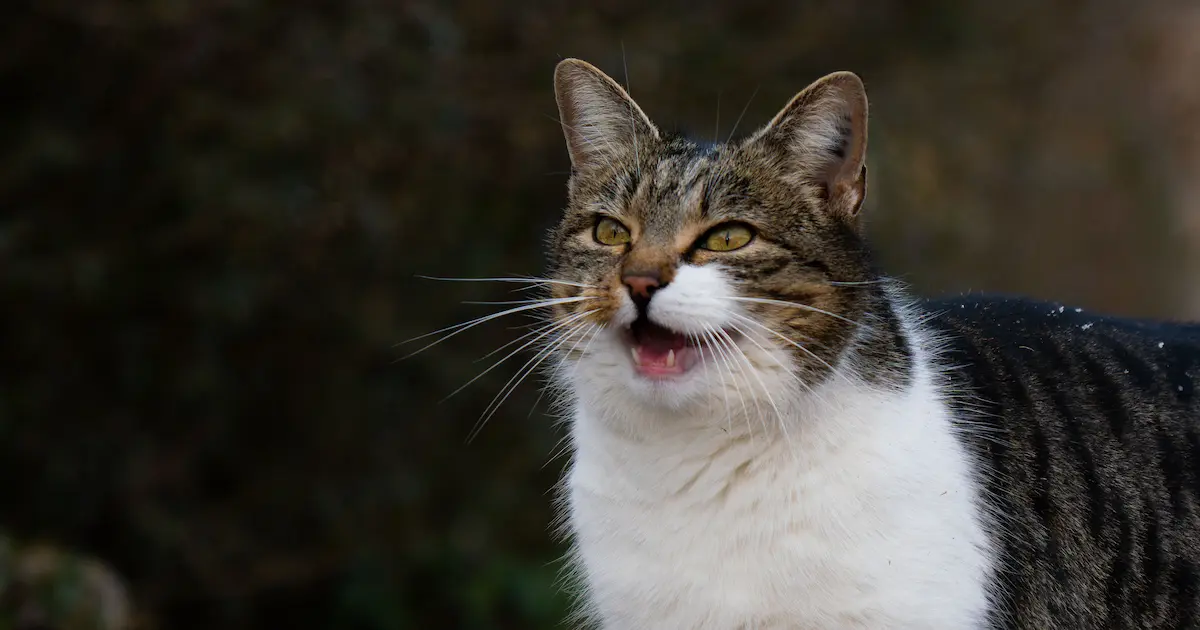
If you’ve ever had your cat plant herself by your face at 3am and yell like she’s never been fed, you know the feeling. One day your cat is quietly chirpy, the next she won’t stop. It’s hard to ignore, and a little worrying.
Here’s the good news: most meowing is just your cat talking to you. But sometimes it’s a signal worth checking. Let’s decode what your cat is saying, then talk about how to handle it.
- Cats meow almost entirely to communicate with humans, not with each other, so excessive meowing is usually a request aimed at you.
- The two most common reasons for a cat meowing a lot are learned attention-seeking and a medical problem.
- A sudden change in your cat’s meowing is a medical red flag until a vet rules out illness, especially in cats over 7.
- Nighttime yowling in senior cats is often linked to hyperthyroidism, high blood pressure, vision loss, or cognitive dysfunction (feline dementia).
- To reduce attention meowing, you have to ignore it completely, because any response, even scolding, rewards the behavior.
Why is my cat meowing so much? The 9 most common reasons
Cats meow so much because they’ve learned it works on humans. Adult cats rarely meow at each other; they mostly save it for us. So when your cat is loud, she’s usually asking for something specific. Below are the nine most common reasons, from totally normal to “let’s call the vet.”
| Usually normal | Worth a vet check |
|---|---|
| Meowing at mealtimes | Sudden new or constant meowing |
| Greeting you when you come home | Yowling at night in a senior cat |
| A chatty breed (Siamese, Bengal) | Meowing with weight loss or pacing |
| Asking for play or attention | Crying in the litter box or when touched |
| Meowing at a closed door | A meow that sounds different than usual |
1. She wants your attention
Attention-seeking is the single most common reason a cat meows a lot, and it’s a learned habit. Your cat figured out that meowing makes you look at her, talk to her, or pet her. Once that clicks, she does it more. Many cats meow the second you walk into a room or get busy with something that isn’t them.
2. She’s hungry or thirsty
Plenty of cats are masters of the “feed me now” meow, especially around their usual mealtimes or when you open the fridge. If the meowing lines up with breakfast and dinner, your cat is probably just running her own dinner bell. Check that her bowl and fresh water are topped up.
3. She’s just saying hello
Some cats greet you with a meow every time you come home or walk past. This is normal social chatter, and it’s a sign your cat is happy to see you. Adult cats often develop little vocal patterns made just for their humans.
4. She’s stressed or something changed
A sudden uptick in meowing can mean your cat is stressed or anxious. Cats are creatures of habit, so a new pet, a move, a schedule change, a houseguest, or rearranged furniture can all trigger more vocalizing. Give her a quiet, safe spot to retreat to while she adjusts.
5. She’s bored or lonely
A cat with too little to do will often meow for stimulation. Boredom meowing is common in indoor cats who are home alone a lot. More play, climbing space, window perches, and puzzle feeders usually quiet it down.
6. She’s looking for a mate
Unspayed and unneutered cats yowl loudly when they’re in heat or hunting for a mate. This is hormone-driven and can be intense and round-the-clock. Spaying or neutering almost always stops this kind of yowling.
7. She’s in pain or unwell
Cats hide pain well, so a change in meowing can be an early clue that something hurts. Dental disease, arthritis, urinary problems, and injuries can all cause more vocalizing. A meow that suddenly sounds hoarse or different also deserves a vet’s ear.
8. She’s a senior with age-related changes
Older cats often meow more because of medical or cognitive changes that come with age. Hyperthyroidism, high blood pressure, fading senses, and feline dementia are common culprits. We’ll dig into senior and nighttime meowing further down, because it’s a big one.
9. She’s just a talkative breed
Some cats are wired to be loud. Siamese, Tonkinese, Oriental, and Bengal cats are known for being especially vocal, and that’s simply their personality. If your chatty cat has always been chatty and seems healthy, breed is likely your answer.
Why is my cat meowing so much all of a sudden?
A sudden increase in meowing should be treated as a possible medical issue until a vet says otherwise. A cat who was quiet and is now loud, or whose meow has changed in tone, is often telling you something is uncomfortable. This is different from a cat who has always been talkative.
Pay attention to what comes with the new meowing. Watch for changes in appetite, thirst, weight, energy, litter box habits, or signs of pain. Track when it happens and what seems to set it off. That short history helps your vet figure out medical versus behavioral causes fast.
For middle-aged and senior cats especially, vets usually consider medical reasons first when meowing suddenly ramps up. If the change lasts more than a day or two, or comes with any other symptom, book an exam.
Why is my cat meowing so much at night?
Nighttime meowing usually comes from one of two places: a young cat’s natural late-night energy, or a medical or cognitive issue in an older cat. In senior cats, you should not assume night yowling is “just behavior.” According to the Cornell Feline Health Center, night vocalizing in older cats is commonly linked to several treatable conditions.
- Hyperthyroidism: An overactive thyroid speeds up a cat’s metabolism, leaving senior cats restless, hungry, and very vocal. Weight loss despite a big appetite is a classic sign.
- High blood pressure (hypertension): Often tied to kidney or thyroid disease, it can cause restlessness and loud meowing, particularly at night.
- Vision or hearing loss: Cats who can’t see or hear well get disoriented in the dark and call out for reassurance.
- Cognitive dysfunction (feline dementia): Similar to Alzheimer’s in people, it causes confusion, disrupted sleep cycles, and loud, repetitive yowling, especially overnight.
If you have a young cat keeping you up, the fix is different. Play hard with her in the early evening to tire her out, feed her last thing before bed, and don’t get up to feed or soothe her when she cries (more on why below). For a senior cat with new night yowling, skip the training and start with a vet exam.
When should I take my cat to the vet for meowing?
See your vet if your cat’s meowing is new, intense, sounds different, or comes alongside any other symptom. Excessive meowing is usually a sign, not a condition by itself, so a quick exam rules out the things that actually need treatment. This article is educational and isn’t a substitute for advice from a licensed veterinarian who can examine your cat.
Book a regular appointment if you notice meowing plus any of these:
- Weight loss, increased hunger, or increased thirst
- Pacing, restlessness, or hiding
- Changes in litter box habits
- Less grooming, low energy, or a scruffy coat
- A meow that has changed in pitch or sound
See a vet right away if your cat is straining to urinate, can’t pass urine, is crying in the litter box, seems painful when touched or moving, collapses, or is breathing hard. A male cat unable to pee is a true emergency.
How do I get my cat to stop meowing so much?
To reduce attention meowing, rule out medical and basic needs first, then stop rewarding the behavior. The catch most owners miss: any response at all, including yelling or pushing your cat away, counts as attention and makes the meowing worse. Here’s the order that works.
- Rule out a medical cause. If the meowing is new, get a vet exam before trying any training. You can’t train away pain or hyperthyroidism.
- Cover the basics. Make sure food, fresh water, a clean litter box, play, and attention are all there. A cat with an unmet need will keep meowing for a reason.
- Stop reinforcing the meows. When your cat meows for attention, ignore it fully. No eye contact, no talking, no feeding, no scolding. Walk out of the room if you have to.
- Reward the quiet. The moment your cat goes quiet, give her attention, praise, or play. This teaches her that calm behavior, not noise, gets your focus.
- Stay consistent. Giving in even occasionally resets the clock and teaches her that persistence pays off. It often gets louder before it gets better, so hang in there.
- Add enrichment and routine. Interactive play, climbing perches, puzzle feeders, and predictable feeding times reduce boredom and anxiety meowing at the source.
For food-demand meowing, an automatic feeder set to specific times can be a game-changer, since the machine, not you, becomes the dinner bell.
Is it cruel to ignore my cat’s meowing?
No, ignoring attention-seeking meowing is not cruel, as long as your cat’s real needs are met first. Ignoring means you’ve already confirmed she’s fed, watered, healthy, and has a clean litter box, and you’re simply not rewarding the noise. You’re still giving her plenty of love, just on quiet terms instead of loud ones.
What you should never ignore is a meow that signals distress or pain, or a sudden change in an older cat. Those need attention, not silence. The skill is learning your cat’s sounds: a demanding “pay attention to me” meow is very different from a cry of pain, and you’ll start to tell them apart with time.
Frequently Asked Questions
Q: Do cats meow more as they get older?
Yes, many senior cats meow more, often because of age-related conditions rather than personality. Hyperthyroidism, high blood pressure, vision or hearing loss, and cognitive dysfunction all increase vocalizing in older cats. A new increase in an older cat always deserves a vet exam.
Q: Why won’t my cat stop meowing even after I feed her?
If your cat keeps meowing after eating, she may want attention, play, or access to something rather than food. It can also signal stress or a medical issue, especially if it’s a new behavior. Cover her basic needs, and if the meowing continues or is sudden, see your vet.
Q: Is constant meowing a sign my cat is sick?
Constant or sudden meowing can be a sign of illness, including pain, hyperthyroidism, kidney disease, or high blood pressure. The bigger red flag is a change from your cat’s normal pattern, particularly when paired with weight loss, appetite changes, or litter box issues. A vet visit is the safest way to rule out a medical cause.
Q: Why does my cat meow at me but not at other cats?
Cats reserve meowing almost entirely for humans, not for each other. Adult cats communicate with other cats through scent and body language, and use sounds like hissing or growling for conflict. Meowing is a learned behavior aimed at people, because it gets a response from us.
Q: Do Siamese cats really meow more?
Yes, Siamese cats are well known for being especially vocal, along with breeds like Tonkinese, Oriental, and Bengal. If your talkative cat is one of these breeds and is otherwise healthy, the chattiness is usually just personality. You can reduce it somewhat by not rewarding the meowing.
Q: Can anxiety or stress make my cat meow more?
Yes, stress and anxiety are common causes of increased meowing. Changes like a move, a new pet, a schedule shift, or houseguests can all trigger it. Predictable routines, a quiet retreat space, and calming pheromone diffusers can help ease stress-related vocalizing.
Q: Why does my cat meow so much at night specifically?
Young cats are naturally most active at night and may meow from leftover energy, while senior cats often yowl at night due to hyperthyroidism, high blood pressure, fading senses, or feline dementia. Tire young cats out before bed and avoid feeding them when they cry. For older cats with new night yowling, see your vet.
Q: Should I use a spray bottle to stop my cat meowing?
No, spraying or scolding your cat does not stop meowing and can make it worse. Any reaction, even a negative one, gives your cat the attention she’s after and increases her fear. The proven approach is to ignore attention meowing completely and reward quiet behavior instead.
So, why is your cat meowing so much? Most of the time she’s simply talking to you, asking for food, attention, or a little reassurance. But a sudden change, nighttime yowling in a senior cat, or meowing paired with other symptoms is your cue to call the vet. Learn your cat’s sounds, meet her real needs, and you’ll both sleep a lot better.

Hello and welcome to The Ideal Cat!
We are some passionate cat owners from different professions. We love our cats and have a lot of experience in how to care for our pets. We are incredibly excited to share our knowledge, experience, and research with you. So you can take good care of your loving cat. We will answer most of the common questions about owning cats, taking care of them, etc. If you have any question contact with us. Thanks for visiting! Enjoy the content.
