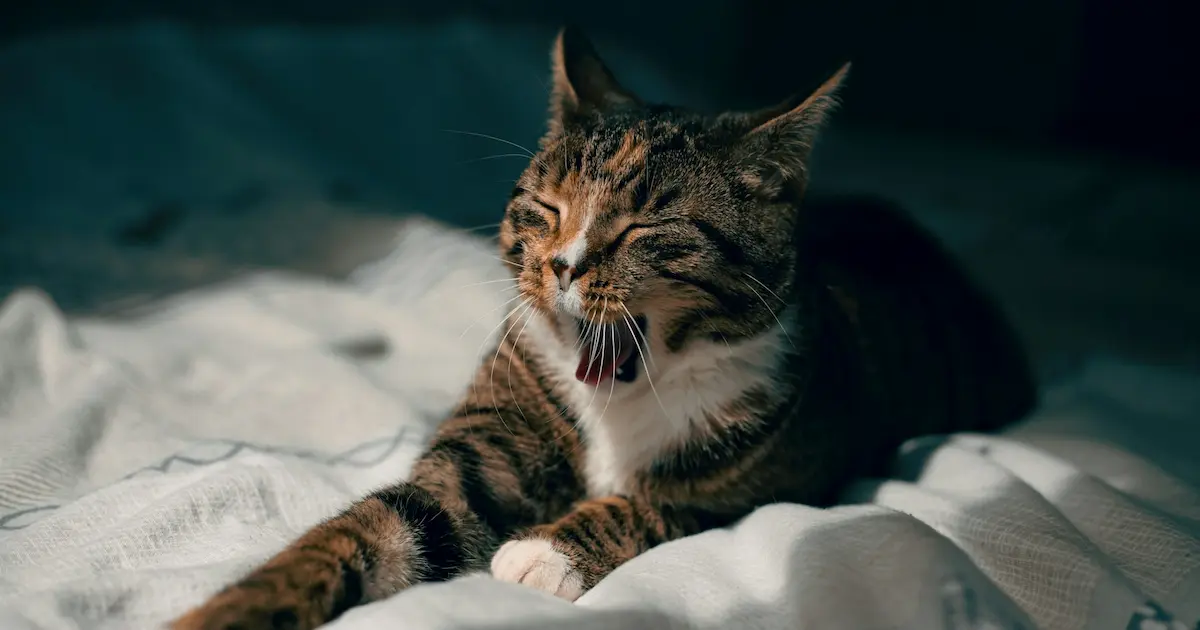
If you’ve ever shot awake at 3am to a cat sitting in the hallway, howling at absolutely nothing, you’re not alone. Night meowing is one of the most common things cat parents quietly lose sleep over. The good news is that most nighttime meowing has a clear, fixable reason. So if you’re wondering “why does my cat meow at night,” this guide walks through every likely cause, sorted by your cat’s age, plus the red flags that mean it’s time to call your vet.
Here’s the thing: meowing is how cats talk to us. Adult cats rarely meow at each other. They learn it works on humans. So a meow at night is almost always your cat asking for something, and our job is to figure out what. If you sleep through most of it, a cat camera will show you what she’s actually doing at 3am.
Why does my cat meow at night instead of sleeping?
Cats meow at night because their bodies are wired for dawn-and-dusk activity, and a cat that sleeps all day often has energy to burn just as you head to bed. The single biggest driver in healthy cats is a mismatch between your cat’s internal clock and your sleep schedule. Cats are crepuscular, a word that simply means most active around sunrise and sunset, the prime hunting hours for their wild ancestors.
So when your cat naps from 9am to 6pm, they wake up refreshed and ready to “hunt” right when the house goes dark and quiet. With no mice to chase, that predatory energy comes out as pacing, zoomies, and loud meowing at the one warm body that usually gives them what they want: you.
Still, night meowing is not always just instinct. It falls into a few clear buckets, and the right fix depends on which one you’re dealing with.
What are the most common reasons cats meow at night?
The most common reasons cats meow at night are pent-up energy, hunger, boredom, attention-seeking, stress, and the natural dawn-dusk activity cycle. In older cats, medical issues join the list. Here are the seven causes that explain the vast majority of nighttime meowing, with how to spot each one.
| Reason | What it looks like | What to do |
|---|---|---|
| Hunting and play instinct | Zoomies, pouncing, meowing then dashing around before dawn | A hard wand-toy session right before bed. |
| Boredom or too little daytime activity | Sleeps all day, wide awake and vocal at night | Window perches, puzzles, and short daytime play breaks. |
| Hunger or an empty bowl | Meowing near the food bowl, often pre-dawn | A late meal, or a timed feeder for the early hours. |
| Attention-seeking | Meows outside your door, stops when you respond | Stay consistent and don’t reward the noise. |
| Stress or change in routine | More vocal after a new pet, move, or baby | Calm, predictable evening routines. |
| Heat or mating behavior | Loud, drawn-out yowling in an unspayed or unneutered cat | Spay or neuter. |
| Medical issues | Sudden new yowling with weight loss, thirst, or confusion | Vet visit, especially in cats over 10. |
1. Hunting instinct and the pre-dawn zoomies
Many cats meow at night because their built-in hunting clock fires before sunrise. A cat with this pattern gets a burst of energy in the early hours, racing through the house, pouncing on toys, and meowing for a play partner. This is normal feline biology, and the fix is usually more play during the day, not less noise at night.
2. Boredom and an unbalanced sleep schedule
A bored cat that snoozes all day is often a noisy cat at night. Indoor cats especially can sleep 12 to 16 hours a day, so if those hours all happen while you’re at work, your cat wakes up understimulated and looking for action after dark. Enrichment and a consistent evening play routine usually turn this around within a week or two.
3. Hunger or an empty bowl
Hunger is a very common reason cats meow at night, especially in the hours right before your alarm. If your cat eats dinner early in the evening, they may genuinely be hungry by 4am and will tell you about it. Cats also quickly learn that morning meowing equals breakfast, which trains them to wake you earlier and earlier.
4. Attention-seeking and learned behavior
Some cats meow at night purely because it works. If meowing has ever earned your cat food, petting, or even a frustrated “shush,” your cat has learned that noise brings a response. Cats enjoy social contact, some are very vocal in asking for it, and any reaction, even a negative one, can reinforce the habit.
5. Stress and changes at home
Cats are creatures of routine, so stress and change can show up as nighttime vocalizing. A new pet, a move, a new baby, a change in your work hours, or even rearranged furniture can leave a sensitive cat feeling unsettled enough to call out at night. Keeping routines steady and adding calm, predictable evening rituals helps these cats settle.
6. Heat cycles and mating behavior
Intact cats yowl at night as part of normal mating behavior. An unspayed female in heat produces loud, repetitive, almost mournful yowling, and unneutered males do the same when they sense a female nearby. Spaying or neutering your cat resolves this kind of yowling and carries broad health and behavior benefits.
7. Medical and age-related causes
In older cats, night meowing can be the first visible sign of illness. Conditions like an overactive thyroid, high blood pressure, and feline dementia commonly cause nighttime yowling in cats over 10. We cover these in detail below, because telling “needs a vet” apart from “needs more playtime” is the most important call you’ll make.
Why does my older cat suddenly yowl at night?
An older cat that suddenly starts yowling at night should be seen by a vet, because new nighttime vocalizing in senior cats is a classic early warning sign of several treatable health conditions. The three most common medical culprits in cats over 10 are hyperthyroidism, high blood pressure, and feline cognitive dysfunction. The word “suddenly” is the key clue: a healthy cat’s habits change slowly, while illness often flips a switch.
This is educational information, not a diagnosis. Only a licensed veterinarian can examine your cat, run bloodwork, and tell you what’s really going on. But knowing what these conditions look like helps you describe the problem and act quickly.
| Condition | What it is | Other signs to watch for |
|---|---|---|
| Hyperthyroidism | An overactive thyroid gland making too much thyroid hormone, common in middle-aged and older cats | Weight loss despite a big appetite, increased thirst, restlessness, vomiting, a fast heart rate, poor coat |
| High blood pressure (hypertension) | Elevated blood pressure, often linked to thyroid or kidney disease | Night yowling, sudden blindness or cloudy eyes, disorientation, often appears alongside other illness |
| Cognitive dysfunction (feline dementia) | Age-related changes in the brain that affect memory, awareness, and sleep, seen in senior cats | Confusion, staring at walls, getting “lost,” litter box accidents, day-night sleep flips, clinginess |
| Pain (arthritis, dental, other) | Discomfort from joints, teeth, or other sources that worsens when the house is quiet | Stiffness, reluctance to jump, hiding, reduced grooming, eating on one side |
Hyperthyroidism: the most common medical cause in older cats
Hyperthyroidism is an overactive thyroid gland, and it is one of the most common reasons senior cats yowl at night. According to the Cornell Feline Health Center, the disease shows up in middle-aged to older cats and can cause vocalizing along with weight loss, a ravenous appetite, increased thirst, vomiting, and nervous, restless energy. The excess hormone revs the whole body up, which is exactly why these cats struggle to settle at night. The good news is that hyperthyroidism is very treatable once diagnosed with a simple blood test.
Feline cognitive dysfunction: doggy dementia’s cat cousin
Feline cognitive dysfunction syndrome, often called feline dementia, is an age-related decline in brain function, and excessive nighttime vocalizing is its single most common sign. The MSD Veterinary Manual says increased vocalization is the most frequently reported behavior sign in aging cats, and cites a study in which about 35 percent of cats over 11 showed at least one sign of cognitive dysfunction, rising to half of cats over 15 showing two or more. Vets track the signs with the letters VISHDAAL: vocalization, changed interactions, sleep-wake changes, house-soiling, disorientation, activity changes, anxiety, and learning or memory loss.
In plain terms, a dementia cat often wakes up confused in a dark, quiet house, can’t quite remember where everyone went, and cries out. Dementia can’t be cured, but vets can help with diet, enrichment, nightlights, and sometimes medication to make these cats more comfortable.
When should I take my cat to the vet for night meowing?
You should take your cat to the vet for night meowing whenever the behavior is new, sudden, or comes with any other symptom, and especially in any cat over 10. Night meowing on its own is often behavioral, but a few signs move it firmly into “get this checked” territory. Don’t try to train away noise that might actually be your cat telling you something hurts.
Book a vet visit promptly if your cat’s nighttime meowing comes with any of these red flags:
- The yowling started suddenly or has clearly gotten worse over days or weeks
- Weight loss, a much bigger appetite, or noticeably increased thirst and urination
- Vomiting, diarrhea, or trouble using the litter box
- Signs of confusion: staring at walls, getting “stuck” in corners, not recognizing you
- Sudden vision changes, cloudy eyes, or bumping into furniture
- Straining to pee, crying in the litter box, or going outside the box (this can be an emergency in male cats)
- Limping, stiffness, hiding, or any sign of pain
- Your cat is over 10 years old and the night yowling is a new habit
If your cat is straining to urinate and producing little or nothing, treat it as an emergency and call a vet right away, since a urinary blockage can become life-threatening within hours. For everything else on the list, a same-week appointment is the safe move.
How do I get my cat to stop meowing at night?
To get your cat to stop meowing at night, first rule out hunger and illness, then tire your cat out with evening play, feed a late meal, and avoid rewarding the meowing. Most healthy cats settle within one to two weeks once their schedule and needs are sorted. Here’s the step-by-step plan, in the order that works best.
- Get a vet check first if anything seems off. Before you try any training, rule out pain and illness, especially in cats over 10 or if the meowing is new. Ignoring a sick cat won’t help either of you.
- Add a big play session before bed. Use a wand toy to mimic a hunt: stalk, chase, pounce, then a final “catch.” Ten to fifteen minutes of real exertion drains the energy that fuels night zoomies.
- Feed a meal right after that play. In the wild, cats hunt, eat, groom, then sleep. Recreate that loop with a late-evening meal so your cat’s body gets the “now we rest” signal.
- Try a timed or puzzle feeder for early hunger. An automatic feeder set for 5am gives a pre-dawn meal without training your cat to wake you. A food puzzle can also stretch dinner through the night.
- Make daytime more interesting. Window perches, food puzzles, rotating toys, and a few short play breaks keep your cat awake and engaged during the day so they sleep at night.
- Keep the bedroom boring and consistent. A cozy bed, fresh water, and a clean litter box outside your room remove common reasons to call out. Some cats settle best shut out of the bedroom, others settle best invited in. Pick one and stay consistent.
- Don’t reward the meowing, and expect it to get louder first. If your cat is healthy and just wants attention, any response teaches them to keep going. We explain the “gets worse before better” part next, because it trips a lot of people up.
Why ignoring the meowing makes it worse before it gets better
When you stop responding to attention-seeking meows, the noise usually spikes before it fades, a normal pattern called an extinction burst. Your cat thinks, “this used to work, I just need to try harder,” so for several nights the meowing gets louder and more persistent. Owners who cave a few nights in accidentally teach the cat that louder, longer crying is what pays off, which makes the habit stronger.
The trick is total consistency once you’ve confirmed your cat is healthy and their needs are met. No talking, no door-opening, not even a sigh. If you can hold the line, most cats give up the strategy and the nights settle within about two weeks. If the meowing never improves no matter what, that’s your cue to head back to the vet.
Could my kitten meowing at night be different?
Yes, a kitten meowing at night is usually about comfort and basic needs rather than habit or illness. Kittens, especially newly adopted ones, often cry at night because they’re hungry, cold, lonely, or missing their littermates and mother. A new kitten is adjusting to a strange home in the dark, which is genuinely scary for a baby animal.
Help a night-crying kitten by feeding a meal before bed, providing a warm and cozy sleeping spot, leaving a soft toy or a worn t-shirt that smells like you, and keeping a small nightlight on. Most kittens settle into the household rhythm within a week or two as they feel safe. If a kitten cries constantly, won’t eat, or seems unwell, call your vet, since little ones can go downhill fast.
So, will you ever sleep through the night again?
So, why does your cat meow at night? For most cats it comes down to instinct, boredom, hunger, or a bid for your attention, and a steady routine of evening play, a late meal, and calm consistency usually quiets things down within a couple of weeks. The most important exception is older cats: if your cat is over 10 and the night yowling is new, or if it comes with weight loss, confusion, or any other symptom, treat it as a health signal and see your vet. Your cat isn’t trying to ruin your sleep. They’re communicating the only way they know how, and once you crack the code, peaceful nights usually follow.
This article is for educational purposes and is not a substitute for veterinary advice. If you’re worried about your cat’s health or behavior, please talk to a licensed veterinarian who can examine your cat.
Night meowing questions
Q: Is it cruel to shut my cat out of the bedroom at night?
No, it is not cruel to shut your cat out of the bedroom at night, as long as your cat has a comfortable space with food, water, a bed, toys, and a clean litter box. Many cats sleep fine in another room. Consistency matters most, since opening the door after meowing teaches your cat that crying works.
Q: Do certain cat breeds meow more at night?
Yes, some breeds are naturally more vocal, including Siamese, Bengal, Tonkinese, and Sphynx cats. These talkative breeds may meow more at night simply because they communicate more overall. Even with a chatty breed, a sudden increase in nighttime yowling is still worth a vet check to rule out a medical cause.

Hello and welcome to The Ideal Cat!
We are some passionate cat owners from different professions. We love our cats and have a lot of experience in how to care for our pets. We are incredibly excited to share our knowledge, experience, and research with you. So you can take good care of your loving cat. We will answer most of the common questions about owning cats, taking care of them, etc. If you have any question contact with us. Thanks for visiting! Enjoy the content.
