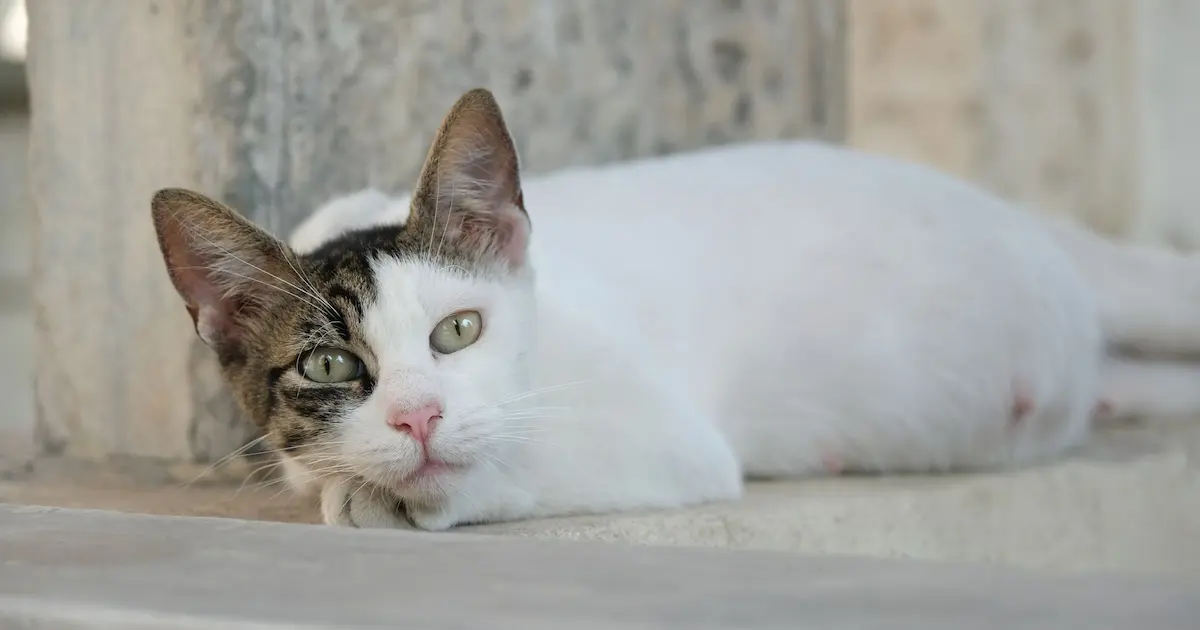
If your cat has been outside, met an un-neutered tomcat, and now seems a little rounder and a lot cuddlier, your mind goes straight to one question. So let’s answer it. Knowing how to know if your cat is pregnant comes down to a handful of clear signs that show up on a fairly predictable timeline, starting with her nipples and ending with a belly you can’t miss.
Here’s the thing: cats hide a lot, and the first couple of weeks usually look like nothing at all. The good news is that the signs do come, and a quick vet visit can confirm everything for sure.
Key Takeaways
- The first visible sign of cat pregnancy is “pinking up,” when the nipples become larger and rosier, around days 16 to 20.
- A pregnant cat’s belly usually becomes noticeably round by about week 5, alongside a total weight gain of 2 to 4 pounds.
- Cat pregnancy (gestation) lasts 63 to 65 days on average, roughly nine weeks, with a normal range of about 60 to 67 days.
- A vet can confirm pregnancy with ultrasound from about 3 to 4 weeks, by gentle palpation from around 17 days, and by X-ray after about 42 days when kitten skeletons show up.
- Only a veterinarian should feel a pregnant cat’s belly, because pressing on it at home can hurt her or the kittens.
How Can You Tell If Your Cat Is Pregnant?
You can tell a cat is pregnant by watching for a sequence of signs that appear over about nine weeks: pinking nipples first, then a bigger appetite and a rounder belly, then nesting near the end. No single sign is proof on its own. That’s why the timeline matters, and why a vet visit is the only way to know for certain.
Cats are pregnant for 63 to 65 days on average. That whole stretch is usually split into three roughly three-week stages, and each stage brings its own clues. Let’s walk through the signs in the order you’ll actually notice them.
What Are the Early Signs Your Cat Is Pregnant (Weeks 1 to 3)?
The earliest signs of cat pregnancy are subtle, and the very first one you can see is “pinking up.” Pinking up is when a cat’s nipples grow larger and turn a brighter pink or rose color, usually around days 16 to 20 of pregnancy. For many owners, this is the first real clue.
In the first week or two, honestly, most cats look completely normal. You won’t feel kittens, and her belly won’t change. A few cats show a small appetite bump or seem a touch more affectionate, but that’s easy to miss.
Some pregnant cats also get a bout of “morning sickness” around week 3 to 4. That can mean occasional vomiting or a brief dip in appetite. Quick safety note: vomiting more than once or twice a month is never normal in a cat, pregnant or not, so call your vet if it keeps happening.
The earliest sign to watch: pinking up
- What it looks like: nipples that were pale and flat become pink, rosy, and more obvious.
- When: around days 16 to 20, near the end of week 3.
- Why it happens: rising hormones boost blood flow to the mammary tissue as her body gets ready to nurse.
What Are the Mid-Pregnancy Signs (Weeks 4 to 6)?
The clearest mid-pregnancy sign is a visibly swelling belly, which usually shows up around week 5. Around the same time, a pregnant cat starts gaining weight, eating more, and sleeping more. This is the stage where most owners go from “maybe” to “I think she really is.”
By weeks 4 to 6, your cat’s body is doing a lot. Her appetite often climbs to about 1.5 times her usual amount as the kittens grow. She may nap far more than normal. Her overall weight gain across the pregnancy lands around 2 to 4 pounds, and almost all of it sits in her abdomen, giving her that classic “pot belly” look while her legs and face stay slim.
Behavior shifts, too. Many cats turn noticeably sweeter and calmer in the middle of pregnancy, following you around and asking for more lap time.
What Are the Late Signs Your Cat Is About to Have Kittens (Weeks 7 to 9)?
In late pregnancy, the belly is large and firm, and you may actually see the kittens move when your cat is resting. The biggest late sign is nesting: your cat hunts for a quiet, hidden spot and may drag in blankets or towels to build a bed. Nesting usually means labor is close.
By weeks 7 to 9, there’s not much guessing left. Her abdomen is clearly swollen, her mammary glands are fuller, and she may groom her belly and back end more often. Some cats get restless or pace in the final days. A drop in appetite in the last day or two can be an early hint that labor is on the way.
If you want to know what comes next, our guide on the signs your cat is going into labor walks through it step by step.
Cat Pregnancy Signs and When They Appear (Timeline Table)
Here is a week-by-week look at the signs of cat pregnancy and roughly when each one shows up. Use it to match what you’re seeing today to a likely stage. Remember that timing varies from cat to cat, so treat these as typical windows, not exact deadlines.
| Sign of pregnancy | When it usually appears | What you’ll notice |
|---|---|---|
| Slightly bigger appetite | Weeks 2 to 3 | Subtle, easy to miss at first |
| “Pinking up” of nipples | Days 16 to 20 (around week 3) | Nipples larger, pinker, more obvious |
| Morning sickness | Weeks 3 to 4 | Occasional vomiting or short appetite dip |
| More affectionate, sleeps more | Weeks 3 to 5 | Calmer, cuddlier, naps a lot |
| Weight gain (2 to 4 lb total) | Weeks 4 to 6 | Gain centered in the belly |
| Visibly swollen, rounded belly | Around week 5 | “Pot belly” while legs and face stay slim |
| Kitten movement visible | Weeks 7 to 8 | Belly ripples when she’s resting |
| Nesting behavior | Weeks 8 to 9 | Seeks a quiet hideaway, gathers bedding |
How Do Vets Confirm a Cat Is Pregnant?
A vet confirms cat pregnancy in three main ways: gentle belly palpation, ultrasound, and X-ray. Each one works at a different stage, and ultrasound is the go-to for confirming a pregnancy early because it can also check that the kittens have heartbeats.
Here’s a quick word on each method and when it works best.
| Method | Earliest it works | What it tells you |
|---|---|---|
| Palpation (gentle feel) | From about 17 days, clearer at 26 to 35 days | Confirms kittens are present; not a reliable count |
| Ultrasound | About 3 to 4 weeks (heartbeats after ~21 days) | Confirms pregnancy and viable, living kittens |
| X-ray (radiograph) | After about 42 days (around 6 weeks) | Counts kittens and helps estimate the due date |
Why see the vet at all if the signs seem obvious? Because confirmation lets you plan. Your vet can estimate how far along she is, count the kittens so you know what to expect at birth, switch her to the right food, and flag any problems early. Modern digital X-rays use very low radiation and are considered safe in late pregnancy.
A quick, friendly note: this article is here to help you understand what you’re seeing, not to replace your vet. If you think your cat is pregnant, book a check-up so a licensed veterinarian can confirm it and help you plan safe care for mom and kittens.
Can You Feel If Your Cat Is Pregnant at Home?
No, you should not try to feel for kittens at home. Only a veterinarian should palpate a pregnant cat’s belly, because pressing or squeezing can hurt your cat and, in some cases, harm the developing kittens. Even vets find early kittens hard to feel, and a soft belly is easy to misread.
If you want to check on her, stick to gentle observation. Look at her nipples, watch her appetite and energy, and notice the shape of her belly over time. Leave the hands-on exam to the professionals, and you’ll keep everyone safe.
Is My Cat Pregnant or Just Fat?
The simplest way to tell a pregnant cat from an overweight one is where the weight sits. A pregnant cat gains weight mostly in her belly, so she looks round in the middle while her neck, legs, and shoulders stay slim. An overweight cat tends to be padded all over, including a fuller face and a wider chest.
Two more clues point to pregnancy over plain weight gain. First, pinked-up nipples, since obesity alone doesn’t change nipple color. Second, timing: if your cat could have mated in the last two months and then rounded out quickly over a few weeks, pregnancy is far more likely than slow weight gain. When in doubt, your vet can settle it in minutes.
Could It Be a False Pregnancy Instead?
Yes, cats can have a false pregnancy, also called a phantom or pseudopregnancy, where a non-pregnant cat shows pregnancy-like signs after heat. A false pregnancy can include pinking up, mild nesting, and even a little milk, which makes it tricky to tell from the real thing in the early weeks.
The main difference is how it plays out over time. A false pregnancy usually fades within about 1 to 3 weeks and never ends in kittens, while a true pregnancy keeps progressing toward a clearly swollen belly and birth around day 63 to 65. False pregnancy in cats is much less common than in dogs, and it isn’t an emergency, but a vet visit is the only way to know for sure which one you’re dealing with.
How Soon Can You Tell If a Cat Is Pregnant?
You usually can’t tell a cat is pregnant at home until about 2 to 3 weeks in, when pinking up appears around days 16 to 20. Before that, there’s rarely anything visible to spot. A vet can confirm pregnancy a little sooner with ultrasound, generally from about 3 to 4 weeks, since scans done before 21 days can miss an early pregnancy.
So if your cat mated only a few days ago, waiting is normal. Give it a couple of weeks, watch for the early signs, and book an ultrasound once you’re past the three-week mark for the most reliable answer.
What to Do Once You Know Your Cat Is Pregnant
Once you know your cat is pregnant, the first step is a vet visit to confirm it and set up a care plan. From there, the basics are simple: feed her well, keep her comfortable, and get ready for the kittens. A little prep now makes the whole journey smoother for both of you.
- Book a vet check-up. Confirm the pregnancy, estimate her due date, and ask about safe parasite and vaccine timing.
- Switch to kitten or pregnancy food. Her needs climb to about 1.5 times normal, and kitten formulas pack the extra calories and nutrients she needs.
- Keep her indoors and calm. A quiet, low-stress home protects her and the litter.
- Set up a nesting box. A few weeks before her due date, offer a warm, private box lined with soft bedding in a quiet corner.
- Learn the signs of labor. Know what early labor looks like so you can support her and call the vet if anything seems off.
When Should You Call the Vet?
Call your vet to confirm any suspected pregnancy and to plan care. Beyond that, certain signs need prompt attention. Reach out right away if your pregnant cat shows any of the red flags below, since cat pregnancy is generally smooth but problems can be serious.
- Repeated vomiting, or vomiting more than once or twice in a month
- Refusing food for more than a day, or sudden lethargy and weakness
- Any vaginal bleeding or unusual, smelly discharge
- A swollen, hot, or painful belly, or signs she is in pain
- Straining in labor for more than 20 to 30 minutes with no kitten
- More than two hours between kittens while she’s clearly still in labor
When something feels wrong, trust your gut and call. Your vet would always rather hear from you early.
Frequently Asked Questions
Q: What is the first sign that a cat is pregnant?
The first visible sign of cat pregnancy is “pinking up,” when the nipples become larger and turn a brighter pink, usually around days 16 to 20 (about week 3). Some cats also show a slightly bigger appetite a little earlier, but pinking up is the most reliable early clue you can see at home.
Q: How many weeks until a pregnant cat shows?
A pregnant cat’s belly usually starts to look noticeably rounder around week 5. Before that, the changes are mostly limited to her nipples and a small appetite bump. By the final weeks, her belly is large and firm, and you may even see the kittens move.
Q: How long are cats pregnant?
Cats are pregnant for 63 to 65 days on average, which is roughly nine weeks. The normal range runs from about 60 to 67 days. Kittens born much earlier than this may need extra veterinary support, so it helps to track her likely due date with your vet.
Q: Can you feel kittens in a pregnant cat’s belly?
A veterinarian can sometimes feel kittens by gentle palpation from around 17 days, and more reliably between 26 and 35 days. You should not try this at home, because pressing on her belly can injure your cat or the kittens. Stick to watching her nipples, appetite, and belly shape instead.
Q: Is there a cat pregnancy test I can do at home?
There’s no reliable over-the-counter pregnancy test for cats like the human kind. At-home blood tests for the hormone relaxin exist but aren’t widely available or fully dependable. The trustworthy ways to confirm cat pregnancy are a vet ultrasound from about 3 to 4 weeks or an X-ray after about 42 days.
Q: How can I tell if my cat is pregnant or just fat?
A pregnant cat gains weight mainly in her belly while her face and legs stay slim, giving her a “pot belly” shape. An overweight cat is usually padded all over. Pinked-up nipples and a recent chance to mate both point to pregnancy rather than simple weight gain.
Q: Can a cat have a false pregnancy?
Yes. A false pregnancy (pseudopregnancy) is when a non-pregnant cat shows signs like pinking up, mild nesting, or even some milk after a heat cycle. It usually fades within 1 to 3 weeks and never produces kittens. It’s less common in cats than dogs, and a vet can confirm whether the pregnancy is real.
Q: How soon can a vet confirm a cat is pregnant?
A vet can confirm a cat is pregnant by ultrasound from about 3 to 4 weeks, since scans before 21 days may miss it. Gentle palpation can detect kittens from around 17 days but is less certain. An X-ray after about 42 days confirms the pregnancy and can count the kittens.
Learning how to know if your cat is pregnant really comes down to watching the signs in order and getting a vet to confirm what you’re seeing. Start with her nipples around week 3, watch her belly grow by week 5, and let an ultrasound seal the deal. Do that, and you’ll be ready to give mom and her kittens the best possible start.

Hello and welcome to The Ideal Cat!
We are some passionate cat owners from different professions. We love our cats and have a lot of experience in how to care for our pets. We are incredibly excited to share our knowledge, experience, and research with you. So you can take good care of your loving cat. We will answer most of the common questions about owning cats, taking care of them, etc. If you have any question contact with us. Thanks for visiting! Enjoy the content.
