
You booked the appointment, the receptionist asked whether you’re spaying or neutering, and suddenly you froze. Isn’t it the same thing? Not quite. And the wording actually matters, because it tells your vet exactly what surgery your cat is getting.
Here’s the short version. If you have a girl, she gets spayed. The word “neuter” gets thrown around for both sexes in everyday talk, but in the vet world it means the male procedure. Let’s clear up the terms, then walk through when to do it, what the surgery involves, and the real health payoff for your female cat.
This article is educational and isn’t a substitute for veterinary care. Your vet knows your cat and can give advice for her specific situation.
- A female cat is spayed; a male cat is neutered. “Spay” always means the female surgery.
- Spaying removes the ovaries and usually the uterus, so the medical term is ovariohysterectomy.
- Most vets recommend spaying a female cat around 5 months old, before her first heat cycle.
- Spaying before 6 months can cut mammary (breast) cancer risk by up to 91 percent.
- Spaying eliminates the risk of pyometra, a life-threatening uterine infection that affects roughly 1 in 4 unspayed female cats.
- Most cats fully recover in 7 to 14 days, and weight gain after spaying is manageable with proper feeding.
Do you spay or neuter a female cat?
You spay a female cat. Spaying is the surgical procedure that sterilizes a female by removing her ovaries, and usually her uterus too. Neutering, in standard veterinary use, refers to the male procedure (castration), which removes the testicles. So the quick rule is simple: girls get spayed, boys get neutered.
Where does the confusion come from? The word “neuter” technically means making any animal unable to reproduce, regardless of sex. So you’ll hear people say “get your cat neutered” for a female, and they’re not wrong in a loose, everyday sense. But when you’re booking surgery, “spay” is the precise word for a female cat, and it’s the one your vet will use on the chart.
You might also hear “fixed,” “altered,” “desexed,” or “sterilized.” Those are all general umbrella terms that cover both sexes. Helpful for chatting, less precise for paperwork.
What is spaying a female cat, exactly?
Spaying a female cat is surgery that removes her reproductive organs so she can’t get pregnant or go into heat. The medical name is ovariohysterectomy, which is a mouthful that simply means removing the ovaries (ovario-) and the uterus (hyster-). Some vets do an ovariectomy instead, removing just the ovaries. Either way, she loses the hormones that drive heat cycles and the ability to have kittens.
It’s done under general anesthesia, so your cat is fully asleep and feels nothing during the procedure. The vet makes a small incision, usually on the belly, removes the organs, and closes it with sutures. For a young, healthy cat it’s a routine, same-day surgery. She goes home the same afternoon in most cases.
Spay vs neuter at a glance
Here’s the difference laid out side by side, since the terms trip up so many cat parents.
| Spay (female) | Neuter (male) | |
|---|---|---|
| Who it’s for | Female cats (queens) | Male cats (toms) |
| Medical term | Ovariohysterectomy (or ovariectomy) | Castration |
| What’s removed | Ovaries and usually the uterus | Both testicles |
| Main goal | No pregnancy, no heat cycles, lower cancer and infection risk | No fathering litters, less spraying and roaming |
| Incision | On the abdomen | On the scrotum |
| Typical recovery | 7 to 14 days | 5 to 7 days |
Why should you spay a female cat?
Spaying a female cat protects her health, prevents unwanted litters, and ends the stress of heat cycles. It’s one of the most protective things you can do for a female cat, and the health benefits go well beyond birth control. Here’s what spaying does for her.
- Prevents pregnancy. One unspayed female and her offspring can produce a staggering number of kittens over a few years. Spaying stops that at the source.
- Ends heat cycles. No more loud yowling, restlessness, rolling, and marking every few weeks. A cat in heat can be miserable, and so can her humans.
- Greatly lowers mammary cancer risk. Feline mammary tumors are usually malignant, and early spaying is the single best prevention.
- Eliminates pyometra. This is a life-threatening uterine infection. No uterus, no pyometra.
- Removes the risk of ovarian and uterine cancers. You can’t get cancer in an organ that’s no longer there.
- Calmer behavior. The ASPCA notes that spaying reduces hormone-driven behaviors like restlessness, escape attempts, and some aggression.
The mammary cancer numbers are worth knowing
Spaying before the first heat dramatically cuts a female cat’s mammary cancer risk. This is the one that surprises people, so let’s put real numbers on it. According to research summarized by the Cornell Feline Health Center, mammary tumors are one of the most common cancers in cats, and most feline mammary tumors are malignant.
Timing changes everything. Spaying before 6 months of age can reduce mammary cancer risk by up to 91 percent. Spay before 1 year and the reduction is still around 86 percent. Wait until she’s 1 to 2 years old and the benefit drops to roughly 11 percent. Spay after age 2, and it no longer lowers her mammary cancer risk at all. Every heat cycle she goes through adds hormone exposure, and that’s what drives the risk up.
Pyometra: the emergency spaying prevents
Pyometra is a serious infection where the uterus fills with pus, and it’s a true emergency. It tends to strike unspayed females after a heat cycle, and it can turn deadly within days. Vets estimate that around 1 in 4 unspayed female cats will develop pyometra at some point. Treating it means emergency surgery on a sick cat, which is far riskier and more expensive than a routine spay on a healthy one. Spaying removes the uterus, so this infection simply can’t happen.
What’s the best age to spay a female cat?
The best age to spay most female cats is around 5 months, before her first heat cycle. Traditional advice landed on 5 to 6 months, and that’s still the sweet spot for most house cats: old enough for safe anesthesia, young enough to get the full cancer-prevention benefit.
Cats can go into heat as early as 4 months, so timing matters. Once she’s had a heat, some of that mammary cancer protection is already lost. If you’re not sure when to book, our guide on how old a cat has to be to get fixed walks through the age question in detail.
What about very early spaying? Pediatric or “early” spay, done as young as 8 weeks (once a kitten hits about 2 pounds), is considered safe and is widely used by shelters and endorsed by major veterinary bodies including the AVMA. It’s why adopted kittens often come home already spayed. For a kitten you’re raising yourself, your vet will help you pick the right week.
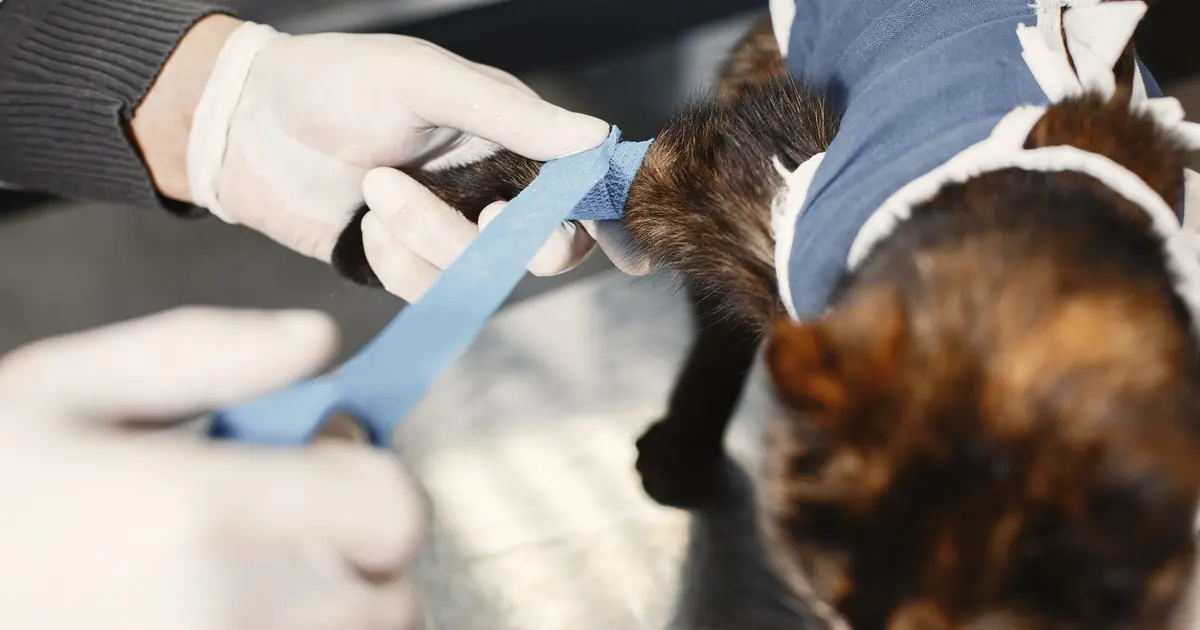
What does spay recovery look like?
Most cats bounce back from a spay within 7 to 14 days, and the first day or two is the groggy part. She may be sleepy, a little wobbly, and not very hungry the evening of surgery. That’s normal anesthesia hangover. Here’s how to make her recovery smooth.
- Keep her calm and indoors. No jumping, running, or rough play for about 10 to 14 days while the incision heals. Easier said than done with a bouncy young cat, but it matters.
- Protect the incision. Use the cone (or a recovery suit) so she can’t lick or chew the stitches. Licking is the top cause of infection and reopened incisions.
- Check the incision daily. A little redness or bruising is normal. Call your vet if you see swelling, discharge, an open wound, or a bad smell.
- Offer a small meal that night. Start light, since anesthesia can cause mild nausea. Appetite usually returns by the next morning.
- Give pain medication as prescribed. Only what your vet sends home. Never give human painkillers, since many are toxic to cats.
Call your vet if she won’t eat after 24 hours, seems in real pain, is very lethargic, or the incision looks angry. Better a quick phone call than a missed problem.
Can you spay a cat while she’s in heat or pregnant?
Yes, a cat can be spayed while she’s in heat or pregnant, but both make the surgery more complicated. During heat and pregnancy, the reproductive organs swell with extra blood flow, which raises the risk of bleeding and lengthens the procedure. Many vets prefer to wait until a heat cycle ends if there’s no urgency.
Spaying a cat in heat can also trigger a temporary hormone swing that sometimes leads to swollen mammary glands afterward. It’s usually manageable, just something your vet will watch for. If your cat is yowling and driving you a little wild, our guide on what to do when your cat is in heat can help you get through it.
Spaying a pregnant cat ends the pregnancy, and the further along she is, the higher the surgical risk and cost. It’s a personal and sometimes difficult decision, and your vet will talk you through the options based on how far along she is.
How much does it cost to spay a female cat?
Spaying a female cat typically costs more than neutering a male, because it’s a more involved abdominal surgery. Prices vary widely by location, clinic, and your cat’s age and health. Low-cost and shelter clinics often offer spays for a fraction of a private practice price, and many areas have subsidized programs.
For real numbers and how to save, see our breakdown of how much it costs to spay a cat. It’s also worth comparing against the cost to neuter a male cat if you have both, and our overview of typical cat vet costs puts it in context with the rest of her care.
Do spayed cats gain weight? And other myths
Spayed cats can gain weight, but it’s not inevitable, and it’s easily managed with the right feeding. Spaying does lower a cat’s metabolism a bit, so she needs fewer calories than before. The weight gain people blame on spaying is really about overfeeding, not the surgery itself. Measure her food, use a diet formulated for spayed or indoor cats if needed, and keep her active. Problem solved.
A few other myths worth busting:
- “She should have one litter first.” There’s no health benefit to letting her have a litter, and waiting actually raises her cancer risk. This one’s a genuine old wives’ tale.
- “It’ll change her personality.” Spaying removes hormone-driven behaviors like heat yowling, not her core personality. Most cats are calmer and happier, not different cats.
- “Indoor cats don’t need it.” Indoor cats still get pyometra and mammary cancer, and still suffer through heat cycles. The health benefits apply no matter where she lives.
Benefits vs risks of spaying a female cat
For the vast majority of female cats, the benefits of spaying clearly outweigh the risks. Spaying is one of the most common surgeries vets perform, and serious complications are uncommon. Here’s an honest look at both sides.
| Benefits | Risks and considerations |
|---|---|
| No unwanted litters or pregnancies | Standard anesthesia risk (low in healthy young cats) |
| Up to 91% lower mammary cancer risk if done early | Small chance of infection or a reopened incision |
| Eliminates pyometra and uterine or ovarian cancers | Slight metabolism drop, so weight needs monitoring |
| No more stressful heat cycles | One-time recovery period of 7 to 14 days |
| Often calmer, less roaming and vocalizing | Cost of surgery upfront |
The anesthesia and surgical risks are real but small, especially for a young, healthy cat. Against that, you’re weighing a large drop in her lifetime cancer risk and the total prevention of a deadly uterine infection. For most cats, that math is easy. Talk it through with your vet if your cat is older or has health issues.
Cat spaying FAQ
Q: Is a female cat spayed or neutered?
A female cat is spayed. Spaying removes her ovaries and usually her uterus. Neutering, in veterinary terms, refers to the male procedure (castration). The word “neuter” is sometimes used loosely for both sexes, but “spay” is the correct term for a female cat.
Q: What is the medical term for spaying a female cat?
The medical term is ovariohysterectomy, meaning removal of the ovaries and uterus. Some vets perform an ovariectomy, which removes just the ovaries. Both procedures stop heat cycles and prevent pregnancy.
Q: At what age should a female cat be spayed?
Most vets recommend spaying around 5 months, before her first heat. Pediatric spaying as early as 8 weeks (about 2 pounds) is also considered safe and is common in shelters. Spaying before 6 months gives the biggest reduction in mammary cancer risk.
Q: Does spaying a cat before her first heat prevent cancer?
It greatly reduces the risk. Spaying before 6 months can lower mammary cancer risk by up to 91 percent, and spaying before 1 year by about 86 percent. After age 2, spaying no longer reduces mammary cancer risk. Each heat cycle adds hormone exposure that raises risk.
Q: How long does it take a female cat to recover from spaying?
Most cats recover fully in 7 to 14 days. The first day is the groggiest. Keep her calm and indoors, prevent licking with a cone or recovery suit, and check the incision daily. Call your vet if you see swelling, discharge, or she stops eating.
Q: Can a cat be spayed while in heat?
Yes, but the surgery is more complex because the reproductive organs swell during heat, raising the risk of bleeding. Many vets prefer to wait until the heat cycle ends if there’s no urgency. Ask your vet what’s best for your cat’s timing.
Q: Will my cat get fat after being spayed?
Not automatically. Spaying lowers her metabolism slightly, so she needs fewer calories. Weight gain comes from overfeeding, not the surgery. Measure her food, consider a spayed or indoor formula, and keep her active to keep her at a healthy weight.
Q: Is spaying safe for my cat?
Yes, spaying is one of the most common and safest surgeries vets perform, especially in young, healthy cats. Serious complications are uncommon. The health benefits, including a big drop in cancer and infection risk, outweigh the small surgical risks for most cats.
Bottom line: if you have a female cat, the word is spay, and it’s one of the best health decisions you’ll make for her. Aim for around 5 months, before that first heat, and you’ll cut her cancer risk, rule out a deadly infection, and skip the drama of heat cycles. When in doubt on timing, your vet is one quick call away.

Hello and welcome to The Ideal Cat!
We are some passionate cat owners from different professions. We love our cats and have a lot of experience in how to care for our pets. We are incredibly excited to share our knowledge, experience, and research with you. So you can take good care of your loving cat. We will answer most of the common questions about owning cats, taking care of them, etc. If you have any question contact with us. Thanks for visiting! Enjoy the content.
