You brought home a tiny kitten, and now everyone keeps asking when you’re getting them “fixed.” It’s a fair question, but the timing advice you hear can feel all over the place. Some say 6 months. Some say wait. Your shelter may have already done it at 8 weeks. So how old does a cat have to be to get fixed, really? The good news is that vets have landed on a clear answer, and it’s earlier than most people think.
- Veterinary groups including the AVMA, AAHA, and AAFP recommend spaying or neutering cats by 5 months of age.
- The safe minimum for surgery is about 8 weeks old and roughly 2 pounds of body weight.
- The older default of 6 months is now considered too late, since cats can reach sexual maturity as early as 4 months.
- Spaying a female before her first heat nearly eliminates her risk of mammary (breast) cancer.
- There is no age that is too old for a healthy cat to be fixed, including senior cats.
How old does a cat have to be to get fixed?
A cat has to be about 8 weeks old and around 2 pounds to be safely fixed, but the recommended target is by 5 months of age. “Getting fixed” means spaying a female cat (removing the ovaries and usually the uterus) or neutering a male cat (removing the testicles). Both are routine surgeries done under anesthesia.
For years, the standard advice was to wait until 6 months. That has changed. Major veterinary organizations now back the Feline Fix by Five Months initiative, which sets 5 months as the goal. The reason is simple: cats can become sexually mature as young as 4 to 5 months old, so waiting until 6 months can mean an accidental litter or a first heat you didn’t see coming.
What is the best age to spay or neuter a cat?
The best age to spay or neuter a cat is by 5 months, before puberty and the first heat cycle. This window is the sweet spot recommended by the American Veterinary Medical Association (AVMA), the American Animal Hospital Association (AAHA), and the American Association of Feline Practitioners (AAFP).
Vets favor the 5-month mark for a few practical reasons. Kittens this age are big enough for safe anesthesia but young enough that surgery is quick and recovery is fast. Spaying or neutering before sexual maturity also heads off the messy stuff: spraying, yowling, roaming, and unwanted kittens.
Here is how the main age windows compare.
| Age window | What it’s called | Who it’s for |
|---|---|---|
| 8 weeks to 12 weeks (about 2+ lbs) | Pediatric / early-age neuter | Shelter and rescue kittens, common before adoption |
| By 5 months | Feline Fix by Five (current standard) | Most pet kittens, the recommended target |
| 6 months | Older traditional default | Now considered later than ideal |
| Any age after that | Adult / senior spay-neuter | Cats adopted as adults or never fixed; safe when healthy |
Can a kitten be too young to be fixed?
A kitten is too young to be fixed only before about 8 weeks of age or under roughly 2 pounds of body weight. Below that, the kitten is too small for safe anesthesia. Once a healthy kitten hits both marks, surgery is considered safe.
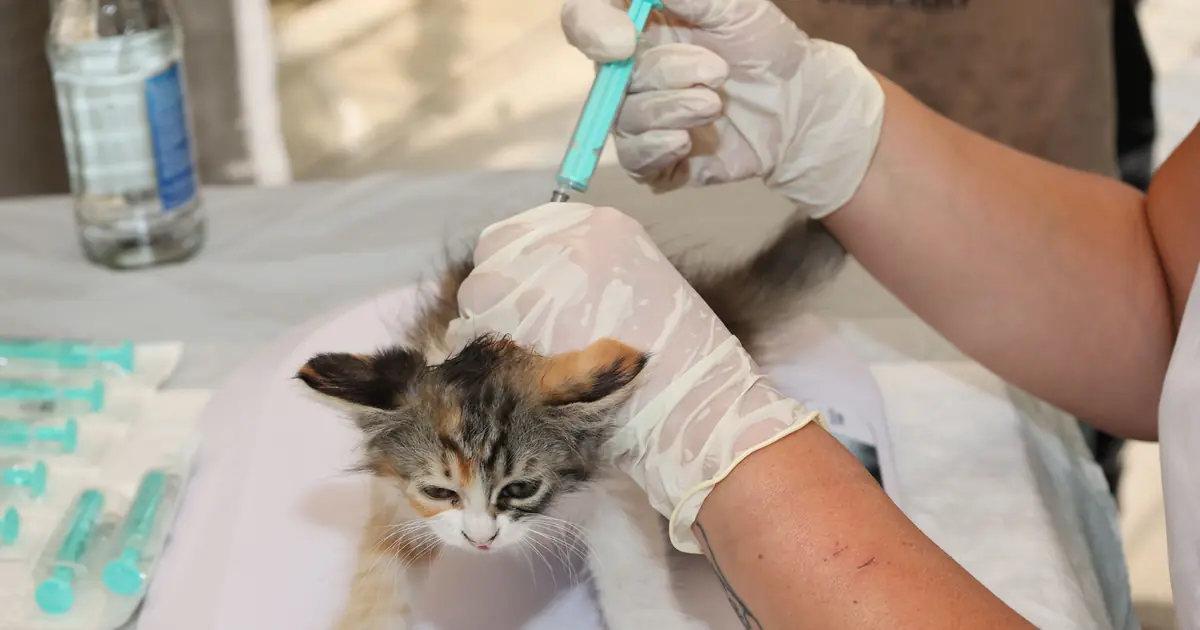
This early surgery is called pediatric or early-age spay/neuter, and it’s why so many shelter kittens come home already fixed. The ASPCA and shelter veterinarians consider it safe and routine. Younger kittens actually tend to have fewer minor surgical complications than older ones, partly because their tissues are less developed and the procedure is faster.
Here’s the thing: pediatric neutering does not stunt growth, cause urinary blockages in males, or change a cat’s personality for the worse. Those are old myths that research has not supported.
Can a cat be too old to be fixed?
No, a cat is never too old to be fixed as long as they are healthy. Spaying and neutering can be done safely on adult and senior cats, including cats well into their teens. Age alone is not a reason to skip the surgery.
For older cats, your vet may run pre-surgery bloodwork to check kidney, liver, and heart health before anesthesia. If you adopted an adult cat with an unknown history, or a stray showed up and stayed, it’s still worth doing. Fixing an adult cat lowers cancer risk and calms down behaviors like spraying and roaming.
Why spay or neuter your cat by 5 months?
Spaying or neutering by 5 months protects your cat’s health and prevents accidental litters before a cat can reproduce. Cats can get pregnant as young as 4 to 5 months old, so the 5-month deadline beats the clock on that first heat.
The health and behavior payoffs are real and well documented:
- Mammary cancer protection: Spaying a female before her first heat nearly eliminates her lifetime risk of mammary (breast) cancer, which is often malignant in cats.
- No uterine infections: Spaying removes the risk of pyometra, a life-threatening uterine infection in unspayed females.
- No testicular cancer: Neutering removes the risk of testicular cancer in males.
- Less spraying and marking: Neutered males are far less likely to spray strong-smelling urine to mark territory.
- Less roaming and fighting: Fixed cats wander less and get into fewer fights, which lowers their exposure to diseases like FIV and feline leukemia.
- No surprise kittens: One unspayed female and her offspring can produce a startling number of cats in just a few years.
This article is educational and not a substitute for veterinary advice. Your vet knows your individual cat best, so confirm the timing and any pre-surgery testing with them.
What happens if you wait too long to fix your cat?
Waiting too long to fix your cat raises the chance of an accidental litter and chips away at the health benefits of early surgery. The mammary cancer protection, for example, is strongest when a female is spayed before her first heat and drops with each cycle she goes through.
Waiting also means living with intact-cat behavior. Unspayed females in heat yowl loudly, roll around, and try to escape outdoors to find a mate. Unneutered males spray pungent urine, become more territorial, and roam far from home. None of that is fun for you or the cat, and most of it fades after surgery.
If your cat is already past 5 months, don’t stress. Later is still far better than never, and the surgery is just as worth doing.
What does getting a cat fixed cost?
Getting a cat fixed typically costs $50 to $150 at low-cost clinics and roughly $100 to $400 at private veterinary practices, depending on your location and the cat’s sex. Neutering a male is usually cheaper than spaying a female, since spaying is the more involved surgery.
| Where you go | Typical cost | What it often includes |
|---|---|---|
| Low-cost / nonprofit clinic | $50 to $150 | Surgery, sometimes pain meds and a cone |
| TNR or shelter program | $30 to $150 | Often all-inclusive, sometimes free for community cats |
| Private vet, neuter (male) | $100 to $250 | Surgery, exam; bloodwork and extras may add cost |
| Private vet, spay (female) | $200 to $400 | Surgery, exam; bloodwork, microchip, meds may add cost |
If cost is a worry, search for local low-cost spay/neuter clinics or ASPCA and Humane Society programs. Many offer sliding-scale or free surgeries, especially for community and barn cats.
How long does it take a cat to recover after being fixed?
Most cats fully recover about 10 to 14 days after being fixed, though many act nearly normal within a day or two. The surgery itself is quick, often 15 to 45 minutes, and most cats go home the same day.
To help your cat heal smoothly:
- Follow fasting instructions. Your vet will usually ask you to take away food the night before surgery so the cat’s stomach is empty for anesthesia.
- Keep the cone on. The recovery cone or suit stays on for 10 to 14 days so your cat can’t lick or chew the incision.
- Limit jumping and play. Quiet, calm activity for about two weeks lets the incision close properly.
- Check the incision daily. A little redness is normal, but call your vet about swelling, discharge, an open wound, or a cat who won’t eat.
- Give meds as directed. Only use pain medication your vet prescribes. Never give human painkillers, which are toxic to cats.
Call your vet right away if your cat seems very lethargic, vomits repeatedly, has trouble breathing, or the incision opens or bleeds. Those are red flags that need prompt attention.
Frequently Asked Questions
Q: How old does a cat have to be to get fixed at a minimum?
A cat can be safely fixed starting at about 8 weeks of age, as long as the kitten weighs at least 2 pounds and is healthy. This early surgery, called pediatric spay/neuter, is common in shelters and is considered safe by the ASPCA and shelter veterinarians.
Q: Is 6 months too old to spay or neuter a cat?
Six months is not dangerous, but it is later than the current recommendation. Vets now target 5 months under the Feline Fix by Five guideline, because cats can reach sexual maturity as young as 4 to 5 months. Spaying or neutering at 6 months still works and is safe.
Q: Can you fix a cat while she is in heat?
Yes, a vet can usually spay a cat while she is in heat, though the surgery may carry a slightly higher cost and bleeding risk because the reproductive tissues are more swollen. Some clinics prefer to wait until the heat passes. Ask your vet what they recommend for your cat.
Q: Does fixing a cat too early stunt their growth?
No, fixing a cat early does not stunt growth. Research shows early-age neutering does not cause growth problems, urinary blockages, or harmful personality changes. Kittens spayed or neutered before 12 weeks often have fewer minor surgical complications than older cats.
Q: How long does the spay or neuter surgery take?
A cat spay or neuter surgery usually takes about 15 to 45 minutes, with neutering being the faster of the two. Most cats are dropped off in the morning, recover for a few hours, and go home the same day.
Q: Can an adult or senior cat still be fixed safely?
Yes, healthy adult and senior cats can be fixed safely. There is no upper age limit. For older cats, vets often run pre-surgery bloodwork to check organ function before anesthesia, and the surgery still lowers cancer risk and reduces spraying and roaming.
Q: What is the cheapest way to get a cat fixed?
The cheapest way to get a cat fixed is through a low-cost spay/neuter clinic, an ASPCA or Humane Society program, or a TNR program for community cats, where surgeries often run $30 to $150 or are free. Search for local nonprofit clinics in your area.
Q: Will my cat’s personality change after being fixed?
Your cat’s core personality stays the same after being fixed. What usually changes are hormone-driven behaviors: less spraying, yowling, roaming, and fighting. Most owners find their cat becomes calmer and more affectionate, not different at heart.
So, how old does a cat have to be to get fixed? Aim for by 5 months of age, knowing the surgery is safe from about 8 weeks, and remember that no healthy cat is ever too old. Whenever you book it, getting your cat fixed is one of the kindest, healthiest choices you can make for them, and your vet can help you nail down the perfect timing.

Hello and welcome to The Ideal Cat!
We are some passionate cat owners from different professions. We love our cats and have a lot of experience in how to care for our pets. We are incredibly excited to share our knowledge, experience, and research with you. So you can take good care of your loving cat. We will answer most of the common questions about owning cats, taking care of them, etc. If you have any question contact with us. Thanks for visiting! Enjoy the content.
)