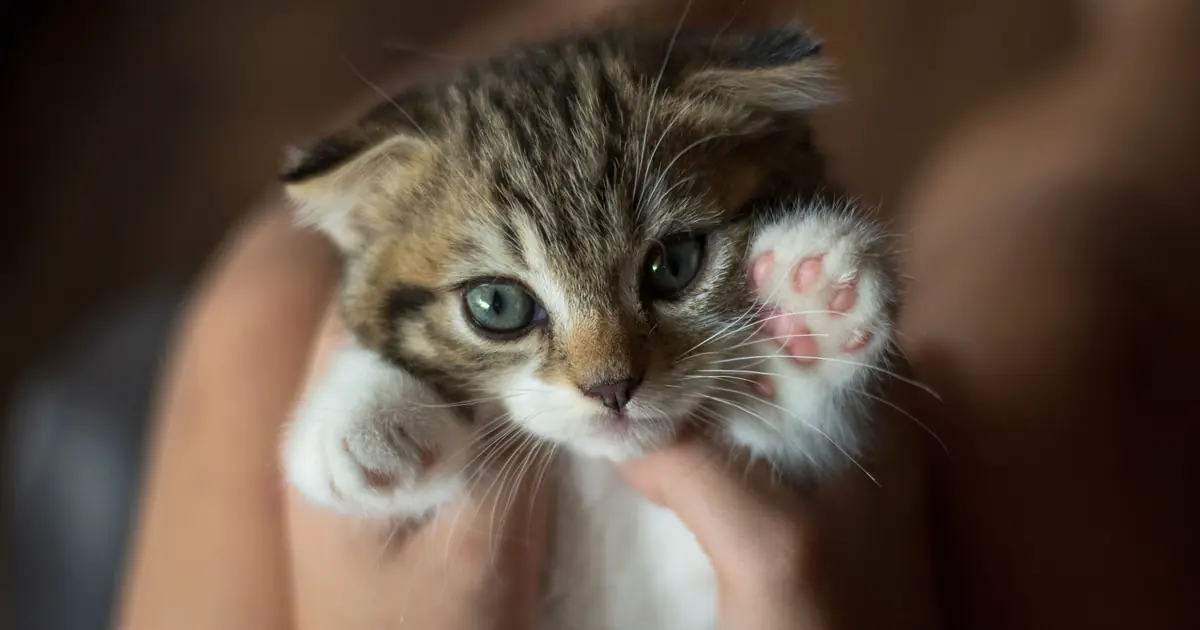
If you’ve ever watched a dog roll over and thought “my cat would never,” here’s some good news: your cat absolutely can. Cats learn tricks the same way dogs do, through treats, timing, and patience. They just have stronger opinions about whether they feel like it today. Learning how to teach a cat tricks comes down to one simple loop: your cat does something, you mark it, you reward it.
I get it, the first time you hold a treat and ask your cat to “sit,” you’ll feel a little silly. Stick with it. Within a week or two you’ll have a cat that high-fives on cue, and a bond that’s noticeably tighter.
- Cats can be trained to do tricks using positive reinforcement, the same reward-based method used for dogs.
- The fastest way to teach a cat tricks is clicker training: click the moment your cat performs the behavior, then give a treat within one to two seconds.
- Keep training sessions short, about 3 to 5 minutes, two or three times a day, and train when your cat is hungry and calm.
- Sit is the easiest first trick, and “target training” (touching a stick or finger) is the building block for most other tricks.
- Never punish a cat during training; punishment creates fear and stops learning. End every session on a win.
Can You Really Teach a Cat Tricks?
Yes, you can teach a cat tricks, and most healthy cats pick up simple ones in a few short sessions. Cats are smart, food-motivated, and quick to repeat anything that earns a reward. The myth that cats can’t be trained comes from people expecting dog-style obedience. Cats work for what’s in it for them, so the trick is making the reward worth their effort.
Reward-based training, also called positive reinforcement, means you reward the behavior you want and ignore the rest. Your cat learns “when I do this, good things happen.” That’s the whole engine behind every trick in this guide.
Training isn’t just a party trick, either. It’s real mental exercise. A bored indoor cat with nothing to figure out can get restless or stir up trouble, and short training sessions give that busy brain a job.
What Do You Need to Start Training a Cat?
To teach a cat tricks, you need just three things: high-value treats, a marker (a clicker or a short word), and a quiet, distraction-free spot. None of it is expensive, and you probably have most of it already.
- High-value treats: Pick something your cat goes wild for, like a freeze-dried chicken bit, a lick of squeezable treat, or a tiny piece of plain cooked meat. The tastier the reward, the harder your cat works. Keep pieces tiny so your cat stays hungry and interested.
- A marker: A clicker is a small plastic device that makes a sharp “click.” The click tells your cat the exact instant it did the right thing. No clicker? Use a quick, consistent word like “yes” in the same upbeat tone every time.
- A quiet space: Train in a calm room with no other pets, no TV, and no distractions. Your cat needs to focus on you and the reward.
- Good timing: Train right before mealtime, when your cat is hungry and motivated. A full, sleepy cat won’t care about treats.
PetSafe Clik-R Training Clicker
This is a simple, ergonomic clicker with a finger band so it sits ready in your hand during sessions. The crisp, consistent sound makes clean timing easy, which is the part that helps your cat learn fastest. It’s a good pick for first-time trainers who want both hands free for treats.
How Do You Clicker Train a Cat? (The Foundation)
Clicker training a cat starts with teaching one thing: the click means a treat is coming. This step, called “charging the clicker,” builds the link your cat needs before any trick will work. Spend two or three short sessions on it before you ask for a single behavior.
- Get a handful of tiny treats. Sit with your cat in a quiet room when it’s a little hungry.
- Click once, then immediately give a treat. The reward should follow the click within one to two seconds. Don’t ask for anything yet. Just click, treat, repeat.
- Repeat 6 to 10 times. Keep it under two minutes. If the clicker startles your cat, muffle it inside your pocket or behind a cushion at first.
- Watch for the “aha” moment. After a few sessions, your cat will perk up and look for the treat the instant it hears the click. That’s your green light to start teaching tricks.
Why bother with a clicker instead of just handing over a treat? A clicker marks the exact behavior in real time. By the time you fish out a treat, your cat may have moved on and learned the wrong lesson. The click is a clean, instant snapshot of “that, right there, is what earned this.”
How Do You Teach a Cat to Sit?
Sit is the easiest trick to teach a cat and the best place to start, because cats fall into the position naturally when they follow a treat up and back. Most cats learn sit within a few sessions, and it builds the focus you’ll lean on for everything else.
- Hold a treat just above your cat’s nose. Let your cat sniff it so it knows the good stuff is there.
- Slowly move the treat up and back over its head. As your cat’s nose follows the treat, its rear end naturally lowers toward the floor.
- The moment its bottom touches the ground, click (or say “yes”). Then hand over the treat right away.
- Add the cue word “sit” once your cat does it reliably. Say “sit” just before you move the treat. After enough reps, the word alone will do the job.
- Repeat 4 to 6 times per session. Stop while your cat is still keen, not bored.
How Do You Teach a Cat to High-Five?
To teach a cat to high-five, reward it for lifting and touching its paw to your hand, then slowly raise your hand into the classic high-five position. High-five is a crowd-pleaser and usually clicks for cats within a week of short daily sessions.
- Ask your cat to sit first. A sitting cat is steadier and more likely to use a paw than a mouth.
- Hold a treat in a closed fist at your cat’s shoulder height. Most cats will paw at your hand to get to the treat.
- The instant a paw touches your hand, click and treat. Timing matters here, mark the paw touch, not the sniffing.
- Repeat, raising your hand a little higher each time. Your cat has to reach up to tap it. This stage takes the longest, so be patient.
- Switch to an open palm and add the cue “high-five.” Once your cat reliably taps your hand, open your palm and say the cue. Reward every solid tap.
How Do You Teach a Cat to Come When Called?
To teach a cat to come when called, say its name or a cue, then reward it the second it reaches you. Come is one of the most useful behaviors you can teach, handy at dinnertime, vet visits, or if your cat ever slips outside.
- Start close. Stand a few feet away when your cat is already heading toward you anyway.
- Say your cue in a happy voice. Pick one word and stick with it, like “come” or your cat’s name plus “here.”
- Click and treat the moment your cat arrives. Make coming to you the best decision it made all day.
- Add distance gradually. Move to the next room, then call. Build up until your cat comes running from across the house.
- Always reward when you call. Never call your cat over for something it dislikes, like nail trims or pills. That teaches your cat to ignore the cue.
How Do You Teach a Cat to Spin?
To teach a cat to spin, lure it in a full circle with a treat, then add the cue once the motion is smooth. Spin is a flashy trick that’s surprisingly easy because cats love to follow a moving treat.
- Hold a treat at your cat’s nose level. Get its attention first.
- Slowly circle the treat around your cat’s body toward its tail. Your cat turns to follow it, tracing a full circle.
- Click and treat the instant your cat completes the spin. Reward the whole turn, not a half-step.
- Add the cue “spin” as the circle becomes reliable. Say it just before you start the lure.
- Fade the treat lure over time. Use a smaller hand motion until your cat spins on the word and a finger circle alone.
What Is Target Training and Why Does It Matter?
Target training teaches a cat to touch its nose or paw to a target, usually a stick, a chopstick, or your finger. Target training is the secret building block behind most advanced tricks, because once a cat will follow a target, you can guide it onto a stool, through a hoop, or into a spin without any treat lure in your hand.
- Hold the target an inch from your cat’s nose. Curious cats lean in to sniff it almost every time.
- Click and treat the instant your cat’s nose touches the target. Mark the touch, not the sniff-from-a-distance.
- Move the target to new spots. A little to the left, a little higher. Click and treat each touch.
- Add the cue “touch.” Say it just before you present the target.
- Use the target to shape bigger tricks. Lead your cat onto furniture, in a circle, or up to give a high-five, all by moving the target where you want your cat to go.
How Long Does It Take to Teach a Cat Tricks?
Most cats learn a simple trick like sit within a few short sessions, and you’ll usually see real progress within the first week of consistent training. A polished, on-cue trick can take a few weeks of daily 3-to-5-minute sessions. The exact pace depends on your cat’s motivation, your timing, and your consistency.
| Trick | Difficulty | Typical time to learn |
|---|---|---|
| Sit | Easy | A few sessions to about a week |
| Come when called | Easy | About 1 to 2 weeks |
| High-five | Easy to moderate | About 1 to 2 weeks |
| Spin | Moderate | About 1 to 3 weeks |
| Target (touch) | Easy | A few sessions to about a week |
Treat these as rough guides, not deadlines. Highly food-motivated cats race ahead, while shyer or older cats take their time. Both are perfectly normal.
What Age Can You Start Training a Cat?
You can start training a cat at any age, though kittens around 8 weeks and older often learn fast because they’re curious and adaptable. The old “you can’t teach an old cat new tricks” line is a myth. Adult and senior cats learn tricks well too, sometimes even better, since they focus longer than a hyper kitten.
For very young kittens, keep sessions extra short and gentle, and lean on play as much as treats. For senior cats, pick tricks that don’t strain stiff joints, and check with your vet first if your cat has arthritis or mobility issues.
What Are the Benefits of Teaching Your Cat Tricks?
Teaching your cat tricks delivers real benefits beyond the cute factor: mental stimulation, a stronger bond, and fewer boredom-driven behaviors. Training gives an indoor cat a satisfying mental workout, which matters a lot when the most exciting part of the day is watching birds through a window.
- Mental enrichment: Training challenges your cat’s brain and helps prevent the boredom that fuels overgrooming, yowling, or knocking things off shelves.
- A tighter bond: Reward-based sessions are quality one-on-one time, and your cat learns to see you as the source of good things.
- Less stress and unwanted behavior: A mentally tired cat is a calmer, more content cat.
- Easier vet and grooming visits: A cat that knows “come” and “touch” is easier to handle, move, and examine.
- Confidence for shy cats: Small wins build a nervous cat’s confidence in a safe, predictable way.
Training pairs beautifully with other enrichment, like puzzle feeders and screen time made for cats.
Common Cat Training Mistakes to Avoid
The most common cat training mistake is punishment, which creates fear and shuts learning down completely. Cats don’t connect a scolding to a “wrong” trick; they just learn that training feels bad. A handful of small habits separate a cat that loves training from one that walks away.
| Mistake | Do this instead |
|---|---|
| Punishing or scolding for “wrong” responses | Ignore misses and reward only the wins |
| Sessions that drag on too long | Keep them to 3 to 5 minutes, end on a success |
| Slow rewards after the behavior | Click and treat within 1 to 2 seconds |
| Boring, low-value treats | Use something your cat truly loves |
| Training a full, sleepy cat | Train when your cat is hungry and alert |
| Teaching several tricks at once | Master one trick before adding the next |
Quick note: this guide is for fun, healthy training. If your cat suddenly stops moving normally, seems painful, or shows any behavior change that worries you, skip the tricks and check in with your veterinarian.
What If Your Cat Won’t Cooperate?
If your cat won’t train, the usual culprits are the wrong reward, the wrong timing, or the wrong moment, not a stubborn cat. Cats are easy to motivate once you find their currency. Run through this quick checklist before you give up.
- Up the treat value. A cat that ignores kibble may sprint for freeze-dried chicken or a lickable treat.
- Train before meals. Hunger is your best ally. A stuffed cat has zero reason to work.
- Shorten the session. If your cat wanders off, you went too long. Two minutes is plenty.
- Cut distractions. Other pets, noise, or an open window will beat you every time.
- Check your timing. If the click comes late, your cat learns the wrong thing. Mark the exact instant.
- End on a win. Always finish with a trick your cat nails, so the last memory is a happy one.
FAQ: Teaching Your Cat Tricks
Q: Can all cats learn tricks?
Most healthy cats can learn tricks, regardless of breed or age, as long as you use rewards and patience. Some cats learn faster than others based on how food-motivated and confident they are. Shy or senior cats may simply need shorter, gentler sessions.
Q: Do I need a clicker to teach a cat tricks?
No, you don’t strictly need a clicker to teach a cat tricks, but it helps a lot. A clicker marks the exact moment your cat does the right thing, which speeds up learning. If you skip the clicker, use a short, consistent word like “yes” in the same upbeat tone every time.
Q: How long should cat training sessions be?
Cat training sessions should be short, about 3 to 5 minutes, done two or three times a day. Cats lose interest quickly, so brief frequent sessions beat one long one. Always stop while your cat is still engaged and wanting more.
Q: What is the easiest trick to teach a cat first?
Sit is the easiest trick to teach a cat first, because cats fall into the position naturally when they follow a treat up and back over their head. Most cats learn sit within a few sessions. It also builds the focus you’ll use for harder tricks.
Q: Can you teach an older cat new tricks?
Yes, you can teach an older cat new tricks, and many seniors focus better than hyper kittens. Keep tricks gentle on the joints and sessions short. If your senior cat has arthritis or mobility issues, check with your veterinarian before training.
Q: Why won’t my cat respond to training?
A cat usually won’t respond to training because the treat isn’t exciting enough, the timing of the reward is off, or the cat isn’t hungry. Try a higher-value treat, train right before mealtime, and remove distractions. Most “stubborn” cats turn around fast once the reward is worth it.
Q: Is it bad to punish a cat during training?
Yes, punishing a cat during training is harmful and counterproductive. Cats don’t connect punishment with a “wrong” trick; they just learn that training feels scary. Always reward the behavior you want and simply ignore the misses.
Q: How many tricks can a cat learn?
There’s no fixed limit to how many tricks a cat can learn, and many cats build a repertoire of sit, high-five, come, spin, fetch, and more. Teach one trick at a time and add new ones once each is solid. Over months, a motivated cat can learn an impressive list.
Now you know how to teach a cat tricks the way that actually sticks: clicker plus treats, short happy sessions, and zero punishment. Start with sit this week, keep it fun, and watch your cat surprise you. The tricks are great, but the real win is the bond you’ll build along the way.
This article is for educational purposes and isn’t a substitute for professional veterinary or behavioral advice. If your cat shows signs of pain, distress, or a sudden behavior change, consult your veterinarian.

Hello and welcome to The Ideal Cat!
We are some passionate cat owners from different professions. We love our cats and have a lot of experience in how to care for our pets. We are incredibly excited to share our knowledge, experience, and research with you. So you can take good care of your loving cat. We will answer most of the common questions about owning cats, taking care of them, etc. If you have any question contact with us. Thanks for visiting! Enjoy the content.
