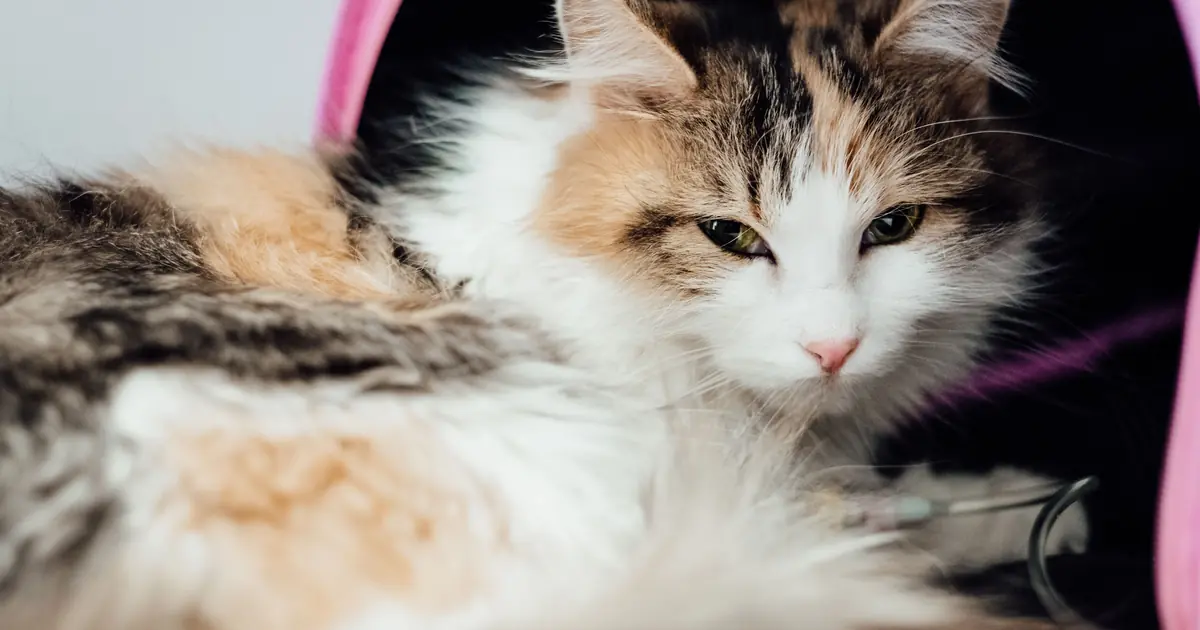
If you’ve ever watched your cat sleep more than usual and thought, “Is she just being lazy, or is something wrong?”, you’re asking exactly the right question. Cats are masters at hiding pain. They’ll act almost normal while something genuinely hurts. So learning how to tell if a cat is in pain mostly comes down to spotting small changes in behavior, posture, and face before they turn into bigger problems.
Here’s the thing: your cat isn’t being secretive to frustrate you. It’s an old survival instinct, and it makes our job as cat parents harder. Let’s make it easier.
- Cats instinctively hide pain, so the most reliable clue is a change from your cat’s normal behavior, not loud crying.
- Common pain signs in cats include hiding, less jumping, reduced appetite, a hunched posture, over- or under-grooming, litter box accidents, and aggression when touched.
- The Feline Grimace Scale, developed at the Université de Montréal in 2019, rates five facial features (ears, eyes, muzzle, whiskers, head) from 0 to 2; a total of 4 or more out of 10 suggests a cat is in pain.
- Purring does not always mean a cat is happy; cats sometimes purr to self-soothe when stressed or in pain.
- Never give a cat human painkillers like acetaminophen (Tylenol) or ibuprofen (Advil), as both are toxic to cats and can be fatal.
- Call a vet right away if your cat hasn’t eaten in 24 hours, strains in the litter box without producing urine, breathes with an open mouth, or cries out when touched.
Why Do Cats Hide Their Pain So Well?
Cats hide pain because of an instinct left over from life in the wild, where a visibly sick or injured animal looks like an easy target to predators. So your cat’s brain is wired to “act fine” even when it isn’t. This is why pain in cats is so easy to miss, and why so many cat parents feel blindsided when a vet finds a real problem.
Even pampered indoor cats carry this instinct. A cat with a sore tooth, an aching hip, or a bladder problem will often keep eating, keep showing up, and keep purring, right up until the discomfort gets hard to mask. That’s not your fault as an owner. It’s just how cats are built. The fix is knowing the quiet signals so you can catch trouble early.
What Are the Most Common Signs a Cat Is in Pain?
The most common signs a cat is in pain are behavioral: hiding, moving less, jumping less, eating less, and changes in grooming or litter box habits. Physical signs like a hunched posture, limping, or a tense face usually come next. Below are 12 of the most telling clues, grouped so they’re easy to scan.
1. Hiding or withdrawing more than usual
A cat in pain often hides. If your normally social cat suddenly lives under the bed, in a closet, or behind the couch, treat it as a possible pain signal, not just a mood. Withdrawal is one of the earliest and most common signs that something hurts.
2. Sleeping more and moving less
Cats in pain tend to slow down. They sleep more, settle in one spot, and seem reluctant to do their usual zoomies or evening play. A drop in normal activity, especially in a younger cat, deserves attention.
3. Reluctance to jump, climb, or use stairs
Hesitating to jump is a classic sign of joint or muscle pain in cats. If your cat now takes the “stairs” of furniture instead of leaping to the windowsill, or pauses and gathers itself before a jump it used to do easily, sore joints are a likely cause. This one is huge in older cats with arthritis.
4. Eating or drinking less
A reduced appetite is a common and important sign of pain in cats. Dental pain, nausea, and general discomfort can all kill a cat’s interest in food. Any cat that stops eating needs prompt attention, because cats that don’t eat for even a day or two can develop a dangerous liver problem.
5. Grooming changes: a messy coat or an over-groomed spot
Grooming changes cut both ways. A cat in pain may stop grooming a hard-to-reach area, leaving a dull, matted, or greasy coat, especially over the back, hips, or tail. Other cats do the opposite and over-groom one painful spot until the fur thins or the skin looks irritated. A sudden bald patch or a newly scruffy coat is worth a closer look.
6. Litter box accidents or trouble going
Litter box problems can be pain in disguise. A cat with sore hips or a painful belly may avoid the box because climbing in and out hurts, and start going right next to it. Straining in the box, frequent trips, or crying while urinating point to urinary pain and can be an emergency, especially in male cats.
7. A hunched, tense, or guarded posture
A hunched posture often signals belly or back pain. A cat protecting a sore abdomen may sit crouched with its body tucked and tense, rather than relaxed and loaf-shaped. A cat that holds itself stiffly, tucks a limb, or won’t fully stretch out may be guarding a painful area.
8. Limping or favoring a leg
Limping is one of the more obvious signs of pain in cats. A cat that favors one leg, holds a paw up, or puts less weight on a limb is telling you that limb hurts. Don’t wait it out; limping rarely fixes itself.
9. Aggression or grumpiness when touched
A normally sweet cat that suddenly hisses, swats, or bites may be in pain. Cats often react this way when you touch or even approach a sore spot. If your lap cat now flinches, growls, or nips when picked up or stroked in one area, pain is a leading explanation.
10. Changes in vocalizing, including odd purring
Vocal changes can signal pain in cats. Some cats yowl, howl, growl, or meow more when they hurt. Others go quiet. And here’s the surprising part: purring isn’t always happiness. Cats sometimes purr to comfort themselves when they’re stressed or in pain, so a cat purring in an unusual situation isn’t automatically a content cat.
11. Facial expression changes
A cat’s face changes when it’s in pain. Flattened ears that rotate outward, squinted or partly closed eyes, a tense “pinched” muzzle, and whiskers pulled forward or stiff are all signals. This is the basis of the Feline Grimace Scale, which we’ll break down next.
12. Restlessness or trouble getting comfortable
A cat in pain may struggle to settle. It might shift position over and over, get up and lie back down, pace, or seem unable to find a comfortable spot. Trembling or panting at rest also belongs here, and panting at rest in a cat always deserves an urgent vet call.
Subtle vs Obvious Signs of Pain in Cats (Quick Comparison)
Pain in cats shows up on a spectrum, from whisper-quiet early clues to hard-to-miss signals. The subtle signs are the ones worth memorizing, because catching pain early usually means an easier fix. Here’s how the two groups compare.
| Subtle, easy-to-miss signs | More obvious signs |
|---|---|
| Hiding or seeking solitude more than usual | Crying out, yowling, or growling |
| Sleeping more, less play, slowing down | Visible limping or holding up a leg |
| Hesitating before jumping or using stairs | Refusing to put weight on a limb |
| Eating slightly less or picking at food | Not eating at all for 24 hours or more |
| A slightly scruffy coat or one over-groomed patch | Open wounds, swelling, or bald, raw skin |
| Mild grumpiness when touched in one spot | Hissing, swatting, or biting when approached |
| Sitting a little hunched or tense | A rigid, hunched “guarding” posture |
| Skipping the litter box occasionally | Straining in the box with no urine produced |
What Is the Feline Grimace Scale, and How Do I Use It at Home?
The Feline Grimace Scale (FGS) is a vet-developed tool that reads pain from a cat’s facial expression. Researchers led by Dr. Paulo Steagall at the Université de Montréal created and validated it in 2019. It scores five facial features from 0 to 2, for a total out of 10. A score of 4 or more suggests your cat is in pain and needs relief.
The best part for cat parents: the FGS was designed to work even at home, and studies found that owners can use it fairly reliably. For the most accurate read, watch your cat when it’s calm and undisturbed, not right after you’ve handled it or when it’s at the vet, since stress can change the face too. Use the table below as your guide.
| Facial feature (action unit) | Relaxed, no pain (score 0) | Obvious pain (score 2) |
|---|---|---|
| Ear position | Ears upright and facing forward | Ear tips pulled apart and rotated outward |
| Orbital tightening (eyes) | Eyes open normally | Eyes squinted or tightly closed |
| Muzzle tension | Muzzle relaxed and round | Muzzle tense and stretched into an oval shape |
| Whiskers position | Whiskers loose and naturally curved | Whiskers stiff and pushed forward, away from the face |
| Head position | Head held at or above the shoulder line | Head dropped below the shoulders or chin tucked to chest |
Score each feature 0, 1, or 2, then add them up. A score under 4 is reassuring, while 4 or higher means it’s time to call your vet. Think of the FGS as a helpful flashlight, not a diagnosis. It tells you whether to worry, not what’s wrong.
Acute vs Chronic Pain in Cats: What’s the Difference?
Cats can have two broad kinds of pain, and they look different. Acute pain comes on suddenly from an injury, infection, surgery, or a problem like a urinary blockage, and it usually eases once the cause is treated. Chronic pain is slow, ongoing discomfort, most often from arthritis, and it builds so gradually that owners often mistake it for “just getting old.”
Chronic pain is the sneaky one. Arthritis is far more common in cats than most people realize: studies show that around 60% of cats over 6 years old, and more than 90% of cats over 12, have X-ray evidence of arthritis. Yet many never limp. Instead they quietly stop jumping to the counter, groom less, get cranky, or sleep in easier-to-reach spots. The Cornell Feline Health Center reminds owners not to write these changes off as unavoidable aging, because feline pain can often be managed once a vet identifies it.
How Can I Check My Cat for Pain at Home?
You can do a gentle at-home check to gather clues before your vet visit, but go slowly and stop if your cat is upset. The goal is to notice reactions, not to diagnose or “test” a sore area hard. Here’s a simple way to do it.
- Watch first, hands off. Before touching anything, observe your cat resting. Note posture, ear and eye position, breathing, and whether it settles comfortably. Run the Feline Grimace Scale from across the room.
- Compare to normal. Ask yourself what’s different from a week or a month ago: appetite, play, jumping, grooming, litter box, and friendliness. Pain in cats shows up as change, so your memory is a real diagnostic tool.
- Do a slow, light body sweep. With calm hands, gently stroke from head to tail and lightly along each leg. Watch for flinching, tensing, pulling away, a sudden head turn, or a growl. Those reactions help pinpoint a sore area.
- Check easy-to-see spots. Peek for swelling, wounds, matted or missing fur, dirty ears, or a paw your cat won’t let you hold. Note anything that looks off.
- Write it down and call your vet. Jot the signs you saw and when they started, then phone your vet. A clear list, plus a short phone video of the behavior, helps your vet enormously.
One firm rule: never reach for your own medicine cabinet. We’ll cover why in the safety note below.
When Should I Take My Cat to the Vet for Pain?
You should call your vet any time you notice a real, lasting change that suggests pain, and you should treat certain signs as same-day emergencies. As a rule of thumb, if your cat is still eating, drinking, and using the litter box normally but seems a little “off,” it’s reasonable to monitor closely and book a regular appointment. Anything more worrying gets a faster call.
This article is educational and isn’t a substitute for veterinary care. Cats are very good at hiding illness, so when in doubt, it’s always safer to check with a licensed vet than to wait and see.
Red-flag signs: call a vet now
Some signs mean a cat needs urgent care, not a wait-and-see approach. Get veterinary help right away if your cat shows any of these:
- Hasn’t eaten anything for 24 hours or more (cats can develop a serious liver problem called hepatic lipidosis when they stop eating)
- Strains in the litter box and produces little or no urine, or cries while trying to pee (a possible urinary blockage, which is life-threatening, especially in male cats)
- Breathes with an open mouth, pants at rest, or breathes fast and hard
- Cries out, screams, or yowls in apparent distress
- Collapses, can’t stand, or seems unable to get up
- Has obvious trauma, heavy bleeding, or sudden severe swelling
- Becomes very lethargic, cold, or unresponsive
Is It Safe to Give My Cat Pain Medicine at Home?
No. You should never give a cat any pain medicine that a vet hasn’t prescribed for that specific cat. Many common human painkillers are toxic to cats. Acetaminophen (Tylenol) can damage a cat’s red blood cells and liver and is often fatal, and ibuprofen (Advil) and other anti-inflammatories can cause stomach ulcers and kidney failure in cats. Even some dog medications are dangerous for cats.
Cats also need much smaller, carefully calculated doses than people or dogs, and only a vet can choose a safe drug and amount. So if your cat is hurting, the kindest, safest move is to call your vet for proper pain relief rather than guessing at home. While you wait, keep your cat warm, quiet, and somewhere easy to reach food, water, and a low-sided litter box.
And if the change you’re noticing is during sleep rather than waking hours, like little jerks or paw movements, that’s usually normal rather than painful. We cover that in our guide on why cats twitch in their sleep, which can help you tell harmless dreaming from a sign of discomfort.
Frequently Asked Questions
Q: How do cats act when they are in pain?
Cats in pain usually act withdrawn rather than dramatic. They hide, sleep more, move and jump less, eat less, and may groom too much in one spot or neglect their coat. Many also get grumpy or aggressive when a sore area is touched, and some sit hunched and tense.
Q: Do cats purr when they are in pain?
Yes, cats sometimes purr when they are in pain or stressed, not only when they’re happy. Purring is thought to be self-soothing, so a cat that purrs in an odd or tense situation may actually be uncomfortable. Look at the whole picture, including face, posture, and behavior, rather than relying on purring alone.
Q: How can I tell if my cat is in pain or just tired?
The difference usually comes down to a change from normal plus other signs. A tired cat rests but still eats, greets you, and moves normally when it gets up. A cat in pain often pairs the rest with hiding, reduced appetite, reluctance to jump, a tense face, or grumpiness when touched. Persistent changes lasting more than a day deserve a vet check.
Q: What does a cat’s face look like when it’s in pain?
A cat in pain often has flattened ears that rotate outward, squinted or partly closed eyes, a tense muzzle that looks stretched rather than round, and stiff whiskers pushed forward. The head may droop below the shoulders. The Feline Grimace Scale uses these five facial features to rate pain from 0 to 10.
Q: Can I give my cat human pain relievers like Tylenol or ibuprofen?
No. Never give a cat acetaminophen (Tylenol), ibuprofen (Advil), aspirin, or other human painkillers. Acetaminophen is especially dangerous and often fatal to cats, and ibuprofen can cause kidney failure and stomach ulcers. Only a veterinarian can prescribe a pain medication and dose that is safe for your cat.
Q: How do I know if my cat is in pain after surgery?
After surgery, watch for hiding, not eating, restlessness, a hunched posture, reluctance to move, and licking at the incision. The Feline Grimace Scale is helpful here, since a score of 4 or more out of 10 suggests your cat needs more pain relief. Call your vet’s office if you’re worried; they can adjust the plan.
Q: Do older cats hide arthritis pain?
Yes, older cats very commonly hide arthritis pain. More than 90% of cats over 12 show X-ray evidence of arthritis, yet many never limp. Instead they stop jumping to high spots, groom less, sleep more, or get irritable. These changes are treatable, so they’re worth raising with your vet rather than accepting as normal aging.
Q: What is an emergency level of pain in a cat?
Treat it as an emergency if your cat cries out in distress, won’t eat for 24 hours, strains to urinate without producing urine, breathes with an open mouth or pants at rest, collapses, or can’t stand. These signs need same-day veterinary care. When you’re unsure, calling an emergency clinic is always the safer choice.
The Bottom Line on Spotting Pain in Your Cat
Learning how to tell if a cat is in pain really comes down to one habit: knowing your cat’s normal and noticing when it shifts. Because cats hide pain so well, the quiet clues, less jumping, a scruffier coat, more hiding, a tense little face, often matter more than any dramatic cry. Trust those changes, lean on tools like the Feline Grimace Scale, and never reach for human medicine. When something feels off, a quick call to your vet is the most loving thing you can do for a cat in pain.

Hello and welcome to The Ideal Cat!
We are some passionate cat owners from different professions. We love our cats and have a lot of experience in how to care for our pets. We are incredibly excited to share our knowledge, experience, and research with you. So you can take good care of your loving cat. We will answer most of the common questions about owning cats, taking care of them, etc. If you have any question contact with us. Thanks for visiting! Enjoy the content.
