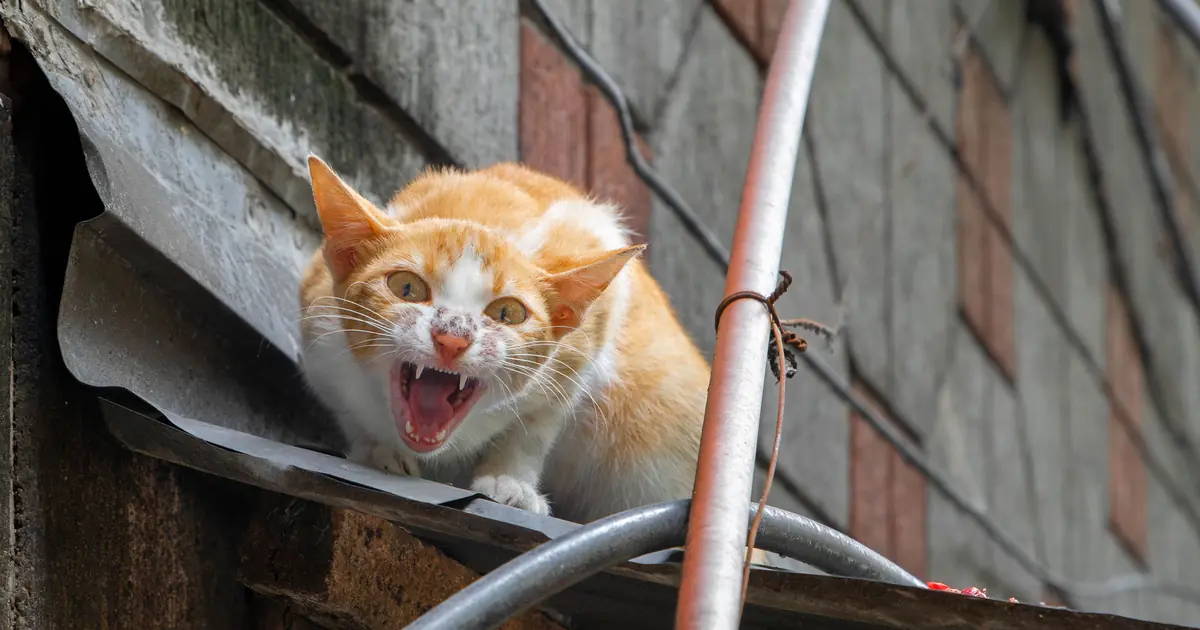
You’re walking past the food bowl and your usually mellow cat lets out a low, rumbling growl. Or maybe you reach down to pet her and get a warning rumble instead of a purr. It’s unsettling, and it can feel personal. It isn’t.
A growl is your cat’s way of talking to you in the clearest language she has. She’s not being mean or “acting out.” She’s telling you something matters right now, whether that’s a painful spot, a stolen toy, or a stranger too close for comfort. Understanding why cats growl helps you respond the right way instead of punishing a message your cat is trying hard to send.
- Growling is a warning signal, not aggression for its own sake. Cats growl to say “stop” before they escalate to a swat or bite.
- The most common triggers are fear, feeling cornered or threatened, resource guarding (food, toys, territory), pain or illness, and overstimulation during petting.
- Growling almost always pairs with body language cues like flattened ears, a puffed tail, dilated pupils, or a low crouch.
- Punishing a growl teaches a cat to skip the warning and go straight to biting or swatting instead.
- Sudden growling in a cat who’s never growled before, or growling when touched in one spot, can point to pain and deserves a vet visit.
Why Do Cats Growl?
Cats growl to warn you or another animal that they feel threatened, uncomfortable, or need space right now. A growl is a low, sustained rumble made deep in the throat, and it’s one of the clearest signals in a cat’s communication toolkit. According to International Cat Care, growling is almost always a distance-increasing signal, meaning your cat wants whatever is bothering her to back off or go away.
Cats don’t have a huge vocabulary of sounds, so they lean hard on the ones they’ve got, from the growl to the much friendlier chuff. A growl sits partway up the warning ladder: below a hiss or a yowl, but above simple avoidance like walking away or hiding. It’s your cat’s version of saying “I mean it” before things get physical.
What Are the Common Reasons a Cat Growls?
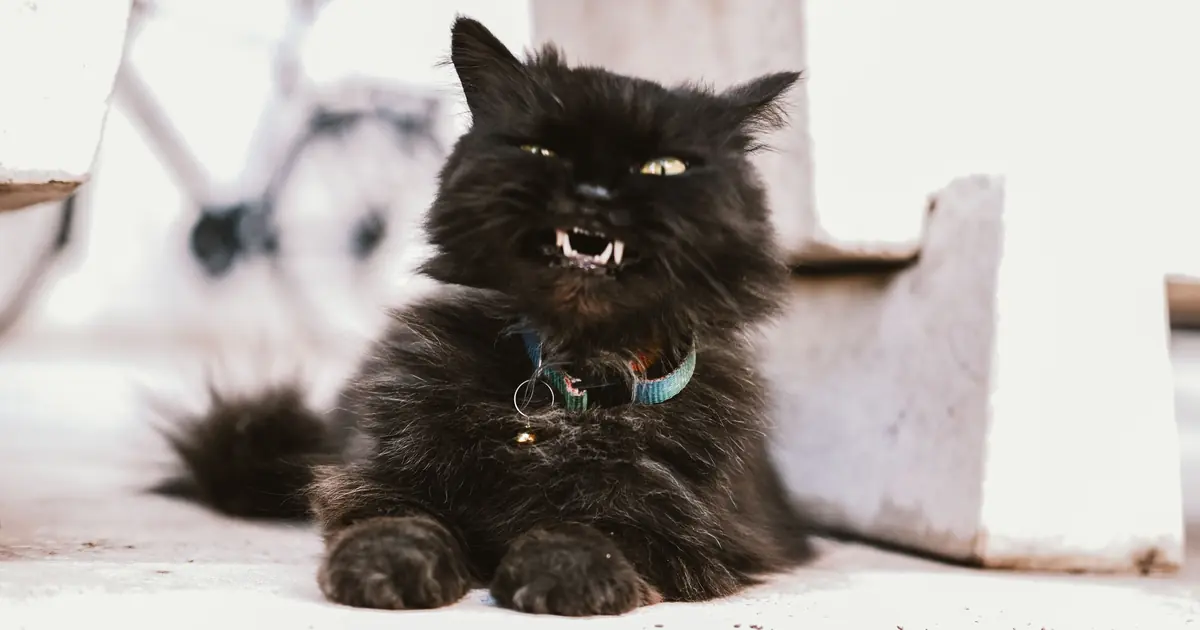
Cats growl for a handful of predictable reasons, and most come down to feeling unsafe, protective, or in pain. Once you know the usual suspects, a growl stops being a mystery and starts being useful information.
- Fear: Loud noises, a trip to the vet, a new dog in the house, or a stranger looming over your cat can all trigger a fear growl. She’s telling the scary thing to keep its distance.
- Feeling threatened or cornered: A cat who can’t easily escape, like one trapped in a carrier or backed against a wall, may growl to create space when running isn’t an option.
- Resource guarding: Food, a favorite napping spot, a toy, or even you can become something your cat guards from another cat or pet. If you’ve ever seen sudden aggression around mealtime, resource guarding is often the reason.
- Pain or illness: Arthritis, dental pain, an injury, or an internal illness can make a cat growl when touched or moved, even by someone she trusts completely.
- Overstimulation during petting: Some cats enjoy attention only up to a point, then their nervous system tips over into irritation. A growl here is an early warning before a bite or swat, similar to how petting-induced overstimulation plays out.
- Redirected aggression: A cat who’s worked up by something she can’t reach, like a bird outside the window or another cat’s scent, may growl (or worse) at whoever’s nearby instead.
- Maternal protection: A mother cat with kittens will growl at anyone or anything she perceives as a threat to her litter, even a person she normally adores.
What Does a Growl Sound Like, and What Body Language Goes With It?
A cat growl is a low, steady rumble in the chest and throat, usually held longer than a hiss and quieter than a yowl. It rarely shows up alone. Watch for the body language that confirms your cat means business.
- Flattened or “airplane” ears pinned sideways or back
- A puffed-up tail or a tail thrashing low and fast
- Dilated pupils, even in a bright room
- A crouched, low body posture or a stiff, upright stance depending on whether she’s trying to look small or big
- Whiskers pushed forward and stiff
- Fur raised along the back (piloerection)
These signals together tell you your cat is past “mildly annoyed” and into “please stop now.” The full picture of cat body language makes it much easier to catch these warnings before they escalate.
Growling vs. Hissing vs. Yowling: What’s the Difference?
Growling, hissing, and yowling are three different warning sounds that sit at different points on a cat’s stress scale. A growl is a low rumble that says “back off.” A hiss is a sharp burst of air that says “stop right now,” often triggered by sudden fright. A yowl is a long, drawn-out cry that usually signals distress, pain, or a territorial dispute with another cat.
| Sound | What It Sounds Like | What It Usually Means |
|---|---|---|
| Growl | Low, sustained rumble | Sustained warning: fear, guarding, pain, or “give me space” |
| Hiss | Sharp exhale, like a snake | Sudden fright or startle, an immediate “stop” |
| Yowl | Long, loud, drawn-out cry | Distress, pain, mating behavior, or a territorial standoff |
Cats often combine these. A cat can hiss and growl in the same breath, or growl before escalating to a yowl. If you’ve noticed your cat hissing more than usual, our guide on why cats hiss at their owners breaks down that specific signal in more depth. And if hissing shows up mid-play, it’s worth knowing whether hissing during play is normal or a sign things have gone too far.
What Should You Do When Your Cat Growls?
When your cat growls, the right move is to stop what you’re doing and give her space, not to punish the growl itself. Here’s how to respond well.
- Stop the interaction immediately. If you’re petting, handling, or approaching her, pull back and let her decide the next move.
- Don’t scold or punish. Yelling, spraying water, or physically correcting a growl teaches your cat that warnings don’t work, which pushes her toward biting or swatting without notice next time.
- Identify and remove the trigger. Is another pet too close? Is a stranger looming? Is it near a food bowl? Address the actual cause instead of just the sound.
- Give her an exit route. Never corner a growling cat. Let her retreat to a safe spot on her own terms.
- Watch for a pattern. One growl during a startling moment is normal. Growling every time you touch a certain spot, or growling that’s new for her personality, is worth tracking closely.
Here’s the thing: a growl is a gift, weirdly enough. It’s your cat giving you fair warning before things get physical. Punish that warning and you don’t get a cat who growls less, you get a cat who skips straight to a bite.
When Does Growling Signal Pain or a Medical Issue?
Growling can signal pain or illness when it’s sudden, out of character, or tied to touch in a specific spot on your cat’s body. A cat who never used to growl and suddenly does, especially alongside hiding, reduced appetite, or reluctance to move, needs a veterinary exam.
Watch for these red flags:
- Growling when you touch a specific area, like the abdomen, back, or a limb
- Growling paired with hiding, lethargy, or a drop in appetite
- A normally affectionate cat becoming growly with no clear trigger
- Growling combined with limping, straining in the litter box, or vomiting
Conditions like arthritis, dental disease, urinary tract issues, and internal injuries can all make an otherwise sweet cat growl defensively. The Cornell Feline Health Center notes that sudden behavior changes, including new aggression or vocalization, are one of the most reliable signs cats give us that something physical is wrong. This article is educational and isn’t a substitute for veterinary care. If your cat’s growling is new, frequent, or paired with any of the signs above, book a vet visit rather than waiting it out.
How Can You Reduce Growling in Your Cat?
You can reduce growling by removing known triggers, respecting your cat’s warnings, and giving her more control over her environment. Feed multi-cat households in separate spots to cut down on resource guarding. Learn your individual cat’s petting limits and stop before she reaches her threshold. Keep a sick or injured cat’s checkups current so pain doesn’t go undetected. And always let a growling cat retreat instead of following or cornering her.
Consistency matters more than any single trick. A cat who learns that growling reliably gets her space, rather than a scolding, will trust that warning system and use it appropriately instead of skipping to more serious aggression. The ASPCA points out that most feline aggression is rooted in fear or discomfort, so calm, predictable handling does more to reduce growling than any correction ever will.
Frequently Asked Questions
Q: Is it normal for cats to growl?
Yes. Growling is a completely normal part of feline communication, used to warn off a perceived threat before escalating further. Occasional growling during startling moments, vet visits, or resource guarding isn’t cause for alarm on its own.
Q: Should I punish my cat for growling?
No. Punishing a growl removes your cat’s early warning system, which often leads to biting or swatting without notice instead. The better response is to stop what triggered the growl and give her space.
Q: Why does my cat growl when I pet her?
This is usually overstimulation, where petting feels good at first but becomes irritating past a certain point. Watch for a stiffening body, twitching tail, or flattened ears, and stop petting before she has to growl to tell you.
Q: Why does my cat growl at other cats?
Growling between cats usually signals territorial tension, resource guarding, or an unfamiliar scent one cat picked up (from a vet visit, for example). It’s a warning to keep distance, not necessarily a sign the cats can never get along.
Q: Can growling mean my cat is in pain?
Yes. A cat who growls when touched in a specific spot, or who suddenly starts growling with no clear trigger, may be reacting to pain from arthritis, dental disease, an injury, or an internal illness. New or unexplained growling is worth a vet visit.
Q: What’s the difference between a growl and a purr?
A purr is a soft, high, continuous vibration usually linked to contentment (though cats sometimes purr when stressed too), while a growl is a low, rumbling warning sound tied to fear, guarding, or discomfort. The two are easy to tell apart once you’ve heard both.
Q: Do mother cats growl at their kittens?
Mother cats rarely growl at their own kittens, but they will growl at people, other pets, or anything they perceive as a threat to the litter. This maternal protectiveness usually settles down once the kittens are weaned.
Q: How do I know if my cat’s growl is serious?
A growl paired with flattened ears, dilated pupils, a puffed tail, or a crouched body means your cat is genuinely stressed and needs space right now. If the growling is new, frequent, or happens with pain signs like limping or hiding, treat it as serious enough for a vet check.

Hello and welcome to The Ideal Cat!
We are some passionate cat owners from different professions. We love our cats and have a lot of experience in how to care for our pets. We are incredibly excited to share our knowledge, experience, and research with you. So you can take good care of your loving cat. We will answer most of the common questions about owning cats, taking care of them, etc. If you have any question contact with us. Thanks for visiting! Enjoy the content.
