
Picture this. A loud bang goes off outside, and your cat vanishes under the bed like a furry magician. You crouch down, reach in, and try to pull them out for a cuddle. They flatten their ears and hiss. Sound familiar?
Here’s the thing about how to calm a scared cat: your instinct to scoop them up and reassure them usually backfires. Cats don’t feel safer when you loom over them and grab. They feel safer when the world gets quiet, boring, and predictable. The good news is that the real method is simple, and it works far better than smothering them with love.
- The fastest way to calm a scared cat is to give them space, stay quiet, and let them hide until they feel safe.
- Never punish, chase, or force a frightened cat out of hiding, since fear responses like hissing and hiding are communication, not misbehavior.
- Slow blinks, a soft voice, a lowered body, and turning slightly sideways all signal to your cat that you are safe and calm.
- Synthetic calming pheromones, such as Feliway, mimic a cat’s natural facial pheromones and can help a scared cat feel more secure.
- Sudden or extreme fear can have a medical cause, so a vet visit is smart if your cat becomes fearful with no clear trigger.
What is the fastest way to calm a scared cat?
The fastest way to calm a scared cat is to make yourself boring and safe, not comforting and loud. That sounds backwards, but a frightened cat reads a fussing, reaching human as one more thing to worry about. Lower the stimulation instead. Follow these steps in order.
- Stop moving toward your cat. Freeze, then back off a few steps. Crowding a scared cat makes the fear worse.
- Get low. Sit or crouch on the floor so you’re not towering over them. A big looming shape reads as a predator.
- Turn slightly sideways. Facing a cat head-on feels confrontational. Angle your body and keep your shoulders soft.
- Soften your eyes and slow blink. Look away, then slowly close and open your eyes. In cat language, a slow blink says “I’m no threat.”
- Lower your voice. Speak in a quiet, even tone. Skip the high-pitched baby talk, which can read as excitement or alarm.
- Cut the trigger. Turn off the vacuum, mute the TV, close the blinds on the fireworks, or gently move the new dog to another room.
- Let them hide. Don’t pull your cat out from under the bed. Hiding is how cats self-soothe, and a hiding spot is a good thing.
- Wait, and let them come to you. Sit quietly nearby. When your cat is ready, they’ll approach on their own terms.
- Reward calm, not fear. Once your cat relaxes, offer a treat, a slow chin scratch, or a gentle play session with a wand toy.
That’s the whole golden rule of calming a cat: space, patience, and no forcing. You’re not abandoning them. You’re giving them the one thing they actually crave in a scary moment, which is control over their own escape.
Why shouldn’t you force or comfort a scared cat?
You shouldn’t force or comfort a scared cat because pressure and looming feel threatening to an animal that’s already in fight-or-flight mode. When you reach into a hiding spot, grab a hissing cat, or hold them tight to “reassure” them, you take away their sense of control. That usually spikes the fear and can teach your cat that hands mean danger.
Fear behaviors are your cat talking to you. Hissing, growling, flattened ears, a puffed tail, and hiding all mean the same thing: “I need space right now.” The ASPCA and other animal-welfare groups are clear that these signals should be respected, not punished. A cat who learns their warnings work is a cat who trusts you more, not less.
Reassuring-smothering also has a sneaky downside. Cats read your energy. If you rush over cooing and fussing every time they get scared, you can accidentally confirm that something really is wrong. Calm, quiet, and a little bit boring is the message you want to send. Learning to read your cat’s body language makes this much easier, because you’ll know the difference between “leave me alone” and “okay, I’m ready now.”
How do you set up a safe space for a frightened cat?
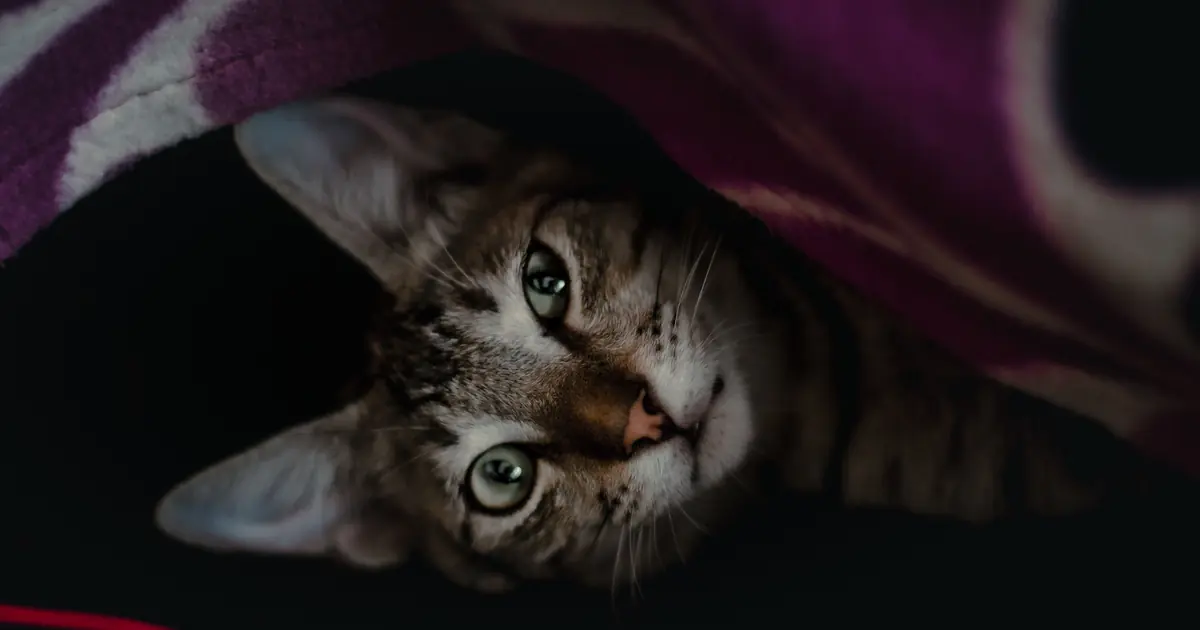
A safe space for a frightened cat is a quiet, low-traffic spot where they can hide, retreat, and control who gets close. Every scared cat needs one, whether the trigger is fireworks, guests, a move, or a new pet. Build it before you need it, not in the middle of the chaos.
Here’s what a good calming setup includes:
- A quiet room or corner away from foot traffic, ideally with a door you can close.
- Enclosed hiding spots like a covered bed, a cardboard box on its side, or an open carrier with a soft blanket inside.
- Vertical space such as a cat tree or a cleared shelf. Cats feel safer up high where they can survey the room.
- Food, water, and a litter box nearby, so a nervous cat never has to cross a scary space to meet basic needs.
- Familiar-smelling items like your worn T-shirt or their usual bedding, which carry reassuring scents.
- Synthetic calming pheromones plugged in or sprayed on bedding about 15 minutes ahead of a stressful event.
Pheromones deserve a quick word, because they’re one of the few calming tools with real science behind them. A calming pheromone diffuser releases a synthetic copy of the facial pheromone cats leave when they rub their cheeks on your furniture. To a cat, that scent means “this territory is safe.” It won’t fix deep anxiety on its own, but it stacks nicely with a quiet room and a patient human.
What body language calms a cat, and what makes it worse?
The body language that calms a cat is small, slow, and non-threatening, while the moves that make fear worse are big, fast, and direct. Cats are hardwired to watch for predators, so your posture matters as much as your voice. This table sorts the do’s from the don’ts.
| Do this (calming) | Avoid this (scary) |
|---|---|
| Crouch or sit low to the ground | Standing over or looming above the cat |
| Turn your body slightly sideways | Facing the cat head-on, squared up |
| Soft eyes and slow blinks | Direct, unbroken staring |
| Quiet, even, low voice | Loud, high-pitched, or fast talking |
| Slow, predictable movements | Sudden reaching, grabbing, or chasing |
| Letting the cat approach you | Cornering the cat or blocking exits |
The slow blink is your secret weapon. Catch your cat’s eye, relax your face, and slowly close and reopen your eyes. Many cats blink back, and researchers and behavior experts treat this as a genuine feline “I trust you.” Do it a few times and just wait. You’re having a tiny, calm conversation in a language your cat actually speaks.
What should you never do to a scared cat?
You should never punish, chase, corner, or flood a scared cat, because each of those breaks trust and deepens the fear. Punishment is the big one. Yelling, spraying water, tapping, or startling a frightened cat teaches them that you’re part of the danger, and it does nothing to fix the root cause.
Keep this short “never” list in mind:
- Never punish fear. Hissing, hiding, and swatting are stress signals, not defiance.
- Never chase or drag them out of a hiding spot. Let them come out on their own clock.
- Never corner a cat or block their only exit, which can trigger a defensive bite or scratch.
- Never flood them with the scary thing to “get them used to it.” Forcing exposure usually backfires.
- Never physically restrain a panicking cat unless it’s a true safety emergency.
If your cat seems fearful more days than not, that’s a different problem than a one-off fright. Chronic, low-grade fear can shade into anxiety, and it’s worth spotting the signs of stress in cats early. Ongoing withdrawal, hiding, and appetite changes can also overlap with feline depression symptoms, so pay attention to patterns over time.
How do you calm a cat in specific scary situations?
Calming a cat in a specific scary situation comes down to the same core rules, applied to that exact trigger: reduce the scary input, offer a safe hideaway, and stay calm yourself. Here’s how that plays out in the situations cat parents ask about most.
Fireworks and thunderstorms
Close windows, draw the curtains, and turn on soft background noise like a TV or fan to muffle the bangs. Set up a cozy hiding spot in an interior room and plug in a pheromone diffuser hours before the show starts. Don’t fuss over your cat during the noise. Let them ride it out in their bunker.
Vet visits and the carrier
Leave the carrier out as everyday furniture year-round, with a blanket and treats inside, so it stops being a trap. Spritz calming pheromone on the carrier bedding 15 minutes before you leave. Cover the carrier with a towel in the car and waiting room to block scary sights. For cats who panic every single visit, ask your vet about pre-visit calming medication.
A new home or a move
Set up one quiet “base camp” room first, with all your cat’s essentials, and let them expand into the house at their own pace. Don’t unpack and introduce the whole space at once. A cat who’s suddenly fearful after a change may just need time, but if the fear seems extreme, it’s worth ruling out other causes. Our guide on why a cat gets scared all of a sudden digs into the common triggers.
Guests and strangers
Tell visitors to ignore your cat completely. No reaching, no staring, no chasing. Give your cat a clear escape route to their safe room, and let curiosity do the rest. Many shy cats will creep out to investigate a calm, still stranger who isn’t paying them any attention.
When does a scared cat need to see a vet?
A scared cat needs to see a vet when the fear is sudden, severe, or has no obvious trigger, because pain and illness can look exactly like fear. This article is educational and isn’t a substitute for veterinary care, so lean on your vet whenever something feels off.
Book a check-up if your cat shows any of these red flags:
- Sudden, unexplained fearfulness with no clear cause like a loud noise or new pet
- Hiding that goes on for days, especially with not eating or drinking
- Signs of possible pain, such as flinching when touched, limping, or hunching
- New aggression or fear in a cat who used to be confident
- Fear paired with sudden clumsiness, disorientation, or bumping into things, which can signal vision or hearing loss
Once your vet rules out a medical cause, a board-certified veterinary behaviorist can help with fear that just won’t settle. Trusted starting points for reliable feline behavior info include International Cat Care, the ASPCA’s cat behavior resources, and the Cornell Feline Health Center.
Calming a scared cat isn’t about being the hero who rushes in. It’s about becoming the safe, boring, predictable human your cat can trust. Give them space, read their body language, keep your routines steady, and let them come to you. Master those basics and you’ll calm a scared cat faster than any grab-and-cuddle ever could.
Frequently Asked Questions
Q: How long does it take for a scared cat to calm down?
A cat spooked by a one-off event like a loud noise usually settles within a few minutes to a couple of hours once the trigger is gone. Cats adjusting to a bigger change, like a new home, may need days or a few weeks. Let your cat set the pace and don’t rush the process.
Q: Should I pull my scared cat out of hiding?
No. Hiding is how cats self-soothe, so forcing a scared cat out of a hiding spot only deepens the fear. As long as they can reach food, water, and a litter box, let them stay hidden and come out on their own terms when they feel safe.
Q: Do calming pheromones actually work on scared cats?
Synthetic calming pheromones like Feliway mimic the facial pheromone cats use to mark safe territory, and many cat parents and vets find they help reduce stress. They work best combined with a quiet room and patience. They’re a helpful aid, not a cure for deep anxiety.
Q: Why does my cat get scared when I try to comfort it?
Reaching, looming, and grabbing feel threatening to a cat already in fight-or-flight mode, even when your intent is loving. A frightened cat reads a fussing human as one more stressor. Staying calm, low, and quiet and letting your cat approach you works far better than active comforting.
Q: Does the slow blink really calm cats down?
Yes. A slow blink signals trust and non-threat in cat language, and many cats blink back when you do it. Softening your eyes and slow blinking, rather than staring directly, helps a scared cat read you as safe. It’s a simple, gentle way to lower the tension.
Q: Should I punish my cat for hissing or hiding when scared?
Never. Hissing, hiding, and swatting are fear signals, not bad behavior, and punishing them teaches your cat that you’re part of the danger. Yelling, spraying water, or startling a scared cat breaks trust and makes future fear worse. Respect the warning and give your cat space.
Q: How do I calm my cat during fireworks?
Close windows and curtains, play soft background noise to mask the bangs, and set up a cozy hiding spot in an interior room. Plug in a calming pheromone diffuser hours ahead. Don’t fuss over your cat during the noise. Let them ride it out in their safe space.
Q: When should sudden fear in a cat be checked by a vet?
See a vet if fear appears suddenly with no obvious trigger, lasts for days, comes with not eating, or pairs with clumsiness, disorientation, or signs of pain. Illness, pain, and vision or hearing loss can all look like fear, so a check-up rules out a medical cause.

Hello and welcome to The Ideal Cat!
We are some passionate cat owners from different professions. We love our cats and have a lot of experience in how to care for our pets. We are incredibly excited to share our knowledge, experience, and research with you. So you can take good care of your loving cat. We will answer most of the common questions about owning cats, taking care of them, etc. If you have any question contact with us. Thanks for visiting! Enjoy the content.
