It’s 6am. You’re not even awake yet, and there’s already a full scoop waiting for you. Or maybe you’re gone all day, and you hate the thought of your cat picking through a dirty box for hours. Sound familiar?
A self-cleaning cat litter box promises to take that daily chore off your plate for good. It sifts the waste itself, seconds after your cat steps out, and drops it into a sealed drawer you empty once a week or so. Less scooping, less smell, fewer guilt trips.
Let’s be honest about one thing first: these are not cheap. Good automatic boxes run from about $167 to $699, so this is a real purchase, not an impulse buy. Below are our four favorites across price tiers, with the good, the annoying, and the safety stuff nobody likes to mention.
- The Whisker Litter-Robot 4 is our best overall pick, offering the quietest cycle, the best odor control, and reliable app tracking for multiple cats.
- Expect to spend $167 to $699 up front for a quality automatic litter box, plus ongoing costs for proprietary litter, crystal trays, or waste liners.
- Most automatic boxes use a weight sensor and delay the cleaning cycle, and most makers recommend waiting until a kitten weighs at least 3 to 5 pounds before use.
- One well-sized automatic box can handle 2 to 3 cats, but the classic rule of one box per cat plus one extra still applies in larger households.
- A sudden change in how often your cat uses the box, or straining and accidents, is a health signal worth a vet visit, not just a hardware issue.
Our Top Picks
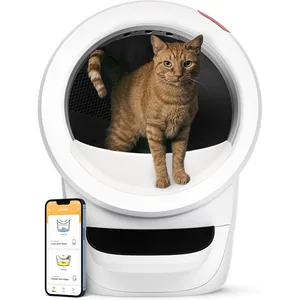
Whisker Litter-Robot 4 Automatic Self-Cleaning Cat Litter Box, White
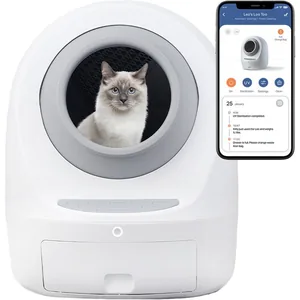
Casa Leo Leo’s Loo Too Wifi Enabled Cat Litter Box, Leo Gray
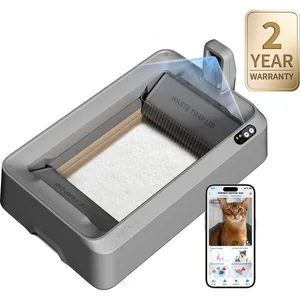
PETKIT Purobot Crystal Duo Automatic Cat Litter Box with Camera, pH Monitoring Bundle
Self-cleaning cat litter box compared at a glance
| Litter box | Best for | Type | Price |
|---|---|---|---|
| Whisker Litter-Robot 4 Automatic Self-Cleaning Cat Litter Box, White | Best overall | Automatic globe, WiFi | $699.00 |
| Casa Leo Leo’s Loo Too Wifi Enabled Cat Litter Box, Leo Gray | Best value premium | Automatic globe, WiFi | $599.99 |
| PETKIT Purobot Crystal Duo Automatic Cat Litter Box with Camera, pH Monitoring Bundle | Best smart/mid-range | Automatic, crystal, camera | $219.99 |
| PetSafe ScoopFree Crystal Smart Self-Cleaning Cat Litter Box, Front Entry | Best budget | Crystal tray, rake | $167.19 |
The 4 best self-cleaning cat litter box picks, reviewed
Whisker Litter-Robot 4 Automatic Self-Cleaning Cat Litter Box, White: best overall
The Whisker Litter-Robot 4 ($699) is the box most people picture when they think self-cleaning, and it earns the reputation. It’s a rotating globe that sifts clumps into a large carbon-filtered drawer, and it works with standard clumping litter, so you’re not locked into a pricey proprietary refill. The app tracks each cat’s weight and visits, which is genuinely useful for spotting a problem early in a multi-cat home. It’s quieter and better at odor control than older models.
Who it’s for: busy owners, multi-cat households, and anyone who wants the most polished experience and will pay for it. Who it’s not for: tight budgets, and homes with kittens or very small cats under about 5 pounds, since the sensor and entry are built for adult-sized cats. The price stings, but this is the one we’d buy for ourselves.
Casa Leo Leo’s Loo Too Wifi Enabled Cat Litter Box, Leo Gray: best value premium
The Casa Leo Leo’s Loo Too ($599.99) gives you most of the high-end experience for about a hundred dollars less than the Litter-Robot. It’s another rotating globe with a big waste drawer, a WiFi app, and safety sensors, plus a UV sterilizing feature and a roomy interior that larger cats appreciate. It handles standard clumping litter too, which keeps running costs sane.
Who it’s for: owners who want premium performance and a bigger entry for a chunky cat, without quite paying flagship money. Who it’s not for: people who want the single most refined app and the deepest track record, where the Litter-Robot still edges ahead. Honestly, if the Litter-Robot is out of budget, this is the smart step down.
PETKIT Purobot Crystal Duo Automatic Cat Litter Box with Camera, pH Monitoring Bundle: best smart/mid-range
The PETKIT Purobot Crystal Duo ($219.99) is the gadget lover’s pick. At roughly a third of the flagship price, you get a built-in camera, pH monitoring on the crystal tray, and app alerts that flag odd bathroom trips. The crystal system controls odor well and needs less frequent handling than clumping setups. It’s a lot of smart features for the money.
Who it’s for: tech-forward owners who want health monitoring and video, and folks who like the crystal-tray approach. Who it’s not for: anyone wary of proprietary trays and refills, which add to the long-term cost, and very large cats who may find the chamber snug. Read the weight guidance before buying if your cat is on the big side.
PetSafe ScoopFree Crystal Smart Self-Cleaning Cat Litter Box, Front Entry: best budget
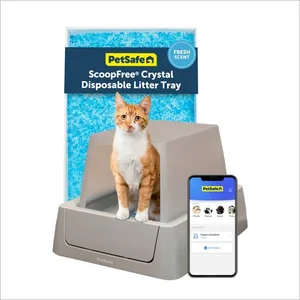
The PetSafe ScoopFree Crystal Smart ($167.19) is the friendliest entry point into self-cleaning boxes. Instead of a rotating globe, a rake pushes waste into a covered tray filled with low-tracking crystal litter, and the front-entry design suits cats who dislike climbing into a hood. Basic app connectivity tells you when the tray needs changing.
Who it’s for: first-timers, single-cat homes, and budget-minded owners testing the automatic waters. Who it’s not for: multi-cat households that will fill the tray fast, and anyone who dislikes buying replacement crystal trays, which are the real ongoing cost here. It’s simpler and smaller than the globes, but for the price, it does the job.
How to choose the best self-cleaning cat litter box
An automatic litter box does one job: it removes waste for you, without a scoop. Here’s what actually matters before you spend real money.
How automatic litter boxes work
Most self-cleaning boxes sit idle until your cat leaves, then run a cleaning cycle after a short delay. Globe-style boxes (like the Litter-Robot and Leo’s Loo) rotate to sift clumps through a screen into a sealed drawer below. Rake-style boxes (like the ScoopFree) drag a comb across a crystal tray to push waste into a covered compartment. Either way, you empty a drawer or swap a tray every few days to a couple of weeks instead of scooping daily.
Weight sensors and safety
Good automatic boxes use a weight sensor to detect when a cat is inside and pause the cycle until the cat steps out, then add a safety delay before cleaning. This is the feature that keeps your cat safe, so don’t skip it. Most manufacturers set a minimum weight, often around 3 to 5 pounds, which is why kittens should wait. If you ever notice your cat avoiding the box after switching, go back to a plain open tray for a while. The ASPCA’s guidance on litter box problems is a good primer on why cats reject a box.
The cost you forget: litter and liners
The sticker price is only part of it. Globe boxes usually take standard clumping litter, which keeps refills cheap. Crystal-tray boxes often use proprietary trays or crystal refills that add up over the year, so factor that in. Waste liners and carbon filters are smaller recurring costs on most models too.
WiFi, apps, and noise
App features range from simple full-drawer alerts to per-cat weight logs and camera feeds. They’re handy, but the health-tracking data is not a diagnosis. On noise: globe boxes hum and rotate, which can startle a skittish cat at first, so place the box where a sudden cycle won’t spook anyone.
Cleaning the drawer and deep cleans
Emptying the drawer is easy, but the machine itself still needs a full wash every few weeks. Waste, dust, and litter residue build up on sensors and surfaces, and a dirty box smells no matter how smart it is.
Multi-cat homes and kittens
One large automatic box can serve 2 to 3 cats, but heavy use fills drawers fast and can create a queue. For kittens, wait until they hit the maker’s minimum weight, and supervise the switch. For more on how cats communicate discomfort around the box, PetMD explains common litter box avoidance causes. If habits change suddenly, that’s a vet conversation, not just a gadget tweak.
Are self-cleaning litter boxes safe for cats?
Yes, self-cleaning litter boxes are safe for most healthy adult cats when they include a working weight sensor and a cleaning delay, which every box on this list does. These sensors detect a cat inside and pause the cycle, then wait before running so no cat is caught mid-clean.
- Kittens and tiny cats: Wait until your cat meets the maker’s minimum weight, often 3 to 5 pounds, before letting them use an automatic box unsupervised.
- Senior or disabled cats: A high globe entry can be hard on stiff joints, so a low front-entry model may suit them better.
- Skittish cats: Introduce the box slowly with the auto-cycle off at first, so the motor noise doesn’t scare them off the box entirely.
International Cat Care and other welfare groups stress that any litter box should feel safe and private, so watch how your specific cat reacts and adjust.
Common mistakes to avoid
- Letting a tiny kitten use it too soon. Under the minimum weight, the sensor may not register your kitten, so wait until they’re big enough and supervise the first weeks.
- Using the wrong litter. Globe boxes need good clumping litter; crystal-rake boxes need the crystal system they’re built for. The wrong type jams the mechanism and ruins odor control.
- Thinking one box is always enough. Even a great automatic box does not cancel the one-per-cat-plus-one rule in busy multi-cat homes.
- Skipping the deep clean. Emptying the drawer is not the same as washing the unit; residue on sensors and walls will start to smell.
- Ignoring the weight limit. Cramming a very large cat into a snug chamber leads to avoidance, mess, and a cat who now hates the box.
Related guides
Related guides:
- Our roundup of the best cat litter for filling any box
- The best clumping cat litter, which most globe-style automatic boxes need
- How many litter boxes you actually need per cat
- Why your cat may not be using the litter box
- The best cat litter mats to catch tracked crystals and clumps
Frequently asked questions
Q: Are self-cleaning litter boxes worth it?
For busy owners, multi-cat homes, and anyone who dreads daily scooping, a self-cleaning litter box is usually worth the money. You trade a high up-front cost of $167 to $699 for far less daily work and better odor control. If you’re rarely home to scoop and have adult cats over about 5 pounds, the value is real.
Q: Are self-cleaning litter boxes safe for cats?
Yes, automatic litter boxes are safe for healthy adult cats when they have a working weight sensor and a cleaning delay, which pause the cycle while a cat is inside. The main cautions are kittens under the minimum weight, very skittish cats, and senior cats who struggle with a high entry. Introduce any new box slowly.
Q: Do vets recommend self-cleaning litter boxes?
Many vets are fine with self-cleaning boxes for adult cats, as long as the box stays clean and your cat uses it willingly. Some prefer traditional open trays for kittens, seniors, or cats with urinary issues, because those cats need easy access and close monitoring of output. Always watch how your own cat responds.
Q: What litter should I use in a self-cleaning litter box?
Use the litter type your box is designed for. Globe-style boxes like the Litter-Robot 4 and Leo’s Loo Too need a good clumping clay litter, while crystal-rake boxes like the ScoopFree use silica crystal trays. Using the wrong type can jam the mechanism and wreck odor control, so check the manual first.
Q: Are self-cleaning litter boxes good for multiple cats?
A large automatic box can comfortably serve 2 to 3 cats, and per-cat app tracking helps you spot problems. In bigger households, still follow the one-box-per-cat-plus-one rule, since heavy use fills the waste drawer quickly and can create a line at peak times.
Q: What is the minimum cat weight for an automatic litter box?
Most manufacturers set a minimum around 3 to 5 pounds so the safety sensor reliably detects the cat. Kittens below that weight should use a plain open litter tray until they grow. Check your specific model’s stated minimum, since it varies between the Litter-Robot, Leo’s Loo, PETKIT, and PetSafe boxes.
Q: How often do you empty a self-cleaning litter box?
You typically empty the sealed waste drawer or swap the crystal tray every few days to two weeks, depending on how many cats use it. That beats daily scooping, but the box itself still needs a full deep clean every few weeks to stay odor-free and keep the sensors working.
Q: Do self-cleaning litter boxes really reduce smell?
Yes, most cut odor well because they remove waste within seconds and seal it in a covered drawer or tray, often with a carbon filter. Smell comes back fast if you skip deep cleans or let the drawer overfill, so odor control depends on you keeping up with maintenance.
The bottom line
If money is no object, buy the Whisker Litter-Robot 4 ($699). It’s the quietest, best-smelling, most reliable pick, and the per-cat tracking is a genuine bonus in a multi-cat home. Want almost that experience for less? The Casa Leo Leo’s Loo Too ($599.99) is the smart step down with a roomy entry. For gadget fans on a mid-range budget, the PETKIT Purobot Crystal Duo ($219.99) packs a camera and health monitoring, and first-timers can dip a toe in with the PetSafe ScoopFree ($167.19). Whichever tier you choose, the right self-cleaning cat litter box should fit your cat’s size and your budget, keep a working safety sensor, and get a real deep clean now and then. Get those three right and you’ll wonder how you ever scooped by hand.

Hello and welcome to The Ideal Cat!
We are some passionate cat owners from different professions. We love our cats and have a lot of experience in how to care for our pets. We are incredibly excited to share our knowledge, experience, and research with you. So you can take good care of your loving cat. We will answer most of the common questions about owning cats, taking care of them, etc. If you have any question contact with us. Thanks for visiting! Enjoy the content.
