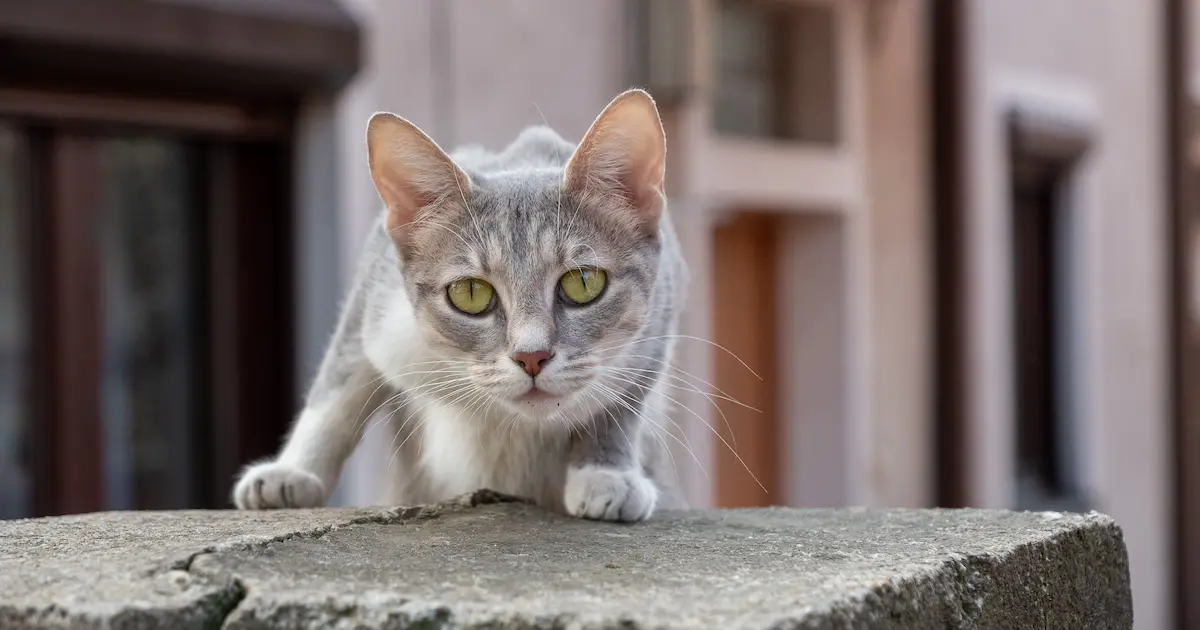
If you’ve ever looked up from your phone to find your cat watching you with those big, unblinking eyes, you’re not alone. It can feel a little intense, sometimes even a little spooky. I get it. That silent gaze makes a lot of cat parents wonder if something’s wrong.
Here’s the reassuring news. When your cat stares at you, it’s almost always a good thing. Cats don’t bark or tug at your sleeve. They use their eyes to talk. So when you ask “why does my cat stare at me,” you’re really asking what they’re trying to tell you. Let’s decode it.
Why does my cat stare at me? The 7 most common reasons
Cats stare at you to communicate, and the reason usually falls into one of seven buckets: hunger, wanting attention, affection, curiosity, fear, overstimulation, or simple habit. The trick is reading the body language around the stare, because the same wide eyes can mean “I love you” or “give me space.”
1. Your cat wants food
The most common reason a cat stares at you is to ask for food. If the staring happens around mealtimes, near their bowl, or first thing in the morning while you’re still in bed, your cat is basically willing breakfast into existence. Many cats pair this stare with meows, leg weaving, or sitting pointedly next to an empty bowl.
2. Your cat wants your attention
Cats often stare to get you to notice them. Once they catch your eye, they might meow, roll over, rub on something nearby, or block your path. Your cat has learned a simple lesson: looking at you tends to make good things happen. If you’ve ever responded to a stare with a treat or a chin scratch, you taught them this works.
3. It’s a sign of affection and trust
A soft, relaxed stare is one of the sweetest things your cat can offer. Cats feel vulnerable when they close their eyes, so holding a gentle gaze and slow-blinking at you means they feel completely safe in your company. This slow blink is affectionately called the “cat kiss.” If your cat stares while purring with half-closed, droopy eyes, that’s pure love.
4. Your cat is curious
Cats are natural observers, and a lot of staring is just your cat keeping tabs on you. They’re studying what you’re doing to figure out if it might involve them. Opening a drawer, standing up, picking up a bag: all of it could lead to something interesting, so your cat watches and waits.
5. Your cat is afraid or anxious
Sometimes a cat stares because they’re worried about something, and they’re keeping their eyes locked on whatever startled them. A loud noise, a new pet, or a sudden movement can trigger this. A fearful stare usually comes with a tense, low body, flattened ears, and dilated pupils. This isn’t a stare you want to crowd into.
6. Your cat is overstimulated or about to pounce
An intense, fixed stare with dilated pupils, a crouched body, and a tail swishing back and forth often means your cat is in hunting or play mode. This is the stare that comes right before your cat sprints across the room to swat your ankle. It’s not aggression exactly, but it’s a heads-up that those teeth and claws are about to come out in play.
7. It’s a learned habit
Cats are smart, and they repeat what works. If staring has reliably gotten your cat fed, petted, or let outside, they’ll keep doing it. Over time, a casual glance turns into a dependable strategy for running the household. Honestly, it usually works, which is why they never stop.
How to read your cat’s stare in 5 seconds
You can tell what a cat’s stare means by looking at the cues around it: the eyes, ears, tail, and body. The stare itself is only half the message. Here’s a quick decoder for the most common combinations.
| What you see | What it usually means | What to do |
|---|---|---|
| Soft eyes, slow blinks, relaxed body, purring | Affection and trust | Slow-blink back and enjoy the moment |
| Stare near the bowl or at mealtime, plus meows | “Feed me” | Check the feeding schedule, not just the bowl |
| Stare followed by rolling, rubbing, or blocking you | Wants attention | Offer petting or a short play session |
| Dilated pupils, crouched body, swishing tail | Play or pounce mode | Redirect to a wand toy before the ankle attack |
| Flattened ears, tense body, dilated pupils, hiding | Fear or anxiety | Give space, remove the trigger, don’t force contact |
| Vacant stare at a wall or empty space, senior cat | Possibly medical | Note frequency and call your vet |
Is it good or bad when my cat stares at me?
In most cases, a cat staring at you is good. Direct staring at a trusted human is usually a sign of bonding, communication, or a simple request, not aggression. Cats reserve their hard, hostile stares for rivals and threats, so the fact that your cat watches you calmly says they’re comfortable with you.
The stare only leans “bad” when the rest of the body looks tense: flattened ears, dilated pupils, a stiff posture, or a lashing tail. That combination means your cat feels threatened or overstimulated, and pushing for affection in that moment can earn you a swat. When in doubt, read the whole cat, not just the eyes.
Why does my cat stare at me without blinking?
A cat staring without blinking is usually just focused, not threatening. Cats don’t blink as often as humans do, and a steady, unblinking gaze often means your cat is simply locked in on you, watching for your next move or waiting for something they want.
Context still matters. An unblinking stare with a relaxed, loafing body is curiosity or mild attention-seeking. An unblinking stare with dilated pupils and a rigid body is closer to alarm or pre-pounce focus. If the no-blink stare is brand new, happens often, and your cat also seems disoriented or off, that’s worth a vet’s eyes rather than just yours.
Should I stare back at my cat?
You can stare back gently, but the magic move is the slow blink, not a hard direct stare. A long, unbroken stare can read as a challenge in cat language, while a soft slow blink reads as friendly and safe. This is how you “talk back” in a way your cat understands, and it isn’t folklore. In a 2020 University of Sussex study published in Scientific Reports, 21 cats from 14 households were more likely to slow-blink back when their owners slow-blinked at them. In a second experiment, cats were more likely to approach a stranger’s outstretched hand after that person slow-blinked first.
Here’s how to do the slow blink:
- Catch your cat’s eye from a comfortable distance.
- Relax your face and soften your gaze, no wide eyes.
- Slowly close your eyes for a second or two.
- Open them just as slowly.
- Wait and watch. Many cats will slow-blink right back.
That little exchange is a genuine “I trust you” between the two of you. It costs nothing and it strengthens the bond every time.
Why does my cat stare at me while I sleep?
A cat staring at you while you sleep is usually a mix of curiosity, comfort, and timing. Your cat is checking that you’re still there, watching your breathing, or quietly waiting for the moment you wake up so they can request breakfast. Many cats also just feel safe sitting close while their favorite human rests.
It can feel unnerving to wake up to a furry face two inches from yours, but it’s rarely anything to worry about. If your cat sleeps nearby and watches you, take it as a compliment. You’re their safe place. The early-morning version is mostly an alarm clock with whiskers, gently reminding you that the food bowl exists.
Why does my cat stare at the wall or into space?
Staring at a wall or empty space is different from staring at you, and it’s the version most worth paying attention to. Often it’s harmless: cats have far sharper hearing and low-light vision than we do, so they may be tracking a bug behind the drywall, a faint sound, or a shift of light you can’t perceive. A short, curious wall-stare is normal.
What’s not typical is frequent, prolonged, vacant staring at nothing, especially in a senior cat. In cats over 10, this can point to medical causes worth ruling out, including:
- Hypertension (high blood pressure): common in older cats with kidney disease or hyperthyroidism, and it can affect the eyes and brain, causing disorientation and blank staring. The Cornell Feline Health Center puts neurologic signs like disorientation at 15 to 40 percent of cats with high blood pressure.
- Feline cognitive dysfunction (FCD): a dementia-like condition in aging cats that can cause confusion, vacant staring, altered sleep, and vocalizing at nothing. The MSD Veterinary Manual stresses ruling out medical causes like high blood pressure, hyperthyroidism, and pain before calling it cognitive decline.
- Focal seizures: not all seizures involve convulsions. Some look like brief “zoned out” episodes with twitching whiskers or lip-smacking.
- Vision changes: cataracts, glaucoma, or retinal issues can make a cat fixate oddly on surfaces.
None of this means you should panic if your cat glances at a wall now and then. It means a new, repeated, or worsening blank-staring habit deserves a check-up rather than a wait-and-see.
This article is for general information and isn’t a substitute for professional care. If your cat’s behavior changes suddenly or you’re worried, please talk to your licensed veterinarian.
When to see a vet about staring
Staring at you is almost never a medical issue. The cases that warrant a vet are usually about staring into space combined with other changes. Book a vet visit if you notice any of these red flags:
- Sudden, frequent staring at walls or empty space, especially in a cat over 10.
- Pupils that stay dilated even in bright light.
- Cloudy, red, or differently colored eyes, or pawing at the eyes.
- Staring episodes with twitching, tremors, circling, or stiffness.
- Vocalizing or growling at nothing, disorientation, or getting “stuck” in corners.
- Big changes in thirst, appetite, litter box habits, or sleep alongside the staring.
If you can, record a short video of the episode on your phone. Timestamped footage helps your vet tell the difference between a quirky habit and something like a focal seizure, which is hard to describe in words.
A few more staring questions
Q: Why does my cat stare at me and then run away?
This is usually play, not rejection. A cat that stares with dilated pupils and then bolts is in hunting or zoomies mode, treating you like a target to ambush. It can also happen when a cat is a little overstimulated. Redirecting that energy to a wand toy gives it a better outlet than your ankles.
Q: Why does my cat stare at me from across the room?
A cat staring from a distance is typically observing you. Cats like to monitor their humans to predict what happens next, since your movements often lead to food, play, or a door opening. From across the room it’s usually calm curiosity rather than anything emotional or urgent.
Q: Why does my cat stare at me when I talk?
Cats stare when you talk because they’re tuning in to you. They recognize your voice and often the cadence of words tied to food, play, or affection. Your cat may not understand the sentence, but they’re reading your tone and watching for cues, which is its own form of bonding.

Hello and welcome to The Ideal Cat!
We are some passionate cat owners from different professions. We love our cats and have a lot of experience in how to care for our pets. We are incredibly excited to share our knowledge, experience, and research with you. So you can take good care of your loving cat. We will answer most of the common questions about owning cats, taking care of them, etc. If you have any question contact with us. Thanks for visiting! Enjoy the content.
)