
Your cat locks eyes with you across the room and you wonder: do I win this staring contest, or is that rude in cat? Turns out how you look back really matters to your cat.
Here’s the right way to return your cat’s gaze, and why the slow blink is your secret weapon.
- Avoid a hard, unblinking stare, cats read direct staring as a threat or challenge.
- Instead, look back softly and offer a slow blink, the friendly “cat kiss.”
- Slow blinking tells your cat you’re relaxed and non-threatening, and builds trust.
- Many cats slow-blink back, a lovely sign of comfort and affection.
- A cat’s own stare can mean curiosity, affection, a request, or, at times, a challenge.
Should I stare back at my cat?
You shouldn’t stare back with a hard, fixed, unblinking gaze, because cats interpret direct staring as a threat or a challenge. Instead, meet your cat’s eyes softly and add a slow blink, which signals friendliness and calm. So the answer is: return the gaze gently, don’t have a staring contest. A soft look plus slow blinking reassures your cat and can even deepen your bond, while an intense stare may make your cat uneasy or defensive.
Why is a hard stare a problem for cats?
In cat language, a direct, prolonged stare is confrontational, a signal of threat or dominance. Among cats, staring is used to challenge rivals, so an unblinking human stare can trigger discomfort, wariness, or a defensive response. That’s also why cats often approach the person in a room who is ignoring them (a non-threatening “safe” human) rather than the one staring adoringly. Understanding this helps you avoid accidentally intimidating your cat, and it’s the flip side of why your cat stares at you.
What is the slow blink and how do you do it?
The slow blink is a gentle, deliberate closing and opening of your eyes that tells a cat you’re calm and friendly, often called a “cat kiss.” Here’s how:
- Look at your cat softly, with relaxed eyes, not a wide fixed stare.
- Slowly close your eyes and hold for a moment.
- Gently open them again, keeping your face relaxed.
- Look slightly away afterward to seem non-threatening.
- Watch for a slow blink back, your cat returning the gesture.
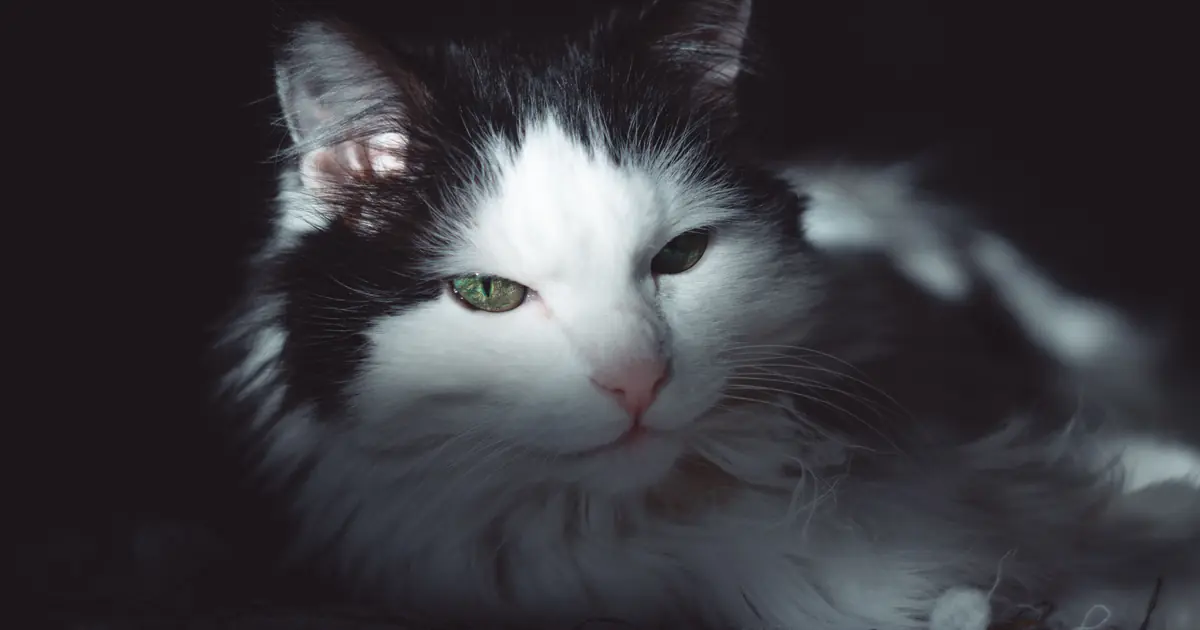
Do cats slow blink back at you?
Yes, many cats slow-blink back, and it’s a heartwarming sign of trust and affection. Research suggests cats are more likely to slow-blink at a person who slow-blinks first, and that this gentle eye contact helps cats feel positively toward people. So when your cat half-closes its eyes at you, or returns your slow blink, it’s essentially saying it feels safe and comfortable, similar to the trust shown when cats close their eyes as you pet them. It’s one of the easiest ways to “talk” to your cat.
Hard stare vs soft slow blink
Here’s the difference in how cats read your eyes.
| Your action | How the cat reads it |
|---|---|
| Hard, fixed, unblinking stare | Threat or challenge, can cause unease |
| Soft gaze with slow blinks | Friendly, calm, trustworthy |
| Looking slightly away | Non-threatening and reassuring |
| Slow blink returned by the cat | Trust and affection |
What does it mean when your cat stares at you?
Your cat’s own stare can mean several things, curiosity, affection, a request (like food), or occasionally a challenge, so read it with body language. A relaxed cat with soft eyes staring at you is usually curious or bonding, and a great moment to slow-blink back. A tense, wide-eyed stare with a stiff body or lashing tail is different and signals agitation, in which case give space rather than engaging. This article is educational; healthy eye contact is normal, but if your cat suddenly stares blankly, seems disoriented, or has other changes, especially a senior cat, consult your vet. For more bonding gestures, see whether to headbutt your cat back. Trusted guidance on cat body language comes from the ASPCA and International Cat Care.
Frequently Asked Questions
Q: Should I stare back at my cat?
Not with a hard, unblinking stare, cats read that as a threat. Instead, return the gaze softly and give a slow blink, which signals friendliness and builds trust. Avoid staring contests; gentle eye contact is the way to go.
Q: Is staring at a cat bad?
A fixed, direct stare can be, since cats use staring to challenge rivals, so it may make your cat uneasy or defensive. A soft gaze with slow blinks, however, is friendly and reassuring. It’s the intensity, not eye contact itself, that matters.
Q: What is a cat slow blink?
A slow blink is a gentle, deliberate closing and opening of the eyes that signals calm and friendliness, often called a “cat kiss.” Doing it at your cat tells it you’re non-threatening, and many cats slow-blink back as a sign of trust.
Q: Do cats like it when you slow blink at them?
Yes. Research suggests slow blinking helps cats feel positively toward people, and cats often slow-blink back. It’s a friendly, bonding gesture that reassures your cat, far better received than a hard stare.
Q: Why does my cat stare at me without blinking?
It can mean curiosity, affection, or a request like food, or occasionally a challenge, so check the body language. A soft-eyed, relaxed stare is usually friendly; a tense, stiff stare means give space. Try slow-blinking back at a relaxed cat.
Q: How do I win my cat’s trust with eye contact?
Use soft eyes and slow blinks rather than staring, then look slightly away to seem non-threatening. Repeat calmly over time. Many cats will slow-blink back, showing they feel safe. It’s one of the simplest ways to build trust.

Hello and welcome to The Ideal Cat!
We are some passionate cat owners from different professions. We love our cats and have a lot of experience in how to care for our pets. We are incredibly excited to share our knowledge, experience, and research with you. So you can take good care of your loving cat. We will answer most of the common questions about owning cats, taking care of them, etc. If you have any question contact with us. Thanks for visiting! Enjoy the content.
