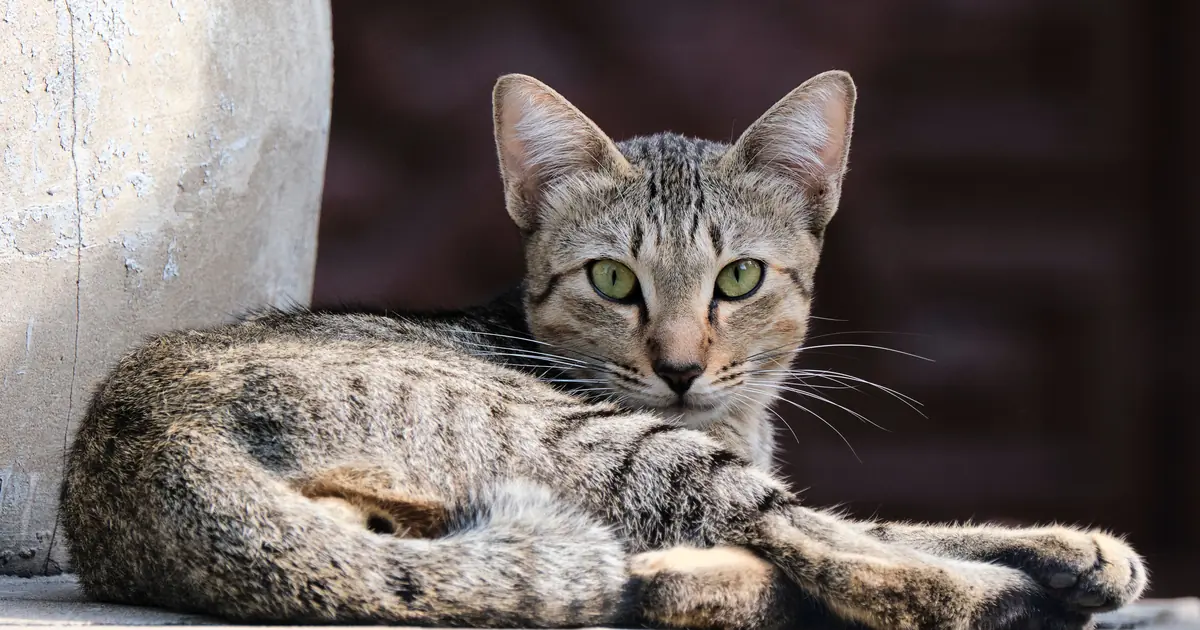
Your cat can’t tell you they’re happy, nervous, or one pet away from a swat. But they’re talking constantly, just not with words.
It’s all in the tail, the ears, the eyes, and that tiny twitch of the whiskers. Once you learn to read it, your cat stops being a mystery. You’ll know when they want cuddles, when they want space, and when to back off before the claws come out. It even explains small quirks, like the shake some cats do right after a petting session.
Here’s the thing most people get wrong: a wagging tail on a cat is not a happy tail like it is on a dog. That single misread causes a lot of scratches. This guide walks through every signal, then shows you how to put them together and read your cat like a book.
- A tail held straight up is the friendliest signal a cat can give, meaning they’re happy and confident.
- A cat’s slow blink is a genuine sign of trust and affection, backed by a 2020 University of Sussex study.
- A wagging or thrashing cat tail signals irritation or overstimulation, the opposite of a dog’s happy wag.
- Flattened “airplane” ears, a puffed tail, and dilated pupils mean a cat is scared or ready to defend itself.
- No single signal tells the whole story, so always read the tail, ears, eyes, and body together in context.
How do you read cat body language?
You read cat body language by watching several parts of the body at once: the tail, ears, eyes, whiskers, posture, and vocal sounds. Each part sends its own signal, and the true message comes from combining them. A cat with an upright tail, forward ears, and a soft slow blink is relaxed and friendly. A cat with a puffed tail, flat ears, and a hard stare is frightened or angry.
Think of your cat as a mood expressed head to tail. One signal is a word. All of them together are the sentence. According to International Cat Care, cats rely on body posture, facial expressions, pupil size, and even the ability to fluff up their fur to communicate, so the subtle stuff matters as much as the obvious.
The cat body language signals table
Here’s a quick-reference chart for the most common cat signals and what they usually mean. Use it to decode a single body part fast, then read the section below on how to combine them.
| Body part | Signal | What it usually means |
|---|---|---|
| Tail | Held straight up (sometimes with a hooked tip) | Happy, confident, friendly greeting |
| Tail | Upright and quivering | Excited to see you, or scent-marking |
| Tail | Puffed up like a bottle brush | Scared or threatened, trying to look bigger |
| Tail | Low or tucked between the legs | Anxious, fearful, or submissive |
| Tail | Wagging, flicking, or thrashing side to side | Irritated, agitated, or overstimulated |
| Ears | Forward and upright | Relaxed, alert, curious, or interested |
| Ears | Swiveling or twitching | Listening, gathering information |
| Ears | Sideways (“airplane ears”) | Nervous, unsure, or conflicted |
| Ears | Flattened flat against the head | Fear, defensiveness, or aggression |
| Eyes | Slow blink, eyes half closed | Trust, affection, feeling safe |
| Eyes | Dilated (wide, round) pupils | Fear, excitement, or high arousal |
| Eyes | Narrowed pupils, hard unblinking stare | Tension, threat, or a challenge |
| Whiskers | Relaxed, fanned slightly to the sides | Calm and content |
| Whiskers | Pushed forward | Curious, interested, or in hunting mode |
| Whiskers | Pulled back flat against the face | Fear, pain, or feeling threatened |
| Body | Belly exposed, rolling over | Relaxed and trusting (not always an invite to touch) |
| Body | Arched back, fur on end, sideways stance | Frightened and defensive |
| Body | Crouched low, tense, weight tucked under | Scared, anxious, or ready to bolt |
| Body | “Loafing” with paws tucked in | Comfortable and content |
| Voice | Meow | A request aimed at you: food, attention, or a greeting |
| Voice | Purr | Usually contentment, sometimes self-soothing when stressed or in pain |
| Voice | Chirp or trill | Friendly greeting or excitement (often at birds) |
| Voice | Hiss or growl | Back off: fear, warning, or aggression |
What does a cat’s tail tell you?
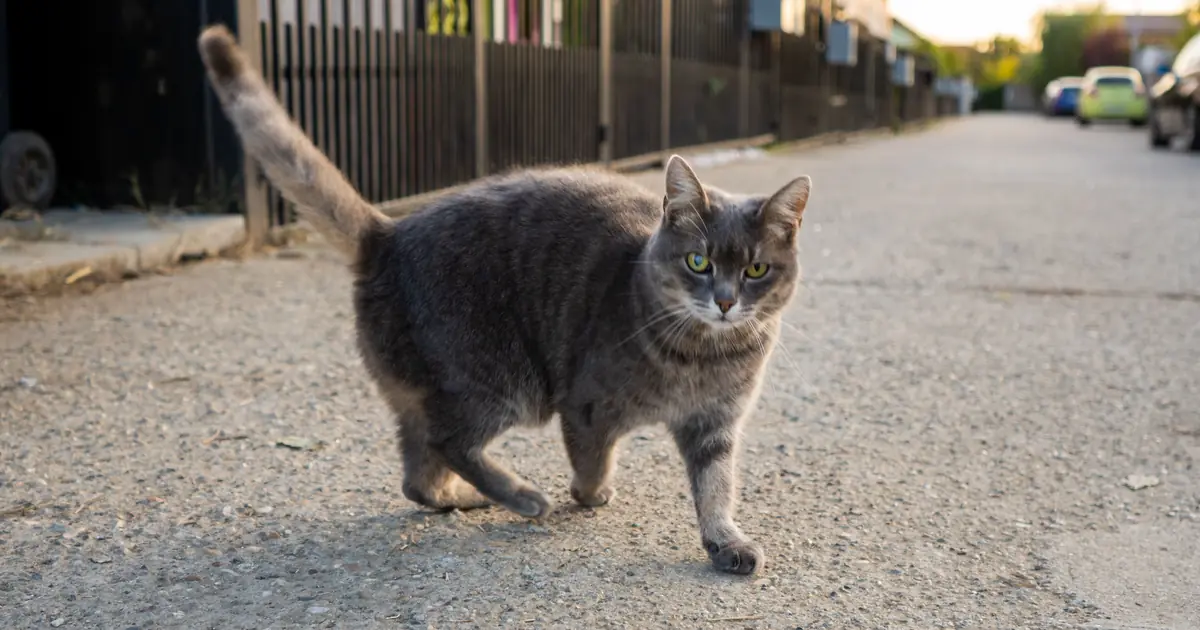
A cat’s tail is the single clearest mood meter on their body, and it tells you a lot before anything else does. A tail held straight up means a happy, confident cat greeting you as a friend. A puffed, low, tucked, or thrashing tail all signal some flavor of upset, from fear to irritation.
The friendly “tail up” is worth memorizing. When your cat walks toward you with the tail vertical, sometimes with a little hook at the tip, that’s the feline version of a warm hello. It’s how confident, sociable cats approach the people and animals they trust.
Now the trickier ones. A tail puffed into a bottle brush means your cat is scared and trying to look bigger. A tail carried low or clamped between the back legs points to anxiety or fear. And a tail that swishes, flicks, or thrashes? That’s a cat getting annoyed, not a cat getting happy. If your cat does this specifically while you pet them, learn more about why your cat slaps you with his tail and where the line sits. For the full breakdown of every wag and swish, our guide on what it means when a cat wags its tail digs deeper.
Why a wagging tail is not a happy tail
A wagging cat tail means the opposite of a wagging dog tail. On a dog, a wag usually says “I’m happy.” On a cat, a fast wag, flick, or thrash almost always says “I’m irritated, stop.” This is the number one misread in the whole cat-owner world, and it’s the reason a lot of petting sessions end in a nip. When that tail starts whipping, take your hand back.
What do a cat’s ears say?
A cat’s ears broadcast their mood in real time, and they move fast. Ears facing forward and upright mean a relaxed, curious, alert cat. Ears flattened back against the head mean fear, defensiveness, or aggression. Everything in between is a dial from calm to worried.
Those swiveling, satellite-dish ears just mean your cat is listening and taking in information. Nothing to worry about there. But watch for “airplane ears,” where the ears rotate out to the sides and flatten a little. That’s a nervous, conflicted cat. And when the ears pin flat and low, your cat feels genuinely threatened. Back off and give them room.
What do a cat’s eyes and pupils mean?
A cat’s eyes reveal trust, fear, and tension through blinking and pupil size. A slow blink with half-closed eyes is a sign of trust and affection. Wide, dilated pupils signal fear, excitement, or high arousal. A hard, unblinking stare is a threat or a challenge, not a loving gaze.
The slow blink is the sweet one. When your cat looks at you and slowly closes and opens their eyes, they’re telling you they feel safe. A 2020 University of Sussex study found that cats are more likely to slow-blink back at a person who slow-blinks at them first, and that even strangers who slow-blink seem more approachable to cats. So yes, you can “talk” back. Try it: catch your cat’s eye, then slowly close and open your own eyes. Many cats return the gesture. People call it the cat kiss.
Pupils take a little more reading, because both fear and excitement can blow them wide open. A cat with saucer-wide pupils might be scared, or might be about to pounce on a toy. That’s exactly why you never read the eyes alone. Pair them with the tail and ears to know which it is.
What do a cat’s whiskers tell you?
A cat’s whiskers add a subtle layer to their mood and even help them sense the world. Relaxed whiskers fanned gently to the sides mean a calm, content cat. Whiskers pushed forward mean curiosity or hunting focus. Whiskers pulled back flat against the face signal fear, pain, or feeling threatened.
Whiskers are easy to overlook, but they’re a great tiebreaker. If your cat’s eyes and ears look neutral but the whiskers are pinned back tight, something is bothering them. Forward whiskers over a toy just mean your little hunter is locked on target.
What do cat sounds mean?
Cat vocalizations pair with body language to complete the message. A meow is aimed at you, usually asking for food, attention, or saying hello. A purr most often means contentment. A hiss or growl is a clear warning to back off. Chirps and trills are friendly, excited sounds.
Here’s a fun fact: adult cats barely meow at each other. They mostly save meowing for humans, developing their own personal set of sounds to get our attention. Purring is usually happiness, but not always. Cats also purr to soothe themselves when they’re stressed, sick, or in pain, so read the purr in context with the rest of the body. Our full guide on what a cat’s purring means unpacks the happy purrs from the worried ones.
Hisses and growls need no translation. That’s your cat saying “stop, I feel threatened.” Respect it and give space. If your cat has started hissing more than usual, our piece on why your cat is hissing at you covers the common triggers.
How do you read the whole cat together?
You read the whole cat by combining every signal into one picture instead of trusting a single body part. The tail, ears, eyes, whiskers, posture, and voice should all point the same direction. When they don’t, the most defensive signal usually wins, so err on the side of giving your cat space.
Picture two cats lying belly-up. One has a soft slow blink, relaxed whiskers, and a loose tail. That cat is blissed out and trusting. The other has dilated pupils, flattened ears, and a twitching tail while showing its belly. That cat is not asking for a tummy rub. It’s braced to defend itself with all four paws and its teeth. Same pose, opposite meaning. The tail and eyes tell you which is which.
This is also why context matters so much during introductions. A cat meeting a new pet will flash fear and defensive signals that mean nothing sinister, just nerves. If you’re going through this, our guide on bringing a new cat home to another cat walks through reading those signals during first meetings.
Common cat body language misreads
Most body language mistakes come from copying dog rules onto cats or reading one signal in isolation. Watch out for these classic mix-ups.
- The wagging tail. A swishing cat tail means irritation, not joy. It’s the opposite of a dog.
- The belly-up pose. A cat showing its belly is showing trust, not always asking to be touched there. Many cats bite if you go for the belly.
- The loud purr. Purring usually means content, but a stressed or hurting cat may purr too, so check the rest of the body.
- The hard stare. A cat staring at you unblinking is not adoring you. That’s tension. A slow blink is the loving look.
- Petting-induced overstimulation. When the tail starts twitching and the skin ripples during petting, stop before the nip. Kneading and rubbing, by contrast, are affection signals, and you can read more on why cats knead.
This article is educational. If your cat shows a sudden, lasting change in behavior, body language, or vocalizing, it can signal pain or illness, so check in with your veterinarian.
Cat body language FAQ
Q: What does it mean when a cat holds its tail straight up?
A tail held straight up is a friendly, confident greeting. It’s the feline way of saying hello to a person or animal they trust. A little quiver at the top usually means your cat is excited to see you.
Q: Why does my cat slow blink at me?
A slow blink is a sign of trust and affection, often called a “cat kiss.” A 2020 University of Sussex study found cats slow-blink back at people who slow-blink at them first. You can return the gesture by slowly closing and opening your own eyes.
Q: Is a cat wagging its tail happy like a dog?
No. A wagging, flicking, or thrashing cat tail means irritation or overstimulation, the opposite of a dog’s happy wag. When your cat’s tail starts swishing fast, it’s a signal to stop petting and give them space.
Q: What do flattened cat ears mean?
Ears flattened flat against the head signal fear, defensiveness, or aggression. Ears turned sideways (“airplane ears”) mean nervousness or uncertainty. Forward, upright ears mean a relaxed, curious cat.
Q: Why does my cat show me its belly?
A cat exposing its belly is showing it feels relaxed and trusts you. It is not always an invitation to touch the belly, though. Many cats will grab or bite if you reach for that vulnerable spot, so admire it rather than pet it unless you know your cat enjoys it.
Q: What do dilated pupils mean in cats?
Wide, dilated pupils can mean fear, excitement, or high arousal. Because both scared and playful cats get big pupils, you have to read the eyes alongside the tail and ears to know which mood it is.
Q: How can I tell if my cat is happy?
A happy, relaxed cat usually has an upright tail, forward or neutral ears, soft slow blinks, relaxed whiskers, and a loose posture. Content cats often “loaf” with paws tucked in, purr softly, and knead. All signals pointing to calm is the sign to look for.
Q: What does it mean when a cat stares at me?
A hard, unblinking stare is a sign of tension or a challenge, not affection. If the stare comes with a soft slow blink, that’s the loving version. A stiff, fixed stare with dilated pupils or a twitching tail means your cat feels tense.
The bottom line: your cat is talking all day, head to tail. Learn the tail, ears, eyes, whiskers, and voice, then read them together and in context. Do that, and you’ll catch the happy hellos, the “give me space” warnings, and everything in between. Your cat has been fluent this whole time. Now you are too.

Hello and welcome to The Ideal Cat!
We are some passionate cat owners from different professions. We love our cats and have a lot of experience in how to care for our pets. We are incredibly excited to share our knowledge, experience, and research with you. So you can take good care of your loving cat. We will answer most of the common questions about owning cats, taking care of them, etc. If you have any question contact with us. Thanks for visiting! Enjoy the content.
