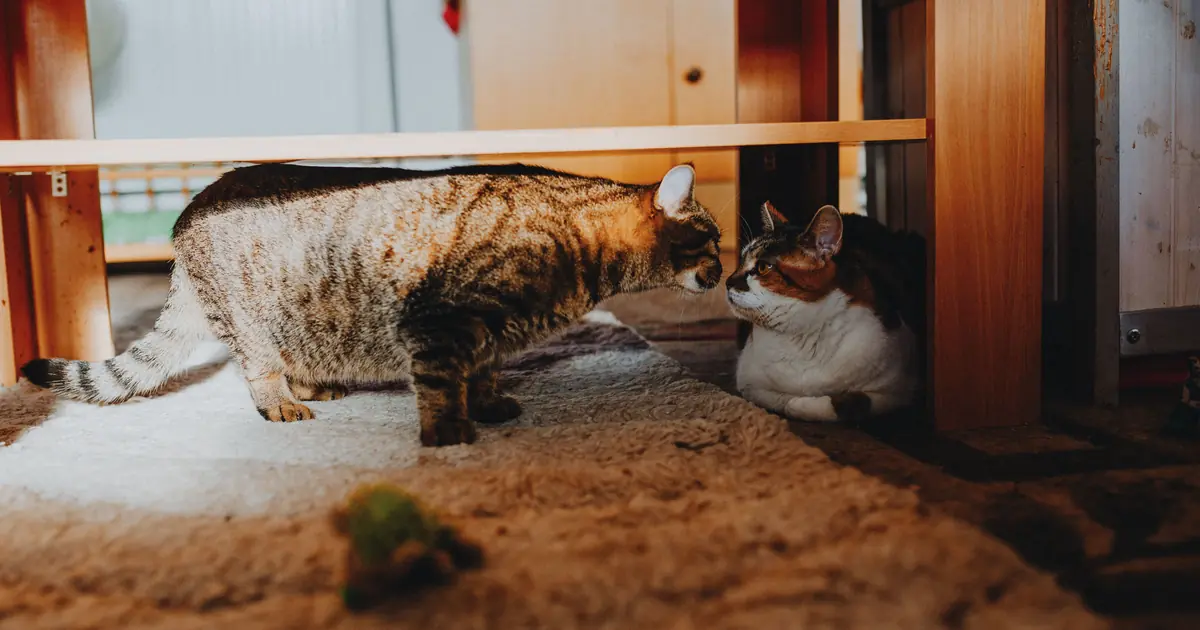
You did it. You brought home a second cat. And now your resident cat is puffed up like a bottlebrush, glaring at the closed door like you’ve betrayed the entire bloodline.
Take a breath. This is normal. Cats are territorial little creatures, and to your first cat, a new arrival smells like an intruder, not a friend. The good news is that most cats do learn to live together, sometimes even to nap in a shared sunbeam. The secret is going slow.
Here’s the exact step-by-step plan to introduce a new cat to your resident cat, how long it usually takes, and how to read whether things are going well or heading south.
This article is educational and isn’t a substitute for professional behavior or veterinary advice. If aggression escalates or a cat stops eating, call your vet.
- Introducing a new cat to a resident cat usually takes 2 to 4 weeks, and sometimes up to 2 to 3 months.
- Start the new cat in a closed “safe room” and let the cats meet through scent and sound before they ever see each other.
- A multi-cat home needs one litter box per cat plus one extra, so two cats need three boxes in separate spots.
- Early hissing, growling, and swatting are normal. Sustained stalking, pinning, or all-out fighting is not.
- Never force cats together, never scruff them, and never punish hissing. Slow down or step back if either cat is very stressed.
How long does it take to introduce a new cat to another cat?
Introducing a new cat to a resident cat usually takes 2 to 4 weeks, and some pairs need 2 to 3 months. There’s no fixed clock. The timeline depends on the cats’ personalities, ages, and past experience with other cats. A laid-back kitten and a social adult might click in a week. Two set-in-their-ways adult cats can take months.
The golden rule: move at the pace of the more nervous cat. Each stage only ends when both cats are calm and relaxed, not just tolerating each other. Rushing is the single biggest reason introductions fail. If you push too fast and a real fight breaks out, you can undo weeks of progress in thirty seconds.
Here’s a rough map of the stages so you know what “normal” looks like.
| Stage | Typical timeframe | What it looks like |
|---|---|---|
| 1. Safe room + settling in | Days 1 to 7 | New cat relaxes alone; cats sniff under the door |
| 2. Scent swapping | Days 2 to 10 (overlaps) | Bedding and socks traded; calm reactions to each other’s smell |
| 3. Feeding across the door | Days 5 to 14 | Both eat calmly on opposite sides of the closed door |
| 4. Site swapping | Around week 1 to 2 | Cats explore each other’s spaces; no panic or spraying |
| 5. Visual intro (cracked door / gate) | Week 2 to 3 | They see each other; curiosity, mild hissing at most |
| 6. Short supervised meetings | Week 3 to 4+ | Brief face-to-face time, ended on a good note |
| 7. Full, unsupervised access | When calm and reliable | Relaxed body language, shared space, no fighting |

The 7-step plan to introduce your new cat to your resident cat
Follow these seven steps in order, and don’t advance until each cat is calm and eating well at the current stage. Think of it as building trust one small, positive experience at a time.
Step 1: Set up a separate safe room
- Pick one closed room for the new cat, like a spare bedroom, office, or bathroom. This becomes their base camp.
- Stock it fully with food, water, a litter box, a scratching post, a cozy hiding spot, and a few toys. The new cat should never have to leave this room to meet a basic need.
- Let them decompress for at least the first few days to a week. Sit with the new cat, talk softly, and let them come to you. Meanwhile, your resident cat still owns the rest of the house, which keeps their stress lower too.
A closed door between them from day one is the whole point. Let them get used to hearing and smelling each other with a solid barrier in place.
Step 2: Swap scents between the two cats
Scent is how cats decide who’s family and who’s a threat, so you introduce the smell long before the face. Once both cats seem settled, start trading their scents.
- Swap bedding or blankets between the two rooms so each cat sleeps near the other’s smell.
- Rub a clean sock or soft cloth gently on one cat’s cheeks (where their friendly scent glands are), then leave it for the other cat to investigate.
- Watch the reaction. Sniffing, rubbing, or ignoring the item is great. Hissing at it or refusing to go near it means slow down and keep swapping until they’re relaxed.
You can even place the scented item near the food bowl, so each cat starts to link the other’s smell with something good.
Step 3: Feed them on opposite sides of the closed door
Feeding on either side of the shut door builds a positive link: the other cat’s presence means dinner is coming. Set a bowl down for each cat on their side of the door, a comfortable distance back at first.
- Start far enough back that both cats will actually eat without stress.
- Inch the bowls closer to the door over several days, only as long as both keep eating calmly.
- Back up if anyone balks. A cat that stops eating or hisses at the door is telling you it’s too much, too soon.
The goal is both cats eating happily just inches apart, with only the door between them.
Step 4: Site swap so they explore each other’s spaces
Site swapping lets each cat explore where the other lives, deepening the scent familiarity without a face-to-face meeting. Once the cats are calm eating at the door, put the resident cat somewhere else and let the new cat roam the house for a bit, then switch them back.
This does two things. The new cat gets to explore the home safely, and your resident cat gets a full dose of the newcomer’s scent all over the house. Keep sessions short and end them before anyone gets anxious. Look for relaxed sniffing, not frantic pacing or spraying.
Step 5: Let them see each other through a cracked door or baby gate
The first visual meeting happens with a barrier, so no cat can rush or corner the other. Crack the door a couple of inches (a doorstop or hook keeps it from swinging open), or stack two baby gates in the doorway.
- Keep the first look short, just a minute or two, then close things up on a calm note.
- Toss treats or play on each side so seeing the other cat pairs with something fun.
- Read the room. Curiosity, a little hissing, or a quick swat through the gap is normal. Frozen staring, growling, or lunging means end the session and go back a step.
Step 6: Try short, supervised face-to-face sessions
Once visual meetings are calm, open the door for brief, fully supervised time together. Keep the very first meetings to just a few minutes.
- Use distractions, like wand toys, treats, or a meal, so both cats have something good to focus on.
- Never trap or carry a cat toward the other. Let each cat approach (or not) on its own terms, with easy escape routes and high perches available.
- End on a good note, before anyone tips into stress. Short and positive beats long and tense every time.
- Keep a towel or blanket handy to safely separate them if a scuffle breaks out. Never use your bare hands.
Step 7: Gradually increase their time together
Stretch the sessions a little longer each time as the cats stay relaxed, until they’re comfortable sharing space. Only leave them alone together once you’ve seen calm, friendly behavior consistently, with zero fighting. For some pairs that’s a couple of weeks. For others it’s a couple of months, and that’s completely fine.
What resources do two cats need to live together?
Two cats need their own set of key resources, spread out so nobody has to share or compete. Cats guard resources even when they get along, and forced sharing is a top cause of tension, litter box problems, and fights. Give them plenty, in multiple locations.
- Litter boxes: one per cat plus one extra. So two cats need three litter boxes, placed in different spots (not lined up in one row). Our guide on how many litter boxes per cat you need explains the math.
- Food and water: separate bowls in separate areas, so nobody feels blocked or crowded at mealtime.
- Vertical space: cat trees, shelves, and perches. Height lets cats share a room while keeping their own zones, and it gives a nervous cat a way to feel safe.
- Hiding spots and beds: boxes, tunnels, and covered beds so each cat has a retreat.
- Scratching posts: more than one, so scratching (a scent-marking behavior) isn’t a flashpoint.
How do I read cat body language during introductions?
Reading body language tells you when to move forward and when to back off. Loose, relaxed cats can keep going. Tense, frozen, or puffed-up cats need you to slow down. Learning the signals is the difference between a smooth intro and a setback, and our full guide to cat body language goes deeper on each cue.
| Relaxed and going well | Stressed, slow down or step back |
|---|---|
| Loose body, tail up with a little curl | Puffed-up fur and arched back |
| Slow blinks, soft ears facing forward | Ears flattened sideways or pinned back |
| Curious sniffing, calm sitting or lying down | Frozen staring, crouched and tense |
| Playing, or eating near the other cat | Growling, yowling, or hissing that doesn’t ease up |
| Grooming themselves in the other’s presence | Tail thrashing, swatting with claws out, stalking |
A quick hiss or swat isn’t a failure. It’s a cat setting a boundary. What you’re watching for is the overall trend: is the tension easing week over week, or building? If a session tips into real aggression, calmly separate them (use a blanket or a piece of cardboard, never your hands) and drop back to the last stage where both cats were relaxed. If you want to understand what’s driving the reactions, see why cats hiss and what can make a cat suddenly aggressive.
What should you never do when introducing cats?
The fastest way to wreck an introduction is to force it. Cats can’t be talked into liking each other, and a scary first meeting can turn into a grudge that lasts months. Skip these mistakes:
- Don’t rush face-to-face. Dropping a new cat straight into the living room (“they’ll sort it out”) is the classic disaster. They usually don’t sort it out. They panic.
- Never scruff or hold a cat to force a meeting. Pinning or carrying a cat toward another triggers fear and defensive aggression, and can get you badly scratched or bitten. Here’s what to do if your cat bites you.
- Don’t punish hissing or growling. Yelling or spraying water just teaches your cat that the newcomer’s arrival means bad things happen.
- Don’t skip steps because it “seems fine.” Calm at the door doesn’t mean ready for the couch.
- Don’t force sharing. One bowl, one litter box, one bed for two cats is a recipe for conflict.
- Don’t reach in with bare hands to break up a fight. Use a towel, blanket, or a loud clap from a distance instead.
When should I get help introducing my cats?
Get professional help if the cats are still fighting hard after several weeks of a slow, careful introduction, or if either cat is hurt, hiding constantly, or has stopped eating. Some tension is expected. Ongoing, escalating aggression is not, and it rarely fixes itself.
Reach out to your veterinarian first. They can rule out pain or illness (a cat that feels bad is more likely to lash out) and refer you to a certified cat behaviorist. Signs it’s time to call in backup:
- Full-on fights with yowling, injuries, or fur flying, more than a rare one-off
- One cat relentlessly stalking, cornering, or blocking the other from food or the litter box
- A cat hiding around the clock, refusing food, or peeing outside the box from stress
- No improvement at all after 4 or more weeks of patient, step-by-step work
A vet may also suggest tools like a synthetic feline pheromone diffuser to take the edge off during the process. Ask what’s right for your cats.
Frequently asked questions about bringing a new cat home to another cat
Q: How long should I keep my new cat separated from my resident cat?
Keep your new cat in a separate safe room for at least the first few days to a week, and often longer. Only open things up in stages, once both cats are eating calmly on either side of the door and reacting relaxedly to each other’s scent. There’s no single deadline; let the more nervous cat set the pace.
Q: Is it normal for my cats to hiss when they first meet?
Yes. Hissing, growling, and swatting are normal early in an introduction and can continue for days. It’s how cats set boundaries in a stressful situation. What matters is the trend: hissing that eases over time is fine, while sustained aggression, stalking, or real fighting means you should slow down or get help.
Q: How many litter boxes do I need for two cats?
Three. The rule is one litter box per cat plus one extra, so two cats need three boxes. Place them in different locations rather than side by side, so one cat can’t guard them all. Enough boxes cuts competition and helps prevent stress-related accidents.
Q: Should I let my cats “fight it out” to establish dominance?
No. Letting cats fight does not sort out a pecking order; it just teaches them to fear and distrust each other, which can create lasting hostility. Always separate fighting cats calmly with a barrier like a blanket or cardboard, never your hands, then go back to an earlier, lower-stress step.
Q: Will my cats ever actually be friends?
Many cats do become friends, and some become deeply bonded, grooming and napping together. Others settle into polite roommates who simply coexist. Both outcomes are success. Personality and a patient, gradual introduction matter far more than breed, and full friendships can take several months to develop.
Q: Can I speed up the introduction if my cats seem to be getting along?
You can move to the next step a little sooner if both cats are consistently calm, relaxed, and eating well, but don’t skip stages entirely. Even friendly-looking cats can get overwhelmed if given too much access too fast. Increase time together gradually and keep early sessions supervised.
Q: What if my resident cat is hissing at me, not just the new cat?
A stressed resident cat may redirect frustration onto you or other pets, which is called redirected aggression. Give them space, keep routines steady, and don’t punish the behavior. It usually eases as the introduction settles. If your cat stays aggressive or seems unwell, check in with your vet.
Bringing a new cat home to another cat is a test of patience more than anything else. Go slow, respect the hissing, keep resources plentiful, and let each small win build to the next. Most cats get there. And one ordinary afternoon you’ll catch them curled up together, and every careful step will have been worth it.
For deeper guidance, International Cat Care’s advice on introducing cats and the American Association of Feline Practitioners’ step-by-step introduction guide both walk through the process in detail. For the science on resources and territory in multi-cat homes, the Cornell Feline Health Center is a trusted resource.

Hello and welcome to The Ideal Cat!
We are some passionate cat owners from different professions. We love our cats and have a lot of experience in how to care for our pets. We are incredibly excited to share our knowledge, experience, and research with you. So you can take good care of your loving cat. We will answer most of the common questions about owning cats, taking care of them, etc. If you have any question contact with us. Thanks for visiting! Enjoy the content.
