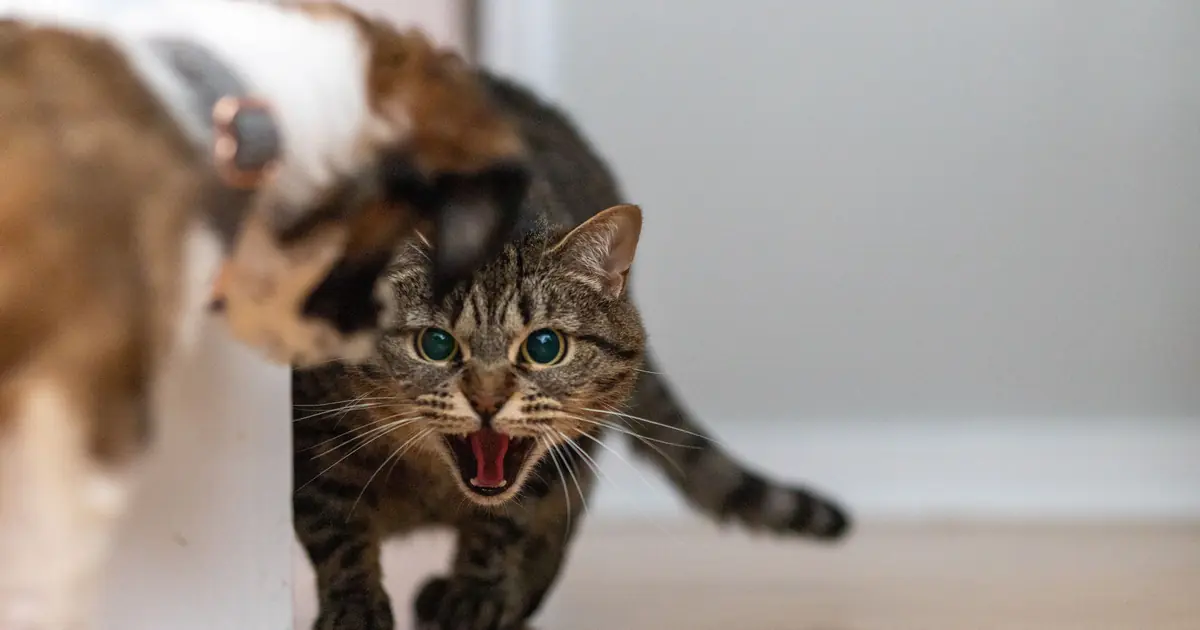
One day your cat is curled in your lap, purring like a tiny engine. The next, they’re hissing, swatting, or sinking teeth into your hand for what feels like no reason at all. If you’ve just asked yourself “why is my cat suddenly aggressive,” take a breath. You’re not a bad cat parent, and your cat hasn’t turned evil overnight. Something changed, and your job is to figure out what.
Here’s the most important thing to know up front: a sudden personality change in a cat is a health symptom until proven otherwise. Pain and illness are among the most common reasons a calm cat starts lashing out, especially in older cats. So while we’ll walk through every behavioral cause too, the safest first move is almost always a vet visit.
- Pain from arthritis, dental disease, injury, or illness is one of the most common drivers of sudden aggression in cats, and a previously gentle cat may bite when a sore spot is touched.
- Any sudden personality change in a cat should be checked by a veterinarian first to rule out pain, hyperthyroidism, neurological disease, and cognitive decline.
- Redirected aggression happens when a cat gets worked up by something it can’t reach (like an outside cat) and attacks whoever is nearby; the cat may stay agitated for hours to days.
- Roughly 60% of cats over 9 to 10 years old show some signs of cognitive dysfunction, which can include new irritability and aggression.
- Never punish an aggressive cat or break up a cat fight with your hands; punishment increases fear and usually makes aggression worse.
This article is educational and not a substitute for veterinary care. If your cat’s aggression is sudden, severe, or out of character, please book a vet visit. Now let’s get into the why.
Why is my cat suddenly aggressive out of nowhere?
A cat that turns aggressive out of nowhere is usually reacting to pain, fear, or overstimulation, not “being mean.” Cats are masters at hiding discomfort, so the aggression often looks like it came from nowhere when really it’s been building. The trigger can be a sore joint, a scary noise, a new smell, or one pet too many. Below are the eight most common causes, starting with the one vets want ruled out first.
Use this table as a quick map. Each row gives the cause, the usual trigger, and the body language that goes with it.
| Cause of aggression | Common trigger | Signs you might see |
|---|---|---|
| Pain or illness | Being touched near a sore area, or no clear trigger at all | Hissing when handled, hiding, flinching, new bite when picked up |
| Fear or defensive | A perceived threat the cat can’t escape | Crouching, flattened ears, tucked tail, dilated pupils, spitting |
| Redirected | An out-of-reach trigger like an outdoor cat or loud noise | Sudden uninhibited attack on a nearby person or pet |
| Petting-induced | Too much stroking past the cat’s comfort point | Tail twitching, skin rippling, ears turning back, then a quick bite |
| Territorial | A new cat, pet, person, or move | Stalking, hissing, swatting, urine marking, blocking spaces |
| Play aggression | Boredom, or hands and feet used as toys | Stalking, pouncing, grabbing ankles, biting during play |
| Maternal | Approaching a mother cat’s newborn kittens | Growling, swatting, defensive posturing near the litter |
| Cognitive decline (senior cats) | Confusion, disrupted routine, sensory loss | New irritability, night yowling, disorientation, aggression when approached |
Can pain or illness make a cat suddenly aggressive?
Yes, pain and illness are among the most common reasons a cat suddenly becomes aggressive, and this is the cause to rule out before any other. Cats hide pain well, so the first obvious sign is often a snap or swat when you touch a tender area, or even when you reach toward one. A normally sweet cat that suddenly bites during petting, grooming, or being picked up may be telling you something hurts.
Several medical issues can flip the switch on a cat’s temper. Common culprits include:
- Arthritis and joint pain, which makes handling and jumping uncomfortable, especially in middle-aged and senior cats.
- Dental disease, one of the most under-diagnosed sources of feline pain.
- Injuries, abscesses, or wounds, sometimes hidden under thick fur.
- Hyperthyroidism, an overactive thyroid that can leave a cat jumpy, restless, and irritable.
- Urinary or digestive problems, which cause cramping and discomfort.
- Neurological issues or sensory decline, including vision or hearing loss that makes a cat startle and lash out.
According to the Cornell Feline Health Center, orthopedic problems, thyroid abnormalities, neurological disorders, and cognitive dysfunction can all increase irritability and aggression. This is exactly why a sudden change deserves a vet visit, not a training plan. If you want help spotting discomfort early, our guide on reading feline pain signals breaks down the subtle cues.
What is redirected aggression in cats?
Redirected aggression is when a cat gets frightened or overstimulated by something it can’t reach, then attacks the nearest person or pet instead. The target had nothing to do with the original trigger, which is why these attacks feel so shocking and unfair. Think of a cat watching a strange cat through the window: it can’t get to the intruder, so the built-up tension spills onto you or the other family cat.
Common triggers for redirected aggression include an outdoor cat in the yard, a sudden loud noise, the scent of an unfamiliar animal, or a startling encounter the cat can’t resolve. The bites and scratches that follow are often uninhibited and serious, because the cat is in full fight-or-flight mode.
Here’s the part many owners miss: a redirected cat may stay agitated long after the trigger is gone. Calm-down time can run from a few minutes to several hours, and sometimes a day or two. The safest response is to give the cat space in a quiet, dimly lit room with food, water, and a litter box, and to avoid touching or even making eye contact until the body language fully relaxes. Do not try to comfort, pick up, or punish a redirected cat mid-episode.
Why does my cat get aggressive when I pet her?
A cat that bites or swats during petting is usually overstimulated, a pattern called petting-induced aggression. The contact starts out pleasant, but repeated stroking can tip over into irritating or overwhelming, and the cat says “enough” the only way it can. This is not your cat being deceptive; it’s a low warning threshold that you can learn to read.
The good news is your cat almost always warns you first. Watch for a twitching or thumping tail, skin rippling along the back, ears rotating backward, dilated pupils, or a sudden stillness. Those are your cues to stop petting before the bite. Keep sessions short, stick to the head and cheeks, which most cats prefer, and let your cat set the pace. We cover this pattern in more depth in our article on why cats bite during petting.
Why is my cat suddenly aggressive toward other cats?
Sudden aggression between cats that used to get along is often territorial, fear-based, or redirected, and sometimes it traces back to one cat being in pain. A cat that feels its space, resources, or safety is threatened may start stalking, blocking doorways, hissing, or fighting. A new pet, a move, a returning cat that smells “wrong” after a vet visit, or an outdoor cat at the window can all spark it.
If two household cats suddenly turn on each other, separate them calmly into different rooms with their own food, water, and litter box, then reintroduce slowly over days. Many behaviorists suggest at least 24 to 48 hours of quiet separation after a serious flare-up before any reintroduction. Have a vet check both cats too, since pain in one cat can change how it interacts and trigger fights.
Why has my older cat suddenly become aggressive?
An older cat that suddenly becomes aggressive is often dealing with pain, an age-related illness, or cognitive decline. Senior cats are especially prone to arthritis, dental disease, hyperthyroidism, high blood pressure, and kidney disease, all of which can make a once-mellow cat short-tempered. Aging eyes and ears also mean more startling, and a startled cat may swat.
Feline cognitive dysfunction, sometimes called cat dementia, is another piece of the puzzle. The Cornell Feline Health Center notes that signs can include disorientation, night-time yowling, litter box lapses, and new irritability or aggression. According to a Cornell Feline Health Center consultant cited in its Catwatch Newsletter, roughly 60% of cats over 9 to 10 years old show at least some signs of cognitive dysfunction. Because pain and treatable illnesses can look just like dementia, a senior cat with new aggression should always see a vet, since many of these problems are manageable once diagnosed.
How do I safely stop my cat from being aggressive?
The safest way to handle an aggressive cat is to back off, give space, and remove the trigger, then address the root cause with your vet’s help. You can’t win a confrontation with a cat in fight mode, and trying to will get you hurt. Calm and distance are your tools, not force.
When your cat is actively aggressive or wound up, follow these steps:
- Stop moving and avoid eye contact. Slow, quiet, and non-threatening is the goal. Staring reads as a challenge to a cat.
- Give the cat an exit. Let it retreat to a quiet, dark room and leave it alone until it fully relaxes, which can take hours.
- Never use your hands to separate fighting cats. Distract them instead with a loud clap, a tossed towel over one cat, or a barrier like a piece of cardboard.
- Do not punish, yell, or spray. Punishment raises fear and stress and tends to make aggression worse, not better.
- Remove the trigger. Block window views of outdoor cats, dial down noise, or end the petting session early.
Once everyone is calm, the long-term fix depends on the cause. A vet visit rules out pain and illness. From there, a plan might include more play and enrichment, slow reintroductions between pets, plug-in calming pheromones, and in some cases a referral to a veterinary behaviorist. For ongoing or severe cases, your vet may discuss anti-anxiety medication.
When should I see a vet about my cat’s aggression?
See a veterinarian any time your cat’s aggression is sudden, severe, or out of character, because pain and illness are leading causes that need ruling out first. A behavior plan only works once you know your cat isn’t hurting. Some signs mean you should call sooner rather than later.
Contact your vet promptly if you notice any of these red flags:
- A previously friendly cat suddenly bites, hisses, or attacks with no clear reason.
- Aggression appears alongside hiding, limping, not eating, or litter box changes.
- Your cat flinches, growls, or snaps when touched in a specific spot.
- A senior cat shows new irritability plus confusion, yowling, or disorientation.
- Attacks are intense, repeated, or leave deep bites and scratches.
A quick note on safety for you: cat bites can become infected fast and often need medical attention. If a bite breaks the skin, especially on your hand, clean it and call your doctor, since cat-bite infections can be serious. And if your cat is unvaccinated, has been exposed to wildlife, and shows truly unusual aggression, mention rabies concerns to your vet right away.
Frequently Asked Questions
Q: Why is my cat suddenly aggressive toward me for no reason?
A cat that turns aggressive toward you “for no reason” usually has a hidden reason, most often pain, fear, or overstimulation. Cats mask discomfort well, so a sore joint or tooth can surface as a sudden bite. Because a sudden change can signal illness, have your vet examine your cat first.
Q: Can a cat’s aggression go away on its own?
Aggression tied to a one-time trigger, like a startling noise, can fade once the cat calms down, which may take hours to a couple of days. But recurring or sudden aggression rarely resolves by itself, because it usually points to pain, stress, or a health issue that needs addressing. A vet visit is the reliable next step.
Q: Is my cat aggressive or just playing?
Play aggression involves stalking, pouncing, and grabbing with claws and teeth, but it lacks the fear signals of true aggression. A playful cat has a relaxed body, forward ears, and no hissing, while an aggressive cat shows flattened ears, dilated pupils, growling, or a puffed tail. Redirect rough play onto wand toys, never your hands.
Q: How long does redirected aggression in cats last?
Redirected aggression can last from a few minutes to several hours, and in some cases a day or two, while the cat stays in a heightened state. Give the cat a quiet, dark room with food, water, and litter, and avoid handling it until its body language fully relaxes. Reintroduce other pets slowly afterward.
Q: Should I punish my cat for being aggressive?
No, you should never punish a cat for aggression. Punishment, yelling, or spraying increases fear and stress and usually makes the behavior worse, and it can damage your bond. Instead, give space, remove the trigger, and work with your vet on the underlying cause.
Q: Why is my older cat suddenly aggressive?
An older cat that becomes suddenly aggressive is often in pain or developing an age-related illness like arthritis, dental disease, or hyperthyroidism. Cognitive decline also plays a role, with roughly 60% of cats over 9 to 10 years showing some signs. A vet exam is the best way to find and treat the cause.
Q: Can stress cause sudden aggression in cats?
Yes, stress is a common driver of sudden aggression in cats. A new pet, a move, schedule changes, or an unfamiliar animal nearby can leave a cat feeling unsafe and on edge. Reducing change, adding hiding spots and vertical space, and using calming pheromones can lower the tension.
Q: Will getting my cat neutered or spayed reduce aggression?
Spaying or neutering can reduce some forms of aggression, especially territorial and mate-related aggression in intact cats. It is not a cure for pain-based, fear-based, or redirected aggression, which need their own approach. Talk with your vet about whether it fits your cat’s situation.
Watching a cat you love turn aggressive is genuinely upsetting, but it’s also a signal you can act on. In most cases a suddenly aggressive cat is hurting, scared, or overstimulated, not broken. Start with a vet visit to rule out pain and illness, keep yourself and your cat safe in the moment, and address the trigger once you know what you’re dealing with. With the right answer, calm usually comes back.

Hello and welcome to The Ideal Cat!
We are some passionate cat owners from different professions. We love our cats and have a lot of experience in how to care for our pets. We are incredibly excited to share our knowledge, experience, and research with you. So you can take good care of your loving cat. We will answer most of the common questions about owning cats, taking care of them, etc. If you have any question contact with us. Thanks for visiting! Enjoy the content.
