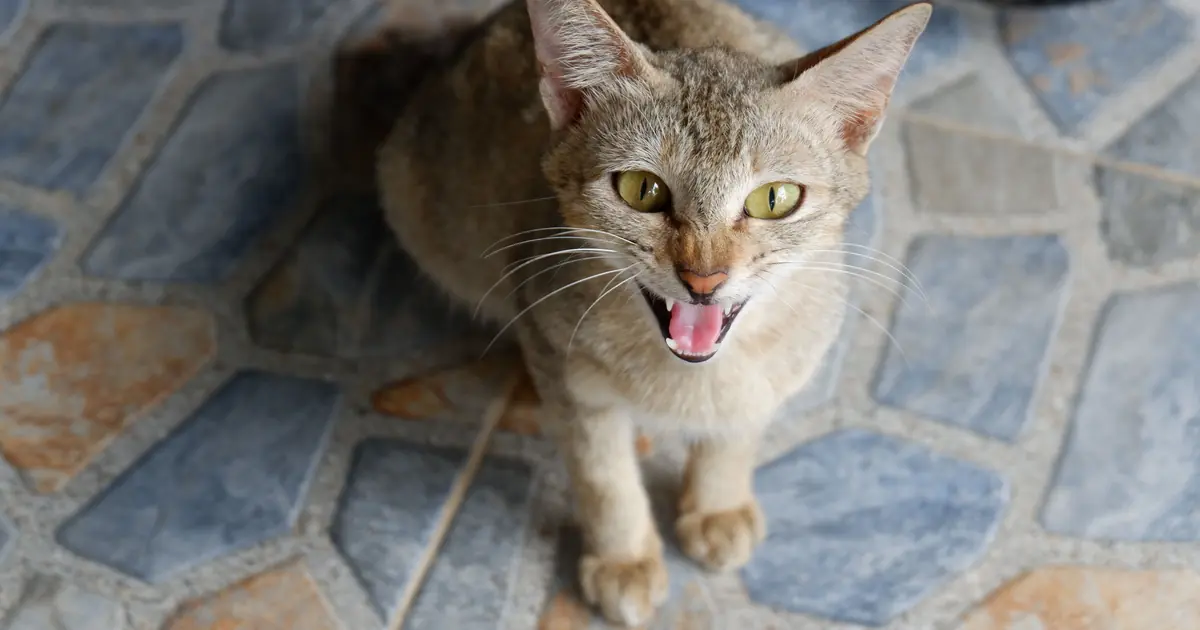
If your normally sweet cat just hissed at you, your heart probably sank a little. I get it. It feels personal, like your cat suddenly hates you. If you have been wondering why is my cat hissing at me, here’s the good news: your cat hissing at you almost never means your cat is mean or angry with you. Hissing is a fear-based warning, your cat’s polite way of saying “please, I need some space right now.” Let’s walk through why it happens and exactly how to respond.
- Hissing is a defensive emotion, not aggression; it signals fear, stress, pain, or overstimulation.
- A hiss is your cat’s warning to back off, and it usually prevents the cat from scratching or biting.
- Sudden hissing in a normally calm cat can mean pain, so a vet exam is the safest first step.
- Never punish a cat for hissing, because punishment increases fear and can erase the warning before a bite.
- The right response to a hissing cat is to stop, back away, avoid eye contact, and give it room to calm down.
What Does It Mean When a Cat Hisses at You?
When a cat hisses at you, it means the cat feels threatened, scared, or uncomfortable and wants whatever is bothering it to stop. Hissing is a defensive signal, not an attack. Your cat forces a sharp burst of air through its mouth to sound bigger and more dangerous than it feels. Many behavior experts think the sound evolved to mimic a snake, tapping into a deep, built-in fear that most animals share.
Here’s the part that helps: a hiss is mostly involuntary, an honest reflex when a cat is startled, cornered, or hurting. So your cat is not plotting against you. It is telling the truth about how it feels in that exact moment. Think of a hiss as the warning light on a dashboard, not the crash itself.
Why Is My Cat Hissing at Me All of a Sudden?
A cat that suddenly starts hissing is usually reacting to pain, fear, a recent change, or overstimulation. Sudden hissing in a cat that was calm an hour ago deserves attention, because cats hide illness well and a hiss can be the first clue something hurts. If the hissing is brand new, rule out a medical cause before assuming it is “just behavior.”
Below are the most common triggers behind sudden cat hissing, each one with a quick read on what your cat is feeling.
1. Pain or a Hidden Illness
Pain is one of the top reasons a friendly cat suddenly hisses, especially when you touch a specific spot. Cats instinctively mask discomfort, so a hiss when you pet the back, lift the belly, or brush near the hips can flag arthritis, a dental problem, an injury, or an infection. If your cat only hisses on contact and never before you reach out, treat it as a possible pain signal and book a vet visit.
2. Fear and Feeling Threatened
Fear is the core emotion behind most hissing. A loud noise, a stranger, a sudden movement, or being cornered can all tip a cat into “back off” mode. A frightened cat often pairs the hiss with flattened ears, wide pupils, a low crouch, or a puffed-up tail. Your cat is not trying to dominate you; it is trying to feel safe.
3. Overstimulation From Petting
Overstimulation is one of the most common reasons a cat hisses at the person petting it. Many cats enjoy a few strokes, then hit a tipping point where the same touch starts to feel like too much. The result is a quick hiss, swat, or sudden walk-off. Watch for early warnings like a twitching tail, rippling skin along the back, or ears that swivel sideways, and stop before the hiss arrives.
4. A New Pet, Person, or Baby
A new animal, visitor, or baby can make a cat hiss because its territory and routine suddenly feel uncertain. Cats are creatures of habit, and an unfamiliar scent or face reads as a possible threat. Sometimes the hiss is aimed at the newcomer but lands on you because you are standing closest, and sometimes it runs the other way and your cat hisses at everyone but you. Slow, scent-first introductions lower the tension a lot.
5. Redirected Aggression
Redirected aggression happens when a cat gets worked up by something it cannot reach, then takes that arousal out on whoever is nearby, often you. A classic trigger is spotting a strange cat through the window. Your cat cannot confront the intruder, so the built-up fear spills onto the closest target. This kind of hissing can seem to come out of nowhere, but there is almost always an off-screen trigger.
6. Stress From Change
Change is a quiet but powerful reason cats start hissing. Moving house, rearranging furniture, a new schedule, fewer hiding spots, or even a different litter can all raise a cat’s stress level. A stressed cat has a shorter fuse, so small things that never bothered it before can now earn a hiss. Restoring routine and safe hiding places usually helps within days to weeks.
7. Mother Cats and Kittens
A mother cat hisses to protect her kittens or to correct them, and it is completely normal. A nursing mom may hiss if you, a guest, or another pet steps too close to her litter. She may also hiss at her own kittens to interrupt rough play or send a quick “knock it off” message. This kind of hissing is about boundaries, not hostility.
Common Triggers and How to Respond, at a Glance
The trigger behind your cat’s hiss points straight to the fix. Use this table to match what is likely going on with the calmest, most effective response.
| Trigger | What your cat is feeling | How to respond |
|---|---|---|
| Pain on touch | Hurting, protective of a sore spot | Stop touching, book a vet exam to rule out illness or injury |
| Fear or a loud noise | Startled, threatened | Lower noise, give an escape route, let the cat hide |
| Overstimulation | Touched past its limit | Stop petting at the first tail twitch, give space |
| New pet or person | Territory feels uncertain | Slow, scent-first introductions over days |
| Redirected aggression | Aroused by something it can’t reach | Block the window view, separate the cat, wait for full calm |
| Stress from change | Routine disrupted | Restore routine, add hiding spots and vertical space |
How Should I React When My Cat Hisses at Me?
When your cat hisses, the best reaction is to freeze, stop whatever you were doing, and slowly back away to give your cat room. A hiss means your cat needs distance, so the most respectful thing you can do is grant it. Pushing forward to “make up” usually backs the cat further into a corner and raises the odds of a scratch or bite.
Here is a simple, calm way to respond in the moment:
- Stop instantly. Pull your hand back and end any petting, picking up, or approaching.
- Avoid direct eye contact, since a hard stare reads as a threat to a nervous cat.
- Slowly create distance and let your cat reach a safe spot or hiding place.
- Stay quiet and relaxed; loud “no!” or sudden movements add fear.
- Give your cat time, often 20 minutes to a few hours, to settle before any gentle interaction.
- Let your cat come to you afterward instead of seeking it out.
Should I Punish My Cat for Hissing?
No, you should never punish a cat for hissing. Punishment makes a scared cat more afraid, damages your bond, and can teach the cat to skip the warning and go straight to scratching or biting. A hiss is actually a gift: it tells you exactly where the line is so you can step back before anyone gets hurt. Take the warning away, and you lose the early signal.
Instead of correcting your cat, work on the cause. Lower stress, respect the cat’s space, watch for the early body-language cues, and rebuild trust with calm, low-pressure time together. Reward relaxed behavior with treats, play, or quiet praise, never with force.
Why Is My Cat Hissing at Me After the Vet?
A cat often hisses at you or at housemates after a vet trip because of stress and unfamiliar smells, a pattern many owners find baffling. Your cat comes home carrying clinic odors and leftover fear, and other pets may treat it like a stranger, which sparks more tension. This is a common pattern called feline non-recognition aggression, where the cat that stayed home no longer recognizes the returning cat by its altered scent. It often fades within hours to a couple of weeks, and occasionally takes longer in tougher cases. Keep returning cats separated and calm, then reintroduce slowly using scent swapping if the hissing lingers.
When Should I See a Vet About Cat Hissing?
See a vet if your cat’s hissing is sudden, frequent, or paired with any sign of illness, because pain is a leading cause of new hissing. Cats are experts at hiding sickness, so a behavior change is often the first visible clue. This article is educational and not a substitute for veterinary care; a licensed veterinarian should evaluate any new or worsening behavior.
Call your vet promptly if you notice red-flag signs alongside the hissing:
- Hissing only when a specific body part is touched, which suggests pain
- A sudden personality change in a normally calm cat
- Hiding, not eating, or low energy along with the hissing
- Limping, drooling, mouth pawing, or signs of a wound or infection
- Hissing that keeps escalating despite plenty of space and a calm home
If the aggression is intense or unmanageable, ask your vet for a referral to a certified feline behaviorist.
How Can I Stop My Cat From Hissing at Me Over Time?
You stop the hissing by removing the cause and rebuilding trust, not by forcing closeness. Cats hiss when they feel unsafe, so a calmer, more predictable environment is the long-term fix. Give it time and consistency, and most cats relax back into their affectionate selves.
- Keep a steady daily routine for feeding, play, and quiet time.
- Offer hiding spots and vertical perches so your cat always has a safe retreat.
- Learn the early warning cues, like a flicking tail or sideways ears, and stop before the hiss.
- Use slow, scent-first introductions for any new pet or person.
- Block window views of outdoor cats if redirected aggression is the trigger.
- Ask your vet about a calming pheromone diffuser for an anxious cat.
FAQ: More Questions About Cats Hissing
Q: Is my cat hissing at me because it hates me?
No, a cat hissing at you does not mean it hates you. Hissing is a fear-based warning that says “I need space right now,” not a sign of dislike. Once the cat feels safe again, it will usually return to normal affectionate behavior.
Q: Why does my cat hiss at me but not my partner?
A cat may hiss at one person because of how that person moves, smells, or interacts, or because of a past scary moment with them. Cats link people to feelings, so louder movements or faster approaches can trigger a hiss. Slow, calm, treat-based interactions usually help that person rebuild trust.
Q: Why is my cat hissing and growling at the same time?
A cat that hisses and growls together is sending a stronger “stay away” message and feels seriously threatened or in pain. Growling often signals that the cat is closer to defending itself. Give the cat plenty of space, and if it keeps happening, have a vet rule out pain.
Q: Do cats hiss when they are in pain?
Yes, cats often hiss when they are in pain, especially if you touch a sore area. Because cats hide illness well, a sudden hiss on contact can be an early sign of arthritis, dental disease, or injury. A vet exam is the safest way to rule out a medical cause.
Q: How long will my cat keep hissing at a new cat?
Hissing between a resident cat and a new cat can last from a few days to several weeks, depending on the introduction. Slow, scent-first introductions with separate spaces shorten the tension. If hissing continues past a few weeks with no progress, ask your vet or a behaviorist for a plan.
Q: Should I hiss back at my cat?
No, you should not hiss back at your cat. Hissing back can read as a threat and make a scared cat more defensive, which damages trust. Instead, stay quiet, back away, and give your cat the space it is asking for.
Q: Why does my kitten hiss at me?
A kitten usually hisses because it is scared or overwhelmed, especially if it had little human contact early on. Kitten hissing is normal and often fades with gentle, patient handling and positive associations like treats and play. Let the kitten approach you on its own terms to build confidence.
Q: Can a cat hiss out of love or playfulness?
No, cats do not hiss out of love or play; hissing is always a defensive signal of fear, stress, pain, or overstimulation. A playful cat shows loose, bouncy body language instead. If a “play” session triggers hissing, it has tipped into overstimulation, so it is time to give the cat a break.
The bottom line: the answer to why is my cat hissing at me is that your cat is communicating fear or discomfort, not picking a fight. Respect the warning, give your cat space, rule out pain when the hissing is new, and rebuild trust patiently. Do that, and your cat hissing at you usually becomes a rare moment rather than a daily worry.

Hello and welcome to The Ideal Cat!
We are some passionate cat owners from different professions. We love our cats and have a lot of experience in how to care for our pets. We are incredibly excited to share our knowledge, experience, and research with you. So you can take good care of your loving cat. We will answer most of the common questions about owning cats, taking care of them, etc. If you have any question contact with us. Thanks for visiting! Enjoy the content.
