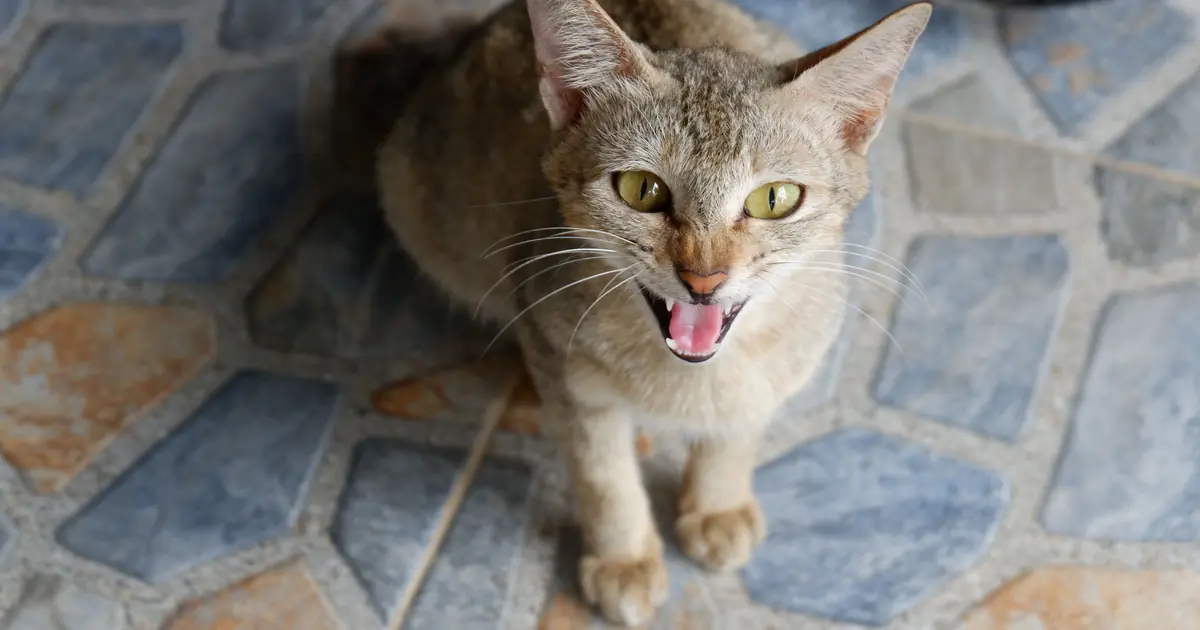
Picture this. A friend walks in, crouches down, and reaches out to your cat with the sweetest voice in the world. Your cat flattens their ears and lets out a slow, dramatic hiss. Then they turn, stroll over to you, and headbutt your hand like nothing happened. Awkward for your guest. A little flattering for you.
So why does my cat hiss at everyone but me? In most cases, it’s because you are their chosen safe person, and everyone else still reads as a stranger. Your cat isn’t being rude or mean. They’re telling unfamiliar people to keep their distance while they figure out whether the world is safe. Here’s what that hiss really means, why you get a pass, and how to help your cat slowly widen their circle.
- A cat that hisses at everyone but you sees you as their trusted safe person, while other people read as unfamiliar or threatening.
- Hissing is a distance-increasing warning that means “stay back,” not aggression for its own sake.
- One-person bonding, under-socialization, and a naturally shy temperament are the most common reasons a cat trusts only one human.
- Strangers feel scary because of unfamiliar scents, fast movements, loud voices, and looming over the cat from above.
- A sudden change from a calm, friendly cat to one hissing at everyone can signal pain or illness and deserves a vet check.
Why does my cat hiss at everyone but me?
Your cat hisses at everyone but you because you’ve earned their trust and everyone else hasn’t yet. To your cat, you’re predictable, safe, and familiar. New people are an unknown, and an unknown gets a warning. This is one of the most common patterns in shy or strongly bonded cats, and honestly, you should take it as a compliment. Out of everyone your cat has met, you’re the one they chose to relax around.
Cats read safety through routine and scent. You feed them, you talk to them the same way every day, and you smell like home. A visitor brings none of that. So your cat defaults to caution. The hiss isn’t personal against your guest. It’s your cat saying, “I don’t know you, so please don’t come closer until I decide you’re okay.” Learning to read your cat’s body language makes this much easier to spot before the hiss even happens.
What does a hiss actually mean?
A hiss is a distance-increasing warning, not an attack. When a cat hisses, their brain has flagged something as a possible threat and triggered a hardwired defensive response designed to create space between the cat and whatever is worrying them. The goal is simple: make the scary thing back off without a fight. Most cats would much rather warn than swipe.
The sound comes from air pushed sharply out through the mouth, usually paired with flattened ears, a puffed-up coat, and an arched or crouched body. All of that is your cat trying to look bigger and buy space. According to the ASPCA’s guidance on cat behavior, this kind of defensive display is rooted in fear, not spite. A hissing cat is a scared cat, not a bad one. And a hiss during play looks different from real fear, which we break down in our guide on whether cats hiss when they play.
Why did my cat bond with only me?
Cats bond strongly with one person for a mix of temperament and history. Some cats are simply wired to be more reserved, and they pour all their trust into a single human instead of spreading it around. Others had a rough or limited start in life. The result looks the same: one safe person, and wariness toward everyone else.
Here are the usual reasons behind one-person bonding:
- Under-socialization. Kittens who don’t meet many different people, sounds, and situations between roughly 2 and 9 weeks old often grow up unsure of strangers.
- A naturally shy temperament. Some cats are born cautious. They’re the “scaredy cats,” and that’s just their personality.
- A past bad experience. A cat who was handled roughly, rehomed, or startled by a specific type of person may generalize that fear to new people.
- Strong single-person attachment. If you’re the one who rescued, fed, or comforted them, you became the anchor. Everyone else is background noise they haven’t vetted.
None of these mean your cat is broken. It means their circle of trust is small right now, and that circle can grow with patience.
What makes strangers scary to my cat?
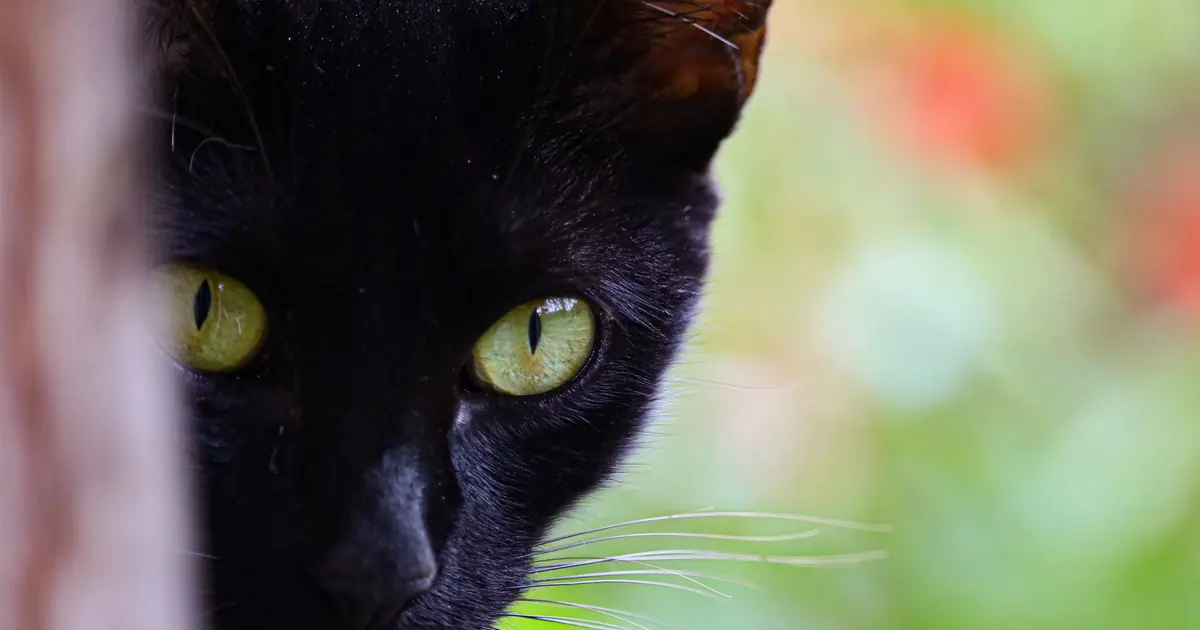
Strangers feel threatening because they break every rule your cat uses to judge safety. A new person shows up smelling wrong, moving unpredictably, talking loudly, and often looming over the cat from above. To a small animal that survives by reading threats fast, that’s a lot to process at once. So the cat picks the safe option and warns them off.
These are the biggest triggers that push a wary cat into a hiss:
| Trigger | Why it worries your cat |
|---|---|
| Unfamiliar scent | Cats identify friend from stranger by smell first. A new scent reads as “unknown.” |
| Fast or sudden movement | Quick reaching, grabbing, or sudden gestures look like a predator lunging. |
| Loud or high voices | Booming or excited voices feel startling and hard to predict. |
| Looming from above | A person standing over the cat and reaching down feels large and cornering. |
| Direct eye contact and staring | In cat language, a hard stare can read as a challenge or threat. |
| Being cornered | A cat with no escape route is far more likely to hiss than one who can retreat. |
Notice how many of these are things a well-meaning guest does the second they see a cute cat. The fix is teaching visitors to do the opposite. If your cat shows these worries often, our guide to the signs of stress in cats can help you catch the early clues.
How can I help guests earn my cat’s trust?
The fastest way to help a guest win over a hissing cat is to have them ignore the cat completely. It sounds backwards, but ignoring a shy cat is the most reassuring thing a stranger can do. It takes the pressure off and lets your cat approach on their own terms, which is the only way a nervous cat ever feels safe.
Coach your visitors through these steps:
- Ignore the cat. No staring, no reaching, no baby talk. Sit down, get low, and let the cat be.
- Stay calm and quiet. Soft voices and slow movements tell your cat there’s no threat here.
- Offer a treat, then back off. Toss a favorite treat near the cat instead of hand-feeding, so the cat links the guest with good things.
- Try a slow blink. A slow, relaxed blink is cat body language for “I’m no threat.” Many cats will soften and blink back.
- Let the cat choose. If your cat approaches and sniffs, great. Let them sniff a finger held low and still. Never chase the interaction.
Do this every visit and keep sessions short. Feliway or another calming plug-in and a safe hideaway room can take the edge off busy days. For a full routine, our step-by-step guide on how to calm a scared cat walks through the whole process. International Cat Care’s behavior advice library also has excellent guidance on introducing nervous cats to new people.
Is this territorial, fear-based, or something worse?
Most hissing at strangers is fear-based, but it can also be territorial, and a sudden change can be medical. Fear-based hissing shows up as a crouched, shrinking cat trying to escape. Territorial hissing tends to come from a more confident cat guarding their space, often near doors, windows, or after a new pet or person moves in. Both usually respond to slow, patient introductions.
The one you can’t ignore is a sudden shift. If your cat used to greet everyone happily and now hisses at all people, including you, treat it as a possible health issue. Pain from arthritis, dental disease, or another hidden problem can make a normally gentle cat defensive, because touching or approaching them suddenly hurts. A new, out-of-character hissing habit is worth a vet visit. You can read more about general reasons a cat hisses at you to compare what’s normal for your cat.
A quick note: this article is educational and isn’t a substitute for veterinary advice. See a vet if the hissing is new or sudden, aimed at everyone including you, or paired with hiding, appetite changes, or signs of pain, since these can point to a medical cause. If your cat is healthy but the fear is severe or turning into swatting, a certified cat behaviorist can help. The Cornell Feline Health Center is a reliable place to learn more about feline behavior and health.
Will my cat ever warm up to other people?
Yes, most cats can learn to trust new people, but it happens on cat time, not human time. Progress is measured in weeks and months, not one good afternoon. Some shy cats will always prefer their one person and simply tolerate everyone else, and that’s a perfectly happy life for them. The goal isn’t a social butterfly. It’s a cat who feels safe enough not to need the hiss.
Keep introductions calm, let every interaction be the cat’s choice, and never punish a hiss. So if your cat hisses at everyone but you, take the compliment, then help them slowly add a few more trusted names to a very exclusive list.
Frequently asked questions
Q: Does my cat hissing at everyone but me mean they love me?
In a sense, yes. A cat that hisses at everyone but you sees you as their safe, trusted person while others still read as strangers. It’s a sign of strong attachment and trust, not that your cat dislikes everyone else on purpose. Take it as a compliment and help them slowly warm up to others.
Q: Is hissing the same as aggression?
No. Hissing is a defensive, distance-increasing warning that means “stay back,” while aggression is an actual attempt to attack. A hissing cat usually wants to avoid a fight, not start one. Give the cat space and the hiss almost always ends without any swatting or biting.
Q: Why does my cat hiss at my partner but not me?
Your cat likely bonded most strongly with you and still sees your partner as less familiar or less predictable. Different scent, voice, movement, or handling style can all keep a cat wary. Have your partner ignore the cat, offer treats, and let the cat approach first, and the bond usually grows over weeks.
Q: Should I punish my cat for hissing at guests?
No, never punish a hiss. Hissing is fear talking, and punishment makes your cat feel even less safe around people, which makes the problem worse. Instead, give your cat an escape route, ask guests to ignore them, and reward calm behavior with treats and quiet praise.
Q: My friendly cat suddenly hisses at everyone. What changed?
A sudden change from friendly to hissing at everyone, including you, can signal pain or illness such as arthritis or dental disease. Cats often hide discomfort and turn defensive when hurting. Book a vet visit to rule out a medical cause before assuming it’s purely behavioral.
Q: How long does it take a shy cat to trust new people?
It varies by cat, but expect weeks to months of slow, patient introductions rather than a single good day. Under-socialized or naturally shy cats may always prefer one person and simply tolerate others. Let every interaction be the cat’s choice and progress will come.
Q: Can an older cat still learn to like other people?
Yes. Adult and senior cats can absolutely learn to feel safer around new people, though it often takes longer than with a kitten. Use calm, treat-based introductions, let the cat set the pace, and never force contact. Patience and consistency are what build trust at any age.
Q: What’s the best way for a stranger to greet my cat?
The best greeting is to ignore the cat at first. Have the person sit low, stay quiet, avoid staring, and offer a treat tossed nearby. A slow blink signals friendliness in cat language. Let the cat approach and sniff on its own terms, and never reach over the cat’s head.

Hello and welcome to The Ideal Cat!
We are some passionate cat owners from different professions. We love our cats and have a lot of experience in how to care for our pets. We are incredibly excited to share our knowledge, experience, and research with you. So you can take good care of your loving cat. We will answer most of the common questions about owning cats, taking care of them, etc. If you have any question contact with us. Thanks for visiting! Enjoy the content.
