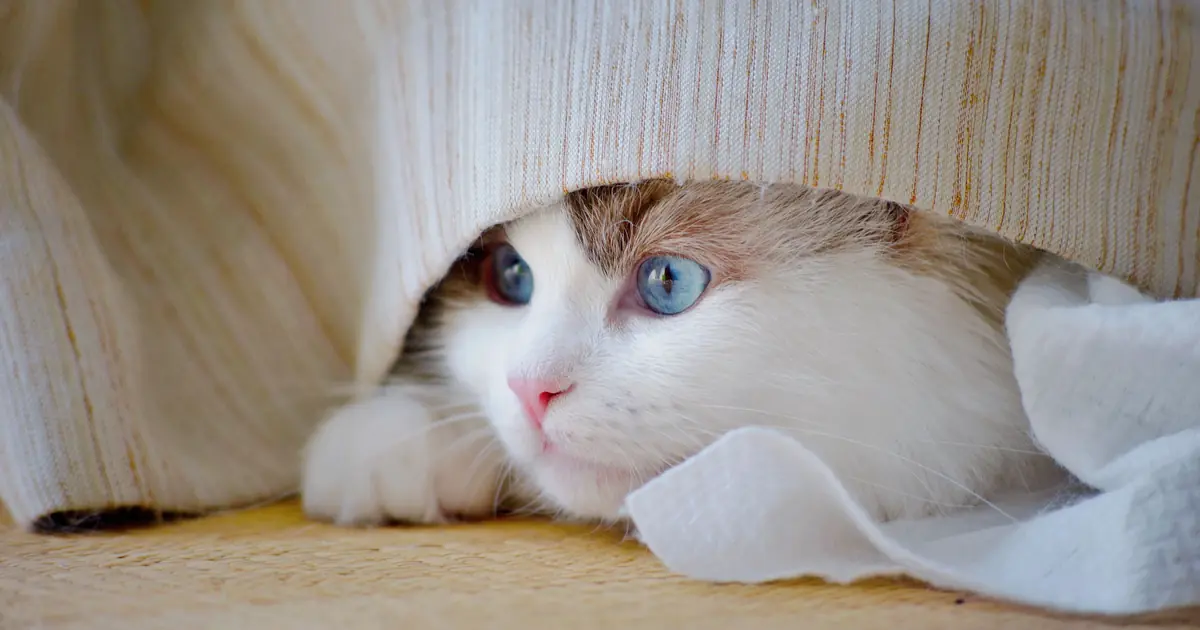
Picture this. You lift the corner of the throw on the couch and there’s a warm lump breathing softly underneath. Your cat has burrowed all the way in, nose tucked, totally content. And your first thought is a little panicky: wait, how can cats breathe under blankets at all?
Here’s the reassuring truth. For a healthy adult cat, snuggling under a blanket is normal, cozy, and safe. Blankets are woven fabric, not plastic wrap. Air moves through them, your cat keeps a little breathing gap by her nose, and that strong survival instinct means she’ll never stay somewhere she can’t get air. Let’s walk through exactly why it works, and the few situations where you do want to pay attention.
- Woven blankets are porous, so enough oxygen passes through the fabric for a healthy adult cat to breathe comfortably underneath.
- Cats instinctively make a small air pocket near their nose and will move out on their own if they ever feel short of air.
- Cats burrow under blankets for warmth, security, a den-like sense of safety, and the comfort of your scent.
- The real risks are very young kittens, heavy or tightly tucked bedding, plastic or non-breathable covers, and cats with breathing conditions.
- Use light, breathable bedding and always leave an easy opening, and blanket-snuggling stays safe.
How can cats breathe under blankets safely?
Cats breathe under blankets because ordinary bedding is breathable fabric with countless tiny gaps between the threads. Air flows through those gaps, so oxygen keeps reaching your cat even when she’s fully tucked in. A blanket is nothing like a sealed bag. It’s more like a loose tent your cat can breathe straight through.
On top of that, cats are pros at self-regulation. When a cat settles under a blanket, she naturally leaves a little air pocket around her nose and mouth, and that pocket holds plenty of oxygen for a resting cat. Cats also slow their breathing when they’re relaxed, so they need less air during those long naps. And cats nap a lot: most sleep 12 to 16 hours a day.
The biggest safety net is instinct. A cat won’t stay somewhere that feels stuffy. If the air gets low or too warm, she pokes her head out or wriggles free. That reflex is fast and reliable in a healthy adult cat.
Why do cats love sleeping under blankets?
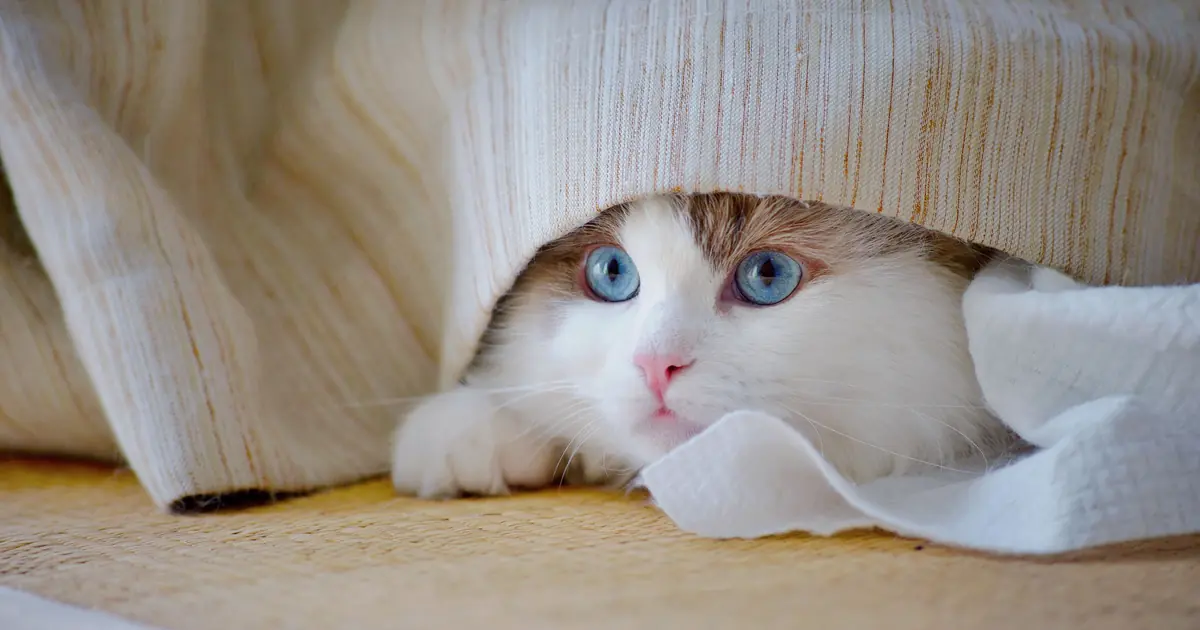
Cats love sleeping under blankets mostly for warmth, security, and your scent. A cat’s normal body temperature runs higher than ours, around 100.5 to 102.5°F, so they’re always hunting for cozy spots. A blanket traps their body heat and turns into a warm little nest fast. It’s the same pull that has your cat parked on warm surfaces like heating pads all winter.
There’s instinct at play too. Cats are both predator and prey, so an enclosed, hidden space feels safe. Burrowing mimics tucking into a den in the wild, where nothing can sneak up from behind.
And then there’s you. Your blanket smells like you, which is deeply comforting to a cat. It’s the same reason your cat curls up on your chest for warmth and closeness. Warm, hidden, and smelling of their favorite human? That’s a cat’s idea of a perfect bed.
How do cats keep air flowing under the covers?
Cats keep air flowing under the covers with a mix of clever positioning and constant awareness. They don’t just flop and hope for the best. They arrange themselves so breathing stays easy the whole time.
- The air pocket. Cats tuck in but leave a small dome of space around the nose and mouth. That pocket, plus air seeping through the fabric, keeps fresh oxygen coming.
- Nose at the edge. Many cats sleep with their face pointed toward a gap, a fold, or the open end of the blanket. Watch closely and you’ll often spot a single ear or whisker sticking out.
- Breathable fabric. Cotton, fleece, and knit blankets all let air pass. The looser the weave, the more air moves through.
- The move-out reflex. The moment a cat feels warm or stuffy, she shifts, lifts the blanket, or walks off. Cats simply don’t tolerate being unable to breathe.
Put those together and you get a system that quietly works, nap after nap, with no help from you.
Is it safe to let my cat sleep under a blanket?
Yes, it’s safe to let a healthy adult cat sleep under a blanket, as long as the bedding is light and breathable and your cat can get out on her own. Most cats do this every day with zero problems. The instinct to self-rescue is strong, and normal blankets don’t block enough air to cause harm.
The picture changes only in a few cases. Very young kittens can’t reliably move out from under heavy fabric, so they need supervision. Extremely heavy comforters, tightly tucked bedding, or anything plastic or non-breathable can trap heat and limit airflow. And a cat with a respiratory condition may struggle where a healthy cat would be fine.
| Usually safe | Use caution |
|---|---|
| Healthy adult cat | Very young kittens who can’t move out on their own |
| Light, breathable fabric (cotton, fleece, knit) | Plastic, vinyl, or tightly woven non-breathable covers |
| Loose blanket the cat pulled over herself | Heavy comforter or tightly tucked-in bedding |
| An easy opening or gap to escape | Cats with asthma or another breathing condition |
How can I make blanket-snuggling safer for my cat?
You can make blanket time safer with a few simple habits, and none of them mean stopping the snuggles. The goal is easy airflow and an easy exit, every time.
- Choose breathable bedding. Stick to cotton, fleece, or loose knit. Skip plastic-backed throws and heavy, dense comforters for cat burrowing.
- Leave an opening. Fold the blanket so there’s always a gap your cat can breathe through and slip out of.
- Never tuck a cat in tight. Let your cat arrange her own blanket. Don’t wrap or pin her under bedding.
- Watch the kittens. Supervise very young kittens closely, since they can’t dig their way out quickly.
- Offer a proper cozy den. Many cats are happy with a covered cave or cozy hooded bed that gives that hidden feeling with built-in airflow.
Get to know your cat’s normal, too. Learning your cat’s body language and comfort signals makes it easy to tell relaxed napping from genuine distress. A comfy cat under a blanket is loose, slow-breathing, and quiet. A cat in trouble struggles, thrashes, or cries, and that’s your cue to lift the cover right away.
When should I worry about my cat under a blanket?
Worry about a cat under a blanket only if you see signs of real breathing trouble, not just cozy napping. A healthy sleeping cat under a light throw is completely normal. What isn’t normal is labored, open-mouthed, or noisy breathing, which is never something to wait out.
Lift the blanket and check on your cat right away if you notice open-mouth or heavy panting, wheezing, rapid or straining breaths, blue or pale gums, or a cat who seems stuck and distressed rather than relaxed. Those signs can point to an underlying issue like feline asthma, and they call for a vet, not a blanket adjustment. This article is educational and isn’t a substitute for professional care, so when in doubt, talk to your veterinarian. For general guidance on cat wellbeing, International Cat Care and the Cornell Feline Health Center are both solid, trustworthy places to start.
A quick safety note: blanket-snuggling is safe for healthy adult cats with light, breathable bedding and an open exit. It’s not the right setup for very young kittens on their own, for heavy or tightly tucked covers, for plastic or non-breathable materials, or for a cat with a known breathing condition. When any of those apply, supervise closely or skip the full tuck-in. For more everyday tips, the ASPCA’s general cat care guide is a helpful reference.
Frequently asked questions
Q: Can a cat suffocate under a blanket?
It’s very unlikely for a healthy adult cat under normal, breathable bedding. Blankets are porous, and cats instinctively move out if air gets low. Suffocation risk rises only with heavy or non-breathable covers, tightly tucked bedding, or very young kittens who can’t free themselves.
Q: How long can a cat safely stay under a blanket?
A healthy adult cat can nap under a light, breathable blanket for hours with no problem. Air passes through the fabric, and your cat will pop out if she gets warm or stuffy. Just make sure there’s always an opening she can use to leave on her own.
Q: Do cats know when to come out from under a blanket?
Yes. Cats have a strong self-preservation instinct and will move out the moment they feel too warm or short of air. This reflex is fast and reliable in healthy adults. Very young kittens are the exception, since they can’t reliably free themselves and need supervision.
Q: Why does my cat sleep completely under the covers?
Cats sleep fully under the covers for warmth, security, and your scent. The enclosed space traps body heat and feels like a safe den, which taps into their natural instinct to hide while resting. Your blanket also smells like you, which is deeply comforting to a cat.
Q: Is it safe for kittens to sleep under blankets?
Kittens should be supervised under blankets. Very young kittens respond to threats slowly and may not be able to wriggle out from under heavy or tucked bedding. Use only light, breathable fabric, leave a wide opening, and keep an eye on them until they’re older and stronger.
Q: What kind of blanket is safest for a cat to sleep under?
Light, breathable blankets are safest, such as cotton, fleece, or loose-knit throws. These let plenty of air pass through. Avoid heavy comforters, tightly woven or plastic-backed covers, and anything non-breathable, since they can trap heat and limit airflow around your cat’s face.
Q: My cat breathes fast under the blanket. Should I worry?
A slightly faster, relaxed breathing rhythm during sleep can be normal. Worry if you see labored, open-mouth, wheezing, or straining breaths, or pale or blue gums. Those signs aren’t about the blanket and could point to a condition like feline asthma, so contact your veterinarian promptly.
Q: Should I pull the blanket off my sleeping cat?
No need, if she looks relaxed and is breathing slowly and quietly. A comfy cat chose that spot and can leave anytime. Only lift the cover if she seems stuck or distressed, or if you spot heavy, noisy, or open-mouth breathing that signals real trouble.

Hello and welcome to The Ideal Cat!
We are some passionate cat owners from different professions. We love our cats and have a lot of experience in how to care for our pets. We are incredibly excited to share our knowledge, experience, and research with you. So you can take good care of your loving cat. We will answer most of the common questions about owning cats, taking care of them, etc. If you have any question contact with us. Thanks for visiting! Enjoy the content.
