Picture this. You walk into the living room and there’s a chunky, round-faced cat sitting upright on the rug, looking at you like a small, slightly judgmental Victorian gentleman. He blinks slowly. He does not get up. He does not run to greet you. He simply acknowledges that you, the human, have arrived.
Welcome to life with a British Shorthair.
These plush, teddy-bear cats are one of the most romanticized breeds on the internet, and honestly, a lot of what you’ll read about them is true. They’re calm. They’re loyal. They’re stunning to look at. But there’s also a lot the glossy breeder websites won’t tell you, and that’s exactly what we’re here to fix.
Breed Stats at a Glance
| Origin | United Kingdom, formalized in the 19th century |
| Weight (Male) | 12 to 18 lbs |
| Weight (Female) | 8 to 14 lbs |
| Lifespan | 14 to 20 years |
| Coat | Short, dense, plush double coat |
| Colors | Over 30 recognized colors, blue is iconic |
| Energy Level | Low to moderate |
| Grooming Needs | Low most of the year, moderate during seasonal shedding |
| Good With Kids | Yes, with supervision and gentle older kids |
| Good With Other Pets | Yes, with proper introductions |
| Average Price | $1,500 to $3,000 from reputable breeders |
From Roman Mousers to Crystal Palace Stars
The British Shorthair has one of the longest histories of any cat breed you can own today. The story goes back almost 2,000 years, to when Roman legions marched into Britain with working cats in tow. Those tough little mousers bred with native British wildcats, and over many centuries, the result was a sturdy, weather-resistant, no-nonsense cat that ruled barns and kitchens across the British Isles.
Things got fancy in the 1800s. A breeder named Harrison Weir, who many consider the father of the cat fancy, started selecting the chunkiest, plushest, most rounded examples of the British street cat and showing them off. The breed made its official debut at the famous 1871 Crystal Palace cat show in London, and the British public fell in love with the plush, dignified look.
Then came two world wars. The breed nearly disappeared during World War II because food shortages made it almost impossible to keep purebred cat colonies going. After the war, dedicated breeders rebuilt the line by crossing the remaining British Shorthairs with Persians, which is where that extra-plush coat texture came from.
Today the British Shorthair is the most popular registered cat breed in the United Kingdom. The Cat Fanciers’ Association recognized the breed in the 1970s, and TICA followed soon after. Fun fact: Lewis Carroll’s Cheshire Cat from Alice in Wonderland was reportedly inspired by the perpetually smiling face of a British Shorthair.
What a British Shorthair Actually Looks Like
If you’ve ever seen a cat that looks like someone took a regular cat and stretched it sideways, you’ve probably seen a British Shorthair. They’re built like little tanks. Cobby is the official word for their body type, meaning they’re compact, broad, and dense without being long-legged or lean.
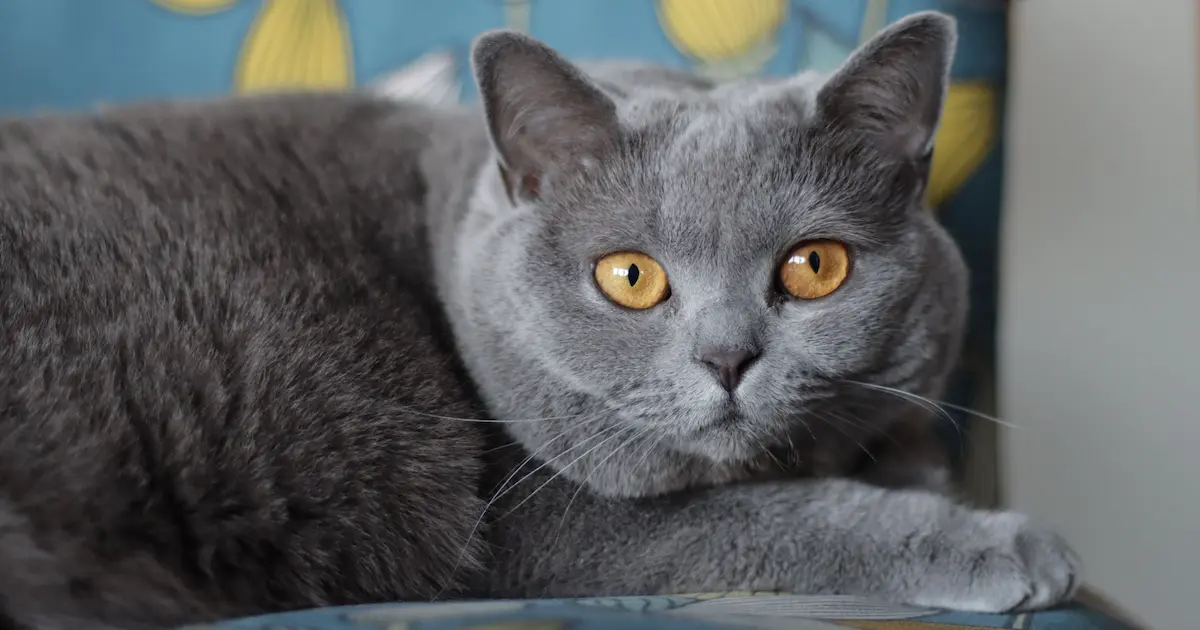
Their head is the showstopper. Round and full, with chubby cheeks (the boys especially get jowls that hang like little teddy-bear sidewhiskers), a short broad nose, and large round eyes that sit wide apart. Most British Shorthairs you’ll see in photos have those famous copper-orange eyes, but eye color depends on coat color and can range from blue to green to gold.
The coat is what people fall for. It’s short, but don’t let that fool you. Underneath that velvety surface is a thick undercoat that gives the British Shorthair its signature plush, stand-up-from-the-body texture. Run your hand against the grain and it springs right back, almost like memory foam.
Blue, that gorgeous slate-gray color, is what most people picture when they hear “British Shorthair.” But the breed actually comes in more than 30 recognized colors and patterns, including black, white, cream, lilac, chocolate, silver tabby, tortoiseshell, calico, and colorpoint. The British Blue is just the celebrity of the family.
Kittens vs Adults: A Big Visual Difference
Here’s something a lot of new owners get blindsided by. British Shorthair kittens look like tiny, perfect round dumplings, but they don’t stay small for long, and they don’t reach their final adult shape for ages. Most cat breeds finish growing by age one. British Shorthairs keep filling out until they’re 3 to 5 years old.
That means the slim, leggy 18-month-old you bring home is not the cat you’ll have in three years. Expect more bulk, more jowls, more chest, more presence. Honestly, they get more handsome with age, which is a rare thing in any species.
The Real British Shorthair Personality
Okay, here’s where I have to be honest with you, because the internet absolutely refuses to be. British Shorthairs are amazing cats, but they are not the cuddly, in-your-face, carry-me-around-the-house teddy bears that breeders love to advertise.
They’re more like a very polite British roommate. They like you. They want to be in the same room as you. They’ll follow you from the kitchen to the office to the bathroom. But they generally do NOT want to be picked up, cradled like a baby, or held against their will. Many British Shorthairs will tolerate a quick scoop, but a lot of them genuinely hate it.
Here’s what they actually love:
- Sitting NEXT to you on the couch, not on your lap
- Slow blinks and gentle head scratches
- Watching you work from across the room
- Following you around with quiet, dignified loyalty
- Greeting you at the door (yes, like a dog, sort of)
- Long, luxurious naps in sunny patches
They’re famously quiet. You’ll get the occasional soft meow when food is late or a door is closed that shouldn’t be, but they’re not the chatty type. If you’re used to a Siamese yelling at you all day, a British Shorthair will feel like a meditation retreat.
They’re also famously patient. These cats handle kids, dogs, vacuum cleaners, and houseguests with a kind of stoic, slightly bored grace. Trust me, the look on a British Shorthair’s face when something dramatic is happening is usually pure judgment, never panic.
One more thing worth knowing: they’re slow to warm up to new people. A British Shorthair might take a few weeks to fully accept a new home or a new family member. Be patient. Once they’re in, they’re in for life.
Is a British Shorthair Right for You?
Look, this is the question every breeder website dodges because they want to sell you a kitten. So let’s do it properly.
A British Shorthair is probably a great fit if:
- You work from home or have a quiet, calm household
- You want a cat that looks gorgeous in photos and is genuinely affectionate, just not clingy
- You live in an apartment or a smaller home (they don’t need acres to roam)
- You’re okay with a cat that does affection on its own terms
- You want a low-vocal cat that won’t wake you at 4 a.m. demanding breakfast
- You can commit to 14 to 20 years of cat ownership
- You can afford the upfront cost and the lifetime vet bills of a purebred cat
A British Shorthair is probably NOT the right fit if:
- You want a lap cat that lives draped across your chest (look at Ragdolls or Persians instead)
- You have very young toddlers who’ll grab and squeeze (most British Shorthairs hate this)
- You want a cat that plays fetch and does tricks for hours (consider an Abyssinian or Bengal)
- You travel constantly and won’t be home for long stretches
- You want a high-energy companion to keep up with you
- You’re hoping for a chatty, conversational cat
Read those lists honestly. If you tried to convince yourself you’d “train” the cat to love being picked up, please don’t. Pick the breed that matches the life you actually have, not the one in your head.
Health Issues You Need to Know About
British Shorthairs are one of the healthier purebred cat breeds, which is honestly part of why they’re so popular. But “healthier than most” is not “bulletproof,” and there are a few specific conditions every potential owner needs to know about before signing a deposit check.
Hypertrophic Cardiomyopathy (HCM)
This one is the big one. HCM is a heart condition where the muscle walls of the heart thicken, making it harder for the heart to pump blood properly. It’s the most common heart disease in cats, and studies show roughly 9 to 12 percent of British Shorthairs may be affected at some point in their lives.
The hard part about HCM is that it often shows no symptoms until the disease is advanced. Signs to watch for include lethargy, fast or labored breathing, sudden weakness, and in serious cases, collapse. Annual echocardiograms (heart ultrasounds) from a vet who knows the breed are the gold standard for catching it early.
Reputable breeders DNA test their breeding cats and provide echo screening certificates. If a breeder dodges this question, walk away.
Polycystic Kidney Disease (PKD)
PKD came into the British Shorthair line back when breeders crossed them with Persians after World War II. It causes fluid-filled cysts to grow on the kidneys over time, eventually leading to kidney failure. The good news is there’s a reliable DNA test for PKD, and good breeders have already removed it from their lines.
If you’re buying a kitten, ask specifically: “Are both parents PKD negative by DNA test?” The answer should be a confident yes, with paperwork.
Hemophilia B
This one is worth understanding clearly. Hemophilia B is a blood clotting disorder where the body can’t properly stop bleeding after an injury or surgery. It’s X-linked, meaning the gene sits on the X chromosome, so male cats (who only have one X) are far more likely to actually show the disease. Females usually carry it without symptoms.
Most cats with hemophilia B look completely healthy until something goes wrong. A routine spay or neuter can turn into an emergency. The simple fix is a DNA test, which any decent breeder will already have done on their lines.
Obesity (The Sneaky Health Issue)
Honestly, this is the health problem you’re most likely to run into. British Shorthairs love food, hate cardio, and are built like little furry meatballs to begin with. The line between healthy chonk and unhealthy chonk is thinner than people realize, and obesity opens the door to diabetes, arthritis, fatty liver disease, and heart strain.
The prevention plan is simple but requires discipline:
- Measure every meal with a kitchen scale or measuring cup, never free-feed
- Use puzzle feeders to slow down eating and add mental stimulation
- Play with your cat for 10 to 15 minutes twice a day, every day
- Weigh your cat monthly and track changes
- Cut treats to 10 percent or less of daily calories
Dental Disease
That round face and short muzzle can lead to crowded teeth, which means more plaque, more tartar, and earlier dental problems. Yearly dental checkups and the occasional professional cleaning are part of the deal. Brushing their teeth at home (yes, really) helps a lot.
Grooming That Plush Double Coat
Here’s another myth we need to break. The internet loves to call the British Shorthair a “low-maintenance” cat because the coat is short. The coat IS short. But it’s also one of the densest, plushest double coats of any shorthair breed out there.
For most of the year, a weekly brushing with a slicker brush or a rubber grooming mitt is plenty. The coat naturally lies smooth and doesn’t tangle easily.
Then spring and fall happen.
Twice a year, British Shorthairs go through a serious coat blow. The undercoat releases in huge amounts, and if you don’t get ahead of it, you’ll be vacuuming the same patch of floor four times a day. During shedding season, brush them 2 to 3 times a week, ideally with a deshedding tool that pulls out the loose undercoat without yanking the topcoat.
Other grooming basics for this breed:
- Trim nails every 2 to 3 weeks (they don’t always wear them down on their own)
- Check ears monthly for wax buildup or any odd smell
- Wipe around the eyes with a damp cloth if you notice any tear staining
- Brush teeth a few times a week, or use dental treats and water additives
- Bathe only when actually dirty, which for most British Shorthairs is almost never
Feeding Without the Roly-Poly Belly
Feeding a British Shorthair is mostly about portion control, not about finding some special breed-specific formula. They do well on high-quality cat food with real animal protein as the first ingredient, moderate fat, and minimal fillers like corn or wheat gluten.
Wet food is honestly the better daily choice for most British Shorthairs. It keeps them hydrated (they’re not the best water drinkers), it’s more satisfying per calorie, and it helps prevent the urinary issues that older cats sometimes develop. A combination of wet food twice daily plus a small measured portion of dry food works well for most homes.
Avoid free-feeding. I cannot say this loud enough. A British Shorthair with a bottomless bowl will become a basketball with legs. Measure portions based on your cat’s ideal weight (not current weight if they’re already overweight), and stick to it.
Kittens need kitten formula until at least 12 months, sometimes 18 months, given how slowly this breed matures. Talk to your vet about when to switch your specific cat to adult food.
Exercise and Play for a Naturally Lazy Cat
Here’s the truth about British Shorthair exercise: if you leave it up to them, they won’t get any. These cats are perfectly happy to spend 18 hours a day napping and the other 6 hours moving slowly between food, water, and the next napping spot.
That’s exactly why you have to be the one to make play happen. Two short play sessions a day, 10 to 15 minutes each, with a wand toy that mimics prey movement, will keep your cat fit and mentally engaged. Laser pointers work too, but always end the session with a real toy they can “catch,” or they get frustrated.
Other ways to keep a British Shorthair active and happy indoors:
- A cat tree with multiple levels (they like to perch, just not too high)
- Window seats with a view of birds or street activity
- Puzzle feeders for meals
- Rotating toys so they don’t get bored of the same mouse for the 400th time
- A scratching post (or three) in different rooms
They’re not big climbers or jumpers compared to athletic breeds like Bengals or Abyssinians. You don’t need ceiling-height cat shelves. But you do need to actively engage them, or the weight creeps on fast.
Living With Kids, Dogs, and Other Cats
British Shorthairs are one of the best breeds for multi-pet, multi-person households, but with a few caveats.
With kids: Great with respectful, gentle children, usually ages 6 and up. Younger toddlers who grab tails and squeeze can stress a British Shorthair out, and these cats will absolutely retreat to a high spot and refuse to come down. Teach kids to let the cat come to them, not the other way around.
With dogs: Surprisingly compatible. The British Shorthair’s calm, unbothered nature means they tolerate dogs better than most breeds, especially calm breeds like Golden Retrievers, Cavaliers, or older mellow mixes. Avoid pairing them with high-prey-drive dogs like terriers without careful introductions.
With other cats: Generally fine, but they prefer slow introductions. A British Shorthair is not going to chase a new kitten around playfully on day one. Give them 2 to 4 weeks of slow introduction, scent swapping, and supervised meetings, and you’ll usually end up with a peaceful coexistence.
One little quirk worth knowing: British Shorthairs can get genuinely jealous if a new pet or new baby gets all your attention. They won’t act out destructively, but they will sulk visibly. Keep their routine consistent during big changes.
The Slow-Growing Cat: Kitten to Adult Stages
Most cat breeds are basically adults by 12 months. The British Shorthair didn’t get that memo. Here’s what to expect through the years:
0 to 12 weeks: Stays with the breeder. Reputable breeders don’t release kittens before 12 weeks, often 14. They need this time with mom and littermates for proper socialization.
3 to 6 months: Pure kitten energy. This is when they’re most playful and curious. Start training routines, introduce the carrier, get them used to nail trimming and brushing.
6 to 12 months: Lanky teenage phase. Bones grow before muscle fills in, so your cat might look a little awkward and skinny. This is normal.
1 to 3 years: Slow muscle and bulk development. The face starts rounding out, the chest broadens, and males begin developing jowls.
3 to 5 years: Full adult size and shape. Now you have the classic plush British Shorthair you saw in the photos.
5 to 10 years: Prime years. Healthy, settled, deeply bonded to family.
10+ years: Senior care begins. Annual bloodwork, kidney function checks, joint support if needed.
Lifespan and Aging Tips
A healthy British Shorthair lives 14 to 20 years, which puts them on the longer-lived end of cat breeds. Plenty of owners report cats hitting 18 or 19 in good health with proper care.
To get your cat to the top end of that range:
- Annual vet checkups under age 10, then every 6 months after
- Yearly bloodwork starting around age 7
- Annual heart screening if your breed lines have any HCM history
- Keep them indoors (outdoor cats live half as long on average)
- Maintain a healthy weight from kittenhood
- Don’t skip dental cleanings
- Keep them mentally stimulated, especially in later years
How Much Does a British Shorthair Really Cost?
Let’s break this down honestly, because British Shorthair pricing has gone a bit wild in recent years.
Kitten purchase price (2026):
- Reputable breeder, pet quality: $1,500 to $3,000
- Reputable breeder, show quality or rare colors (lilac, cinnamon, golden): $3,500 to $6,000+
- Adoption from rescue (rare but possible): $100 to $400
- Suspiciously cheap “breeder” online: $400 to $800 (this is a red flag, more on that below)
First-year setup costs: Plan for $600 to $1,200 on top of the kitten price. This covers initial vet visits, vaccinations, spay or neuter, microchip, carrier, litter boxes, cat tree, food, litter, toys, and basic supplies.
Annual ongoing costs: Around $1,000 to $1,800 per year for food, litter, routine vet care, flea and parasite prevention, and the occasional toy. Pet insurance adds $20 to $50 a month and is genuinely worth it for a breed with HCM risk.
Lifetime cost over 15 to 20 years: Realistically $17,000 to $25,000, more if you hit any major health issues. This isn’t a budget pet.
Finding an Ethical British Shorthair Breeder
Because British Shorthairs are pricey and in demand, the breed has attracted its fair share of shady operations. Here’s what to look for and what to run from.
Green Flags (Signs of a Good Breeder)
- Registered with CFA, TICA, or GCCF (in the UK)
- Health-tests parent cats for HCM, PKD, and hemophilia B with documentation
- Lets you visit the cattery in person (or do a thorough video tour)
- Kittens stay with mom until at least 12 weeks, often 14 to 16
- Provides a written health guarantee (usually 1 to 2 years against genetic defects)
- Asks YOU questions about your home and lifestyle
- Has a waiting list and isn’t always “ready to ship today”
- Will take the cat back at any age if you can’t keep them
- Vaccinations and deworming up to date before pickup
- Microchipped and registered before going home
Red Flags (Run Away)
- Prices way below average ($400 to $800) for “pure” British Shorthair kittens
- Multiple breeds available, especially designer mixes
- Kittens ready to leave at 6 or 8 weeks
- No health testing paperwork available
- Won’t let you visit or meet the parents
- Pressures you to pay deposits immediately
- Ships kittens long distances via cargo with no questions asked
- No registration papers or “papers cost extra”
- Cats live in cramped or dirty conditions
- Kittens seem fearful, lethargic, or have crusty eyes or runny noses
Adoption Options
British Shorthairs are rarely surrendered, but it does happen. Check breed-specific rescues like Specialty Purebred Cat Rescue, Persian and Himalayan Cat Rescue (which also takes British Shorthairs), and local shelter databases like Petfinder. You may have to wait, but adopting saves a life and costs a fraction of buying.
Similar Breeds Worth Considering
If the British Shorthair almost fits but not quite, here are a few breeds with overlapping appeal:
- Chartreux: The French answer to the British Blue. Quieter, slightly more athletic, copper eyes, very similar plush coat.
- Scottish Fold: Same chubby round face but with folded ears. Be aware of the breed’s known cartilage health issues before choosing.
- Russian Blue: Plush blue coat and similar calm vibe, but more slender, more reserved, and quieter still.
- British Longhair: Literally the same breed with a longer coat. If you love the personality but want fluffier, here you go.
- Exotic Shorthair: The shorthaired version of a Persian. Smushier face, similar plush coat, very chill temperament.
British Shorthair Myths That Need to Die
Myth 1: They’re total lap cats. Honestly, most aren’t. Some are. The majority would rather sit beside you than on you, and many actively dislike being held.
Myth 2: They’re low maintenance because the coat is short. Mostly true 10 months of the year. False during the two big seasonal shedding periods, when you’ll be brushing more than you expected.
Myth 3: All British Shorthairs are blue. The blue is just the most famous color. The breed actually comes in over 30 colors and patterns.
Myth 4: They’re related to American Shorthairs. Different breeds with separate histories. The American Shorthair developed from cats brought over on ships from Europe to North America.
Myth 5: They don’t need exercise because they’re calm. Calm doesn’t mean healthy. Without active play, they get fat fast and develop weight-related health issues.
Myth 6: A British Shorthair kitten will look exactly like the adult. Not even close. They grow and fill out until age 3 to 5. Be patient.
Myth 7: They’re hypoallergenic because the coat is short. No cat is truly hypoallergenic. British Shorthairs produce the Fel d 1 protein like every other cat, and that dense undercoat actually holds a lot of dander.
Frequently Asked Questions
Q: Do British Shorthairs like to be picked up?
Most don’t, honestly. They’re affectionate cats but they prefer to keep all four paws on solid ground. A few individual cats tolerate or even enjoy being picked up, but as a breed, they’d rather sit beside you than be lifted off the floor.
Q: Are British Shorthairs good for first-time cat owners?
Yes, they’re one of the most beginner-friendly breeds. Their calm temperament, low vocal nature, and easy grooming make them forgiving for new owners. Just be ready for the upfront cost and the long lifespan commitment.
Q: How long do British Shorthairs live?
Healthy British Shorthairs typically live 14 to 20 years. Cats that are kept indoors, fed a quality diet, kept at a healthy weight, and given regular vet care tend to hit the upper end of that range.
Q: Why are British Shorthair cats so expensive?
You’re paying for years of selective breeding, genetic health testing on parent cats, vaccinations, microchipping, longer kitten stays with the breeder, and registration with cat fancy organizations. Cheap British Shorthairs almost always skip these steps, which is why they’re risky.
Q: Do British Shorthairs shed a lot?
Moderately year-round and heavily twice a year during seasonal coat blows in spring and fall. Their short but dense double coat releases a surprising amount of fur during shedding season, so plan for extra brushing then.
Q: Can British Shorthairs be left alone?
Yes, they handle alone time better than most cat breeds. They’re independent and won’t fall apart if you work a normal full-time job. That said, daily interaction matters, and they shouldn’t be left alone for multiple days without a sitter.
Q: Are British Shorthairs good apartment cats?
They’re one of the best apartment breeds out there. Low energy, low vocal, and not big climbers or jumpers, they adapt easily to small spaces as long as they get daily play and some vertical perches.
Q: What is the difference between a British Shorthair and a British Blue?
A British Blue is just a British Shorthair with a blue (slate-gray) coat. It’s a color variation of the same breed, not a separate breed. The blue happens to be the most famous color, which is why people sometimes use the names interchangeably.
The Honest Final Verdict
The British Shorthair is one of the best cat breeds you can pick if you understand who they actually are. They’re calm, dignified, deeply loyal, easy to live with, and they’ll spend 15 to 20 years being the most chilled-out family member in your home.
But they’re not a snuggly stuffed animal. They’re not high-energy entertainment. And they’re definitely not a budget pet.
If you want a cat that respects your space, follows you around quietly, looks stunning in every photo, and treats your home with calm, slightly amused dignity, the British Shorthair is genuinely one of the best companions you can find. Just go in with realistic expectations, find an ethical breeder or rescue, and prepare your wallet for the long haul. You’ll end up with a friend who, in their own polite British way, will absolutely adore you.
Welcome to the chubby-cheeked side of cat ownership. You’re going to love it.

Hello and welcome to The Ideal Cat!
We are some passionate cat owners from different professions. We love our cats and have a lot of experience in how to care for our pets. We are incredibly excited to share our knowledge, experience, and research with you. So you can take good care of your loving cat. We will answer most of the common questions about owning cats, taking care of them, etc. If you have any question contact with us. Thanks for visiting! Enjoy the content.
