Your cat’s slowing down a little. More naps, longer stretches in the sun, and maybe a small hesitation before the jump onto the bed. The stairs take a beat longer than they used to. It’s not sad, it’s just age, and it means their bowl needs a second look.
The best senior cat food supports aging bodies with protein that’s easy to digest, sensible calories, and extras like joint and hydration support. Older cats have different needs than kittens or young adults, and the right food helps them stay comfortable, curious, and steady on their feet.
We rounded up 7 strong options, dry and wet, for cats in their mature and senior years. Below you’ll find who each one fits, plus a plain-language guide to choosing well.
- Cats are generally considered mature at 7 to 10 years and senior around 11, so their food needs shift gradually rather than all at once.
- Aging cats do best on high-quality, digestible animal protein, since their ability to digest and absorb protein and fat can decline with age.
- Wet food adds moisture that supports kidney and urinary health, which matters because chronic kidney disease is common in older cats.
- Any food labeled AAFCO complete-and-balanced meets baseline nutrition standards, so look for that statement on the label.
- Switch foods gradually over 7 to 10 days to avoid stomach upset and food refusal.
Our Top Picks
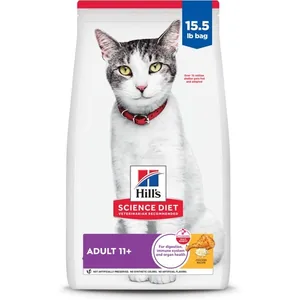
Hill’s Science Diet Senior Adult 11+ Chicken Recipe Dry Cat Food, 15.5-lb bag
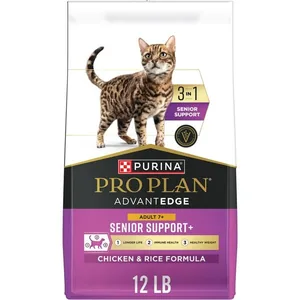
Purina Pro Plan AdvantEDGE Senior Support Plus Adult 7+ Chicken & Rice Formula Dry Cat Food, 12-lb bag
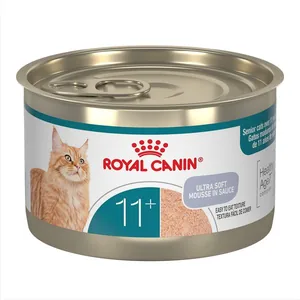
Royal Canin Feline Health Nutrition Aging 11+ Ultra Soft Mousse in Sauce Senior Wet Cat Food, 5.1-oz can, case of 24
Senior cat food compared at a glance
| Food | Best for | Type | Price |
|---|---|---|---|
| Hill’s Science Diet Senior Adult 11+ Chicken Recipe Dry Cat Food, 15.5-lb bag | Best overall senior | Senior dry | $64.99 |
| Purina Pro Plan AdvantEDGE Senior Support Plus Adult 7+ Chicken & Rice Formula Dry Cat Food, 12-lb bag | Best for senior support | Mature dry | $64.98 |
| Royal Canin Feline Health Nutrition Aging 11+ Ultra Soft Mousse in Sauce Senior Wet Cat Food, 5.1-oz can, case of 24 | Best wet for seniors | Wet in sauce | $74.16 |
| Iams Proactive Health Healthy Senior Chicken Recipe Dry Cat Food, 7-lb bag | Best budget | Senior dry | $16.97 |
| Blue Buffalo Wilderness High Protein Natural Grain-Free Chicken Mature Dry Cat Food, 4-lb bag | Best high-protein | Mature dry | $24.98 |
| Blue Buffalo Healthy Aging Chicken & Rice Mature Dry Cat Food, 7 lb | Best for aging with grains | Mature dry | $31.98 |
| Fancy Feast Senior 7+ Chicken, Beef & Tuna Feasts Variety Pack Canned Cat Food, 3-oz can, case of 12 | Best wet variety | Wet variety | $11.52 |
The 7 best senior cat food picks, reviewed
Hill’s Science Diet Senior Adult 11+ Chicken Recipe Dry Cat Food, 15.5-lb bag: best overall senior
Hill’s Science Diet Senior Adult 11+ Chicken Recipe is our top all-around pick for cats in their senior years. It’s built around digestible protein with balanced minerals, and it’s a formula many vets recognize and trust for older cats. The kibble is a manageable size, and most cats take to the chicken flavor easily.
This one’s best for a healthy senior who just needs age-appropriate nutrition, not a prescription diet. If your cat already has a diagnosed condition like kidney disease, talk to your vet about a therapeutic food instead.
Purina Pro Plan AdvantEDGE Senior Support Plus Adult 7+ Chicken & Rice Formula Dry Cat Food, 12-lb bag: best for senior support
Purina Pro Plan AdvantEDGE Senior Support Plus 7+ Chicken & Rice is a solid choice for cats entering their mature years at 7 and up. It leads with real chicken and aims to support the changes that come with age, so it’s a nice fit if you want to get ahead of things before your cat hits the true senior stage.
It’s best for owners who like a well-known brand with consistent quality. Cats with grain sensitivities may do better elsewhere, since this one includes rice and other grains.
Royal Canin Feline Health Nutrition Aging 11+ Ultra Soft Mousse in Sauce Senior Wet Cat Food, 5.1-oz can, case of 24: best wet for seniors
Royal Canin Aging 11+ Ultra Soft Mousse in Sauce is our pick for senior cats who need moisture and an easy texture. The soft mousse is gentle on aging mouths and dental issues, and the sauce adds water that supports hydration. It’s designed specifically for cats 11 and older.
This is a great option for picky older cats or those who’ve lost teeth. It costs more per calorie than dry food, so it works well as part of a mixed feeding plan rather than the only thing in the bowl.
Iams Proactive Health Healthy Senior Chicken Recipe Dry Cat Food, 7-lb bag: best budget
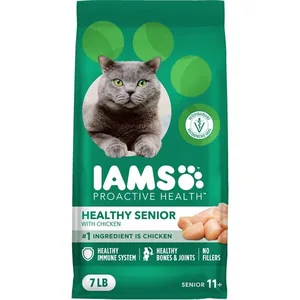
Iams Proactive Health Healthy Senior Chicken Recipe gives you dependable senior nutrition without the premium price. It’s chicken-first, complete and balanced, and a reasonable everyday pick when the budget is tight. For the cost, it holds up well.
It’s best for owners who want a no-fuss dry food for a generally healthy older cat. It won’t have the specialized tuning of pricier formulas, but it covers the basics honestly.
Blue Buffalo Wilderness High Protein Natural Grain-Free Chicken Mature Dry Cat Food, 4-lb bag: best high-protein
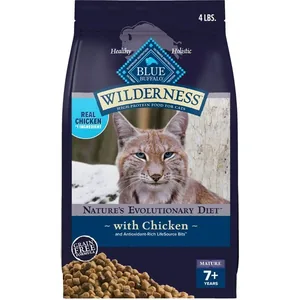
Blue Buffalo Wilderness High Protein Grain-Free Chicken Mature is for the older cat who’s still lean, active, and thriving on animal protein. It’s grain-free and protein-rich, which suits cats that maintain a healthy weight and muscle. Cats are obligate carnivores, so a protein focus makes sense for many.
Here’s the honest caveat: high protein isn’t right for every senior. Cats with kidney disease often need protein and phosphorus managed under a vet’s guidance, so this one is best for healthy seniors, not cats with diagnosed CKD.
Blue Buffalo Healthy Aging Chicken & Rice Mature Dry Cat Food, 7 lb: best for aging with grains
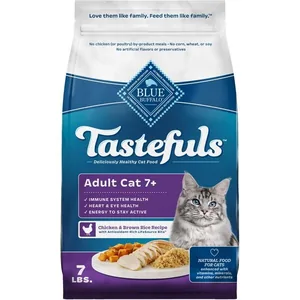
Blue Buffalo Healthy Aging Chicken & Rice Mature is a balanced, grain-inclusive option for older cats who do fine with rice and other wholesome grains. It pairs real chicken with digestible carbohydrates, and it skips the by-product meals and artificial preservatives Blue Buffalo is known for leaving out.
It’s best for a mature cat with no grain sensitivity whose owner prefers a grain-inclusive recipe. If your cat has shown intolerance to grains, go with a grain-free pick instead.
Fancy Feast Senior 7+ Chicken, Beef & Tuna Feasts Variety Pack Canned Cat Food, 3-oz can, case of 12: best wet variety
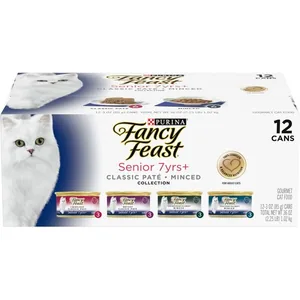
Fancy Feast Senior 7+ Chicken, Beef & Tuna Feasts Variety Pack is an affordable, palatable way to get moisture into an older cat who craves variety. The three flavors help with picky eaters, and the soft texture suits aging teeth. It’s an easy add-on to a dry-food routine.
This is best for owners who want budget-friendly wet food to boost hydration. As with any single product, use it alongside a complete diet and check that the label reads complete and balanced for your cat’s life stage.
How to choose the best senior cat food
Choosing food for an older cat comes down to a few clear priorities. Here’s what actually matters, and what’s just marketing.
Look for digestible, high-quality protein
Older cats often digest and absorb protein and fat less efficiently, so quality counts. Look for a named animal protein (like chicken or salmon) near the top of the ingredient list. Cats are obligate carnivores and rely on animal protein to hold muscle as they age, per Cornell Feline Health Center.
Watch the calories
Many senior cats slow down and gain weight, while the oldest cats sometimes lose weight and need more calories. There’s no one answer. Pick moderate calories for a comfortable, active senior, and ask your vet if your cat’s weight is trending up or down.
Consider joint and kidney support
Ingredients like glucosamine, chondroitin, and omega-3 fatty acids (EPA and DHA) can support aging joints, whether they come in the food itself or in separate cat vitamins. For kidney health, moisture is your friend, which is where wet food shines. If your cat has diagnosed chronic kidney disease, phosphorus and protein should be managed with a vet-prescribed diet, not guesswork. The American Animal Hospital Association is a good starting point for understanding senior pet care.
Prioritize palatability
A perfect food does nothing if your cat won’t eat it. Older cats can get finicky, and their sense of smell may fade. Warming wet food slightly or offering a soft texture often helps.
Combine dry and wet
A mix gives you the convenience of dry plus the hydration of wet. Many older cats thrive on this combo. Check that both foods carry an AAFCO complete-and-balanced statement for the right life stage.
Switch slowly
Transition to any new food over 7 to 10 days, mixing a little more of the new food each day. A slow switch protects your cat’s stomach and improves acceptance.
One more thing: senior cats need vet checkups twice a year. Changes in weight, appetite, or thirst are worth a visit, since kidney disease, thyroid issues, and diabetes are all common in older cats and are far easier to manage when caught early. This guide is educational and isn’t a substitute for advice from your own veterinarian.
What should you feed an older cat?
Feed an older cat a complete-and-balanced diet built around digestible, high-quality animal protein, with moderate calories and enough moisture to support kidney and urinary health. For most healthy seniors, that means a good senior or mature dry food paired with wet food for hydration.
- Protein first: a named animal protein (chicken, turkey, salmon) high on the ingredient list.
- Moisture: add wet food, or offer both wet and dry, to keep hydration up.
- Joint helpers: glucosamine, chondroitin, and omega-3s (EPA and DHA) can support stiff, aging joints.
- The AAFCO label: confirm the food is complete and balanced for adult or all life stages.
- Vet input: cats with kidney disease, thyroid issues, or diabetes need a diet tailored by a veterinarian.
Common mistakes to avoid
- Ignoring weight and thirst changes. Sudden weight loss or increased drinking can signal kidney disease, thyroid problems, or diabetes. Don’t wait it out, call your vet.
- Feeding dry only with no water plan. Dry food is low in moisture, so a dry-only senior needs plentiful fresh water, and ideally some wet food, to stay hydrated.
- Switching foods abruptly. A sudden change often triggers stomach upset or a hunger strike. Transition over 7 to 10 days.
- Settling for low-quality protein. Vague meat sources and heavy fillers shortchange a cat that already digests protein less efficiently with age.
- Treating a medical problem with over-the-counter food. A store-bought bag can’t replace a diagnosis. If something’s off, get a vet exam before changing diets to fix it.
Related guides
Related guides:
- Best wet cat food for senior cats
- Best urinary cat food
- Best wet cat food overall
- Best dry cat food
- How much should I feed my cat?
Frequently asked questions
Q: What age is a cat considered senior?
Cats are generally considered mature at 7 to 10 years and senior around 11. The oldest cats, past about 15, are sometimes called geriatric. These are guidelines, and your individual cat may age faster or slower.
Q: What should I feed a senior cat?
Feed a complete-and-balanced diet built on digestible, high-quality animal protein with moderate calories. Pair a senior or mature dry food with wet food for added moisture, and confirm the AAFCO complete-and-balanced statement on the label.
Q: Do senior cats really need special food?
Not every senior needs a dedicated senior formula, but many benefit from one. Senior foods are tuned for easier digestion, sensible calories, and extras like joint support. Healthy older cats can sometimes stay on a quality adult food, so ask your vet what fits.
Q: Is wet or dry food better for senior cats?
Both have a place, and a combination is often ideal. Wet food adds moisture that supports kidney and urinary health and suits aging teeth, while dry food is convenient and cost-effective. Many older cats do best with wet and dry together.
Q: What is the best food for an older cat with kidney disease?
Cats with diagnosed chronic kidney disease usually need a veterinary therapeutic diet with controlled phosphorus and protein. This is a vet-guided decision, not something to manage with over-the-counter food, so work with your veterinarian on the right prescription formula.
Q: How much should I feed a senior cat?
Portion depends on your cat’s weight, body condition, and activity, so follow the feeding guide on the label as a starting point and adjust. Since older cats can gain or lose weight, weigh your cat regularly and confirm the target amount with your vet.
Q: Why is my senior cat losing weight even though they’re eating?
Weight loss with a normal or big appetite can point to conditions common in older cats, such as hyperthyroidism, diabetes, or kidney disease. This warrants a prompt vet visit, since bloodwork can identify the cause and early treatment makes a real difference.
Q: How do I switch my older cat to a new food?
Transition gradually over 7 to 10 days, mixing a bit more of the new food into the old each day. A slow switch reduces stomach upset and helps a picky senior accept the change. If your cat refuses to eat, slow down further and check with your vet.
The bottom line
The best senior cat food for most healthy older cats is a complete-and-balanced formula rich in digestible animal protein, with moderate calories and enough moisture to keep them hydrated. Our top overall pick is Hill’s Science Diet Senior 11+ Chicken, but the right bowl depends on your cat, from budget-friendly Iams to high-protein Blue Buffalo Wilderness to soft, hydrating wet options like Royal Canin Aging 11+ and Fancy Feast Senior 7+. Pair dry with wet, switch slowly over 7 to 10 days, and keep up with twice-yearly vet checkups. If your cat’s weight, appetite, or thirst shifts, see your veterinarian, since the most common senior conditions are very manageable when caught early.

Hello and welcome to The Ideal Cat!
We are some passionate cat owners from different professions. We love our cats and have a lot of experience in how to care for our pets. We are incredibly excited to share our knowledge, experience, and research with you. So you can take good care of your loving cat. We will answer most of the common questions about owning cats, taking care of them, etc. If you have any question contact with us. Thanks for visiting! Enjoy the content.
