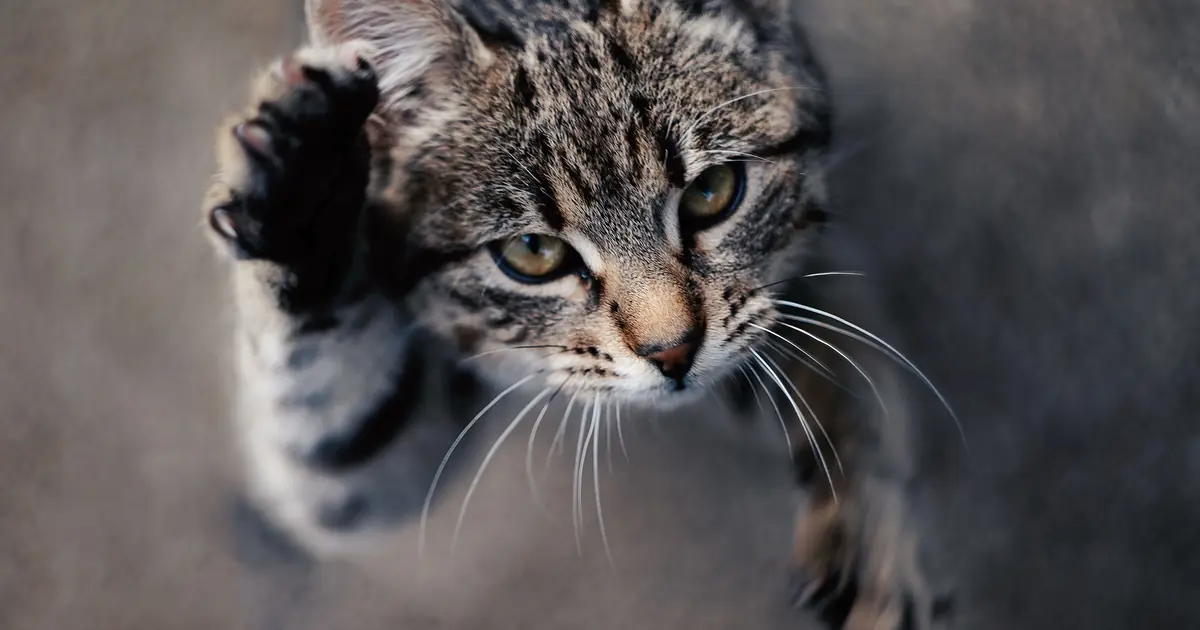
It’s 4am and something the size of a loaf of bread just sprinted across your headboard, skidded into the closet door, and knocked a hair tie off the dresser like it personally offended her. You lie there wondering if this is just what life is now.
Good news: it’s not forever. Kitten chaos has a shelf life, even though it doesn’t always feel that way at 4am. Here’s what’s actually happening in that tiny brain, and roughly when you can expect a full night’s sleep again.
- Kittens are usually at their most hyper between 3 and 6 months old, when hunting instincts and coordination are developing fast.
- Most kittens begin to calm down between 9 and 12 months, with a clearer, steadier drop in energy by 12 to 18 months.
- Spaying or neutering, typically done around 5 to 6 months of age, often reduces restless, hormone-driven energy and roaming behavior.
- High-energy breeds like Bengals, Abyssinians, and Siamese often stay playful for years longer than the average mixed-breed cat.
- A kitten living alone, with no outlet for play, often seems more hyper simply because pouncing on your ankles is the only prey available.
When Do Kittens Calm Down?
Kittens generally start calming down around 9 to 12 months old, and most are settled into a steadier adult energy level by 12 to 18 months. That lines up with the end of adolescence, the stretch veterinarians consider the “teenage” phase of a cat’s life, running roughly from 6 to 18 months. Some cats mellow earlier, some take closer to two years, and a handful of high-drive individuals never fully lose the zoom. Genetics and breed play a real role here, so think of 9 to 18 months as a wide, normal window rather than a hard deadline.
If your kitten just turned six months old and is still doing 3am parkour, that’s completely normal. You’re not doing anything wrong. She just hasn’t hit the brakes yet.
What Does the Kitten Energy Timeline Look Like, Month by Month?
Kitten energy follows a fairly predictable arc from birth to about age two, and knowing which stage your cat is in helps you set realistic expectations. The table below breaks down what’s typical at each age.
| Age Stage | Energy Level | What to Expect |
|---|---|---|
| 0 to 7 weeks | Low, then rising | Mostly sleeping and nursing early on. By 5 weeks, kittens are pouncing, wrestling siblings, and starting to run and stalk. |
| 7 to 14 weeks | High and climbing | The “active play” period. Sleep drops, play time spikes, and locomotory skills like running and jumping fully develop by 10 to 12 weeks. |
| 3 to 6 months | Peak chaos | Hunting instincts sharpen fast. This is the classic zoomies phase: sprinting, pouncing on feet, climbing everything in sight. |
| 6 to 12 months | Still high, slowly leveling | Adolescence. Energy stays strong but starts becoming a bit more purposeful and less random as hormones and growth plates settle. |
| 9 to 18 months | Noticeably calmer | Most cats settle into their adult temperament here. Play sessions get shorter and naps get longer. |
| 2 years and up | Adult baseline | Energy stabilizes into whatever is normal for that individual cat, from mellow couch cat to lifelong live wire. |
Why Are Kittens So Hyper in the First Place?
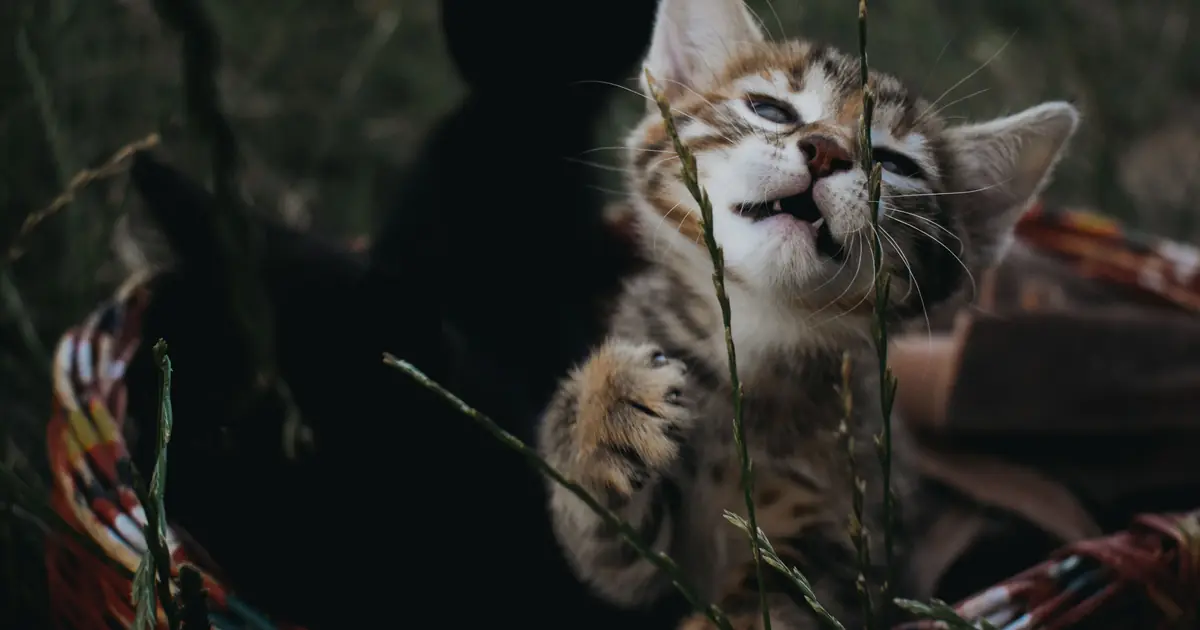
Kittens are hyper because play is how they practice hunting, and a developing kitten’s brain and body are wired to rehearse those skills constantly. Every pounce on a shoelace, every ambush from under the couch, every full-speed sprint down the hallway is a rough draft of a hunting sequence: stalk, chase, pounce, bite. According to International Cat Care, this predatory play behavior is essential to a kitten’s development and typically peaks between 3 and 6 months old, right when owners tend to notice the most chaos.
On top of that, kittens simply have more raw energy relative to their size than adult cats do, and they haven’t yet learned to pace themselves or read social cues about when play has gone too far. Combine developing muscles, sharpening reflexes, and a brain that treats your toes as legitimate prey, and 4am zoomies start to make a lot more sense.
What Affects How Fast a Kitten Calms Down?
Several factors speed up or slow down how quickly a kitten settles, and they explain why two kittens from the same litter can mature at different rates.
- Breed: Some breeds are simply built to stay active longer, sometimes for life.
- Spay or neuter status: Hormones drive a lot of restless, roaming energy in unaltered cats, especially males. The ASPCA notes that spaying or neutering can reduce hormone-driven behaviors like yowling, spraying, and escape attempts, which often reads as a calmer overall cat.
- Single kitten vs. a paired kitten: A kitten with no feline playmate often redirects hunting practice onto your hands, feet, and ankles. Two kittens raised together tend to burn off a lot of that energy on each other instead of on you.
- Environment and enrichment: A bored kitten in a bare apartment gets far more wound up than one with climbing space, scratching posts, and daily play sessions.
- Individual personality: Just like people, cats have a natural temperament. Some are wired mellow from day one, and some stay curious troublemakers into old age.
Worth knowing: neutering is typically done around 5 to 6 months old, and many owners notice a real shift in restlessness within a few weeks of the procedure, according to the American Veterinary Medical Association. If you’re wondering about timing, our guide on how old a cat needs to be to get fixed walks through the details.
How Can You Help a Hyper Kitten Settle Down?
You can help a hyper kitten settle by giving her structured outlets for that energy instead of trying to suppress it, because a kitten that never gets to hunt something will hunt your ankles instead. Here’s what actually works.
- Schedule two or three real play sessions a day. Ten to fifteen minutes of wand-toy chasing, pouncing, and “catching” lets her act out the full hunting sequence in a way that’s actually satisfying to her brain.
- Play hard right before bedtime. A tired kitten who’s had a good hunt-and-catch session, followed by a small meal, is far more likely to settle in for a long nap instead of staging a 2am raid.
- Add vertical space. Cat trees, shelves, and window perches give her somewhere to burn energy climbing instead of using your curtains.
- Rotate toys weekly. Novelty keeps a kitten engaged. The same toy sitting on the floor for a month stops being interesting fast.
- Skip the laser pointer as the only toy. A laser never lets her actually catch anything, which can leave hunting instincts unsatisfied. Our post on whether laser pointers are bad for cats covers how to use one without frustrating her.
- Consider a second kitten if your lifestyle allows it. Two kittens playing together often means less biting and pouncing directed at you.
- Keep a predictable routine. Consistent feeding and play times help a young cat feel secure, and a secure kitten tends to be a calmer one.
If those middle-of-the-night sprints sound familiar, you might also want to read about why cats get the zoomies, since that burst of manic energy is a normal (if noisy) part of feline behavior at any age.
Do Some Cat Breeds Stay Energetic Longer Than Others?
Yes, breed genuinely affects how long a cat stays kitten-like, and a few breeds are known for keeping that playful streak well into adulthood. Bengals, Abyssinians, and Siamese cats top that list. Bengals in particular were bred from wild Asian leopard cats and often stay athletic and mischievous for years, not months. Abyssinians are famously curious and active, frequently described as needing more mental stimulation than a typical house cat. Siamese cats tend to stay vocal, social, and playful long after other breeds have settled into couch-potato mode.
On the flip side, breeds like Ragdolls and Persians are generally known for calmer, more laid-back temperaments even as kittens. If a slower-paced cat matters to you, breed is worth researching before you bring a kitten home, since it can shape your day-to-day life for the next 15 years or more.
When Should You Worry About a Kitten’s Energy Level?
A hyper kitten is almost always completely normal, but a few patterns are worth a vet check. Sudden aggression, energy that never lets up even after long play sessions, obsessive circling or tail-chasing, or a kitten who seems anxious rather than playful can sometimes point to an underlying issue. If your kitten’s activity level changes suddenly, especially alongside appetite changes, weight loss, or hiding, it’s worth a call to your veterinarian rather than assuming it’s just a phase. According to the VCA, normal kitten play should look purposeful and engaged, not frantic or distressed. This article is educational and not a substitute for veterinary advice.
Frequently Asked Questions
Q: At what age do kittens stop being crazy?
Most kittens noticeably tone down the craziness between 9 and 12 months old, with a steadier adult energy level settling in by around 18 months. A handful of high-energy cats keep some of that zoomie behavior well into adulthood.
Q: Why is my 6 month old kitten still so hyper?
Six months is right in the middle of adolescence, which runs from about 6 to 18 months, so high energy at this age is completely normal. Most kittens don’t show a real drop in activity until closer to 9 to 12 months old.
Q: Does spaying or neutering calm a kitten down?
Spaying or neutering, usually done around 5 to 6 months old, often reduces hormone-driven restlessness like roaming, yowling, and spraying. It won’t turn a naturally playful cat into a couch potato, but many owners notice a calmer baseline within weeks of the surgery.
Q: Do kittens calm down after their first heat?
Not really, and going through a heat cycle doesn’t calm a kitten down on its own. If anything, an unspayed female in heat tends to be more restless and vocal, which is one reason vets recommend spaying before the first heat when possible.
Q: Is it normal for a kitten to have zoomies every night?
Yes, nightly zoomies are extremely common in kittens between 3 and 9 months old, especially in the evening and early morning when cats are naturally most active. A solid play session before bedtime usually cuts down on the worst of it.
Q: Will getting a second kitten help mine calm down?
A second kitten often helps, because two kittens can direct their hunting and wrestling instincts at each other instead of at your hands and feet. It’s not guaranteed to work for every cat, but many owners see a real drop in ankle-biting once there’s a playmate in the house.
Q: What age is a kitten considered an adult cat?
Cats are generally considered full adults around 1 year old, though some larger breeds keep growing physically until 2 to 3 years. Energy and temperament usually stabilize close to that same 12 to 18 month mark.
Q: How much energy should an adult cat have compared to a kitten?
Adult cats typically sleep 12 to 16 hours a day and play in short, purposeful bursts rather than the near-constant motion of a kitten. If your grown cat still acts like a kitten for hours at a time, that’s usually just her personality, not a problem.
For more on your kitten’s physical growth alongside her behavior, check out our guide on when a cat is fully grown, and if restless energy ever seems paired with fear or discomfort, our post on signs of stress in cats can help you tell the difference. Keeping a few interactive cat toys in rotation is one of the simplest ways to turn all that kitten energy into a game you both enjoy.

Hello and welcome to The Ideal Cat!
We are some passionate cat owners from different professions. We love our cats and have a lot of experience in how to care for our pets. We are incredibly excited to share our knowledge, experience, and research with you. So you can take good care of your loving cat. We will answer most of the common questions about owning cats, taking care of them, etc. If you have any question contact with us. Thanks for visiting! Enjoy the content.
