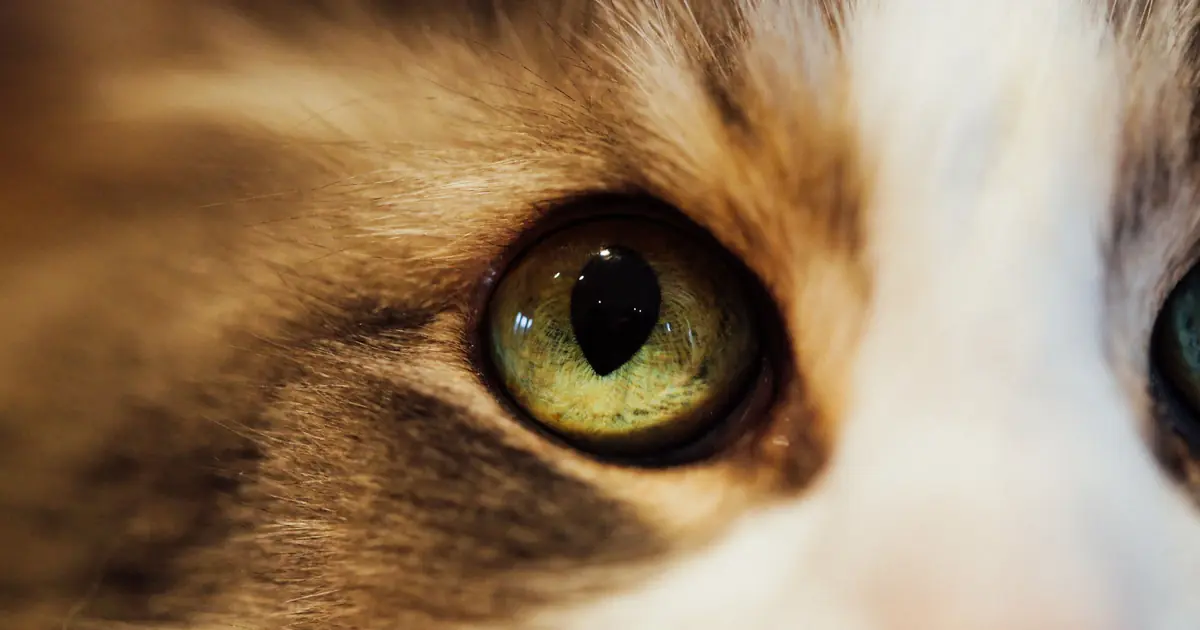
You’re mid-play session, wand toy flicking across the carpet, and suddenly your cat’s eyes go huge. Two dark, glassy moons where slim green slits used to be.
Dilated pupils are one of the most honest signals a cat gives you, and also one of the most misread. A cat with big round pupils could be thrilled, terrified, in pain, or just standing in a dim hallway. You can’t tell which from the eyes alone. Here’s the rest of the story.
- Cat pupils dilate for two core reasons: low light and strong emotional or physical arousal (excitement, fear, aggression, play, or pain).
- A cat’s vertical slit pupils can change area by roughly 135 to 300 times between fully constricted and fully dilated, far more range than a human’s round pupil.
- Dilated pupils on their own don’t tell you if a cat is happy or scared. You have to read ears, tail, whiskers, and posture alongside the eyes.
- Pupils that stay dilated in bright light, or that don’t match in size between the two eyes, can point to pain, high blood pressure, poisoning, or a neurological problem.
- Anisocoria, when one pupil is bigger than the other, is considered an emergency sign and warrants a same-day call to your vet.
Why Do a Cat’s Pupils Get Big?
A cat’s pupils get big because the iris, the colored ring of muscle around the pupil, relaxes and pulls back to let more light or more sensory information reach the retina. This happens automatically through the nervous system, not something your cat chooses to do. Two triggers cause it: a drop in available light, and a surge in emotional or physical arousal. Both end with the same result, a bigger, rounder pupil, which is why you can’t diagnose a cat’s mood from pupil size alone.
How Does Light Affect a Cat’s Pupil Size?
In dim light, a cat’s pupils widen into full circles to gather every available photon, and in bright light they narrow into thin vertical slits to protect the sensitive retina. This is the simplest, most common reason you’ll catch your cat with big eyes: the sun went behind a cloud, or your cat just walked out of a sunny window into a shaded room.
Cat eyes are built for this kind of range. Their vertical slit pupils can change in area by roughly 135 to 300 times between fully open and fully closed, according to research on pupil shape and hunting ecology. Round human pupils only manage about a 15-fold change by comparison. That huge range, plus a reflective layer behind the retina called the tapetum lucidum, is a big part of why cats can see so well in low light compared to us.
What Emotions Make a Cat’s Pupils Dilate?
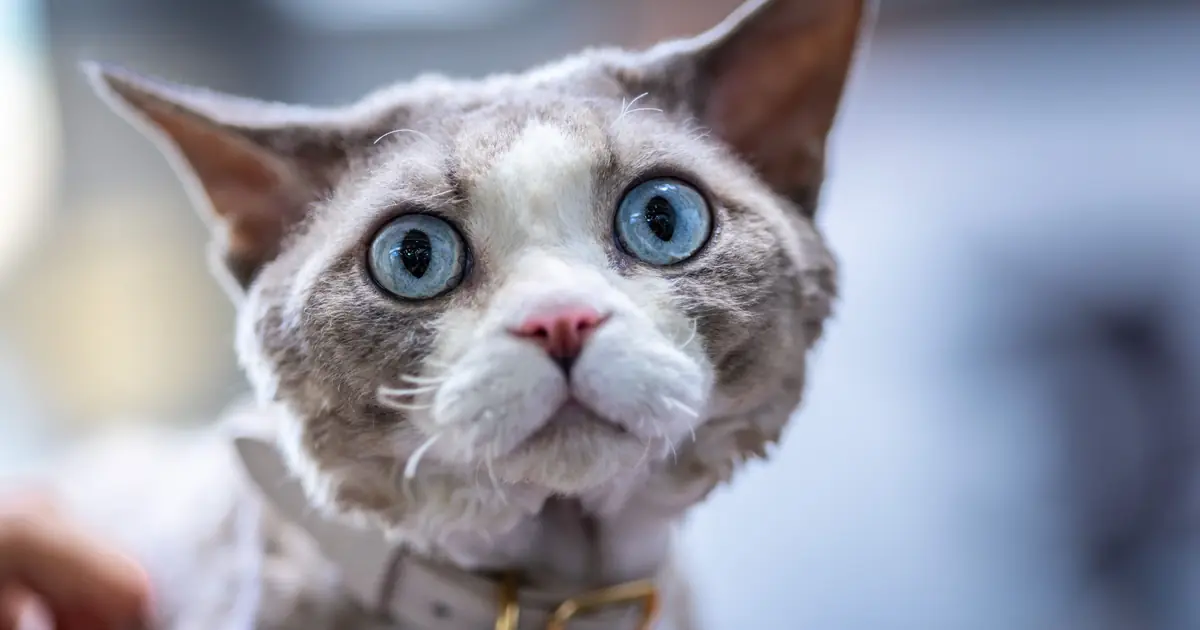
Strong emotions dilate a cat’s pupils because the same adrenaline-driven “fight or flight” response that speeds up the heart also widens the eyes. Excitement, fear, arousal, aggression, and pure predatory focus all push the pupils open, since they flood the body with the same stress hormones. That’s why a cat mid-zoomie and a cat cornered by the vacuum cleaner can end up with nearly identical-looking eyes.
- Play and excitement: chasing a feather wand often widens the pupils along with forward ears and a twitching tail.
- Fear or startle: a loud noise or a trip to the vet can blow the pupils wide open almost instantly.
- Arousal or overstimulation: a long petting session can tip a cat from enjoying it to overstimulated, and the pupils are often the first clue.
- Aggression: a cat about to lash out often has dilated pupils paired with flattened ears and a low, swishing tail.
- The pre-dawn zoomies: if your cat launches into a full sprint at 3am, you’ve probably seen those saucer-sized pupils in action. Here’s why cats get the zoomies in the first place.
Can You Tell If a Cat Is Happy or Scared Just From Its Pupils?
No, you can’t tell a happy cat from a scared cat by pupil size alone, because both emotions dilate the pupils in almost the same way. The eyes only tell you that something has grabbed your cat’s attention, not whether that something feels good or bad. To know which one you’re looking at, check the rest of your cat’s body at the same time.
| Body Language Sign | Likely Playful or Excited | Likely Fearful or Aggressive |
|---|---|---|
| Ears | Forward or slightly out to the sides | Flattened back or sideways (“airplane ears”) |
| Tail | Up, maybe twitching at the tip | Low, tucked, or puffed up like a bottle brush |
| Whiskers | Forward, relaxed | Pulled back tight against the face |
| Posture | Loose, crouched to pounce | Arched back, low to the ground, or frozen still |
Learning to read these signs together, not in isolation, is the single best way to understand what your cat is actually feeling. We cover this in more depth in our full guide to cat body language, and if the signals are leaning toward fear rather than fun, it’s worth checking the signs of stress in cats so you can step in early.
Why Do Cats Have Vertical Slit Pupils in the First Place?
Cats have vertical slit pupils because they evolved as small, ground-level ambush predators that need sharp depth perception at dawn and dusk. Researchers who studied pupil shapes across dozens of species found that vertical slits show up almost exclusively in smaller, front-eyed hunters that stalk prey close to the ground, like cats, foxes, and vipers. Bigger cats such as lions and tigers, which chase prey from a standing height rather than ambushing it, have round pupils instead, closer to a human’s.
The slit shape does double duty: it gives cats an unusually wide range of pupil size for controlling light, and it sharpens depth perception in the vertical plane, which helps a cat judge exactly how far to leap before it pounces. That’s part of why a cat’s eyes are built so differently from ours.
When Do Big Pupils Signal a Problem?
Big pupils signal a possible medical problem when they stay dilated in bright light, don’t shrink back after the exciting moment passes, or don’t match between the two eyes. A little dilation during play or a startle is normal. Pupils that stay permanently wide, glassy, or uneven are a different story.
- Pain: chronic pain, from arthritis to an injury, can keep a cat’s pupils dilated even when nothing exciting is happening.
- High blood pressure (hypertension): often linked to kidney disease or an overactive thyroid in older cats, and dilated pupils can be an early clue.
- Poisoning or toxin exposure: certain plants, medications, and chemicals can affect the nervous system and change pupil size.
- Anisocoria (unequal pupils): a noticeably bigger pupil in one eye points to a problem with that eye or its nerves, and it’s considered urgent. VCA Animal Hospitals lists causes from glaucoma and eye inflammation to head trauma and retinal disease.
What Does It Mean If One Cat Pupil Is Bigger Than the Other?
One pupil being bigger than the other is called anisocoria, and it means the nerve pathways or structures controlling that eye aren’t working right. This is a real, visible size difference between the two eyes even when both are looking at the same light, not just a cat glancing sideways. According to PetMD, anisocoria in cats can stem from glaucoma, uveitis, retinal disease, infections like feline leukemia virus, or head trauma. Because the cause can be serious, unequal pupils deserve a same-day call to your vet.
| Pupil State | Likely Meaning | What To Do |
|---|---|---|
| Round, dilated, in dim light | Normal light response | Nothing, this is expected |
| Round, dilated, in bright light or during play/fear | Excitement, fear, arousal, or aggression | Check ears, tail, and posture to read the mood |
| Thin vertical slit | Bright light, or a calm, relaxed cat | Nothing, this is normal |
| Dilated and staying that way in normal light | Possible pain, stress, or illness | Watch for other symptoms; call your vet if it persists |
| One pupil bigger than the other (anisocoria) | Possible glaucoma, trauma, infection, or neurological issue | Contact your vet the same day |
A quick, calm note: this article is meant to help you understand what’s normal, not to replace a vet visit. If your cat’s pupils stay dilated in bright light, the two eyes don’t match, or you notice squinting, redness, bumping into furniture, vomiting, or a change in appetite alongside the eye changes, it’s time to get your cat checked out by a licensed veterinarian. Cornell’s Feline Health Center and your regular vet are both good resources if you want a second opinion before your appointment.
Frequently Asked Questions
Q: Why do my cat’s pupils get huge when I pet them?
Petting can dilate a cat’s pupils because touch is stimulating, and stimulation, whether pleasant or overwhelming, triggers the same nervous system response. If the dilation shows up alongside a swishing tail or skin twitching, your cat may be nearing overstimulation and could appreciate a break.
Q: Are big pupils always a sign of happiness in cats?
No, dilated pupils are not a reliable happiness signal on their own. They show up during play and excitement, but also during fear, aggression, and pain, so you need to check ears, tail, and body posture to know which one you’re seeing.
Q: Why do my cat’s pupils get big at night?
A cat’s pupils widen at night because there’s less light available, and a wider pupil lets more of it reach the retina. Cat pupils can change area by roughly 135 to 300 times between constricted and dilated, giving them a much bigger range than human eyes.
Q: Can stress cause a cat’s pupils to stay dilated?
Yes, ongoing stress or anxiety can keep a cat’s pupils dilated for longer than a single startled moment. If you’re also seeing hiding, over-grooming, or a change in appetite, take a look at the wider signs of stress in cats to see if the pattern fits.
Q: What does it mean when a cat’s pupils are dilated and it’s growling or hissing?
Dilated pupils combined with growling, hissing, flattened ears, and a low or puffed-up tail usually point to fear or defensive aggression rather than play. If your cat has been acting this way out of nowhere, it’s worth reading up on sudden aggression in cats, since pain is a common hidden trigger.
Q: Is it normal for one cat pupil to be slightly bigger than the other?
No, a real, visible difference in pupil size between the two eyes, known as anisocoria, is not considered normal and should be checked by a vet the same day. Causes range from glaucoma and eye inflammation to head trauma and infections, some of which can threaten your cat’s vision if left untreated.
Q: Why do cats have vertical pupils instead of round ones like humans?
Cats have vertical slit pupils because they evolved as small ambush predators that hunt close to the ground, and that pupil shape gives them a wider range of light control and sharper depth perception for judging pounces. Larger cats like lions, which hunt from a standing height, have round pupils instead.
Q: Should I worry if my cat’s pupils are dilated all the time?
Yes, pupils that stay dilated even in bright, normal light are worth mentioning to your vet, since this can point to pain, high blood pressure, a toxin, or a neurological issue rather than a passing emotional response. A quick eye exam can usually sort out whether it’s something to watch or something to treat.

Hello and welcome to The Ideal Cat!
We are some passionate cat owners from different professions. We love our cats and have a lot of experience in how to care for our pets. We are incredibly excited to share our knowledge, experience, and research with you. So you can take good care of your loving cat. We will answer most of the common questions about owning cats, taking care of them, etc. If you have any question contact with us. Thanks for visiting! Enjoy the content.
