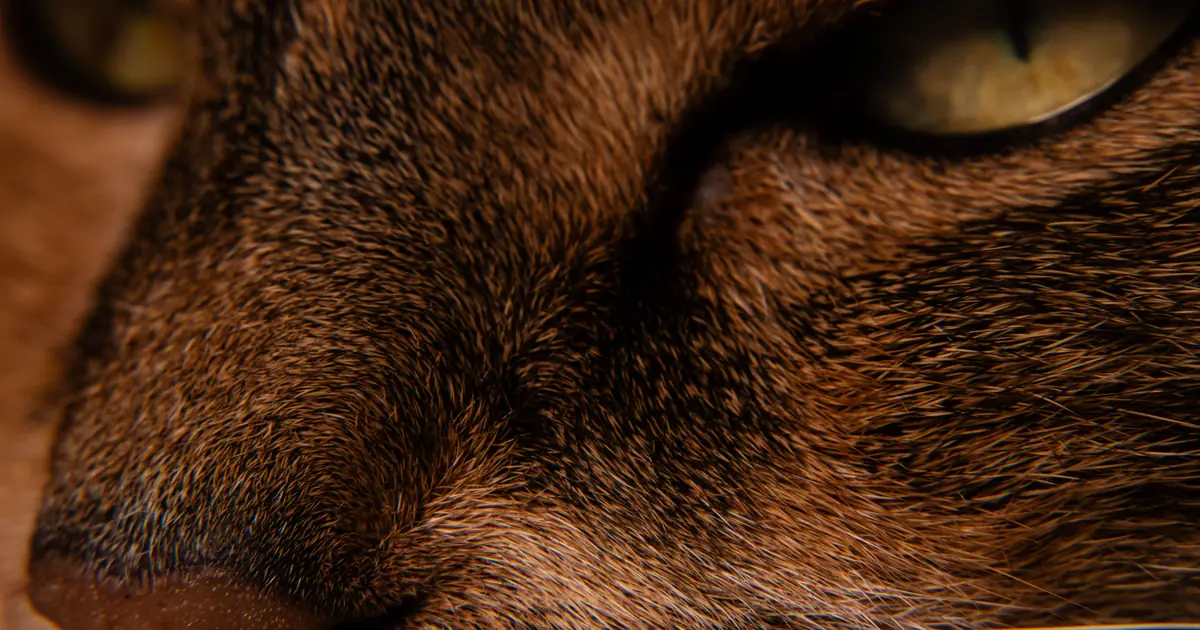
Picture this. You’re staring into your cat’s eyes at 3am (they started it), and you notice they’ve turned a deep gold since kittenhood. Weren’t they blue once? You’re not imagining it. Every kitten starts life with baby-blue eyes, and the grown-up color shows up later.
So what color eyes can cats have? The real palette is wider than most people think, but it’s not endless. Cat eye color runs from icy blue through green, yellow, gold, amber, and rich copper, with hazel and odd-eyed cats in the mix too. Let’s walk through the whole rainbow, why kittens change, and which colors are pure myth.
- Cat eye colors range across blue, green, yellow, gold, amber, orange, copper, and hazel, plus odd-eyed (heterochromia).
- All kittens are born with blue eyes; the adult color develops between 6 and 12 weeks as melanin fills the iris.
- More melanin means gold or copper eyes, while less melanin gives green, and none gives blue.
- Blue eyes come from light scattering, not blue pigment, and link to pointed cats like the Siamese.
- Purple, violet, red, and pink are not natural cat eye colors; a reddish look comes from albinism or camera flash.
What are all the eye colors cats can naturally have?
Cats can naturally have eye colors across a fairly set range: blue, green, yellow, gold, amber, orange, copper, and hazel. That’s the whole honest palette. Everything you see in real cats is some shade or blend inside that group.
Here’s the thing though. Color intensity varies a lot. A green-eyed cat might have anything from pale gooseberry to deep emerald, and a gold-eyed cat can lean lemon-yellow or burnt copper. Purebred cats often show the most saturated, jewel-like colors because breeders select for it. Your average tabby from down the street usually lands in the yellow-to-green zone, and there’s nothing wrong with that.
Eye color and coat color are mostly separate traits, so a black cat can have copper eyes and a white cat can have blue. If you’re curious about how those eyes actually work, our guide on what feline vision looks like is a fun rabbit hole.
Why are kittens born with blue eyes, and when do they change?
Kittens are born with blue eyes because their bodies haven’t started making eye pigment yet. Newborn kittens can’t even open their eyes for the first week or so, and when they do, the iris has no melanin in it. No pigment plus the way light bounces around inside the eye equals that cloudy blue every kitten shares.
The adult color develops between 6 and 12 weeks of age as melanin gradually fills the iris. You’ll often catch it mid-change, when a kitten’s eyes look muddy or half-blue, half-yellow. That awkward-teen phase is totally normal.
Most cats settle into their final eye color by around 3 to 4 months. If your kitten’s eyes stay blue into adulthood, that’s not a delay. It usually means they’re a pointed breed or carry the gene for white coat and blue eyes, which we’ll get to.
How does melanin decide a cat’s eye color?
Melanin is the pigment that decides a cat’s eye color, and it works on a simple sliding scale: more melanin makes darker, warmer eyes, and less makes lighter, cooler ones. The melanin lives in cells in the iris called melanocytes, and how many pigment cells a cat has (and how active they are) sets the final shade.
Roll it out and it looks like this. A lot of melanin gives you gold, orange, and copper. A moderate amount lands in yellow and amber. A little bit produces green. And essentially none leaves the eye blue.
So green eyes aren’t “green pigment” and blue eyes aren’t “blue pigment.” There’s really only one pigment in play, and the color you see depends on how much of it fills the iris. The same melanin behind a cat’s coat color is doing quiet work in the eyes too. For the coat-and-color science, our piece on how cats see color pairs nicely with this.
Why are some cats’ eyes blue, and what’s the white-cat link?
Some cats have blue eyes because their iris has no melanin, so it scatters light instead of showing pigment, the same physics that makes the sky look blue. There’s no blue dye anywhere in the eye. It’s an optical trick, and it’s gorgeous.
Blue eyes in adult cats show up in two main groups. First, pointed cats like the Siamese, Ragdoll, Balinese, and Birman. The pointed gene that darkens their ears, face, paws, and tail also keeps pigment out of the iris, so pointed cats almost always have blue eyes. Second, cats carrying the dominant white gene (a solid white coat), which can also block iris pigment.
Now the part worth knowing. In some white cats with one or two blue eyes, there’s a genetic link to deafness. According to the Cornell Feline Health Center, white cats with blue eyes are more likely to be born deaf, and a white cat with two blue eyes carries the highest odds. A deaf cat can live a full, happy indoor life, so this isn’t a reason to panic, just something to be aware of. If you’re wondering about eye colors that sound too good to be true, we tackled that in can cats have purple eyes.
What is an odd-eyed cat, and which eye colors are rare?
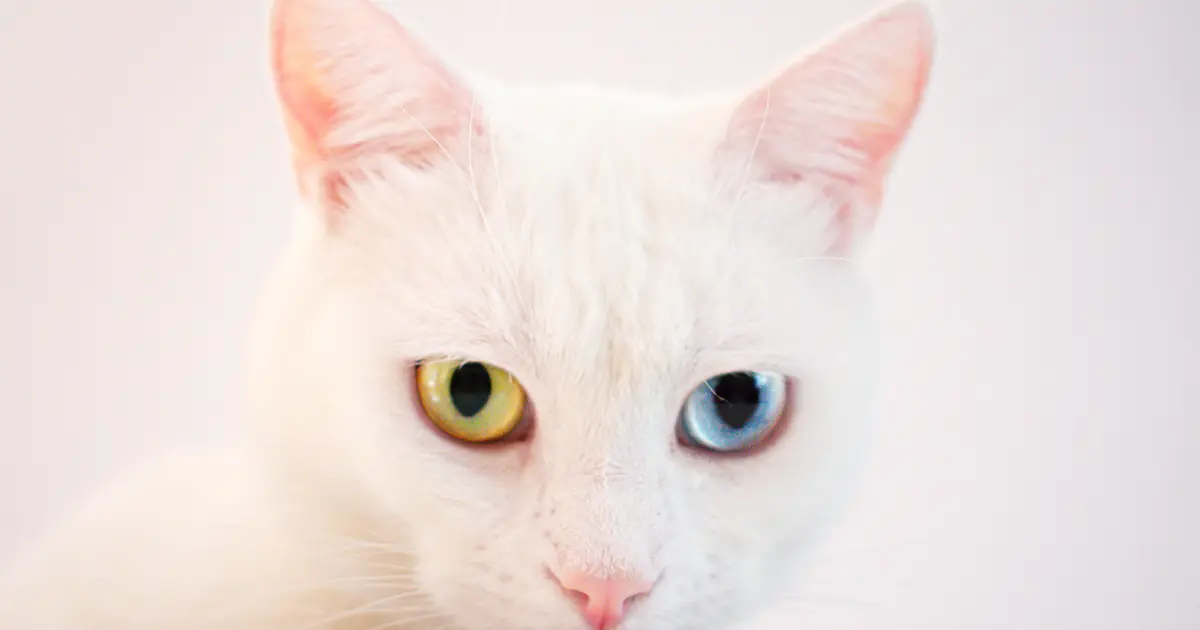
An odd-eyed cat has two different colored eyes, usually one blue eye and one green, yellow, or copper eye. The proper name is complete heterochromia, and it happens when the white or pointed gene keeps melanin out of just one eye while the other develops normal pigment.
Odd eyes are most common in white cats and in breeds like the Turkish Van, Turkish Angora, and some Persians. It looks striking, but the cat sees fine out of both eyes. One quick note: in an odd-eyed white cat, deafness (if any) tends to affect the ear on the blue-eyed side.
As for rarity, deep orange and true copper are among the harder colors to get without selective breeding, which is why you see them so often in show cats. Vivid, saturated green is prized too. The everyday yellows and greens are the most common colors you’ll meet on regular house cats. Pupil shape and size tell their own story separate from color, and you can read those signals in our cat body language guide.
What eye colors can cats NOT have?
Cats cannot naturally have purple, violet, red, or pink eyes. These colors get shared around online a lot, usually as edited photos or AI images, but they don’t exist in real feline genetics. The melanin scale simply doesn’t produce them.
Here’s why a reddish or pink look sometimes shows up anyway. Cats with albinism produce no melanin at all, and their eyes can appear very pale blue or pinkish because you’re partly seeing the blood vessels behind a pigment-free iris. It’s a real (and rare) condition, not a “purple-eyed” cat. The other cause is plain camera flash, which bounces off the eye and can flash red or pink in a photo. That’s the flash, not your cat.
So if someone’s selling a “violet-eyed rare kitten,” be skeptical. The iCatCare advice library and general feline care resources from the ASPCA are solid places to sanity-check breed and health claims before you fall in love with a myth.
Cat eye colors at a glance
| Eye Color | What Causes It | Common In |
|---|---|---|
| Blue | No melanin in the iris; light scatters | Siamese, Ragdoll, Birman, white cats, all kittens |
| Green | Low melanin | Russian Blue, Egyptian Mau, many domestic cats |
| Yellow / Amber | Moderate melanin | Many tabbies and mixed-breed cats |
| Gold / Copper / Orange | High melanin | British Shorthair, Bombay, Maine Coon, Persian |
| Hazel | A blend of green and gold tones | Common in domestic shorthairs |
| Odd-eyed (one blue, one other) | Melanin absent in one iris (white/pointed gene) | Turkish Van, Turkish Angora, white cats |
| Purple / Red / Pink | Not natural; albinism or flash can mimic a reddish look | None (myth) |
This article is educational and not a substitute for veterinary advice. If your cat’s eye color changes suddenly in adulthood, or you notice cloudiness, redness, squinting, or discharge, call your vet. A shifting eye color in a grown cat can point to inflammation or other issues worth checking.
The bottom line on cat eye colors
Cats come in a beautiful but finite set of eye colors: blue, green, yellow, gold, amber, orange, copper, hazel, and the striking odd-eyed look. It all traces back to one pigment, melanin, and how much of it fills the iris. Kittens start blue, then grow into their real color by a few months old. And if you ever see a “purple-eyed cat” online, you can smile and scroll on, because that one’s not real.
Frequently Asked Questions
Q: What is the rarest eye color for cats?
Deep, saturated colors like true copper and vivid orange are among the rarest cat eye colors and usually appear in selectively bred show cats. Brilliant emerald green is also uncommon in everyday house cats. Most domestic cats land in the yellow-to-green range.
Q: Can cats have purple or violet eyes?
No, cats cannot naturally have purple or violet eyes. Feline eye color comes from melanin, which only produces shades of blue, green, yellow, gold, copper, and hazel. Purple-eyed cat photos are edited, AI-generated, or the result of camera flash.
Q: Why did my kitten’s blue eyes change color?
Kittens are born with blue eyes because their irises have no pigment yet. Between 6 and 12 weeks of age, melanin fills the iris and the adult color, often green, yellow, or gold, develops. Most cats settle into their final eye color by 3 to 4 months.
Q: Do all white cats have blue eyes?
No, white cats can have blue, green, gold, or odd-colored eyes. The dominant white gene can block iris pigment and produce blue eyes, but not always. White cats with one or two blue eyes have a higher chance of being born deaf.
Q: Are odd-eyed cats blind or deaf?
Odd-eyed cats are not blind and see normally out of both eyes. In odd-eyed white cats, there can be a link to deafness, and it usually affects the ear on the same side as the blue eye. Many odd-eyed cats hear perfectly fine.
Q: Why do some cats have red or pink eyes in photos?
Red or pink eyes in cat photos usually come from camera flash reflecting off the eye. In rare cases, a cat with albinism has no melanin, so the iris looks very pale blue or pinkish because blood vessels show through. Neither is a true eye color.
Q: What eye color do Siamese cats have?
Siamese cats almost always have blue eyes. The pointed gene that darkens their ears, face, paws, and tail also keeps melanin out of the iris, so light scatters and the eyes look blue. Deeper, more vivid blue is often preferred in show-quality Siamese.
Q: Can a cat’s eye color change in adulthood?
A healthy adult cat’s eye color stays stable. A sudden color change, cloudiness, or a reddish or yellow tint in a grown cat can signal inflammation, injury, or illness. If your cat’s eye color shifts unexpectedly, contact your veterinarian promptly.

Hello and welcome to The Ideal Cat!
We are some passionate cat owners from different professions. We love our cats and have a lot of experience in how to care for our pets. We are incredibly excited to share our knowledge, experience, and research with you. So you can take good care of your loving cat. We will answer most of the common questions about owning cats, taking care of them, etc. If you have any question contact with us. Thanks for visiting! Enjoy the content.
