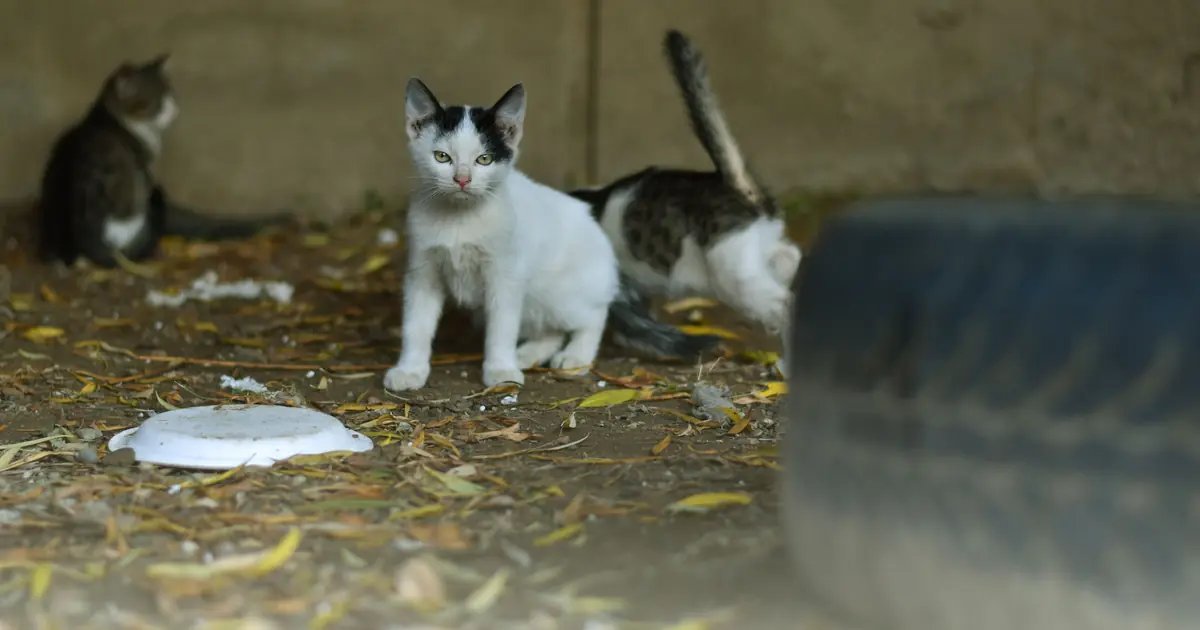
You’ve got a tiny, wobbly 5-week-old kitten who’s just figured out that food comes in a bowl now, not just from mom. Messy? Absolutely. Adorable? Also yes.
Five weeks is a big turning point. Your kitten is smack in the middle of weaning, that in-between stage where milk is on its way out and real food is coming in. Get the schedule right and you’ll grow a healthy, chunky little cat. Here’s exactly how much to feed, how often, and what to skip.
This article is educational and isn’t a substitute for veterinary care. If your kitten isn’t gaining weight or seems unwell, call your vet.
- A 5-week-old kitten needs 4 to 5 small meals a day, spaced roughly every 4 to 6 hours during waking hours.
- At 5 weeks, kittens are mid-weaning and eat a soft gruel made from canned kitten food blended with kitten milk replacer (KMR) or warm water.
- Never feed a kitten cow’s milk; it lacks the right nutrients and often triggers diarrhea and dehydration.
- A healthy 5-week-old kitten weighs roughly 450 to 550 grams (about 1 to 1.2 pounds) and should gain around 10 grams a day.
- Fresh water should always be available in a shallow dish, and kittens are usually fully weaned onto solid food by 8 weeks.
What should a 5-week-old kitten eat?
A 5-week-old kitten should eat a soft gruel made from canned kitten food mixed with kitten milk replacer (KMR) or warm water. At this age kittens are weaning, moving from mom’s milk (or formula) to solid food. Their baby teeth are coming in, but they still can’t handle dry kibble on its own yet.
The magic word here is gruel. Gruel is just wet kitten food blended with liquid until it’s the texture of warm oatmeal or a thick soup. It’s soft enough for little mouths and lets your kitten lap and chew at the same time. Always choose food labeled for kittens or “all life stages,” never adult cat food. Kittens need far more protein, fat, and calories to fuel that wild growth spurt.
If you’re planning ahead for what comes next, our guide to choosing a healthy kitten food walks through what to look for on the label.
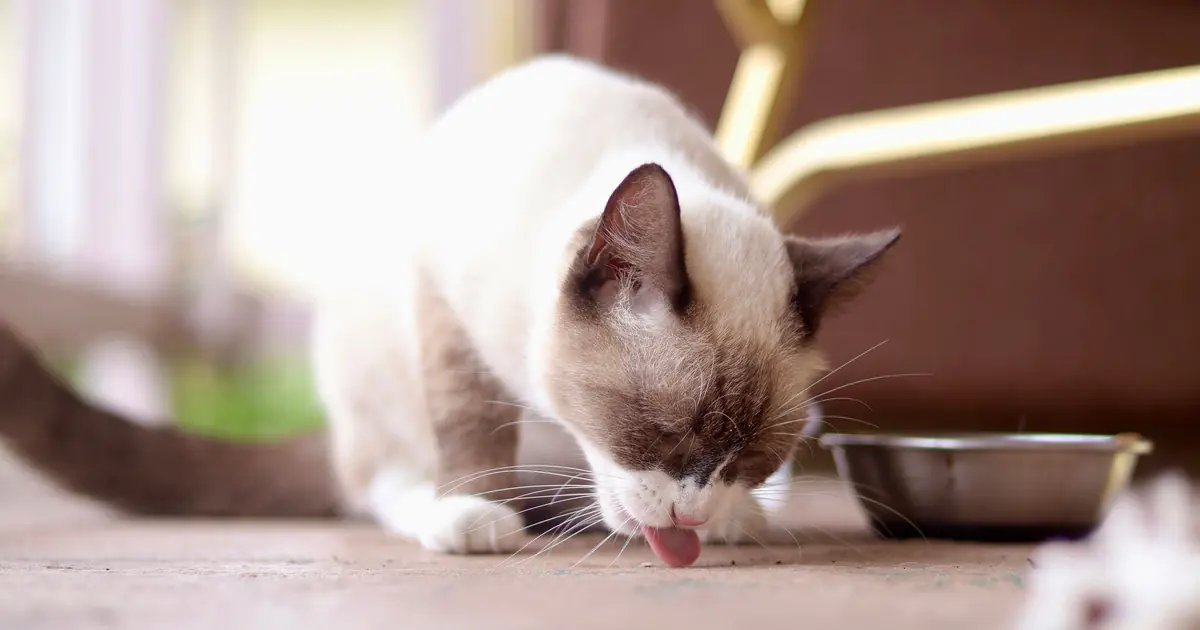
How often should I feed a 5-week-old kitten?
Feed a 5-week-old kitten 4 to 5 small meals a day, spaced roughly every 4 to 6 hours during the day. Little kittens have tiny stomachs, so several small meals work far better than one or two big ones. You don’t need to feed overnight at this age, though a late meal before bed helps them sleep.
Many people caring for weaning kittens simply leave gruel out and refresh it every 3 to 4 hours, since a kitten this age tends to graze, wander off, nap, then come back for more. Just toss any gruel that’s been sitting out too long. It spoils, and nobody wants a kitten with an upset tummy.
Sample daily feeding schedule
Here’s a simple routine you can adjust to your own day. The goal is even spacing and a full, content kitten.
| Time | Meal | What to offer |
|---|---|---|
| 7:00 AM | Breakfast | 2 to 3 tbsp gruel, fresh water refreshed |
| 11:00 AM | Late morning | 2 to 3 tbsp gruel |
| 3:00 PM | Afternoon | 2 to 3 tbsp gruel |
| 7:00 PM | Evening | 2 to 3 tbsp gruel |
| 10:00 PM | Bedtime (optional) | Small top-up if still hungry |
How much should a 5-week-old kitten eat per day?
A 5-week-old kitten eats roughly 2 to 3 tablespoons of gruel per meal, adding up to about half a can of wet kitten food a day, split across 4 to 5 meals. Amounts vary by kitten, so let appetite and weight guide you rather than forcing an exact number.
The real measure of “enough” isn’t the bowl, it’s the scale. A well-fed kitten gains weight steadily and has a rounded (not bloated) belly after meals. If your kitten cleans the bowl every time and still cries for more, offer a little extra. If food sits untouched, scale back and watch for any signs of illness.
Once your kitten graduates to mostly wet food in a week or two, our breakdown of how much wet food to feed a kitten gives you clearer daily portions to grow into.
How do I make gruel for a weaning kitten?
To make kitten gruel, mash canned kitten food with an equal amount of warm kitten milk replacer or warm water until it looks like a thick, smooth soup. Start soupy in early weaning, then thicken it over the following week as your kitten gets the hang of eating.
Here’s the step-by-step:
- Start with kitten food. Scoop a spoonful or two of pate-style canned kitten food into a shallow dish.
- Add warm liquid. Mix in an equal amount of warm KMR (or warm water) and mash until smooth. Aim for warm oatmeal texture, never hot.
- Offer it low and shallow. Use a flat plate or saucer so a small kitten can reach in easily.
- Thicken gradually. Each day, add a little more food and a little less liquid, so by the end of the week the gruel is closer to plain wet food.
- Keep it fresh and warm. Kittens turn their noses up at cold, crusty gruel. Serve it fresh and cozy-warm.
Don’t be surprised if your kitten walks through the plate before eating it. Weaning is gloriously messy. A warm, damp cloth wipe-down after meals keeps everyone clean.
When can a 5-week-old kitten eat dry food?
You can start introducing dry kitten food around 5 to 6 weeks, but soften it first. Soak kibble in warm water or KMR until it’s mushy, then offer it alongside the wet gruel. As those baby teeth finish coming in, usually by 6 to 7 weeks, your kitten can start crunching dry kibble on its own.
Does a 5-week-old kitten still need kitten milk replacer (KMR)?
Yes, a 5-week-old kitten usually still benefits from some kitten milk replacer, but less than before. KMR is a formula that mimics a mother cat’s milk, and it’s the liquid that makes early gruel work. As weaning progresses through weeks 5 and 6, you slowly cut back the KMR until your kitten is eating mostly solid food.
Orphaned or bottle-fed kittens may still need a few bottle or syringe feedings of KMR if they aren’t yet lapping enough gruel on their own. The transition isn’t a hard switch; it’s a gradual fade from milk to food. Follow your KMR package for mixing, and if you’re hand-rearing, the ASPCA and rescue groups like Kitten Lady have detailed hand-rearing guidance worth reading.
Why not cow’s milk?
Cow’s milk is one of the worst things you can give a kitten. Kittens don’t have enough of the enzyme needed to digest the lactose in cow’s milk, so it commonly causes diarrhea, and diarrhea dehydrates a tiny kitten fast. On top of that, cow’s milk has the wrong balance of protein, fat, and nutrients for a growing kitten. Skip soy, almond, and other plant milks too. Only mother’s milk or KMR belongs in a kitten’s bowl. According to PetMD, dairy products can contribute to real GI upset during weaning.
Should a 5-week-old kitten have water?
Yes, a 5-week-old kitten should always have access to fresh, clean water. As kittens shift from formula to solid food, water becomes important for hydration and digestion. Offer it in a shallow, tip-proof dish no more than about 2 inches deep so a small kitten can drink safely without falling in.
Don’t panic if your kitten doesn’t drink much water yet. Gruel and KMR still supply a lot of moisture at this stage. Water intake naturally picks up as the food gets drier. Just keep it available, clean, and refreshed a couple of times a day.
How much should a 5-week-old kitten weigh?
A healthy 5-week-old kitten typically weighs about 450 to 550 grams, or roughly 1 to 1.2 pounds. Kittens gain weight steadily, around 7 to 14 grams a day (about 100 grams a week), and consistent gain is the single best sign that feeding is going well.
Weigh your kitten daily on a small kitchen scale if you can, and jot it down. You’re looking for steady forward progress, not a magic number. A kitten that stalls, plateaus, or loses weight needs a vet promptly. The ASPCA publishes handy kitten weight and growth charts that make daily tracking easy.
What should you NOT feed a 5-week-old kitten?
A 5-week-old kitten should not eat cow’s milk, adult cat food, dog food, or human table scraps. Their tiny digestive system needs a specific, calorie-dense kitten diet, and the wrong foods can cause upset stomachs, poor growth, or worse.
Keep these off the menu:
- Cow’s milk and plant milks (soy, almond, oat): trigger diarrhea and don’t provide proper nutrition.
- Adult cat food: too low in the protein, fat, and calories a growing kitten needs.
- Dog food: not formulated for cats and missing key nutrients like taurine.
- Raw meat, bones, or fish scraps: risk of bacteria, choking, and parasites for a fragile kitten.
- Human foods like onion, garlic, chocolate, or anything seasoned: several are toxic to cats.
- Dry kibble served hard and dry: too tough for baby teeth until closer to 6 to 7 weeks.
When in doubt, keep it simple: quality wet kitten food, KMR, and fresh water. That’s really all a 5-week-old needs. As your kitten grows, our guide to feeding a 2-month-old kitten covers the next stage, and if you’re caring for a litter, you might like our piece on how many kittens a cat has the first time.
Frequently asked questions
Q: Can a 5-week-old kitten eat dry food?
A 5-week-old kitten can start eating dry food only if it’s softened first. Soak the kibble in warm water or KMR until mushy and offer it beside the wet gruel. Most kittens can chew dry kibble on their own by around 6 to 7 weeks, once their baby teeth are fully in.
Q: How often should I feed a 5-week-old kitten?
Feed a 5-week-old kitten 4 to 5 small meals a day, spaced roughly every 4 to 6 hours during the day. Overnight feeding usually isn’t needed at this age, though a bedtime top-up can help. Many caregivers simply leave gruel out and refresh it every 3 to 4 hours.
Q: How much should a 5-week-old kitten eat per meal?
A 5-week-old kitten eats about 2 to 3 tablespoons of gruel per meal, adding up to roughly half a can of wet kitten food a day. Let your kitten’s appetite and steady weight gain guide the exact amount rather than forcing a fixed portion.
Q: Can I give my 5-week-old kitten cow’s milk?
No. Kittens can’t properly digest the lactose in cow’s milk, so it often causes diarrhea and dehydration. Cow’s milk also has the wrong nutrient balance for a growing kitten. Use kitten milk replacer (KMR) instead, which is made to mimic mother cat’s milk.
Q: Does a 5-week-old kitten still need a bottle?
Most 5-week-old kittens are lapping gruel and no longer need a bottle. Orphaned or slower-to-wean kittens may still need a few KMR bottle or syringe feedings until they eat enough solid food on their own. Weaning is gradual, not an overnight switch.
Q: How much should a 5-week-old kitten weigh?
A healthy 5-week-old kitten usually weighs about 450 to 550 grams, or roughly 1 to 1.2 pounds. Kittens gain around 7 to 14 grams a day. Steady daily weight gain is the best sign that feeding is on track; a plateau or loss needs a vet.
Q: When is a kitten fully weaned?
Most kittens are fully weaned onto solid food by about 8 weeks of age. The process usually starts around 3 to 4 weeks with gruel, moves to mostly wet food by 5 to 6 weeks, and finishes with the kitten eating solid kitten food independently by week 8.
Q: What if my 5-week-old kitten won’t eat gruel?
If your kitten refuses gruel, try warming it, thinning it with more KMR, or offering a little on your fingertip to spark interest. A kitten that won’t eat, seems weak, or is losing weight needs to see a vet quickly, since young kittens can go downhill fast without food.
Feeding a 5-week-old kitten is really about patience and consistency. Small, regular meals of warm kitten gruel, plenty of fresh water, and a scale to track those precious grams. Keep it simple, skip the cow’s milk, and watch your little one grow into a healthy, confident cat.

Hello and welcome to The Ideal Cat!
We are some passionate cat owners from different professions. We love our cats and have a lot of experience in how to care for our pets. We are incredibly excited to share our knowledge, experience, and research with you. So you can take good care of your loving cat. We will answer most of the common questions about owning cats, taking care of them, etc. If you have any question contact with us. Thanks for visiting! Enjoy the content.
