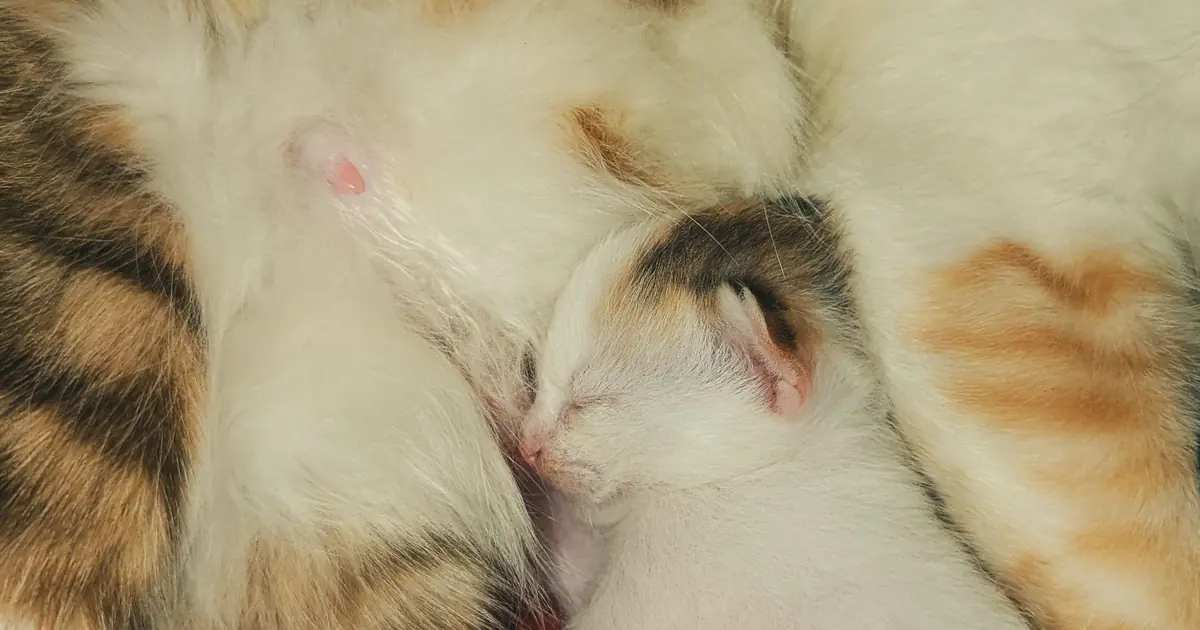
If your cat is expecting and this is her first time, you’re probably staring at her belly wondering exactly how many kittens will fit in there. I get it, the not-knowing is the hardest part. The good news is there’s a pretty reliable answer for first-timers, and it’s usually a small, manageable number.
Here’s the short version: the answer to how many kittens will my cat have first time is most often 1 to 3. First litters tend to run smaller than the lifetime average, and that’s completely normal. Let’s walk through the numbers, what nudges them up or down, and how to spot when the kittens are on their way.
- A first-time mother cat usually has 1 to 3 kittens, smaller than the typical lifetime average of 4 to 6.
- Litter size is influenced by the mother’s age, breed, overall health, and nutrition, not by anything the owner did wrong.
- One single kitten in a first litter is normal and healthy, though single kittens benefit from extra handling and socialization.
- A vet X-ray after about day 45 of pregnancy is the most accurate way to count kittens before birth; ultrasound confirms pregnancy but counts poorly.
- Most cats give birth (queening) around 63 to 65 days after conception, often within 24 to 48 hours of nesting and restlessness.
How many kittens will my cat have first time?
A cat in her first litter usually has 1 to 3 kittens, and 2 to 3 is the most common range. First-time litters run on the smaller side because the queen (the term for a female cat used for breeding) is often young, and her reproductive system is still hitting its stride.
For comparison, the average litter across all cats is about 4 to 6 kittens, with 4 being the most common single number. So if your first-timer surprises you with just one or two, don’t worry. A small first litter is the rule, not a red flag.
Litters can range widely, from a single kitten to 8 or more in experienced moms. The largest litter ever recorded was 19 kittens, born to a Burmese-Siamese cat in the UK in 1970, a Guinness World Record that still stands. Your first-timer will be nowhere near that, and that’s a very good thing.
Why are first litters smaller than later ones?
First litters are smaller mainly because first-time mothers are usually young, and a young queen’s body releases and supports fewer eggs than a mature one. As a cat has more pregnancies and reaches her physical prime, her litter sizes tend to grow.
Cats generally have their biggest litters in their middle reproductive years, often the second through fourth litters. After that, litter size slowly tapers off again as a cat ages, frequently dropping back toward 2 to 3 kittens in older queens.
So a typical cat’s litter pattern looks like a gentle hill: small at the start, peaking in the middle years, then easing back down later in life.
What affects how many kittens my cat will have first time?
How many kittens your cat will have first time depends on her age, breed, health, and nutrition. These factors stack together, which is why two cats of the same age can still have very different litter sizes.
Here are the main things that move the number, according to veterinary sources like PetMD and Cornell Feline Health Center:
- Age: Young first-timers and senior cats have smaller litters. Cats in their prime years have the largest.
- Breed: Some breeds run larger, others smaller (see the table below).
- Health: A healthy cat carries more kittens to term. Illnesses like feline leukemia (FeLV) can lower litter size or cause loss.
- Nutrition: A well-fed, properly nourished queen produces and supports more kittens. Malnutrition shrinks litters.
- Genetics: The mother’s own litter size is a strong predictor. Cats from big litters often have big litters.
- Stress: A calm, secure environment supports a healthier pregnancy.
One thing worth saying clearly: a small first litter is not your fault. It’s mostly biology and timing, not a sign you did anything wrong.
Do certain cat breeds have more kittens?
Yes, breed influences litter size, though individual cats still vary a lot. Oriental-type breeds such as Siamese tend toward larger litters, while flat-faced breeds like Persians tend toward smaller ones.
Here’s a general guide to how litter size tends to vary by breed. Treat these as tendencies, not guarantees, since age and health matter just as much as breed.
| Breed type | Typical litter tendency |
|---|---|
| Siamese and other Oriental breeds | Larger, often 5 to 6 kittens |
| Burmese and Abyssinian | Larger than average |
| Maine Coon, Ragdoll, Ragamuffin | Average to larger litters |
| Domestic shorthair / mixed-breed house cats | Average, around 3 to 6 (4 most common) |
| Persian and other flat-faced breeds | Smaller, often 2 to 4 kittens |
Remember, no matter the breed, a first litter usually skews small. A Siamese first-timer might have 3 where she’d have 6 a year later.
Is it normal for a cat to have only one kitten?
Yes, it’s completely normal for a cat to have only one kitten, especially in a first litter. A single-kitten litter, sometimes called a “singleton,” is healthy and happens fairly often with young or first-time moms.
There’s one thing to keep in mind with singletons. Kittens normally learn bite control, play limits, and social cues from their littermates. A single kitten misses that, so a singleton can grow up a bit nippy or pushy without some help.
If your first-timer has just one kitten, give that kitten extra gentle handling, plenty of play that teaches “soft paws,” and exposure to calm adult cats if you have them. A little effort early goes a long way.
How can I tell how many kittens my cat will have before birth?
The most accurate way to count kittens before birth is a vet X-ray taken after about day 45 of pregnancy, once the kittens’ skeletons have hardened enough to show up. An X-ray at that stage gives the best headcount, though even then a kitten or two can hide.
Here’s how the common methods compare, so you know what to expect at the vet:
| Method | When it’s used | What it tells you |
|---|---|---|
| Abdominal palpation | Around day 21 to 30 | Confirms pregnancy by feel; a rough guess at number only |
| Ultrasound | From about day 30 | Confirms pregnancy and heartbeats; not reliable for an exact count |
| X-ray (radiograph) | After about day 45 | Most accurate kitten count before birth |
Knowing the number ahead of time genuinely helps. If the X-ray says four and only three arrive, you’ll know to call your vet promptly rather than waiting and wondering.
This article is educational and not a substitute for veterinary care. A pregnancy check-up lets your vet confirm the litter, flag any concerns, and plan for the birth.
How long is my cat pregnant before the kittens arrive?
A cat is pregnant for about 63 to 65 days, which is roughly nine weeks or a little over two months. Most queens deliver within a few days on either side of that window, so the kittens usually arrive around the two-month mark from conception.
Because cats often hide early pregnancy well, many owners don’t notice until the belly rounds out around week 5. If you’re tracking dates, count from the suspected mating and watch closely as you near day 60.
What are the signs my cat is about to give birth?
The clearest signs a cat is about to give birth are nesting, restlessness, a drop in appetite, and a body temperature falling below about 99 to 100°F (a cat’s normal range is 100.5 to 102.5°F). The temperature drop usually shows up within roughly 24 hours of active labor.
In the day or two before queening, watch for these common signs:
- Nesting: She seeks out quiet, hidden spots like closets, under beds, or laundry baskets.
- Restlessness and pacing: She may seem unsettled or follow you around more.
- Appetite drop: Many cats eat little or nothing right before labor.
- More vocalizing: Extra meowing or crying is common.
- Temperature drop: A reading below roughly 99 to 100°F signals labor is likely within about a day.
- Visible contractions: Belly tightening means active labor has started.
Set up a clean, warm, quiet birthing box a week or two before her due date so she has a spot she likes. A cardboard box lined with soft towels in a low-traffic room works well.
When to call your vet right away
Most cats give birth on their own without trouble, but some situations need a vet fast. Call your veterinarian or an emergency clinic right away if you see any of these red flags:
- Strong contractions for more than 20 to 30 minutes with no kitten appearing
- More than about 2 hours between kittens while she’s clearly still straining
- Green, dark, or foul-smelling discharge before the first kitten arrives
- A kitten visibly stuck in the birth canal
- The mother seems weak, collapses, or is in obvious distress
When in doubt, call. A quick phone check with your vet is always better than guessing during a birth.
FAQ: First-time cat litters
Q: How many kittens will my cat have first time?
A cat usually has 1 to 3 kittens in her first litter, with 2 to 3 being most common. First litters run smaller than the all-cat average of 4 to 6 because first-time moms are often young and still maturing.
Q: Is one kitten normal for a first litter?
Yes, one kitten is normal for a first litter, especially with a young mother. A single kitten, or “singleton,” is healthy, but it misses out on littermate play, so give it extra handling and socialization to prevent nippy behavior later.
Q: Will my cat’s next litter be bigger?
Usually yes. Cats tend to have their largest litters in their prime reproductive years, often the second through fourth litters. Litter size then slowly decreases again as a cat ages, sometimes back to 2 to 3 kittens.
Q: How can I find out how many kittens my cat is having?
A vet X-ray after about day 45 of pregnancy is the most accurate way to count kittens before birth. Ultrasound from about day 30 confirms pregnancy and heartbeats but is not reliable for an exact count, and palpation gives only a rough guess.
Q: What is the most kittens a cat can have at once?
Most cats have 1 to 8 kittens per litter, but larger numbers happen. The record litter was 19 kittens, born to a Burmese-Siamese cat in the UK in 1970, per Guinness World Records. First-time moms stay on the small end at 1 to 3.
Q: Do certain breeds have more kittens?
Yes. Siamese and other Oriental breeds, plus Burmese and Abyssinian, tend toward larger litters, while Persians and other flat-faced breeds tend toward smaller ones. Mixed-breed house cats average around 4. A first litter still tends to be small for any breed.
Q: How long is a cat pregnant before giving birth?
A cat is pregnant for about 63 to 65 days, roughly nine weeks. Most queens deliver within a few days of that window. Belly rounding usually becomes obvious around week 5 of the pregnancy.
Q: Does a smaller first litter mean something is wrong?
No. A small first litter of 1 to 3 kittens is normal and expected, not a sign of a problem. It mostly reflects the mother’s young age and maturing body. A vet check-up can confirm everything looks healthy if you’re concerned.
Bottom line, the answer to how many kittens will my cat have first time is most often 1 to 3, and a small first litter is something to celebrate, not worry about. Keep her well fed and calm, book a pregnancy check-up, watch for the labor signs above, and you’ll both be ready when the big day comes.
This article is for educational purposes only and is not a substitute for professional veterinary advice. Always consult a licensed veterinarian about your cat’s pregnancy, birth, and the care of newborn kittens.

Hello and welcome to The Ideal Cat!
We are some passionate cat owners from different professions. We love our cats and have a lot of experience in how to care for our pets. We are incredibly excited to share our knowledge, experience, and research with you. So you can take good care of your loving cat. We will answer most of the common questions about owning cats, taking care of them, etc. If you have any question contact with us. Thanks for visiting! Enjoy the content.
