You set your coffee down for thirty seconds. When you turn back, there’s a cat sitting on top of the fridge, watching you like a tiny security guard. You didn’t see it climb up there. You never do.
Welcome to life with an Abyssinian.
If you’re picturing a soft lap cat who’ll nap on your chest all evening, take a breath, because the Aby is not that cat. What it is, though, might be even better, as long as you know what you’re signing up for. Let’s get into the real story.
| Origin | Named for Abyssinia (Ethiopia), genetic roots in Southeast Asia, 19th century |
| Weight (Male) | 8 to 12 lbs |
| Weight (Female) | 6 to 10 lbs |
| Lifespan | 12 to 15 years (often longer) |
| Coat | Short, ticked (agouti) tabby |
| Colors | Ruddy, Sorrel, Blue, Fawn |
| Energy Level | High |
| Grooming Needs | Low |
| Good With Kids | Yes |
| Good With Other Pets | Yes, often prefers company |
| Average Price | $900 to $2,000+ from breeders |
Where Abyssinians Actually Come From
Here’s a fun bit of trivia to start: the Abyssinian is probably not from Abyssinia at all.
The breed got its name from Abyssinia, the old name for Ethiopia, because some of the first cats shown in England in the late 1800s were said to have arrived from that region after a war. There’s even a famous origin story about a kitten named Zula brought home by a British soldier around 1868. It’s a charming tale. The problem is there’s no solid evidence linking that cat to the Abyssinians we know today.
Modern genetic research tells a different story. The breed’s true roots most likely trace to Southeast Asia and the coast of the Indian Ocean, possibly the Bay of Bengal in India. Traders moving between India and Britain probably carried these cats over, and the breed was really shaped by British and later American breeders.
The Aby earned serious respect early. It was one of the first breeds the Cat Fanciers’ Association recognized back in 1906, and it’s also recognized by TICA and FIFe. The breed nearly vanished in Britain during World War II, surviving on just a handful of cats, so every Aby today comes from a pretty resilient line. Not bad for a cat that still acts like the whole house belongs to it.
What an Abyssinian Looks Like
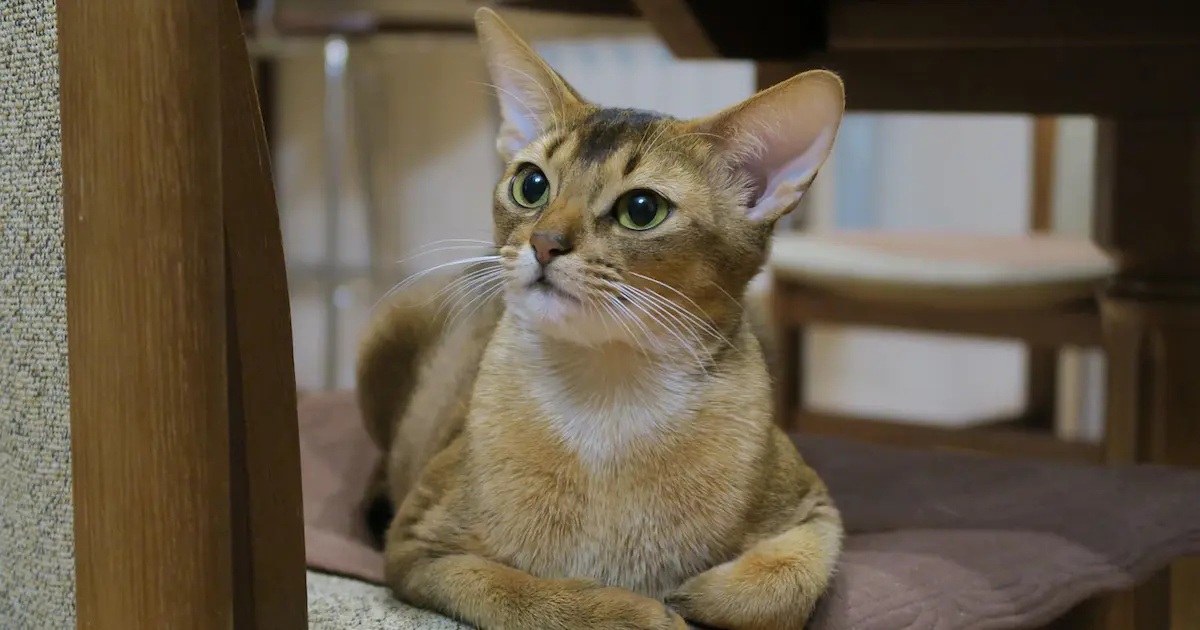
The first thing people notice is the coat, and once you’ve seen it up close you’ll understand the fuss. Each hair carries several bands of color, light then dark, light then dark, which is called ticking. The effect is a warm, shimmering coat that seems to glow when the light hits it. It’s the same pattern you see on a wild rabbit or a cougar, which is exactly why an Aby can look like a miniature wildcat that wandered in off the savanna.
There are four main colors you’ll come across: Ruddy (a deep warm brown, the classic look), Sorrel (a softer cinnamon red), Blue (a cool gray), and Fawn (a pale, milky tan). By the way, breed standards frown on white patches, so a true show Aby won’t have a white locket on its chest, though a tiny bit near the chin or throat sometimes slips through.
Beyond the coat, you’re looking at a lean, athletic body with long legs, big alert ears that tilt forward, and large almond eyes in gold or green. Those eyes come rimmed with a fine dark line, like someone went at them with eyeliner. They didn’t. It’s just the breed.
Kittens look a bit gangly and their ticking takes time to fill in, so don’t panic if your young Aby looks patchy or dull at first. The coat keeps developing for months, and the full grown-up shimmer is worth the wait.
Living With an Abyssinian: The Real Personality
If cats came with a single-word warning label, the Aby’s would read “RELENTLESS.” In the best way.
This is one of the smartest, busiest, most curious cats you can share a home with. People call them the clowns of the cat world, and others compare them to a Border Collie because they think, problem-solve, and need a job. Your Aby will open cabinets, fish toys out from under the couch, follow you room to room, and supervise every single thing you do, including your trips to the bathroom. Privacy is a concept they reject.
They’re deeply attached to their people, more like a dog than the aloof-cat stereotype. But here’s the honest part: that attachment usually shows up as company, not cuddles. An Aby would rather sit beside you, on the back of your chair, or on your shoulder than curl up in your lap for an hour. Plenty of owners go in expecting a snuggler and feel a little stung at first. Adjust the expectation and you’ll love what you actually get.
They’re talkers too, but quiet ones. Instead of loud meows, Abys tend to chirp and trill, soft little sounds they save for when they have something to tell you. And trust me, they always think they have something to tell you.
Is the Abyssinian Right for You?
This is the section most breed posts skip, so let’s actually do it. An Aby is a fantastic cat for the right home and a frustrating one for the wrong fit.
An Abyssinian is probably right for you if:
- You want an interactive, playful cat who acts like a furry shadow
- Someone is home a good chunk of the day, or you can provide a companion
- You’re happy to offer vertical space and daily play
- You like a chatty, involved pet and don’t mind a cat on the counter
An Abyssinian is probably not right for you if:
- You’re picturing a calm lap cat who naps all day
- You work long hours and the cat would be alone and solo
- You want a quiet, low-engagement pet that mostly keeps to itself
- Open shelves of breakables are non-negotiable in your home
Here’s the thing: an under-stimulated Aby doesn’t just get sad, it gets into trouble. Bored Abys chew, shred, and find creative new ways to test gravity with your belongings. The energy is going somewhere whether you direct it or not.
Should You Get One Aby or Two?
If you take one piece of advice from this whole guide, make it this one.
Abyssinians are intensely social and they do not handle long stretches of solitude well. A single Aby in an empty house all day is a recipe for stress, overgrooming, and destruction. If your home is quiet for eight or nine hours at a stretch, seriously consider adopting two.
A pair will chase, wrestle, groom, and nap together, and they’ll burn off energy on each other that would otherwise land on your curtains. Plenty of experienced Aby owners will tell you the second cat made the first one easier, not harder. It’s not double the trouble. Often it’s half.
Health Issues to Know About
Abys are generally hardy cats with long lives, but the breed carries a few inherited conditions worth understanding before you bring one home. Knowing these also helps you spot a responsible breeder, because good ones screen for them.
Progressive Retinal Atrophy (PRA). This is a genetic eye condition where the retina slowly breaks down, leading to night blindness first and eventually full vision loss. It’s painless, and cats adapt surprisingly well to a familiar home, but there’s no cure. The upside: a DNA test exists, so reputable breeders can screen parents and avoid passing it on.
Pyruvate Kinase Deficiency (PK-Def). This affects an enzyme red blood cells need for energy, which can cause anemia. It’s recessive, so a kitten only gets sick if both parents carry the gene. Many affected cats have mild, occasional episodes, sometimes not noticed until they’re older. There’s a genetic test for this one too, so always ask to see results.
Renal amyloidosis. This is the one to take seriously, and the one a lot of breed sites quietly leave out. Abnormal proteins build up in the kidneys and can lead to kidney failure, sometimes in cats under five years old. There is no genetic test for it yet, which makes a breeder’s honesty about their lines genuinely matter. Watch for increased thirst, weight loss, and frequent urination, and get regular bloodwork as your cat ages.
Patellar luxation and hip issues. For such an acrobatic cat, the Aby can be prone to slipping kneecaps and hip joint problems, which may cause limping or, over time, arthritis. Keeping your cat lean takes a lot of pressure off those joints.
Overgrooming (psychogenic alopecia). This is behavioral, not genetic, and it ties straight back to that social personality. A stressed or lonely Aby may lick itself bald in patches. It’s often a signal that the cat needs more company or stimulation, not just a medical fix.
Grooming and Care
The good news is that grooming an Abyssinian is almost suspiciously easy. That short, close-lying coat doesn’t mat and doesn’t shed much, so you’re not signing up for daily brushing battles.
A quick brush once a week keeps the coat glossy and removes loose hairs, and most Abys actually enjoy the attention since it’s time with you. Add the usual basics: nail trims every couple of weeks, a peek in those big ears to check for wax, and dental care, which matters more than people think. Brushing your cat’s teeth or using vet-approved dental treats helps head off the gum problems that plague a lot of cats later in life.
Feeding and Diet
Abys are little engines, and they need fuel to match. Go for a high-protein, meat-first food, since cats are true carnivores and this breed burns through energy fast.
A mix of wet and dry food works well for most Abys. Wet food keeps them hydrated and supports kidney health, which matters a lot given the amyloidosis risk, while a bit of dry food helps with dental wear and convenience. Watch the portions, though. Despite all that activity, an Aby can still tip into overweight, and extra pounds make those knee and hip issues worse. Measured meals beat leaving a full bowl out all day.
Exercise and Enrichment
This is where Aby ownership is won or lost, so let’s make it practical.
Your goal is to give all that energy somewhere productive to go. Think vertical and think variety. Abys are climbers and leapers by nature, so the single best thing you can do is build them an indoor jungle: tall cat trees, wall shelves, and perches near windows so they can survey their kingdom.
Aim for two solid play sessions a day, even ten minutes each. Wand toys, feather teasers, and a classic laser pointer (followed by a toy they can actually catch, so they don’t get frustrated) all hit the mark. Puzzle feeders are gold for an Aby’s busy brain, turning dinner into a problem to solve. Rotate toys so they stay novel, because a clever cat gets bored of the same mouse fast.
If you’re tight on floor space, go up the walls. And honestly, a sturdy tall cat tree pays for itself in saved curtains.
Frisco 72-Inch Tall Cat Tree
A floor-to-near-ceiling tower with multiple perches and posts that gives a climbing-obsessed Aby a legal place to satisfy the urge. The height matters here, since this breed wants to be up high watching everything.
Abyssinians With Kids, Dogs, and Other Cats
Socially, the Aby is a winner, and this is one of the breed’s real strengths.
With kids, they tend to do beautifully. Their playful, sturdy, game-for-anything nature matches well with children who know how to be gentle, and an Aby will often seek out the most active person in the house. As always, teach kids to respect the cat’s limits, but this isn’t a breed that hides under the bed all day.
With dogs, Abys often get along great, especially with calm, cat-friendly dogs. That dog-like confidence means they’re not easily intimidated, and many Abys and dogs become genuine playmates. Introduce them slowly and supervise early on, but the odds are good.
With other cats, the Aby usually thrives, which loops back to that companion question. A confident, social Aby paired with another active cat is often a happy household. Just give every cat its own resources, food, water, litter, and perches, to keep the peace.
Lifespan and Aging Tips
Abyssinians commonly live 12 to 15 years, and plenty sail well past that with good care. To get there, lean on a few habits.
Keep up with yearly vet visits, and once your cat hits middle age, ask about bloodwork to catch kidney trouble early, since that’s the breed’s soft spot. Keep your Aby at a lean weight to protect the joints. As they age, the leaping slows down a touch, so add lower steps or ramps to their favorite high spots so an older Aby can still reach its throne without a risky jump. Mental stimulation matters at every age, so keep those puzzle toys and play sessions going even into the senior years.
How Much Does an Abyssinian Cost?
Let’s talk money, because the sticker price is only the beginning.
A pet-quality Abyssinian kitten from a reputable breeder usually runs between $900 and $2,000, and in some markets you’ll see prices push past $2,400. Show-quality kittens with champion bloodlines climb higher still, often $1,500 to $3,500 or more. If you adopt from a shelter or breed rescue, expect something in the $50 to $250 range, often with vaccinations and spay or neuter already done.
Then come the ongoing costs. Budget roughly $200 to $500 up front for the basics: litter box, carrier, bowls, scratching posts, and that all-important cat tree. After that, food, litter, and routine vet care make up most months, with the occasional bigger bill when something unexpected comes up. It’s smart to set aside a small cushion or look into pet insurance, especially given the breed’s inherited risks.
Where to Find an Abyssinian Ethically
How you get your Aby matters, both for the cat and for your peace of mind.
A responsible breeder will happily show you health-test results for PRA and PK-Def, let you meet the kitten’s parents or at least the mother, keep kittens until around 12 weeks, and ask you plenty of questions in return. Good breeders care where their cats land.
Watch out for red flags: a “breeder” who always has kittens available, won’t share health testing, ships cats sight unseen, or pressures you to pay fast. Suspiciously cheap purebred kittens often come from places cutting corners on health. And don’t overlook rescue. Breed-specific rescues and adoption sites do place Abys, and an adult cat with a known personality can be a wonderful match.
Similar Breeds to Consider
If the Aby’s energy gives you pause, or you just want to compare, here are a few cats in the same neighborhood:
- Somali: Basically a long-haired Abyssinian, same playful personality with a fluffier coat and plumed tail.
- Oriental Shorthair: Sleek, chatty, and people-obsessed, for someone who wants even more conversation.
- Bengal: Another wild-looking, high-energy athlete, but with a bolder spotted coat and even bigger exercise needs.
- Siamese: Equally social and vocal, though far louder, with a strong attachment to their humans.
- Egyptian Mau: Active and elegant, a good pick if you love a spotted coat and a busy mind.
Common Myths and Misconceptions
Myth: Abyssinians are ancient Egyptian cats. It’s a romantic idea fueled by their resemblance to cats in Egyptian art, but genetic evidence points to Southeast Asia, not the Nile.
Myth: They’re rare and exotic. Abys are uncommon enough that you won’t see one on every block, but they’re consistently among the more popular registered breeds, not some unicorn.
Myth: Short coat means low effort overall. Grooming is easy, sure. But the energy and social needs make this a higher-effort cat than many fluffy breeds. The work is mental, not the brush.
Myth: They’re hypoallergenic. No cat truly is. Abys shed less, which can help mild allergy sufferers, but they still produce the proteins that trigger reactions.
Frequently Asked Questions
Q: Are Abyssinian cats cuddly lap cats?
Not usually. Abyssinians are affectionate and deeply bonded to their people, but they show it by following you around and staying near you rather than curling up in your lap. If you want a sit-still snuggler, this isn’t the breed.
Q: Are Abyssinian cats hypoallergenic?
No cat is fully hypoallergenic. Abyssinians shed less than many breeds, so they may bother people with mild allergies less, but they still produce the Fel d1 protein that causes reactions. Spend time around one before committing.
Q: Are Abyssinian cats rare?
They’re uncommon but not rare. The Abyssinian regularly ranks among the more popular pedigreed breeds with registries like the CFA, so you’ll likely need a breeder or breed rescue rather than stumbling on one at a shelter.
Q: Do Abyssinian cats get along with dogs?
Often very well. Their confident, dog-like nature means they’re rarely intimidated, and many Abys become genuine playmates with calm, cat-friendly dogs. Introduce them slowly and supervise the first interactions.
Q: How much does an Abyssinian cat cost?
Expect $900 to $2,000 for a pet-quality kitten from a reputable breeder, with show-quality cats running higher. Adoption through a rescue or shelter typically costs $50 to $250 when an Aby is available.
Q: Are Abyssinian cats high maintenance?
Grooming is low maintenance thanks to the short coat, but the breed is high maintenance in energy and attention. They need daily play, vertical space, and ideally company, or they get bored and destructive.
Q: How long do Abyssinian cats live?
Most Abyssinians live 12 to 15 years, and many go beyond that with good care. A high-quality diet, a lean weight, and regular vet checkups, especially kidney monitoring as they age, all help extend their years.
Q: Do Abyssinian cats need a companion?
If your home is empty for long hours, yes, a companion is strongly recommended. Abys are very social and prone to stress and overgrooming when left alone too much. A second active cat often keeps a single Aby far happier.
Final Verdict: Should You Get an Abyssinian?
So here’s the bottom line on the Abyssinian cat.
If you want a calm, low-key companion who melts into your lap, keep looking. But if you want a brilliant, funny, endlessly curious cat who’ll greet you at the door, learn your routines, supervise your every move, and keep you laughing for fifteen years, the Aby is hard to beat.
Give it height, give it play, give it company, and be honest with yourself about your lifestyle. Get those right, and an Abyssinian won’t just live in your home. It’ll run the place, and you’ll be glad it does.

Hello and welcome to The Ideal Cat!
We are some passionate cat owners from different professions. We love our cats and have a lot of experience in how to care for our pets. We are incredibly excited to share our knowledge, experience, and research with you. So you can take good care of your loving cat. We will answer most of the common questions about owning cats, taking care of them, etc. If you have any question contact with us. Thanks for visiting! Enjoy the content.
)