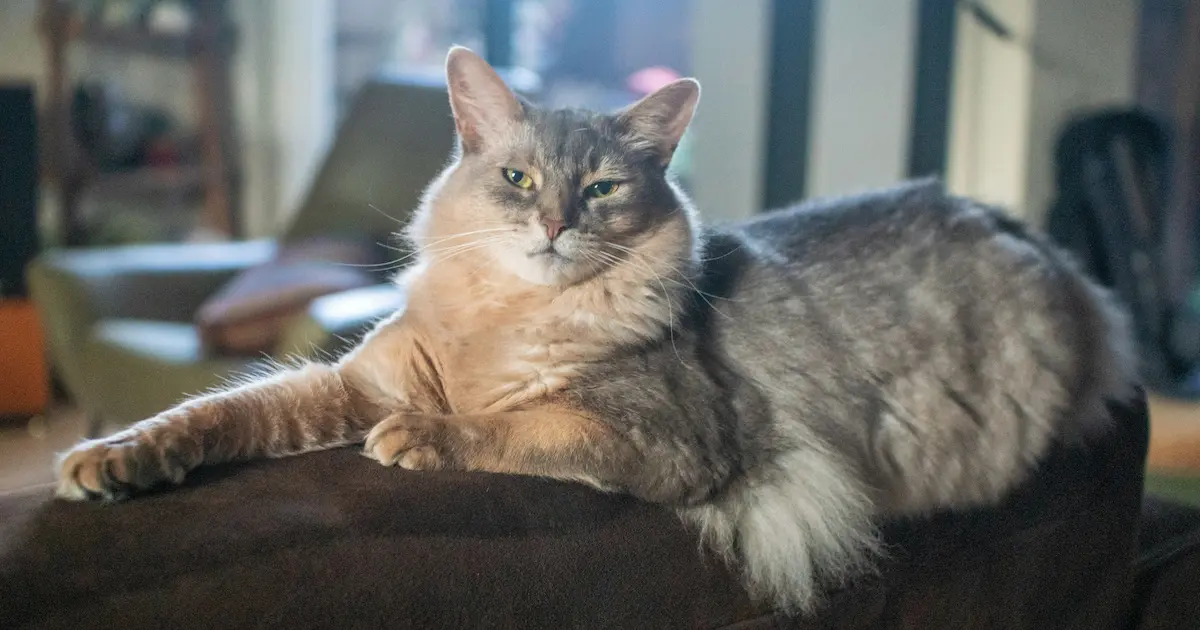
You walk into the kitchen and a cupboard door is hanging open. Nothing’s been eaten. A treat bag has just been relocated to the floor, neatly, like evidence in a tiny crime. Sitting on top of the fridge, tail wrapped around its paws like a fox in a children’s book, is your cat. It looks very pleased with itself.
Welcome to life with a Somali cat.
If you’ve fallen for those plumed tails and warm, ticked coats, you’re in good company. The Somali is one of the most charming cats you can share a home with. It’s also busier, smarter, and needier than a lot of people expect. This guide walks you through exactly what living with one is like, including the parts most breed pages skip.
| Origin | North America, developed from Abyssinian stock (mid-20th century) |
| Weight (Male) | 8 to 12 lbs |
| Weight (Female) | 6 to 10 lbs |
| Lifespan | 12 to 16 years |
| Coat | Semi-longhair, fine and soft, ticked (agouti) pattern with a neck ruff and tail plume |
| Colors | Ruddy, sorrel (red), blue, fawn, plus silver variants in some registries |
| Energy Level | High |
| Grooming Needs | Low to Moderate |
| Good With Kids | Yes, with supervision |
| Good With Other Pets | Yes, with a slow introduction |
| Average Price | $1,000 to $3,000 from a reputable breeder |
Where the Somali Cat Came From
Here’s the short version: the Somali is the long-haired cousin of the Abyssinian. Same body, same ticked coat, same restless brain, just with extra floof.
The fluff didn’t arrive on purpose. Back in the 1940s, British breeder Janet Robertson shipped Abyssinian kittens out to Australia, New Zealand, and North America. Every so often, those bloodlines produced kittens with longer, fuzzier coats. For years, breeders treated these long-haired babies as a mistake and quietly rehomed them as pets.
One person decided they weren’t a mistake at all. American breeder Evelyn Mague started working with these long-haired Abyssinians in the 1960s and gave them a name: Somali. Since Somalia borders Ethiopia (the country once called Abyssinia), the name was a clever nod to a cat that was clearly related but standing on its own.
It took patience to get there. The Cat Fanciers’ Association began registering Somalis in 1976 and granted the breed full championship status in 1979. The International Cat Association recognized them the same year, with European and broader international acceptance following through the 1980s and into the early 1990s. Today the Somali is a respected breed worldwide, even if it stays relatively rare.
What a Somali Cat Actually Looks Like
The first thing people notice is the tail. It’s full, soft, and waves behind the cat like a fox brush. That single feature is why “fox cat” stuck as a nickname, and once you’ve seen it in motion, you’ll get why.
The coat is the real signature, though. Somalis have a ticked pattern, which means each individual hair carries several bands of color from base to tip. Show standards like to see at least four to six bands on a single strand. That banding is what gives the coat its glowing, almost shimmering depth in sunlight. It’s soft and fine, never woolly, with a fuller ruff around the neck and little “britches” of longer fur on the back legs.
Body-wise, they’re medium and athletic. Long legs, small oval paws, a gently wedge-shaped head, and big ears tipped forward like they’re always listening for the next interesting noise. The eyes are large and almond-shaped, ringed with darker fur and pale “spectacles,” usually in amber, hazel, or green.
The main coat colors are ruddy (a warm reddish-brown ticked with black), sorrel or red (a softer cinnamon tone), blue (a muted slate), and fawn (a gentle pinkish cream). Some registries also recognize silver versions of these.
One thing that surprises new owners: Somali kittens look almost plain at first. The ticking and the famous tail plume take time. Don’t be discouraged if your fuzzy kitten doesn’t look like the magazine photos yet. The full coat and rich color can take up to a year and a half to come in, and the body keeps filling out until around three years old.
Living With a Somali: The Real Personality
If you want a cat that lies on a cushion and admires you from across the room, this isn’t your breed. The Somali is a doer.
These cats are clever in a way that’s genuinely fun and occasionally exhausting. They figure out cupboard latches, fish toys out from under the couch, and learn the sound of the treat drawer faster than you’d like. Give a Somali a puzzle feeder and it’ll treat it like a part-time job.
They’re also deeply social, which catches some people off guard. A Somali wants to be wherever you are, supervising. The good news is they get on beautifully with other cats, gentle dogs, and respectful kids. The catch is that they don’t do well as a forgotten cat in a quiet house. More on that in a second, because it matters.
Now, the affection. Somalis love you intensely, but many of them aren’t classic lap cats. They’d rather sit beside you, ride around on your shoulder, or “help” with whatever you’re doing than be scooped up and held still. Trust me, once you stop trying to cuddle them on your terms and let them come to you, you’ll get plenty of love.
And the voice? This is where Somalis pleasantly surprise Siamese-wary owners. They do talk, but it’s soft, chirpy, and quiet. You’ll get trills and little questions, not the loud, demanding yowling some vocal breeds are famous for.
Is a Somali Cat Right for You?
This is the question most breed pages dance around, so let’s be honest about it. A Somali is a wonderful cat for the right home and a frustrating one for the wrong home.
A Somali is probably right for you if:
- Someone’s home a good chunk of the day, or you have another pet for company.
- You actually enjoy interactive play and don’t mind a cat that wants in on your activities.
- You can offer vertical space: shelves, a tall cat tree, room to climb.
- You want a smart, engaged companion and find mischief charming rather than annoying.
A Somali is probably the wrong choice if:
- You’re out of the house ten-plus hours a day with no second pet. Somalis can become genuinely depressed and anxious when left alone too much.
- You want a calm, low-energy cat that mostly sleeps.
- You prefer a tidy home with nothing knocked off shelves, ever.
- You’re not able to commit to play and enrichment most days.
Here’s the thing: the single most common regret from Somali owners isn’t grooming or cost. It’s underestimating how much company and stimulation these cats need. Get that part right and most of the rest takes care of itself.
Health Issues Every Somali Owner Should Know About
Somalis are generally healthy, athletic cats that often live well into their teens. But like every purebred, they carry a few breed-linked conditions, and one of them is worth understanding in detail before you buy a kitten.
Pyruvate kinase (PK) deficiency. This is the big one for the breed, and it’s the thing most guides barely mention. PK deficiency is an inherited blood disorder. The cat lacks enough of an enzyme that keeps red blood cells healthy, so those cells break down early and the cat can develop anemia. Signs include tiredness, weakness, pale gums, poor appetite, weight loss, and sometimes a yellowish tint to the eyes or skin. It’s inherited in an autosomal recessive way, which means a kitten needs two copies of the faulty gene to be affected.
Here’s why this matters so much to you as a buyer: the Somali (along with its Abyssinian cousin) has one of the highest carrier rates of any breed, the disease can stay hidden for years, and there’s a simple, reliable DNA test for it. A responsible breeder tests their breeding cats and only pairs them so that no kitten can be born affected. This is the first question you should ask any Somali breeder. We’ll come back to it in the sourcing section.
Progressive retinal atrophy (PRA). This is an inherited eye condition where the light-sensing cells in the retina slowly break down, eventually causing blindness. The good news is there’s also a DNA test for the form seen in this breed line, so ethical breeders screen for it.
Renal amyloidosis. This is a kidney problem that runs in some Abyssinian and Somali lines, where abnormal protein deposits damage the kidneys over time. There’s no simple gene test for it yet, so you can’t screen it away with a swab. What you can do is ask the breeder whether there’s any history of kidney disease in their lines.
Dental disease. Like a lot of fine-boned breeds, Somalis can be prone to gingivitis and tartar buildup. Regular tooth brushing at home and a yearly dental check go a long way here.
None of this should scare you off. A Somali from a careful breeder is usually a robust, long-lived cat. The point is simply this: with this breed, the breeder’s testing habits matter more than almost anything else.
Grooming and Coat Care
Good news, because this is where people worry the most. That gorgeous coat looks high-maintenance, but it really isn’t.
The Somali’s fur is fine and silky, not the dense, woolly, mat-prone coat you find on a Persian. There’s no thick undercoat fighting you. For most of the year, a thorough brush once or twice a week keeps it soft, tangle-free, and shiny. A simple comb and a soft slicker brush are all you need.
Twice a year, usually spring and fall, expect a heavier shed. During those weeks, daily brushing or a quick pass with a de-shedding tool keeps the loose fur off your couch and out of your cat’s stomach (which means fewer hairballs, too). Outside of those seasons, Somalis shed less than you’d guess for a long-haired cat.
You won’t need regular baths. Somalis are tidy self-groomers, and an occasional bath every few months is plenty if your cat will tolerate it. Don’t forget the basics either: trim nails every couple of weeks, peek inside those big ears, and keep up with dental care.
Feeding Your Somali
Somalis don’t need a fancy breed-specific diet, but they do best on quality food built around real animal protein. Cats are obligate carnivores, so look for a complete, balanced food where named meat or fish leads the ingredient list, not fillers.
Because these cats are so active, most keep a trim figure naturally, as long as you’re not free-feeding endless dry food. A mix of wet and dry, or a measured amount split into a couple of meals, works well. Wet food also helps with hydration, which is kind on the kidneys (relevant for a breed with some kidney-disease risk in certain lines).
Watch portions as your cat ages and slows down. An older, less acrobatic Somali needs fewer calories, and extra weight is hard on the joints and organs. Always keep fresh water available, and many Somalis love a pet fountain because, naturally, moving water is more interesting than still water.
Exercise and Keeping That Busy Brain Happy
A bored Somali is a destructive Somali. That’s not a threat, just physics. These cats have energy and brains to burn, and if you don’t give them an outlet, they’ll invent one involving your curtains.
Plan for a couple of real play sessions a day. Wand toys, feather teasers, and anything they can chase and “catch” are favorites. Rotate toys so they stay novel, and lean into their cleverness with puzzle feeders and treat balls that make them work for a reward.
Vertical space is non-negotiable. Somalis are climbers and jumpers who love being up high, surveying their kingdom. A tall, sturdy cat tree, a few wall shelves, or a window perch will make a Somali far happier than another floor-level toy. Clicker training and simple tricks also work brilliantly with this breed, since they’re quick learners who love the attention.
Somalis With Kids, Dogs, and Other Cats
This is one of the breed’s strengths. Somalis are sociable by nature and usually adapt well to a busy household.
With other cats, they often thrive. In fact, a second cat is one of the best ways to keep a Somali company when you can’t be home. With dogs, especially calm, cat-friendly ones, they tend to get along great, sometimes becoming genuine playmates. The agile Somali can usually stay a step ahead of a dog anyway.
With kids, Somalis are playful and tolerant, which makes them a good family cat. That said, supervise young children, as you would with any cat. A Somali wants to play, not be squeezed or carried around, so teaching kids to interact gently keeps everyone happy.
The golden rule with any new pairing is a slow introduction. Separate spaces at first, then scent swapping, then short supervised meetings. Rush it and you risk a rocky start. Take your time and most Somalis settle in fast.
Lifespan and Caring for an Aging Somali
With good care, Somalis commonly live 12 to 16 years, and plenty reach the upper end of that. Genetics, diet, weight, dental health, and regular vet care all stack the odds in your favor.
As your cat moves into its senior years, usually around age ten or eleven, you’ll notice it slowing down a little. Keep an eye out for changes in appetite, thirst, weight, or litter box habits, since these can be early hints of age-related issues like kidney trouble. Senior cats benefit from twice-yearly vet visits rather than annual ones, because catching problems early makes a real difference.
Make small adjustments as they age. Lower-sided litter boxes, a step up to favorite perches, and cozy warm spots help a stiffer, older Somali stay comfortable. The play instinct usually never fully fades, so keep offering gentle games. It keeps their mind sharp and their spirit young.
How Much Does a Somali Cat Cost?
Let’s talk money, because the Somali isn’t a budget cat, and there’s a scam you need to know about.
From a reputable breeder, expect to pay roughly $1,000 to $3,000 for a Somali kitten, with around $1,800 being a fair average. Kittens from show-winning lines or rarer colors can climb higher, sometimes to $4,000 or $5,000. The breed is genuinely uncommon, so you may also face a waitlist of several months. That wait is a good sign, not a red flag.
Here’s the warning: if you see a “Somali kitten” advertised for $200 to $500, be very careful. Legitimate, health-tested Somalis simply don’t cost that little. Bargain listings, especially on social media, are often from backyard or pop-up breeders who skip the DNA testing this breed needs. You might save money up front and pay for it many times over in vet bills and heartbreak.
Don’t forget the ongoing costs either. Quality food, litter, toys, enrichment, routine vet care, and the occasional dental cleaning add up to a meaningful yearly budget. Pet insurance is worth considering with this breed, given its handful of inherited conditions. One smart middle path: some breeders rehome retired adults for a few hundred dollars. You skip the wild kitten phase and get a fully vetted cat, often with years of love left to give.
Finding a Somali Cat Ethically
Because Somalis are rare and carry real genetic risks, where you get yours matters enormously. A great breeder is your best protection against the health problems we talked about earlier.
When you contact a breeder, here’s what a good one looks like:
- They DNA test for PK deficiency and PRA. Ask directly: “Are both parents tested for pyruvate kinase deficiency, and can I see the results?” A responsible breeder will be glad you asked. A defensive or vague answer is your cue to walk away.
- They’re honest about kidney-disease history in their lines. Since renal amyloidosis can’t be DNA tested, this comes down to the breeder knowing and sharing their cats’ family history.
- They let you visit or video-call to see how the cats and kittens are raised. Kittens should be clean, social, and well handled, living in the home rather than in cages.
- They don’t release kittens too early. Twelve weeks is a reasonable minimum, with first vaccinations done.
- They ask you questions too. A breeder who cares where their kittens go is a breeder worth buying from.
Rescue is also possible, just rarer. Purebred Somalis don’t show up in shelters often, but breed-specific rescues and Abyssinian/Somali rescue networks do exist, and retired breeding cats are a lovely option. Avoid any seller pushing for a quick deposit, shipping a kitten sight unseen, or dodging health questions.
Somali vs Abyssinian and Other Similar Breeds
The obvious comparison is the Abyssinian. Genetically, the Somali basically is a long-haired Abyssinian, so they share the same lithe build, ticked coat, and lively personality. If you love the Aby’s energy but want a softer, fuller look with that fox tail, the Somali is your cat. Prefer lower grooming and a sleeker silhouette? The Abyssinian might suit you better.
If the Somali sounds close but not quite right, here are a few alternatives worth a look:
- Abyssinian: The short-haired original. Same brains and bounce, less coat.
- Oriental Longhair: Sleek, vocal, and people-oriented for those who want even more chatter and elegance.
- Singapura: A small, ticked-coat charmer with similar warmth in a tinier package.
- Turkish Angora: Silky semi-long fur and a playful, athletic streak.
- Bengal: If you love the wild look and high energy, though Bengals are even more demanding.
Common Myths About Somali Cats
A few stubborn myths follow this breed around. Let’s clear them up.
“Somalis are hypoallergenic.” Nope. No cat truly is. Somalis still produce the Fel d 1 protein that triggers allergies, and they still shed. If you’re allergic, spend time around the breed before committing.
“It’s just a long-haired Abyssinian, so it’s not a real breed.” The coat length comes from a recessive gene, but the Somali is a recognized breed in its own right, with its own standard and decades of dedicated breeding behind it.
“That coat will be a nightmare to maintain.” Honestly one of the most overblown worries. With no woolly undercoat, a brush once or twice a week handles it outside of shedding season.
“Somalis are loud like Siamese.” They’re chatty but soft-spoken. You’ll hear gentle trills, not relentless yowling.
“They came from Somalia.” The name is a geographic nod to Abyssinia’s neighbor, nothing more. The breed was actually developed in North America.
Somali Cat FAQ
Q: Are Somali cats good for first-time owners?
They can be, as long as you’re ready for an active, social cat. Somalis aren’t difficult to care for, but they need company and daily play. A busy household or a home with another pet suits them best.
Q: Do Somali cats shed a lot?
Less than you’d expect for a semi-longhaired cat. They shed moderately most of the year, with two heavier shedding seasons in spring and fall. Weekly brushing keeps it under control.
Q: Are Somali cats hypoallergenic?
No. Like all cats, they produce the Fel d 1 allergen and shed dander. If you have cat allergies, spend time with the breed before bringing one home.
Q: How much does a Somali cat cost?
Expect $1,000 to $3,000 from a reputable breeder, averaging around $1,800. Show or rare-color lines can cost more. Listings under $500 are a warning sign of unhealthy or untested kittens.
Q: How long do Somali cats live?
Most Somalis live 12 to 16 years, and many reach the upper end with good care. Diet, healthy weight, dental care, and regular vet visits all help maximize their lifespan.
Q: Are Somali cats affectionate?
Very, but often on their own terms. Many prefer sitting beside you or riding on your shoulder over being held. They bond closely with their people and dislike being left alone for long stretches.
Q: Can Somali cats be left alone all day?
Not happily. Somalis are highly social and can become bored, anxious, or even depressed when alone too long. A companion pet or someone home during the day makes a big difference.
Q: What’s the main health issue in Somali cats?
Pyruvate kinase (PK) deficiency, an inherited blood disorder, is the standout concern. There’s a reliable DNA test, so always ask your breeder whether both parents were screened for it.
The Final Verdict: Should You Get a Somali?
The Somali cat is a stunner with a personality to match: clever, playful, affectionate, and endlessly curious. If you want a cat that participates in your life rather than just decorating it, few breeds are this rewarding.
Just go in with open eyes. This is a cat that needs your time, your attention, and ideally some company when you’re out. It’s a cat whose breeder’s testing habits genuinely affect its health for life. And it’s a cat that costs real money to buy and to care for well.
Get those pieces right, and you’ll have one of the most engaging companions in the cat world curled up (or, more likely, climbing) in your home for the next decade and a half. If that sounds like exactly your kind of chaos, the Somali might be the perfect cat for you.

Hello and welcome to The Ideal Cat!
We are some passionate cat owners from different professions. We love our cats and have a lot of experience in how to care for our pets. We are incredibly excited to share our knowledge, experience, and research with you. So you can take good care of your loving cat. We will answer most of the common questions about owning cats, taking care of them, etc. If you have any question contact with us. Thanks for visiting! Enjoy the content.
