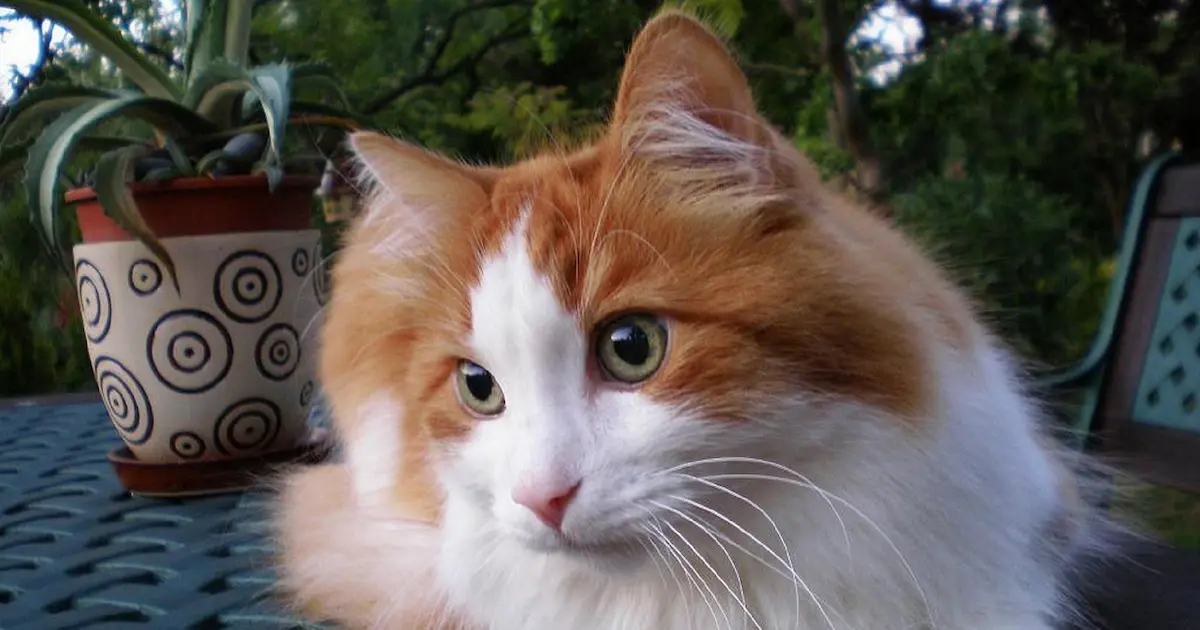
Picture a cat that almost didn’t make it. By the early 1900s, the Turkish Angora had been crossbred so heavily into Persian lines that it nearly vanished as its own breed. The cat you see today exists because a zoo in Turkey decided to step in and save it.
That’s right. One of the most elegant cats on the planet was rescued by a zoo breeding program. If that doesn’t earn your respect, the cat’s personality will.
Here’s the thing about the Turkish Angora though. It’s beautiful, yes, but it’s also loud, busy, and a little bit bossy. Before you fall for those silky looks, let’s talk about what life with one actually feels like.
| Origin | Turkey (Ankara region), documented since the 1500s |
| Weight (Male) | 7 to 12 lbs |
| Weight (Female) | 5 to 8 lbs |
| Lifespan | 12 to 18 years |
| Coat | Long, fine, silky, single-coated (no undercoat) |
| Colors | White (iconic), plus black, blue, red, cream, tabby, tortoiseshell, calico, bicolor, smoke |
| Energy Level | High |
| Grooming Needs | Low to Moderate |
| Good With Kids | Yes, with gentle, respectful kids |
| Good With Other Pets | Yes, with slow intros (likes to run the show) |
| Average Price | $1,000 to $2,000 from breeders |
The Cat That a Zoo Saved: Turkish Angora History
The Turkish Angora is one of the oldest natural cat breeds we know of. It developed on its own in the Ankara region of central Turkey, which used to be called Angora. That’s where the name comes from, and it’s the same place that gave us Angora rabbits and goats.
This is a natural breed, not something humans designed in a lab. Written mentions of these long-haired cats go back to the 1500s, and many cat historians believe the Angora may be the ancestor of all long-haired cats in Europe. Pretty wild for a cat that now naps on your bookshelf.
Then came the near-disaster. In the early 1900s, breeders leaned hard on Angoras to build up the Persian breed. So much so that the Angora almost disappeared as a distinct cat. The Ankara Zoo in Turkey started a careful breeding program to protect it, and the breed is still considered a national treasure there today.
Angoras reached the United States in the 1950s. The Cat Fanciers’ Association began registering them in the late 1960s, gave white Angoras full recognition in 1972, and accepted colored Angoras in 1978. TICA and most major registries recognize the breed now too.
What a Turkish Angora Actually Looks Like
People often compare the Angora to a ballerina, and it fits. This is a fine-boned, graceful cat with a wedge-shaped head, big pointed ears, and a long tail that fans out like a plume. Don’t let the delicate look fool you though. Underneath that flowing coat is a firm, surprisingly muscular little athlete.
The coat is the part everyone gets wrong. Angoras have a single coat with no thick undercoat, so the fur is silky and lies close to the body. It looks like a lot of maintenance, but it really isn’t (more on that later).
Coat colors and those famous eyes
White is the color everyone pictures, and it’s the one Turkey prized for centuries. But Angoras come in plenty of other colors: black, blue, red, cream, tabby, tortoiseshell, calico, smoke, and bicolor patterns. If someone tells you a “real” Angora has to be white, they’re wrong.
The eyes can be just as striking. You’ll see blue, green, amber, gold, and copper. Some Angoras have odd eyes, meaning one blue eye and one of another color. It’s gorgeous, and as you’ll see in the health section, it also matters for their hearing.
Kittens vs adults
Angora kittens look almost scrawny and a little gangly. The full plume tail and that flowing coat take time to fill in. Here’s a patience note: this breed can take up to about two years to truly mature into its adult body. So if your kitten looks lean and leggy, that’s normal.
Living With a Turkish Angora: The Real Personality
Now for the part that actually decides whether you two will be happy together. The Angora is smart, busy, and deeply attached to its people. It wants to be wherever you are, watching what you do, often from the highest point in the room.
These cats are talkers. They chirp, trill, and meow their opinions all day long, and they expect a reply. Honestly, if you live alone, an Angora is a built-in roommate who narrates your life back to you.
But here’s the honest catch most breed sites skip: the Angora is usually not a classic lap cat. It loves you fiercely, it just shows it on its own terms. Instead of melting into your lap for an hour, your Angora is more likely to supervise you from the top of the fridge, then dash down for a play session.
They also tend to pick a favorite. One person in the house often becomes “their” human, the one they shadow from room to room. They’re friendly with the rest of the family and even with guests, but the bond with their chosen person runs deep.
One more thing you have to know. Angoras hate being alone. Leave one by itself for long days on repeat and you’ll likely see stress, boredom, and trouble. A bored Angora invents its own entertainment, and you won’t love the results.
Is a Turkish Angora Right for You?
Let’s be real instead of salesy. This breed isn’t for everyone, and that’s fine. Use this quick gut-check.
A Turkish Angora is a great fit if you:
- Are home a lot, or have another pet to keep your cat company
- Want an interactive, playful cat that engages with you
- Don’t mind a chatty cat with strong opinions
- Are okay with a climber and can offer high perches
- Enjoy a cat with a bit of attitude and a lot of charm
You might want a different breed if you:
- Work long hours away from home with no second pet
- Dream of a quiet, sleepy lap cat that cuddles for hours
- Want a calm, low-energy companion
- Prefer a cat that keeps all four paws on the floor
- Need total silence (this is not your cat)
Trust me, matching the cat to your real life matters more than matching it to a pretty photo. An Angora in the wrong home is a frustrated cat, and that’s not fair to either of you.
Turkish Angora Health Issues to Know About
The good news is that Angoras are generally healthy and often live well into their teens. But this is a natural breed with a few inherited concerns, and you deserve the full picture before you bring one home.
Congenital deafness (the white-and-blue-eyes connection)
This is the big one, and almost nobody explains it clearly, so let’s fix that. The same dominant gene that makes an Angora pure white can also affect how the inner ear develops. When white fur pairs with blue eyes, the risk of being born deaf goes up a lot.
Here’s the plain-English version:
- White cats with two blue eyes: highest risk of deafness, often estimated well above half.
- Odd-eyed white cats (one blue eye): often deaf only in the ear on the same side as the blue eye.
- White cats without blue eyes, and colored Angoras: much lower risk.
So if hearing is a worry for you, a colored Angora or a white one with green or amber eyes sidesteps most of the risk. Easy.
And please hear this part: a deaf cat is not a broken cat. Deafness doesn’t shorten an Angora’s life or dull its spirit. A deaf Angora simply needs to live indoors (or in a secure catio), respond to visual cues like a flicked light or a wave, and get a gentle heads-up before you touch a sleeping cat so you don’t startle it. They thrive. They just can’t hear the can opener.
Hypertrophic cardiomyopathy (HCM)
HCM is the most common heart disease in cats overall, and it shows up in some Angora lines too. It thickens the heart muscle and makes the heart work harder than it should. It often appears in cats somewhere between about two and six years old, and males tend to be affected more often.
Early on there may be no signs at all. A vet sometimes catches it as a heart murmur during a routine checkup. Watch for things like low energy, poor appetite, fast or labored breathing, or sudden weakness in the back legs, and get to a vet quickly if you see them. Good breeders screen their cats, which is exactly why where you get your kitten matters so much.
Hereditary ataxia
This one is rare but serious. Hereditary ataxia is a neurological condition that affects very young kittens, usually around two to four weeks old, causing shaky, uncoordinated movements. Sadly, affected kittens don’t survive to adulthood. Responsible breeders screen their lines carefully to keep it out, which keeps it uncommon.
Weight management
Angoras are fine-boned, so extra weight puts real strain on that delicate frame. Keeping your cat lean isn’t about looks. It’s one of the simplest things you can do to protect its joints and overall health for the long haul.
Grooming and Coat Care (the Easy Part)
Here’s a pleasant surprise. That dramatic coat is one of the lowest-maintenance long coats in the cat world. Because Angoras have no dense undercoat, the fur resists matting and doesn’t shed nearly as much as you’d expect.
A good combing once or twice a week is usually plenty. It keeps the coat glossy, controls loose hair, and gives you a nice few minutes of bonding. During seasonal shed periods you may want to comb a touch more often, but that’s about it.
The rest is standard cat care: keep nails trimmed, peek in the ears now and then, and stay on top of dental health. If you brush a kitten gently from day one, grooming stays a non-event for life.
A simple stainless steel comb is really all you need for this coat. A wide-tooth comb glides through the silky fur without tugging, and it reaches the skin better than a basic brush on a single-coated cat.
Feeding Your Turkish Angora
Angoras don’t need a fancy special diet, but they’re active cats, so quality fuel helps. Cats are true carnivores, so look for a food built around real animal protein with a named meat (like chicken or turkey) at the top of the list.
Pick a complete and balanced food that matches your cat’s life stage, whether that’s kitten, adult, or senior. A mix of wet and dry can be a smart combo. Wet food boosts water intake, which is great for kidney and urinary health, while a bit of dry food is convenient and easy to portion.
Watch the portions. Because Angoras are slender by design, it’s easy to let a food-motivated cat creep into chubby territory. Measure meals, go easy on treats, and let your vet weigh in on the right amount for your specific cat.
Exercise and Enrichment: The Climbing Cat
If there’s one thing you remember from this whole guide, make it this: Angoras need to climb. They are natural acrobats who want the highest spot in any room. Give them legal high places, or they’ll claim the curtains, the cabinets, and the top of your wardrobe.
A tall cat tree is basically required gear. So are wall shelves, window perches, and anything that lets your cat survey its kingdom from above. The taller, the better.
These are clever cats too, so their brains need work, not just their legs. Wand toys, puzzle feeders, and short daily play sessions keep them happy and out of trouble. Fun fact: many Angoras can learn to fetch and even walk on a harness, so leaning into that smarts pays off.
Living With Kids, Dogs, and Other Cats
Angoras are social, and that usually makes them good family cats. With kids, they do best alongside children who already know how to be gentle and respectful. This isn’t a cat that will tolerate rough handling, and its fine bones mean play needs to stay kind.
With dogs and other cats, Angoras often get along fine, especially with slow, patient introductions. Just know your Angora will almost certainly decide it’s in charge. It likes to be the boss of the household animal crew, and other pets tend to go along with it.
One caution worth repeating for deaf white Angoras: a deaf cat can’t hear an approaching dog or a running toddler. Extra supervision and a few quiet retreat spots keep everyone safe and relaxed.
Lifespan and Aging Tips
With good care, Turkish Angoras commonly live 12 to 18 years, and plenty hit the upper end of that range. To get there, the basics matter more than anything fancy: a quality diet, a healthy weight, regular vet visits, and steady companionship.
As your Angora ages, keep an eye on heart health given the breed’s HCM link, and ask your vet about checkups that listen for murmurs. Older cats may slow down a little, but many Angoras stay playful and nosy well into their senior years.
Make life easy for aging joints. Lower a few of those favorite high perches, add soft landing spots, and keep food, water, and the litter box easy to reach. A senior Angora still wants to be near you, just with a comfier setup.
How Much Does a Turkish Angora Cost?
A Turkish Angora kitten from a good breeder usually runs about $1,000 to $2,000. Price swings with the breeder’s reputation, your location, the kitten’s lineage, and color or eye patterns. Show-quality or odd-eyed white kittens can sit at the higher end.
The sticker price is just the start though. Plan for the real cost of owning one: quality food, litter, annual vet care, and the gear this breed actually needs, like a sturdy cat tree and plenty of toys. Pet insurance is worth a look too, especially given the HCM risk.
Be wary of “bargain” Angoras. A suspiciously cheap kitten, a seller who won’t show you health screening, or someone pushing a quick cash sale are all red flags. Cutting corners on the breeder often means paying far more later in vet bills and heartache.
Where to Find a Turkish Angora Ethically
Because this is a rare breed, you’ll mostly be choosing between a reputable breeder and the occasional rescue. Both can be wonderful. The key is doing it the right way.
With a breeder, look for someone who screens for HCM and ataxia, lets you meet the kittens and ideally a parent, raises the cats inside the home, and asks you plenty of questions in return. Good breeders care where their kittens land. TICA’s site, for example, lists breeders who’ve signed its code of ethics, which is a useful starting point.
Rescue is also possible. Purebred Angoras are rare in shelters, but breed-specific rescues exist, and shelters sometimes label fluffy white cats as Angoras. Even a non-purebred lookalike can be the perfect companion, so keep an open mind.
Avoid kitten mills, random online sellers with no paperwork, and anyone who treats a living animal like a quick transaction. If it feels off, walk away.
Similar Breeds to Consider
Not totally sold on the Angora? Here are a few cats with overlapping charms:
- Turkish Van: another Turkish beauty, bigger and famous for sometimes liking water.
- Oriental Longhair: sleek, chatty, and very people-focused, with similar energy.
- Balinese: a long-haired, vocal, intelligent cat with that same velcro streak.
- Ragdoll: if you want the long coat but crave a calm, cuddly lap cat instead.
- Siamese: talkative, smart, and deeply bonded, just in a short-haired package.
Common Myths and Misconceptions
This breed collects myths like its coat collects sunbeams. Let’s clear up the big ones.
Myth: All Turkish Angoras are white. Nope. White is iconic, but Angoras come in black, blue, red, cream, tabby, tortoiseshell, and more.
Myth: All Angoras are deaf. Not true. Deafness is tied to the white-and-blue-eyes combo. Colored Angoras and non-blue-eyed cats face much lower risk.
Myth: That long coat is high-maintenance. Actually one of the easiest long coats around, thanks to the lack of an undercoat. Weekly combing covers it.
Myth: They’re aloof and standoffish. Far from it. Angoras are people magnets. They’re just not always lap-sitters, which is a different thing.
Myth: They’re hypoallergenic. No cat truly is, and the Angora is no exception. They shed less than many breeds, but they still produce the proteins that trigger allergies.
Turkish Angora FAQ
Q: Are Turkish Angoras good pets for first-time owners?
Yes, as long as you can give them attention and stimulation. They’re smart, friendly, and engaging, but they don’t like being left alone all day, so they suit homes where someone is around or there’s a second pet.
Q: Are Turkish Angoras lap cats?
Usually not in the cuddly, sit-still-for-hours sense. They bond closely and want to be near you, but they often show love by following and supervising rather than sitting in your lap.
Q: Do Turkish Angoras shed a lot?
Less than you’d think for a long-haired cat. With no dense undercoat, they shed moderately and rarely mat. A combing once or twice a week keeps loose hair in check.
Q: Why are some Turkish Angoras deaf?
The dominant white gene can affect inner-ear development, especially when paired with blue eyes. White, blue-eyed Angoras have the highest deafness risk, while colored Angoras are largely unaffected.
Q: Are Turkish Angoras talkative?
Very. They chirp, trill, and meow throughout the day and expect you to chat back. If you want a silent cat, this isn’t the breed for you.
Q: How big do Turkish Angoras get?
They’re small to medium cats. Males usually weigh about 7 to 12 pounds and females around 5 to 8 pounds, with a slender, fine-boned build under all that fur.
Q: How long do Turkish Angoras live?
Commonly 12 to 18 years with good care. A healthy weight, quality diet, and regular vet visits give your cat the best shot at the upper end of that range.
Q: Do Turkish Angoras get along with dogs?
Often yes, with patient introductions. Just expect your Angora to act like the boss of the household. Many do fine with cat-friendly dogs as long as everyone has space.
Final Verdict: Should You Get a Turkish Angora?
The Turkish Angora is living history with a mischievous streak. It’s a graceful, chatty, athletic cat that will shadow you, talk to you, and rule your home from the highest shelf it can find. For the right person, that’s pure joy.
So be honest with yourself. If you want company, conversation, and an interactive sidekick, and you can offer attention plus things to climb, the Turkish Angora will reward you with years of devotion. If you wanted a quiet lap cat, you’ll both be happier with a different match.
Get one for the right reasons, source it from someone who screens for health, and you’ll end up with a smart, beautiful, deeply bonded friend. The Turkish Angora isn’t just a pretty cat. It’s a personality you get to live with, and that’s the best part.

Hello and welcome to The Ideal Cat!
We are some passionate cat owners from different professions. We love our cats and have a lot of experience in how to care for our pets. We are incredibly excited to share our knowledge, experience, and research with you. So you can take good care of your loving cat. We will answer most of the common questions about owning cats, taking care of them, etc. If you have any question contact with us. Thanks for visiting! Enjoy the content.
)