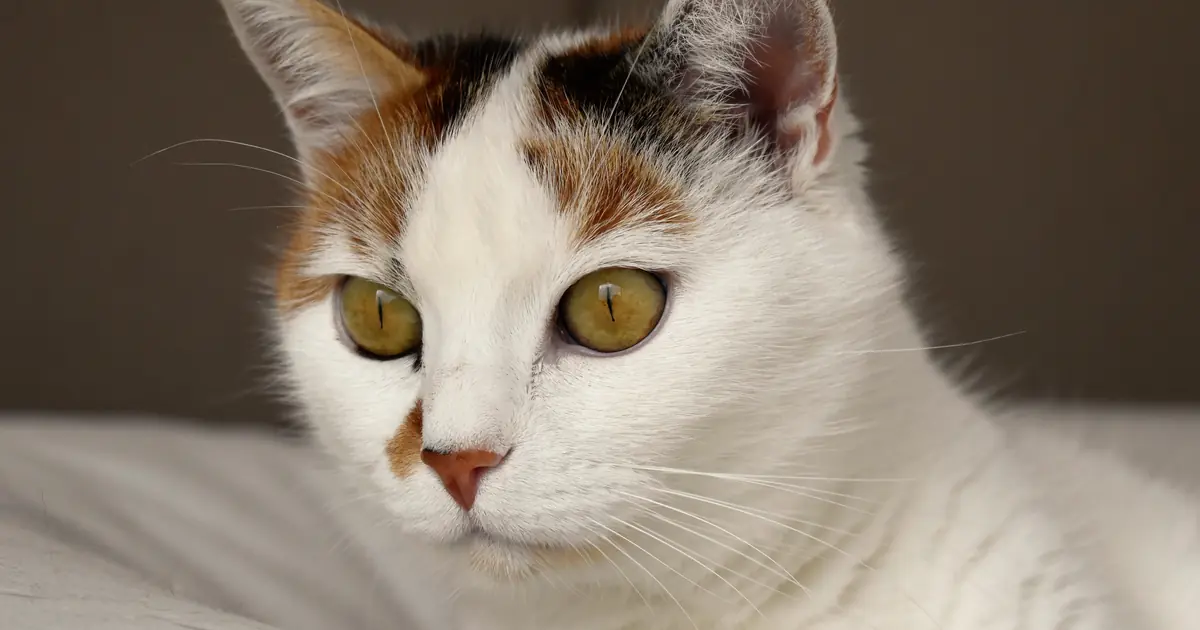
Picture this: you’re scrolling through kitten photos and someone asks “what breed is that calico?” and you freeze, because you genuinely don’t know. You’re not alone. It’s one of the most common mix-ups in the cat world, and honestly, it’s an easy one to make. That patchwork of orange, black, and white looks so distinctive it seems like it has to be its own breed.
Here’s the truth: calico cats are defined by their coat, not their pedigree. Any cat with the right genes, whether a scrappy barn cat or a pedigreed Persian, can end up wearing a calico coat. And the genetics behind it are honestly some of the coolest biology in the whole cat world, tied directly to why almost every calico you’ll ever meet is a girl.
- Calico is a coat pattern (white plus orange and black patches), not a breed. Many breeds, and mixed-breed cats, can be calico.
- About 99.9 percent of calico cats are female because the orange and black color genes live on the X chromosome, and it takes two X chromosomes to show both colors at once.
- Male calicos are rare, roughly 1 in 3,000, and almost always have an extra X chromosome (XXY), a condition that leaves most of them sterile.
- The “tortitude” reputation, the idea that calico and tortoiseshell cats have sassier personalities, is popular folklore, not something science has proven.
- Maryland made the calico its official state cat in 2001, and calico cats inspired Japan’s maneki-neko “lucky cat” figurine.
What Makes a Cat a Calico?
A calico cat is any cat with a coat that’s mostly white with solid patches of orange (also called red) and black scattered across it. Some calicos show the diluted versions of those colors instead: cream instead of orange, and blue-gray instead of black. Either way, you need all three colors present, white plus two others, for a coat to count as true calico.
The patches themselves are random. No two calico cats have the same pattern, which is part of the charm. Some cats are mostly white with a few bold patches, others look like a black-and-orange cat that got splashed with white paint. Groomers and vets sometimes call this a “particolor” or “tricolor” coat, and if you ever want to keep that pattern looking sharp, regular brushing with the right cat brush helps prevent mats where those color patches meet.
Is Calico a Cat Breed?
No, calico is not a breed. It’s a coat color pattern that can show up in dozens of breeds, plus plenty of mixed-breed cats, as long as the cat carries the right combination of color genes. Think of it the way you’d think of “tabby”: it describes what the coat looks like, not who the cat’s parents were.
Breeds that can produce calico cats include the American Shorthair, Persian, Maine Coon, Japanese Bobtail, Manx, and Cornish Rex, among others. A few breed standards, like the Persian, even have an official calico division for cat shows. But most calicos you’ll meet at a shelter are domestic shorthair or domestic longhair moggies with no pedigree at all, and that’s perfectly fine. The pattern doesn’t care about paperwork.
Why Are Almost All Calico Cats Female?
Almost all calico cats are female because the genes for orange and black fur sit on the X chromosome, and showing both colors at once requires two X chromosomes. Female cats have two X chromosomes (XX), so they can carry both the orange gene and the black gene, one on each X. Male cats normally have just one X and one Y (XY), so they can only inherit one color gene and end up either orange or black, never both.
Here’s where it gets neat. In every cell of a female cat’s body, one of her two X chromosomes gets randomly switched off early in development, a process called X-inactivation. In some cells the X carrying orange stays active, in others the X carrying black does. The result is a coat with patches of both colors, plus white from a separate gene that blocks color from developing in certain spots. According to Cornell Feline Health Center, this X-linked inheritance is exactly why coat color genetics in cats are tied so closely to sex. If you’re curious how this same genetics plays out in kittens, our guide to raising a calico kitten walks through what to expect as those patches fill in.
Can a Male Cat Be Calico?
Yes, but it’s rare: roughly 1 in every 3,000 calico cats is male. Most male calicos have an extra X chromosome, making them XXY instead of the usual XY, a condition similar to Klinefelter syndrome in humans. That extra X gives them enough genetic material to show both orange and black, the same way a female’s two X chromosomes do.
The catch is that XXY male calicos are almost always sterile, because the extra chromosome disrupts normal sperm development. A much smaller number of male calicos, estimated at roughly 1 in 10,000, are fertile. These cats are usually chimeras or mosaics: they have a normal XY makeup in their reproductive tissue, but a patch of genetically different cells elsewhere in their body created the calico coat. Either way, if you ever come across a male calico, you’re looking at a genuine rarity worth a mention at the vet’s office.
Calico vs. Tortoiseshell vs. Tabby: What’s the Difference?
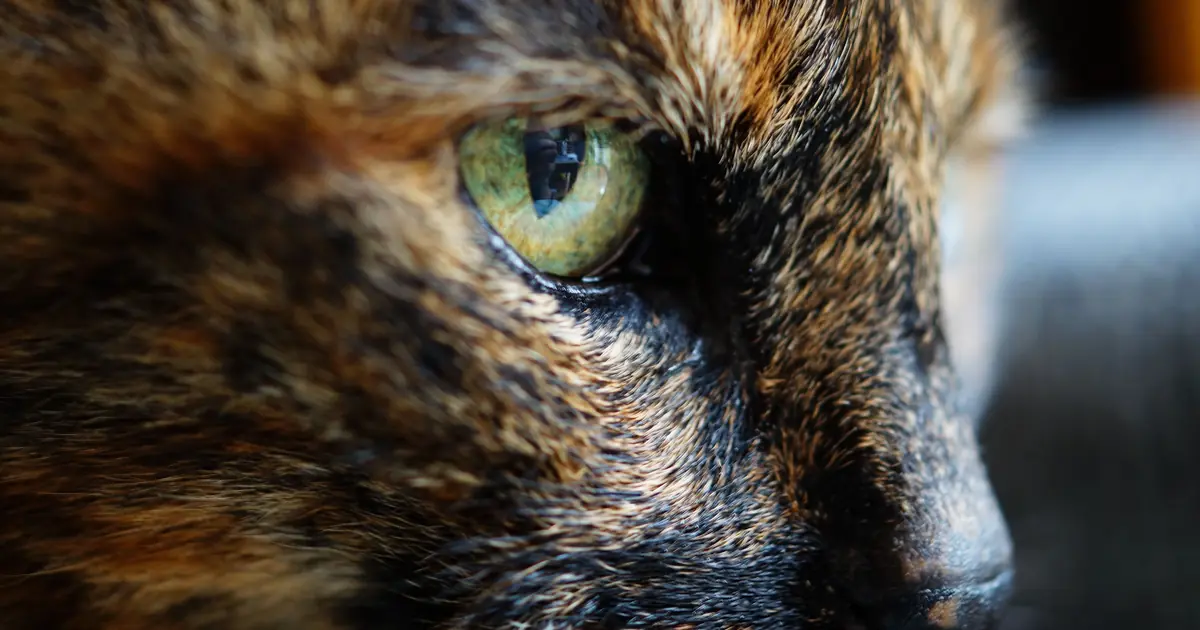
Calico, tortoiseshell, and tabby are three separate coat patterns, and the easiest way to tell them apart is by color count and shape. Calico has three colors, including white, in solid patches. Tortoiseshell (often shortened to “tortie”) has two colors, orange and black, mottled together without much or any white. Tabby refers to a striped, spotted, or swirled pattern that can appear in almost any base color, including within a calico or tortie’s patches.
A calico cat can technically be thought of as a tortoiseshell with white patches added in, which is why the two get confused so often. Tabby is a different axis entirely: it describes the pattern of the marking, not the number of colors, so you can have an orange tabby, a gray tabby, or even a “torbie,” a tortoiseshell cat with tabby striping mixed into its patches.
| Pattern | Colors | White Present? | Typical Look |
|---|---|---|---|
| Calico | White, orange (or cream), black (or blue-gray) | Yes, always | Bold solid patches of three colors |
| Tortoiseshell | Orange and black (or cream and blue) | Rare, minimal if any | Mottled, marbled two-color coat |
| Tabby | Any base color | Varies | Stripes, spots, or swirls |
Do Calico Cats Really Have a Sassier Personality?
There’s no proven scientific link between a calico coat and personality. The idea of “calico attitude” or “tortitude,” the reputation that calico and tortoiseshell cats are more independent, feisty, or opinionated, is a widely repeated bit of cat folklore, not something backed by controlled research.
One 2015 survey out of UC Davis did find that a lot of cat owners describe their tortoiseshell and calico cats as more challenging or feisty, which is probably where the reputation gets its staying power. But a survey of owner impressions isn’t the same as proof that coat color drives behavior. Personality in cats comes down to a mix of genetics, early socialization, and individual temperament, way more than fur color. According to International Cat Care, temperament in cats is shaped largely by kittenhood experiences and handling, not coat pattern. So go ahead and enjoy the “tortitude” jokes. Just don’t expect them to predict how your specific cat will act.
Do Calico Cats Have Any Special Health Issues?
No, calico cats don’t have any health problems tied to their coat pattern itself, and they live the same normal lifespan as any other cat of their breed, typically 12 to 18 years with good care. The calico pattern is purely cosmetic, a result of which X chromosome switched off in which patch of skin, and it doesn’t affect organs, immunity, or life expectancy.
The one group worth watching more closely is male calicos, since the XXY chromosome condition that usually causes their coat can sometimes come with other health considerations, similar to Klinefelter syndrome in people. If you have a male calico, it’s worth mentioning that to your vet so they know his full picture. For every calico, regardless of sex, routine wellness checkups matter more than coat color ever will. The ASPCA recommends annual vet visits for adult cats and twice-yearly visits for seniors, which is good general advice no matter what your cat’s coat looks like.
Can Calico Cats Have Kittens, and What Determines Their Coat?
Yes, female calico cats can absolutely have kittens, and their fertility works exactly like any other female ca
t’s. What gets interesting is that a calico mother won’t necessarily have calico kittens. Coat color in kittens depends on the genes contributed by both parents, so a litter from a calico mom can include solid black kittens, orange kittens, tabbies, or more calicos, depending on what the father carries and how X-inactivation plays out in each kitten.
Because the color genes ride on the X chromosome, a calico female needs a father who carries at least one orange gene for any of her daughters to have a shot at being calico too, and sons can only be calico in the rare XXY scenario described above. If you’re weighing whether to breed or adopt out a calico female, our guide on calico cat fertility and the female-skew genetics breaks down the odds in more detail.
Fun Facts About Calico Cats
Calico cats have earned a genuine spot in culture, not just as pretty pets but as symbols of luck and identity in a few different places.
- Maryland made the calico its official state cat in 2001, chosen because its orange, black, and white coloring echoes the colors of the state bird (Baltimore oriole) and state insect (Baltimore checkerspot butterfly).
- The Japanese maneki-neko, the beckoning “lucky cat” figurine you’ve probably seen in restaurant windows, is traditionally modeled on a calico Japanese Bobtail and is believed to bring good fortune.
- Sailors historically considered calico cats good luck aboard ships, partly for their rarity and partly for old superstitions about tricolor cats warding off bad weather.
- The eye colors of calico cats vary widely, from green to gold to blue, and coat pattern has no bearing on which eye color a kitten ends up with. If you’re curious about the range, our breakdown of what eye colors cats can have covers it.
Frequently Asked Questions About Calico Cats
Q: Are calico cats a specific breed?
No, calico describes a tricolor coat pattern, not a breed. Cats of many breeds, including the American Shorthair, Persian, and Maine Coon, plus plenty of mixed-breed cats, can carry the calico pattern.
Q: Why are calico cats almost always female?
The orange and black color genes sit on the X chromosome, and showing both colors requires two X chromosomes. Female cats have two X chromosomes, so around 99.9 percent of calico cats are female.
Q: Can male calico cats exist?
Yes, but they’re rare, about 1 in 3,000 calico cats. Most male calicos have an extra X chromosome (XXY) and are almost always sterile as a result.
Q: What’s the difference between a calico cat and a tortoiseshell cat?
Calico cats have three colors including white in solid patches, while tortoiseshell cats have two colors, orange and black, mottled together with little or no white. A calico is essentially a tortie pattern with white added in.
Q: Do calico cats have a special personality or “tortitude”?
There’s no proven scientific link between coat color and personality. The “calico attitude” reputation is popular folklore based on owner impressions, not controlled research.
Q: Do calico cats have any health problems related to their coat?
No, the calico pattern itself doesn’t cause health issues, and calico cats have a normal lifespan of 12 to 18 years. Male calicos with XXY chromosomes can have other health considerations worth mentioning to a vet.
Q: Why is the calico cat considered lucky?
In Japan, the calico pattern is traditional for the maneki-neko “lucky cat” figurine, believed to bring good fortune. Sailors historically also considered calico cats lucky aboard ships.
Q: Is the calico cat an official state symbol anywhere?
Yes, Maryland designated the calico cat as its official state cat in 2001, chosen because its coloring matches the state bird and state insect.

Hello and welcome to The Ideal Cat!
We are some passionate cat owners from different professions. We love our cats and have a lot of experience in how to care for our pets. We are incredibly excited to share our knowledge, experience, and research with you. So you can take good care of your loving cat. We will answer most of the common questions about owning cats, taking care of them, etc. If you have any question contact with us. Thanks for visiting! Enjoy the content.
