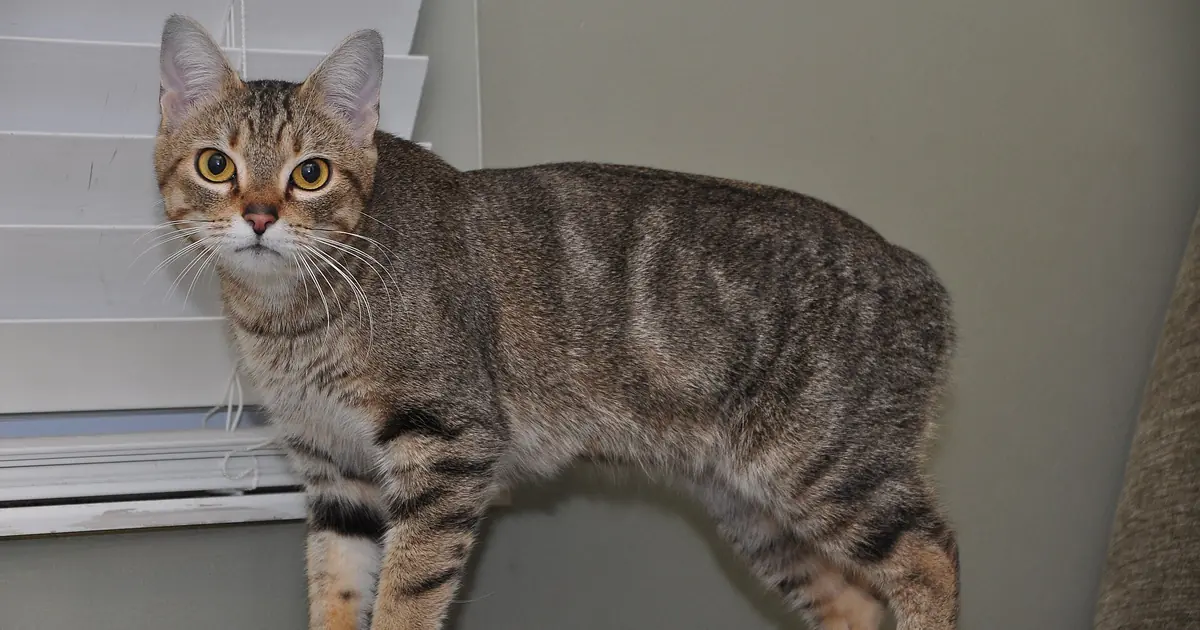
Picture a cat with no tail, powerful back legs, and a hop that looks more rabbit than feline, trotting over to drop a toy at your feet for a game of fetch. That’s the Manx, and once you meet one, you don’t forget it.
Famous for its missing tail and clownish charm, the Manx is one of the most distinctive cat breeds in the world. Here’s what makes them special, what they’re like to live with, and the one health issue every future Manx owner should understand.
- The Manx is a naturally tailless cat breed that originated on the Isle of Man.
- Not every Manx is fully tailless, tails range from none (“rumpy”) to nearly full length.
- Manx cats are playful, loyal, and often described as dog-like, even learning to fetch.
- The tailless gene can cause Manx syndrome, a serious spinal condition that shows up from birth.
- Manx cats typically weigh 8 to 12 pounds and live about 10 to 14 years.
What is a Manx cat?
A Manx cat is a tailless or short-tailed breed that developed naturally on the Isle of Man, a small island between England and Ireland. With no large landmass around it, a tailless mutation spread through the island’s cat population over generations, giving us the rounded, taillless cat we know today. The breed is one of the oldest recognized natural breeds, and it’s been a beloved companion for centuries.
The Manx look is unmistakable: a compact, muscular body, a rounded head, a broad chest, and back legs noticeably longer than the front ones. Those long hind legs give the Manx its signature bunny-hop gait.
Why do Manx cats have no tail?
Manx cats have no tail because of a natural genetic mutation that affects tail development, not because of any breeding trick or docking. The gene is dominant, so it passes easily from parent to kitten. But it doesn’t act the same in every cat, which is why Manx tails come in a whole range of lengths.
Breeders even have nicknames for the variations:
- Rumpy: completely tailless, with a small dimple where a tail would be
- Rumpy riser: a small rise of bone under the fur
- Stumpy: a short, stubby partial tail
- Longy: a nearly full-length tail
If you love the short-tailed look, the Manx isn’t the only option. The American Bobtail and the Japanese Bobtail both sport naturally short tails from separate genetics.
What is the Manx cat’s personality like?
Manx cats are playful, people-oriented, and famously dog-like in how they bond with their families. They tend to follow their humans around, greet you at the door, and stay involved in whatever you’re doing. Many Manx will play fetch, learn simple tricks, and even come when called.
They’re also known for a clownish, mischievous streak. Manx are quick learners, which makes them fun to play with but also means they can figure out door handles and cupboards. They generally get along well with children and other pets, so they slot nicely into busy family homes. If you want a cat that acts like a shadow and a comedian rolled into one, the Manx delivers.
Manx cat health: what is Manx syndrome?
Manx syndrome is the most important health issue in the breed, and every future owner should understand it. Because the same gene that shortens the tail also affects the spine, some Manx are born with a spine and spinal cord that are too short. According to PetMD, this can disrupt the nerves that control the back legs, bladder, and bowel.
Severity varies widely. Mild cases may only affect a cat’s ability to jump, while serious cases can cause loss of bladder or bowel control, or hind-leg problems. The reassuring part: Manx syndrome is present from birth and shows up early, usually within the first few months. It doesn’t suddenly appear in a healthy adult, so a Manx that’s fine as a kitten isn’t going to develop it later. Responsible breeders screen for it and often wait to place kittens until they’re a few months old.
Manx cats can also be prone to corneal dystrophy, an eye condition that typically appears around 4 months of age. Overall, the breed lives about 10 to 14 years. As with any cat, keep up with regular vet checkups and stay current on parasite prevention to protect their health.
How do you care for a Manx cat?
Caring for a Manx is much like caring for any active, social cat, with a little extra attention to weight and enrichment. Their sturdy build can tip into pudgy if they overeat, so measured meals of quality food matter. Keep them busy with puzzle toys and play, since a bored Manx will invent its own (often naughty) entertainment.
- Diet: Feed a complete, balanced food and watch portions to prevent weight gain.
- Grooming: A weekly brush handles most coats; the long-haired variety (sometimes called the Cymric) needs more.
- Enrichment: Fetch, puzzle feeders, and climbing spots keep that clever brain happy.
- Vet care: Choose a breeder who screens for Manx syndrome, and keep up with routine checkups.
Curious how the Manx stacks up against other breeds? You might also enjoy our guides to the gentle-giant Maine Coon and the talkative Siamese.
Manx cat FAQ
Q: Are all Manx cats completely tailless?
No. Manx tails range from fully absent (a “rumpy”) to a short stub (a “stumpy”) to nearly full length (a “longy”). Only the fully tailless ones fit the classic show standard, but all are Manx.
Q: Do Manx cats make good pets?
Yes. Manx are affectionate, playful, and family-friendly, often getting along with kids and other pets. Their dog-like loyalty makes them a favorite for people who want an interactive cat.
Q: How much does a Manx cat cost?
A Manx kitten from a reputable breeder typically ranges from several hundred to over a thousand dollars, depending on lineage and tail type. Adopting through a rescue is usually far less.
Q: Are Manx cats hypoallergenic?
No. Manx cats are not hypoallergenic. No breed is truly allergy-free, though some produce fewer allergens. See our guide on hypoallergenic cat breeds for lower-allergen options.
Q: What is a Cymric cat?
A Cymric is the long-haired version of the Manx. It shares the same tailless body and personality but has a longer, plush coat that needs more frequent grooming.
Q: How long do Manx cats live?
Manx cats generally live about 10 to 14 years. Good nutrition, a healthy weight, and regular veterinary care all help them reach the upper end of that range.
The bottom line: the Manx is a charming, tailless character with the heart of a lapdog and the antics of a clown. If you go through a responsible breeder who screens for Manx syndrome, you’ll get one of the most engaging, loyal companions in the cat world.
Featured image: Michelle Weigold, CC BY-SA 4.0, via Wikimedia Commons.

Hello and welcome to The Ideal Cat!
We are some passionate cat owners from different professions. We love our cats and have a lot of experience in how to care for our pets. We are incredibly excited to share our knowledge, experience, and research with you. So you can take good care of your loving cat. We will answer most of the common questions about owning cats, taking care of them, etc. If you have any question contact with us. Thanks for visiting! Enjoy the content.
