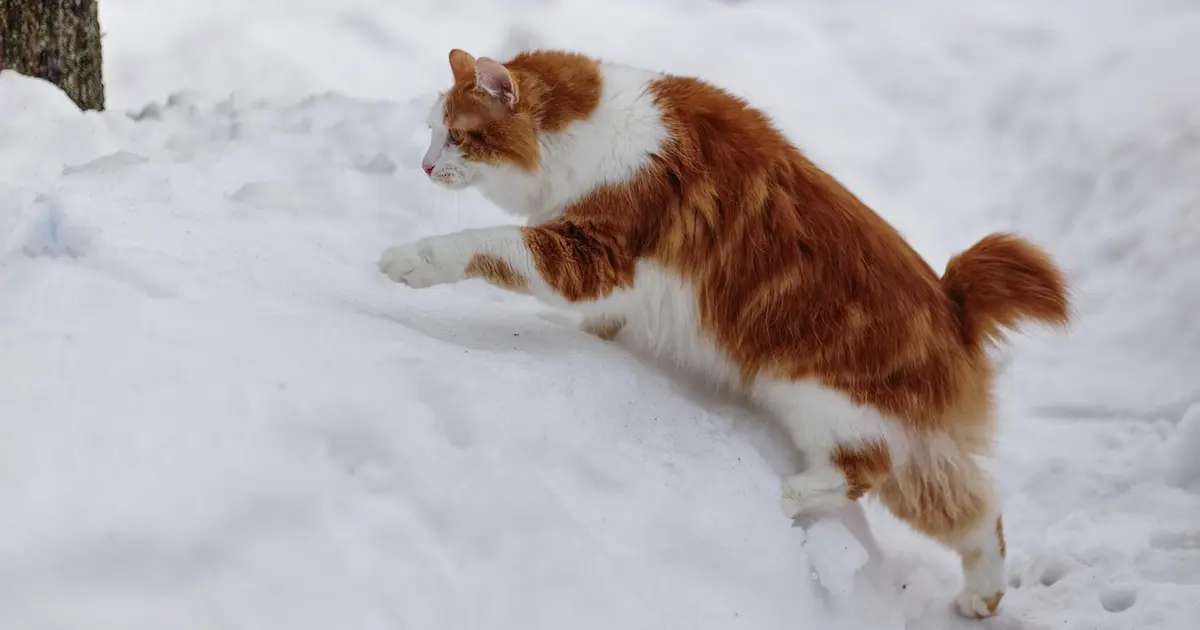
Picture this. A cat strolls across your living room looking like it just wandered off a desert ridge, all muscle, alert eyes, and a stubby little tail. Then it flops onto your lap, chirps at you, and refuses to leave your side for the rest of the night.
That’s the American Bobtail in a nutshell. Wild on the outside, total softie on the inside.
People often call this breed the “Golden Retriever of cats,” and honestly, it’s a fair nickname. So before you fall for that rugged face, let’s talk about what living with one is actually like.
American Bobtail Breed Stats at a Glance
| Origin | United States, late 20th century (1960s) |
| Weight (Male) | 12 to 16 lbs |
| Weight (Female) | 7 to 11 lbs |
| Lifespan | 13 to 18 years |
| Coat | Double coat, short or semi-long |
| Colors | Any color or pattern, with or without white |
| Energy Level | Moderate to High |
| Grooming Needs | Low to Moderate |
| Good With Kids | Yes |
| Good With Other Pets | Yes |
| Average Price | $600 to $1,200 from breeders (more for longhairs) |
Where the American Bobtail Came From
This breed has a fun origin story, and it starts with a road trip. Sometime in the late 1960s, a couple named John and Brenda Sanders were traveling through Arizona. They came across a scrappy brown tabby kitten with a naturally short tail and took him home to Iowa.
His name was Yodie. When Yodie had a litter with the family’s colorpoint female, the kittens inherited that signature stubby tail. Word got out, other breeders got curious, and a new breed was born.
Here’s the part most guides skip. The early breeding got messy. Too much inbreeding left those first cats fragile and unhealthy. So around 1980, breeders hit reset and started a fresh program, this time pulling in feral domestic cats that had short tails of their own. Widening the gene pool gave the breed the sturdy health it’s known for today.
The hard work paid off. The International Cat Association recognized the American Bobtail in the late 1980s, and the Cat Fanciers’ Association granted full championship status in 2000. Both short-haired and long-haired versions are accepted.
What an American Bobtail Looks Like
The first thing you notice is that this cat looks like it could survive in the wild. It can’t, by the way. It’s a complete couch potato at heart. But the look is real.
American Bobtails are muscular and substantial, with a broad chest, slightly arched back, and strong hind legs. Males usually land between 12 and 16 pounds, while females sit around 7 to 11. They’re heavier than they look when you pick them up.
The head is broad and wedge-shaped with prominent cheeks, a strong chin, and a brow that gives them that focused, hunter’s gaze. Pair that with the bobbed tail and you get a cat that resembles a shrunken lynx.
The coat comes in two lengths. Shorthairs have a dense, slightly shaggy feel, while longhairs carry a softer, semi-long coat. Both are double coats. Color and pattern are basically a free-for-all here, anything from solid black to tabby to lynx point shows up in the breed.
One thing breeders wish more buyers knew
American Bobtails are slow growers. Most don’t reach full size until they’re two or even three years old. So that gangly “teenager” phase lasts a while, and your cat will keep filling out long after most breeds have settled down.
The Tail Genetics Nobody Explains Properly
Let’s clear up the biggest piece of misinformation about this breed. You’ll read everywhere that the American Bobtail has “no genetic defects.” That’s mostly true, but it isn’t the whole story, and you deserve the real version.
The short tail comes from a dominant gene mutation. That tail can be straight, curved, kinked, or bumpy, and it usually runs about one-third to one-half the length of a normal cat’s tail, roughly 1 to 4 inches. No two are exactly alike, which is part of the charm.
People often confuse this with the Manx, the famous tailless breed. Here’s the key difference: the American Bobtail’s tail mutation is a different one, and it generally isn’t tied to the serious spinal problems Manx cats can face.
The honest catch? Litters can occasionally produce a fully tailless kitten, sometimes called a “rumpy.” Those tailless individuals carry a higher risk of spinal and bowel-control issues, the same family of problems seen in Manx syndrome. On top of that, veterinary genetics research has found that a small number of American Bobtail lines actually do carry Manx-type tail-gene variants.
What this means for you is simple. A good breeder screens for this and avoids pairings that produce health risks. Ask about it directly. We’ll cover exactly what to ask later in the post.
Living With an American Bobtail: Personality and Temperament
This is where the breed earns all the love. American Bobtails are some of the most dog-like cats you’ll ever meet.
They follow you from room to room. They greet you at the door. Plenty of them learn to fetch, and some happily walk on a leash. If you’ve always wanted a dog’s loyalty in a cat’s body, you’re in the right place.
They’re smart, too. Bored Bobtails get into mischief, but give them a puzzle feeder or a new trick to learn and they light up. Many owners teach them sit, high-five, and even come-when-called.
On the chatty scale, they’re middle of the road. They’re not constant talkers like a Siamese, but they’ll chirp, trill, and murmur to tell you how they feel. It’s more conversation than complaint.
One more thing that surprises new owners: this breed is genuinely emotionally tuned in. American Bobtails are often used as therapy cats because they read the room so well. If you’re having a rough day, your Bobtail will probably notice before you say a word.
Is the American Bobtail Right for You?
Every breed guide gushes. Few tell you who should walk away. Let’s fix that.
An American Bobtail is a great fit if you:
- Want a cat that’s involved in your daily life, not one that hides under the bed
- Are home often, or have other pets and people around
- Enjoy training, play, and interactive toys
- Have room for an active, climbing, jumping cat
- Want a pet that travels well (more on that soon)
You might want to skip this breed if you:
- Work long hours and live alone, with no second pet for company
- Want a quiet, independent cat that mostly does its own thing
- Can’t commit to daily play and mental stimulation
- Aren’t prepared to vet a breeder carefully (rushing this can lead to health issues)
Here’s the bottom line. This is a social, attention-loving cat. Leave one alone too much and you’ll end up with a frustrated, lonely, and possibly destructive pet. That’s the trade-off for all that affection.
Health Issues to Watch For
The good news is that the American Bobtail is one of the sturdier purebred cats out there. That widened gene pool from the 1980s did its job. Still, a few things are worth keeping on your radar.
Tail-related spinal and bowel issues. As we covered, fully tailless individuals can develop problems with their lower spine, including trouble with bladder or bowel control. This is rare in well-bred cats but real, so it’s the first thing to ask a breeder about.
Hip dysplasia. This joint condition shows up more in larger, heavier cats, and the American Bobtail qualifies. Signs include stiffness, reluctance to jump, or a wobbly back end. Keeping your cat lean takes a lot of pressure off those joints.
Heart disease (HCM). Hypertrophic cardiomyopathy affects many cat breeds. Responsible breeders screen their breeding cats for it, and a vet can monitor your cat over time.
Polycystic kidney disease (PKD). This isn’t specific to the breed, but it can appear in lines where Persian or Himalayan cats were used long ago. DNA testing makes it easy to screen out, so ask if the parents were tested.
Trust me, none of this should scare you off. A reputable breeder who health-tests will hand you a kitten with a clean genetic record. The risk lives almost entirely with backyard breeders cutting corners.
Grooming and Coat Care
The good news is American Bobtails are low-fuss. Even the longhairs are surprisingly easy.
A shorthair only needs a brush about once a week to clear out loose fur. A longhair does better with two or three brushings a week, especially during seasonal sheds, to keep mats and hairballs at bay.
They’re moderate shedders, so you’ll see more fur flying twice a year when they blow their coats. A quick daily brush during those weeks saves your furniture and your vacuum.
Round out the routine with the usual basics: nail trims every couple of weeks, regular tooth brushing, and an ear check now and then. That’s about it. This isn’t a high-maintenance grooming breed.
Feeding Your American Bobtail
There’s no exotic diet here. American Bobtails thrive on quality cat food built around real animal protein, the same as most cats.
Because they’re muscular and slow to mature, kittens should stay on a kitten formula through their first year to fuel all that growth. After that, a solid adult food does the trick.
Watch the waistline, though. This breed loves to lounge as much as it loves to play, and the heavier cats are prone to packing on pounds. Extra weight is hard on their hips, so measure meals instead of free-feeding, and go easy on treats.
Fresh water matters too. Some Bobtails prefer moving water, so a pet fountain can encourage them to drink more, which is good news for kidney health down the road.
Exercise, Play, and the Travel Thing
Plan on daily play. Fifteen to twenty minutes of real interaction, twice a day, keeps an American Bobtail happy and out of trouble. Wand toys, fetch, and puzzle feeders all work beautifully.
They’re climbers and jumpers, so a tall cat tree or some wall shelves give them a place to burn energy. A bored Bobtail will invent its own entertainment, and you may not love the results.
Now, the travel thing. This breed has a reputation for wanderlust and tends to handle car rides better than most cats. If you start short trips while they’re young, you can raise a cat that genuinely enjoys going places with you. It’s why some long-haul drivers swear by them as road companions. If you’re an RV traveler or you take regular road trips, that’s a real perk worth knowing about.
American Bobtails With Kids, Dogs, and Other Cats
This is one of the breed’s strongest selling points, and it’s well earned.
American Bobtails are patient and easygoing with children. They tolerate the enthusiastic, slightly clumsy affection of little kids better than most cats. As always, teach children to handle any cat gently, but this breed has a long fuse.
They also tend to get along with dogs, often acting more like a fellow dog than a wary cat. And they usually accept other cats with a proper slow introduction. Their social, confident nature means they’d rather make a friend than start a fight.
If you want a cat that fits into a busy, full household, this is one of the best choices on the table.
Lifespan and Caring for a Senior Bobtail
American Bobtails typically live 13 to 18 years, and plenty cruise into their late teens with good care. That’s a long, rewarding run.
As your cat ages, a few small shifts help. Around the senior years, ask your vet about a diet that supports joints and kidneys. Keep an eye on weight, since older cats slow down and need fewer calories.
Watch for stiffness or hesitation before jumping, which can signal arthritis. A ramp or step up to favorite perches keeps an aging Bobtail comfortable. Regular vet checkups catch the common senior issues, like kidney and heart changes, while they’re still easy to manage.
How Much Does an American Bobtail Cost?
Let’s talk money, because this is a rare breed and the price reflects it.
From a reputable breeder, you’re usually looking at $600 to $1,200 for a pet-quality kitten. Longhairs, rare colors, and show-quality kittens climb higher, sometimes $1,500 to $3,000. The rarity, the health testing, and the careful breeding all factor into that number.
Adoption is far cheaper, often $50 to $300, but here’s the honest truth: purebred American Bobtails almost never turn up in shelters. They’re just too uncommon. Breed-specific rescues are your better bet if you’re set on adopting.
Don’t forget the ongoing costs. Food, litter, vet visits, insurance, and supplies add up to a few hundred dollars a year at minimum. The kitten price is just the entry fee.
One red flag to remember: if someone offers a “bargain” American Bobtail with no paperwork and no health testing, walk away. Cheap kittens from careless breeders are exactly where those tail-related health problems show up.
Finding an American Bobtail Ethically
Because this breed is rare, you’ll probably need patience and maybe a road trip of your own. Here’s how to do it right.
Look for a breeder who:
- Is registered with TICA or CFA
- Health-tests parents for PKD, HCM, and screens for proper spinal structure
- Raises kittens underfoot in the home, well socialized with people and pets
- Lets you ask about tail genetics and answers honestly
- Provides a written health guarantee and a contract
- Won’t let kittens leave before about 12 weeks
Walk away if a seller:
- Has kittens “always available” with no waitlist
- Dodges health-testing questions
- Won’t show you the kitten’s living space or the parents
- Prices suspiciously low
A good breeder might make you wait months. That’s a feature, not a bug. It means they’re breeding for health, not volume.
Similar Breeds to Consider
Love the American Bobtail but want to weigh your options? A few cousins are worth a look:
- Pixiebob: Another wild-looking, dog-like breed, often even chunkier, sometimes with extra toes.
- Japanese Bobtail: A short-tailed, super-social breed with a different (and health-safe) tail gene.
- Maine Coon: Big, friendly, and gentle if you want size and sociability with a full tail.
- Manx: The original tailless cat, though it carries more tail-related health risk, so research carefully.
- Ragdoll: If you want the affection and laid-back nature without the wild look.
Common Myths About the American Bobtail
Myth: They’re part wildcat or part bobcat. Nope. They just look the part. American Bobtails are 100% domestic cat, with no wild ancestry behind that rugged face.
Myth: They have no health risks at all. Mostly healthy, yes. Risk-free, no. Tailless individuals and poorly bred lines can have spinal and bowel issues, which is why breeder choice matters.
Myth: Their tail was docked or injured. The short tail is natural and genetic. No surgery, no accident. It’s the whole point of the breed.
Myth: They’re aloof like a typical cat. Quite the opposite. This is one of the most affectionate, people-focused breeds you can own.
American Bobtail FAQ
Q: Are American Bobtail cats rare?
Yes, they’re considered an uncommon breed. You’ll rarely find one in a shelter, and reputable breeders often have waitlists, so expect to be patient.
Q: Are American Bobtails good with kids?
They’re excellent with children. Their patient, easygoing nature means they tolerate energetic kids well, though gentle handling should always be taught.
Q: Do American Bobtails really act like dogs?
Many do. They follow their owners around, greet you at the door, play fetch, and can be leash-trained. The “dog-like cat” reputation is well deserved.
Q: How big do American Bobtails get?
Males usually weigh 12 to 16 pounds and females 7 to 11. They’re a medium-to-large, muscular breed that keeps growing until about two or three years old.
Q: Are American Bobtails hypoallergenic?
No. No cat breed is truly hypoallergenic. American Bobtails produce the same allergy-triggering proteins as other cats, so they’re not a safe pick for severe allergy sufferers.
Q: How long do American Bobtails live?
Most live 13 to 18 years, and many reach their late teens with good care. They’re a robust breed thanks to their diverse genetic background.
Q: Why is the American Bobtail’s tail short?
It’s caused by a natural dominant gene mutation, not an injury or docking. The tail typically runs 1 to 4 inches and can be straight, curved, or kinked.
Q: How much does an American Bobtail cost?
Expect $600 to $1,200 from a reputable breeder, with longhairs and show-quality kittens running higher. Avoid suspiciously cheap kittens with no health testing.
Final Verdict: Should You Get an American Bobtail?
If you want a cat that’s truly part of the family, the American Bobtail is hard to beat. It’s affectionate, smart, playful, and shockingly easygoing with kids and other pets. That wildcat look hides one of the friendliest hearts in the cat world.
The catch is commitment. This breed needs your time, your attention, and a bit of homework to find a healthy, well-bred kitten. Leave one alone all day and you’ll both be miserable.
But if you’re around, you’re playful, and you want a cat that acts like a loyal little dog, the American Bobtail might just be the best companion you’ve ever had. Do the breeder research, ask the hard questions, and you’ll be set for 15-plus years of one of the most rewarding cats out there.

Hello and welcome to The Ideal Cat!
We are some passionate cat owners from different professions. We love our cats and have a lot of experience in how to care for our pets. We are incredibly excited to share our knowledge, experience, and research with you. So you can take good care of your loving cat. We will answer most of the common questions about owning cats, taking care of them, etc. If you have any question contact with us. Thanks for visiting! Enjoy the content.
