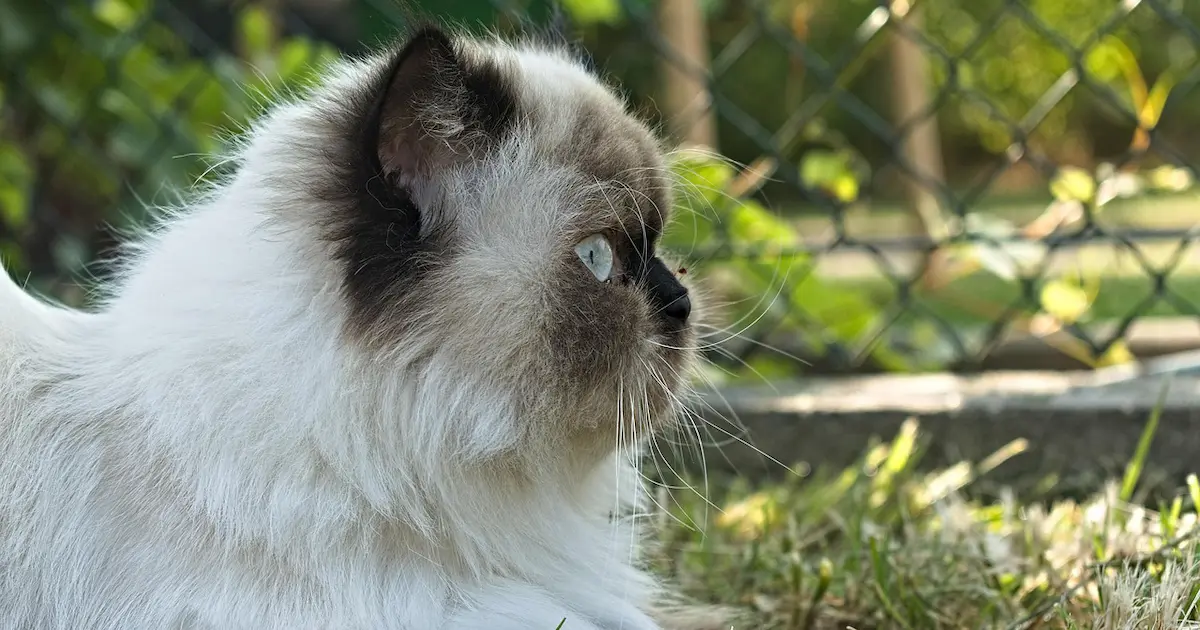
Picture a marshmallow that got dipped in chocolate at the ears, nose, paws, and tail, then handed the bluest pair of eyes you’ve ever seen. That’s a Himalayan cat. People stop mid-sentence when one walks into the room.
Here’s the thing nobody tells you at the breeder’s house, though. That gorgeous coat is a part-time job. And that adorable squished face? It can come with a vet bill attached.
So before you fall in love (too late, probably), let’s talk honestly about what living with a Himalayan cat is really like. The good, the fluffy, and the stuff the cute photos leave out.
Himalayan Cat at a Glance
| Origin | United States, 20th century |
| Weight (Male) | 9 to 14 lbs |
| Weight (Female) | 7 to 11 lbs |
| Lifespan | 9 to 15 years |
| Coat | Long, thick double coat |
| Colors | Seal, blue, chocolate, lilac, flame, cream, tortie, lynx point |
| Energy Level | Low to Moderate |
| Grooming Needs | High |
| Good With Kids | Yes, with gentle kids |
| Good With Other Pets | Yes, with slow intros |
| Average Price | $800 to $2,500 from breeders |
Where Himalayan Cats Actually Came From
The name is a bit of a tease. No, your Himalayan’s ancestors were not scaling snowy peaks. The breed was made by people, in labs and living rooms, mostly in the United States.
It started as science, honestly. Back in 1931, breeder Virginia Cobb and a Harvard researcher named Dr. Clyde Keeler began crossing Persians with Siamese cats. They wanted to understand how the colorpoint gene gets passed down. The pretty kittens were almost a side effect.
By the 1950s, breeders in North America and Britain had turned that experiment into a real breed. The Cat Fanciers’ Association recognized the Himalayan in 1957. The “Himalayan” name came from the rabbit, by the way, which carries the same kind of pointed coloring.
Now for the part that confuses everyone. In 1984, the CFA decided the Himalayan was close enough to the Persian to fold it in as a color division rather than a standalone breed. That decision split the cat world. Some breeders were furious, and a few even broke off to form their own association over it.
So today it depends who you ask. The CFA and Britain’s GCCF treat the Himalayan as a pointed Persian. TICA groups it within the Persian family too. The American Cat Fanciers Association gives it its own spot. Your cat doesn’t care either way, but it’s good to know why the labels seem to argue with each other.
What a Himalayan Cat Looks Like
You’ll know one on sight. The body is pale (cream, fawn, or near-white) and the “points” go dark. Think ears, face mask, legs, paws, and tail.
Those points come in a whole rainbow: seal (the classic dark brown), blue, chocolate, lilac, flame (a warm reddish tone), cream, tortie, and lynx point, which adds faint tabby stripes. The eyes are always blue. Not sometimes. Always. That’s the Siamese signature shining through.
Underneath all that floof, they’re medium-sized cats. They just look enormous because the coat is so thick. There’s a ruff around the neck, tufts on the ears and toes, and a tail like a feather duster.
One sweet detail about kittens: they’re born almost pure white. The points darken in over the first weeks and months, so the seal point kitten you bring home keeps getting a little more dramatic as it grows. Older cats often deepen in body color too.
Doll-Face vs Peke-Face: The Choice That Matters Most
This is the section other guides skim past, and it might be the most important decision you make. Himalayans come in two face types, and the difference is not just looks.
Doll-face (also called traditional): a rounder face with a longer, lower-set nose. It’s closer to how the breed looked decades ago.
Peke-face (also called extreme): the very flat, pushed-in look named after the Pekingese dog. Big eyes, smushed muzzle, lots of “aww.”
Here’s the honest part. The flatter the face, the more crowded everything behind it gets. Extreme peke-face Himalayans are more likely to deal with noisy breathing, blocked tear ducts, dental crowding, and trouble in hot weather. Some need surgery to open up their airways later in life.
Doll-face cats aren’t problem-free, but that extra bit of nose gives them more room to breathe and drain tears. If you’re choosing a kitten and you want to stack the odds toward an easier life, a moderate or doll-face cat is the kinder bet. Trust me on this one. The “cuter” face often costs more at the vet down the road.
A good breeder will talk openly about face type and won’t push the most extreme look just because it sells. If they dodge the question, that tells you something.
What Living With a Himalayan Cat Is Really Like
If you want a cat that treats you like furniture, look elsewhere. Himalayans are velcro cats. They follow you room to room, settle into your lap the second you sit, and greet you at the door like a small fluffy dog.
They’re famously gentle and calm. Most of the day is spent lounging in a sunbeam looking regal. But the Siamese in them sneaks out in little bursts of play. A feather wand or a crinkle ball, and suddenly your dignified marshmallow is doing the goofiest pounce you’ve ever seen.
They’re quiet too, mostly. Don’t expect the constant chatter of a full Siamese. A Himalayan will tell you when dinner is late, then go back to being a soft, purring presence on the couch.
The flip side: they bond hard and they don’t love being alone all day. A Himalayan in an empty house from 8 to 6 every day is a lonely Himalayan. They do best where someone is around a fair bit.
Is a Himalayan Cat Right for You?
Let’s be real with each other for a second. This breed is a joy, but it’s not for everyone.
A Himalayan is a great fit if you:
- Work from home, are retired, or are around most days
- Genuinely enjoy grooming and won’t resent the daily brushing
- Want a calm, cuddly companion over a high-energy acrobat
- Have a budget cushion for flat-face health surprises
- Keep a fairly quiet, predictable home
You might want a different breed if you:
- Travel constantly or work very long hours
- Hate the idea of daily brushing and face wiping
- Want a low-maintenance “set it and forget it” cat
- Have a loud, chaotic household with rough-and-tumble toddlers
- Are on a tight budget with no room for vet bills
No shame in any of that. The kindest thing you can do is match the cat to your actual life, not your dream version of it.
Health Issues to Know About
Because Himalayans share so much DNA with Persians, they inherit the same short list of concerns. None of this should scare you off. It just means you go in with your eyes open.
Polycystic kidney disease (PKD): an inherited condition where cysts form on the kidneys and slowly damage them. The huge upside is that a simple DNA test catches it, and responsible breeders test their cats. Always ask for proof.
Brachycephalic airway issues: the flat-face tradeoff again. Snoring, snorting, and getting winded easily can all show up, and worse cases sometimes need surgery. This is far more common in extreme peke-face cats.
Eye and tear duct problems: those big eyes and short faces mean tears overflow instead of draining properly. You’ll see reddish-brown staining and, if you ignore it, skin infections in the folds.
Dental crowding: a small jaw means teeth can sit too close together, which traps gunk and leads to gum trouble. Regular dental care matters here.
Heart and weight: hypertrophic cardiomyopathy can affect the breed, and their laid-back nature makes them prone to packing on pounds. Extra weight makes every other problem worse.
Pet insurance is worth a serious look with this breed. The flat face alone can justify it.
Grooming and Daily Care (The Honest Version)
Okay, deep breath. This is the part that makes or breaks the Himalayan experience.
That double coat tangles fast. Skip a few days and you get mats, which are not just ugly. They pull on the skin and hurt. Once a coat mats badly, brushing won’t fix it. You’re looking at a trip to the groomer for a shave-down, which is exactly the situation you want to avoid.
So the rule is simple, even if it isn’t easy: brush every single day. A metal comb that reaches the undercoat is your best friend. Five to ten minutes, every day, ideally turned into a calm bonding ritual rather than a wrestling match.
Then there’s the face. Every day, wipe gently around the eyes with a soft, damp cloth to clear tear stains before they set in and irritate the skin. Plain warm water is fine. Ask your vet before using any product near the eyes.
A few more habits that pay off: check the ears, keep the litter box spotless (long fur and litter are not friends), and consider a sanitary trim around the back end if your cat struggles to stay clean back there.
If daily grooming sounds like a lot, that’s because it is. Some owners book a professional groom every four to six weeks to share the load. There’s no wrong answer, as long as the mats never win.
Feeding and Diet
Himalayans don’t need anything exotic, just good food fed in sensible amounts. Go for a high-quality option with real animal protein as the first ingredient.
Wet food deserves a spot in the rotation. It adds moisture, which supports those kidneys we talked about, and the cats usually love it. If your Himalayan has a very flat face, some find certain kibble shapes easier to pick up than others, so watch how yours eats and adjust.
The big thing here is portion control. These cats love lounging more than laps around the house, so calories add up quietly. Measure meals instead of free-feeding, and keep an eye on the waistline. A trim Himalayan is a healthier, longer-lived one.
Exercise and Enrichment
Nobody’s calling the Himalayan an athlete. But low energy doesn’t mean no energy, and a bored cat finds its own trouble.
Short, daily play sessions do the trick. A wand toy, a ball that rolls, or a puzzle feeder keeps both body and brain working. Many Himalayans will even play fetch if you find the right little toy.
Keep climbing options low and stable. With their stocky build and heavy coat, these aren’t the cats leaping to the top of a six-foot tower. A cozy perch by a window is more their speed, and they’ll happily watch the world go by for hours.
Living With Kids, Dogs, and Other Cats
Good news: Himalayans are easygoing roommates. Their mellow temperament means they usually get along with the whole household.
With kids, they’re patient and sweet, but they’re not built for chaos. Calm, gentle children who understand “let the cat come to you” are a wonderful match. Toddlers who grab and chase will stress them out.
With dogs and other cats, slow introductions are the secret. A relaxed dog and a Himalayan often become nap buddies. Just give everyone space and time, and don’t force it. These cats prefer peace, so a household that already feels calm is one they’ll settle into beautifully.
Lifespan and Aging Tips
Most Himalayan cats live somewhere between 9 and 15 years, and good care can push them toward the higher end. Picture a long, slow companionship rather than a brief whirlwind.
As they age, the grooming gets even more important, since older cats groom themselves less. Watch for changes in thirst or litter box habits, which can be early hints of kidney trouble. Senior vet visits twice a year are a smart move.
Keep them lean, keep their teeth clean, and keep their world calm. An older Himalayan asks for very little: a warm lap, a soft bed, and you nearby. Honestly, that’s most of what they ever wanted.
How Much Does a Himalayan Cat Cost?
Let’s talk money, because the sticker price is only the beginning.
Kitten price: a Himalayan from a reputable breeder usually runs from around $800 to $2,500. Where you land depends on the breeder’s reputation, the cat’s lineage, and color rarity. Show-quality and rare-point kittens sit at the top end.
First-year extras: budget for the basics like vaccines, spay or neuter, microchipping, a carrier, grooming tools, and a litter setup. That can easily add several hundred dollars on top of the kitten.
Ongoing costs: quality food, litter, routine vet care, and the occasional professional groom add up month after month. With this breed, set aside a health cushion or carry pet insurance, because the flat face raises the odds of eye, dental, and breathing bills.
A red flag to watch: a “bargain” Himalayan with no health testing and no paperwork isn’t a deal. It’s often a future vet bill in a fluffy disguise.
Where to Find a Himalayan Cat Ethically
You’ve got two solid paths, and both can be the right one.
Reputable breeders: look for someone who DNA-tests for PKD, lets you meet the kittens and the mother, raises them inside the home, and asks you plenty of questions too. Good breeders care where their kittens land. They’ll happily show health records and talk openly about face type and any concerns.
Rescue and adoption: Persians and Himalayans turn up in shelters and breed-specific rescues more often than people expect. You’ll usually pay far less, and you’ll give a cat a second chance. Adult cats also come with their personality already on display, which takes the guesswork out.
Walk away if a seller won’t show you the kitten’s living conditions, can’t provide any health testing, always “has kittens available,” or pressures you to pay fast. Those are classic signs of a kitten mill, and the cats often pay for it with their health.
Similar Breeds to Consider
Not totally sure the Himalayan is the one? A few cousins worth a look:
- Persian: the same plush coat and calm vibe, minus the blue eyes and dark points.
- Ragdoll: bigger, still pointed and blue-eyed, with a coat that mats a little less and a famously floppy, mellow nature.
- Birman: pointed, semi-longhaired, and lower-maintenance in the coat department, with white “gloves” on the paws.
- Exotic Shorthair: basically a Persian in a short coat, sometimes called the easy-care option for people who love the squishy face but not the brushing.
- Siamese: if you adore the points and color but want a sleek, low-grooming, chatty live-wire instead.
Common Myths and Misconceptions
“They came from the Himalayas.” Nope. The name comes from the pointed coloring, the same pattern seen in Himalayan rabbits. The breed was developed in the US.
“Longhair cats are hypoallergenic if they don’t shed much.” Not true. No cat is truly hypoallergenic. The allergy trigger is a protein in saliva and skin, not the hair itself, and Himalayans spread plenty of it across that coat.
“They’re lazy and don’t need attention.” They’re calm, not indifferent. Himalayans crave company and can get lonely or anxious when left alone too long.
“The flat face is just a cute look.” It’s a real anatomical change with real consequences. The more extreme the face, the more breathing and tear-duct issues tend to come with it.
Himalayan Cat FAQ
Q: Are Himalayan cats high maintenance?
Yes, mostly because of grooming. Their long double coat needs daily brushing to prevent painful mats, and their faces need daily tear-stain cleaning. The cats themselves are calm and easy company, but the coat is real work.
Q: How long do Himalayan cats live?
Most live between 9 and 15 years. Good diet, weight control, dental care, and regular vet checks can help your Himalayan reach the upper end of that range.
Q: Do Himalayan cats shed a lot?
Yes, they shed year-round and more heavily during seasonal changes. Daily brushing captures loose fur before it lands on your couch and reduces hairballs at the same time.
Q: Are Himalayan cats good with kids and dogs?
Generally yes. They’re gentle and tolerant with calm children and relaxed dogs. They do best with slow introductions and a peaceful home, not chaos and rough handling.
Q: Why do Himalayan cats have eye stains?
Their flat faces make tears overflow instead of draining normally, leaving reddish-brown stains. Wiping the eye area daily with a soft, damp cloth keeps it under control and prevents skin irritation.
Q: Is a Himalayan a Persian?
It depends on the registry. The CFA and GCCF treat the Himalayan as a pointed division of the Persian, while TICA and ACFA recognize it differently. Genetically it’s a Persian crossed with Siamese coloring.
Q: How much does a Himalayan kitten cost?
From a reputable breeder, usually $800 to $2,500, depending on lineage and color. Adoption through rescues costs much less. Avoid suspiciously cheap kittens with no health testing.
Q: Do Himalayan cats have breathing problems?
They can, especially the extreme peke-face type. Their short muzzle can cause snoring, snorting, and trouble in heat. Choosing a more moderate doll-face cat lowers the risk.
Final Verdict: Should You Get a Himalayan Cat?
If you’ve read this far and you’re still smitten, that’s a great sign. The Himalayan cat is one of the most affectionate, serene, downright beautiful companions you can share a home with. They reward you with years of lap time, soft purrs, and that signature blue-eyed gaze.
Just go in honest with yourself. This is a daily-grooming, flat-face-aware, “I’m-home-a-lot” kind of commitment. Choose a moderate face, find an ethical breeder or rescue, and budget for care, and you’ll have a devoted friend for well over a decade.
Meet the breed where it actually lives, not just where the photos do, and a Himalayan cat will be one of the best decisions you ever make.

Hello and welcome to The Ideal Cat!
We are some passionate cat owners from different professions. We love our cats and have a lot of experience in how to care for our pets. We are incredibly excited to share our knowledge, experience, and research with you. So you can take good care of your loving cat. We will answer most of the common questions about owning cats, taking care of them, etc. If you have any question contact with us. Thanks for visiting! Enjoy the content.
