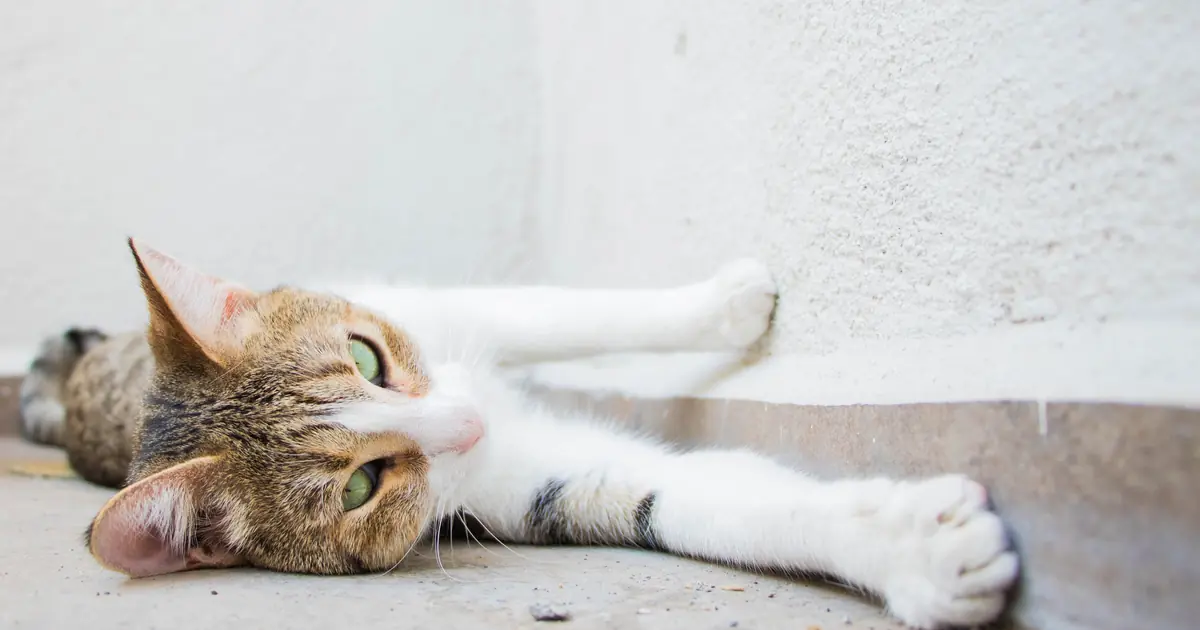
Picture this: your cat hops up off the couch after a long nap, takes two wobbly steps, and shakes one back paw like it just stepped in something wet. Then, ten seconds later, she’s sprinting down the hallway like nothing happened. If you’ve ever seen this and wondered whether cats get that weird tingly “pins and needles” feeling too, you’re not imagining things.
The good news is that this is almost always completely normal. Cats sleep 12 to 16 hours a day, and a lot of that happens curled into positions that put pressure on a leg or paw. Here’s what’s actually going on, how to tell harmless from worrying, and the one look-alike condition every cat parent should know about, because it can look similar at first glance but is nothing like a sleepy leg.
- A cat’s leg can briefly “fall asleep” from nerve compression during sleep, and it resolves on its own within seconds to a minute or two.
- Cats likely feel a version of the same tingling, “pins and needles” sensation people do, which is why they shake or lick the leg afterward.
- A truly asleep leg wakes up fast and leaves the cat acting completely normal within a minute.
- A leg that stays limp, weak, dragging, cold to the touch, or painful is not a sleepy leg. It needs a vet visit right away.
- Feline aortic thromboembolism, sometimes called a saddle thrombus, causes sudden, painful hind-leg paralysis and cold paws, and it’s a true medical emergency.
Can a cat’s legs actually fall asleep?
Yes. A cat’s leg can fall asleep in exactly the same way a human’s arm or leg does, through a brief nerve signal disruption called paresthesia. Body weight presses on a nerve long enough to interrupt its normal signaling, and it’s temporary, harmless, and resolves fast once the pressure lifts.
You’ve felt this yourself if you’ve ever sat cross-legged too long. The limb goes numb, then tingles as feeling comes back. Cats go through the same thing, usually while sprawled across a sunny windowsill or wedged into an oddly shaped nap spot.
Why do a cat’s legs fall asleep?

A cat’s leg falls asleep when sustained pressure on a nerve, usually from the cat’s own body weight, briefly slows the nerve’s signaling and the blood flow around it. Cats often sleep with a leg tucked underneath the body or a paw curled at an awkward angle, and if that position holds long enough, the nerve gets compressed.
It’s not dangerous on its own. Nerves recover fast once pressure lifts, which is why the whole episode is usually over before you’ve finished asking what’s wrong. Cats in tight, curled sleeping positions, and older cats with less padding over their joints, may notice it a bit more, but that alone isn’t a sign of illness.
What does a cat’s leg falling asleep actually look like?
A cat with a leg that fell asleep usually wobbles for a step or two, shakes the leg out, or holds a paw up briefly before walking normally again. The whole thing typically lasts a few seconds and rarely more than a minute or two.
Common signs include:
- A slight stumble or uneven gait right after standing up
- Shaking or flicking one back paw repeatedly
- Briefly favoring or lifting the leg, then setting it down normally
- Licking or chewing at the paw for a few seconds, as if something feels odd
- Full, normal movement returning within a minute
If your cat looks a little unsteady on her feet more generally, not just right after waking up, it’s worth reading up on why a cat might seem wobbly, since that can point to other causes beyond a sleepy leg.
Do cats feel pins and needles like we do?
Cats almost certainly feel something similar to the tingling “pins and needles” sensation people get, based on how they react. Cats can’t tell us, but the shaking, paw-licking, and brief limping line up closely with a nerve regaining its signal, and cats have a nervous system built the same basic way ours is.
Shaking out or licking the leg is the cat’s own way of working the odd sensation out, the same way you might flex or stomp a foot after it falls asleep. It’s a reflex, not a sign of pain.
How can you tell a harmless “asleep” leg from a real problem?
A harmless sleepy leg resolves within seconds to a couple of minutes and leaves the cat acting completely normal afterward. A real problem shows up as a leg that stays weak, limp, dragging, cold, or painful, or a cat that cries out, refuses to bear weight, or doesn’t bounce back to normal movement quickly.
This table breaks down the difference at a glance:
| Sign | Leg “asleep” (harmless) | Medical emergency |
|---|---|---|
| Duration | Seconds to 1-2 minutes | Persists, does not improve |
| Pain | None, or mild odd sensation | Often severe, cat may cry out or growl if touched |
| Temperature of paw | Normal | Cold to the touch |
| Other signs | None, cat acts normal within a minute | Panting, weakness, dragging, limp leg, sudden collapse |
| What to do | Nothing, it resolves on its own | Go to an emergency vet immediately |
If the leg keeps happening, or your cat seems off balance beyond just a quick stumble, it’s worth checking whether cats can get dizzy and what that looks like, since dizziness and a sleepy leg can sometimes get confused with each other.
What serious conditions can look like a leg “falling asleep” but aren’t?
The most serious look-alike is feline aortic thromboembolism, often called a saddle thrombus, a blood clot that suddenly blocks circulation to the back legs and causes real paralysis, not a brief tingle. Injuries, nerve damage, and arthritis can also mimic a sleepy leg, and each needs different care.
- Feline aortic thromboembolism (saddle thrombus): A blood clot lodges where the aorta splits toward the hind legs, cutting off blood flow. According to Cornell Feline Health Center, this causes sudden, painful paralysis of one or both back legs, along with cold paws and pale or bluish pads. It’s most often linked to underlying heart disease and is a true veterinary emergency.
- Injury or fracture: A fall, a slammed door, or rough play can bruise or break a leg. Unlike a sleepy leg, injury-related lameness doesn’t resolve in seconds and usually gets worse with movement, similar to what you’d see with a cat that’s suddenly limping.
- Nerve damage: Trauma, a tumor, or a slipped disc can pinch a nerve long-term rather than briefly, leading to ongoing weakness or dragging instead of a quick recovery.
- Arthritis: Common in older cats, arthritis causes stiffness and reluctance to move, especially after resting, but it builds up gradually rather than resolving within a minute the way a sleepy leg does.
Cats are famously flexible, which is part of why odd-looking sleeping positions rarely cause real harm. If you’re curious about the anatomy behind that, this guide to why cats are so flexible and whether cats even have knees both explain how a cat’s joints and spine allow for those pretzel-like naps in the first place.
What should you do if your cat’s leg doesn’t “wake up”?
If a leg stays weak, limp, dragging, or cold for more than a couple of minutes, or your cat is in obvious pain, call an emergency vet right away. This is especially urgent for sudden back-leg weakness paired with pain, panting, or crying out, since those are classic signs of a blood clot cutting off circulation.
Don’t wait it out at home to “see if it gets better.” According to VCA Hospitals, a saddle thrombus is painful and time-sensitive, and faster veterinary care gives a cat a better shot at recovery. A quick paw-shake after a nap is nothing to worry about. A leg that won’t move right is always worth a same-day call to your vet.
A quick, honest note: this article is meant to help you understand what’s normal and what isn’t, not to replace a veterinarian. If your cat’s leg looks weak, cold, painful, or paralyzed at any point, don’t wait and see. Get her seen by a vet immediately.
Frequently Asked Questions
Q: Can a cat’s leg fall asleep like a human’s?
Yes. Cats experience the same nerve compression that causes a human limb to fall asleep, and it resolves the same way, usually within a minute of the cat moving around and shaking the leg out.
Q: Why does my cat shake her back leg after waking up?
A cat shakes her back leg after waking up because a nerve was briefly compressed while she slept, and shaking helps restore normal feeling. This is a normal reflex, not a sign of injury, as long as it stops within a minute or two.
Q: How long does it take for a cat’s leg to “wake up”?
A harmless sleepy leg usually resolves within a few seconds to about two minutes. If a leg is still weak, limp, or unsteady after that, it’s not a sleepy leg anymore and needs a vet’s attention.
Q: What is a saddle thrombus in cats?
A saddle thrombus, or feline aortic thromboembolism, is a blood clot that lodges at the point where the aorta splits toward the back legs. It causes sudden, painful paralysis of one or both hind legs along with cold paws, and it requires immediate emergency vet care.
Q: How do I know if my cat’s leg is just asleep or something worse is going on?
A leg that’s just asleep bounces back to normal movement within a couple of minutes with no pain and no change in temperature. A leg that stays limp, cold, weak, dragging, or painful is a medical emergency and needs a vet the same day.
Q: Can cats get pins and needles?
Cats very likely feel something similar to the tingling “pins and needles” sensation people get, based on their reactions of shaking, licking, or briefly favoring the leg after standing up from a long nap.
Q: Is it normal for an older cat’s legs to fall asleep more often?
It can happen slightly more with age simply because older cats sleep longer and may have less muscle padding over their joints. But frequent, ongoing leg weakness in a senior cat should still be checked by a vet, since arthritis and other conditions become more common with age.
Q: Should I wake my cat up if her leg looks asleep?
There’s no need to wake a sleeping cat over a leg that looks tucked at an odd angle. If she wakes on her own and briefly wobbles or shakes the leg before walking normally, that’s a typical sleepy-leg episode and nothing to worry about.

Hello and welcome to The Ideal Cat!
We are some passionate cat owners from different professions. We love our cats and have a lot of experience in how to care for our pets. We are incredibly excited to share our knowledge, experience, and research with you. So you can take good care of your loving cat. We will answer most of the common questions about owning cats, taking care of them, etc. If you have any question contact with us. Thanks for visiting! Enjoy the content.
