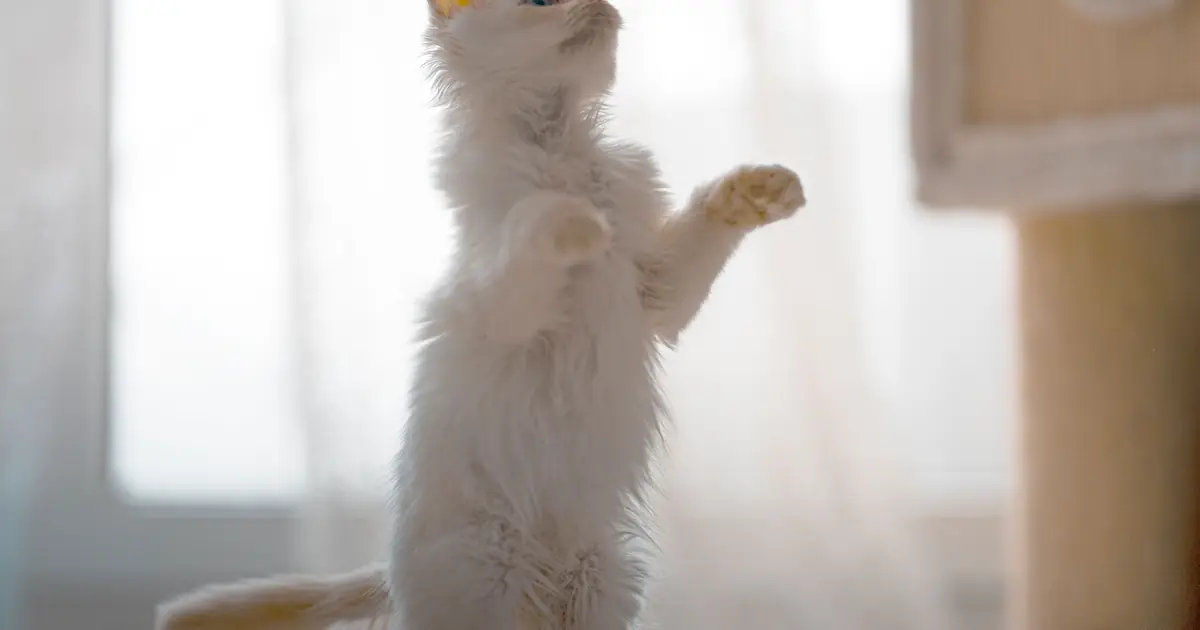
Watch a cat walk across the room and you’ll notice something odd. The front legs seem to have a knee that bends the “normal” way. The back legs have a joint that bends backward, way up near the body, and it looks nothing like a human knee. So which one is the real knee? Or does a cat even have one?
Here’s the thing: cats are built a lot like us underneath all that fur, just rearranged and rescaled. Once you know where to look, cat leg anatomy actually makes a lot of sense, and it explains why your cat can leap onto the counter, land silently, and pivot mid-air like it’s nothing.
- Cats have a true knee joint, called the stifle, but it’s only on the hind legs, and it includes a kneecap (patella) just like a human knee.
- The backward-bending joint on a cat’s front leg is the wrist (carpus), not a knee, and it sits low, close to the paw.
- The joint that looks like a “backward knee” high on the hind leg is actually the ankle, called the hock (tarsus).
- Cats are digitigrade, meaning they walk on their toes, which is why so much of the leg looks folded up compared to a human leg.
- A limping back leg, a leg held out to the side, or an audible knee “pop” can point to a luxating patella, a kneecap that slips out of place, and it’s worth a vet visit.
Do cats have knees?
Yes, cats have knees, and they work almost exactly like human knees do. A cat’s knee joint, known as the stifle, connects the femur (thigh bone) to the tibia (shin bone) on each hind leg. It even has its own kneecap, the patella, which glides in a groove at the end of the femur every time your cat bends or straightens that leg. The confusion comes from the front legs, which don’t have a knee at all. More on that below.
Where exactly is a cat’s knee?
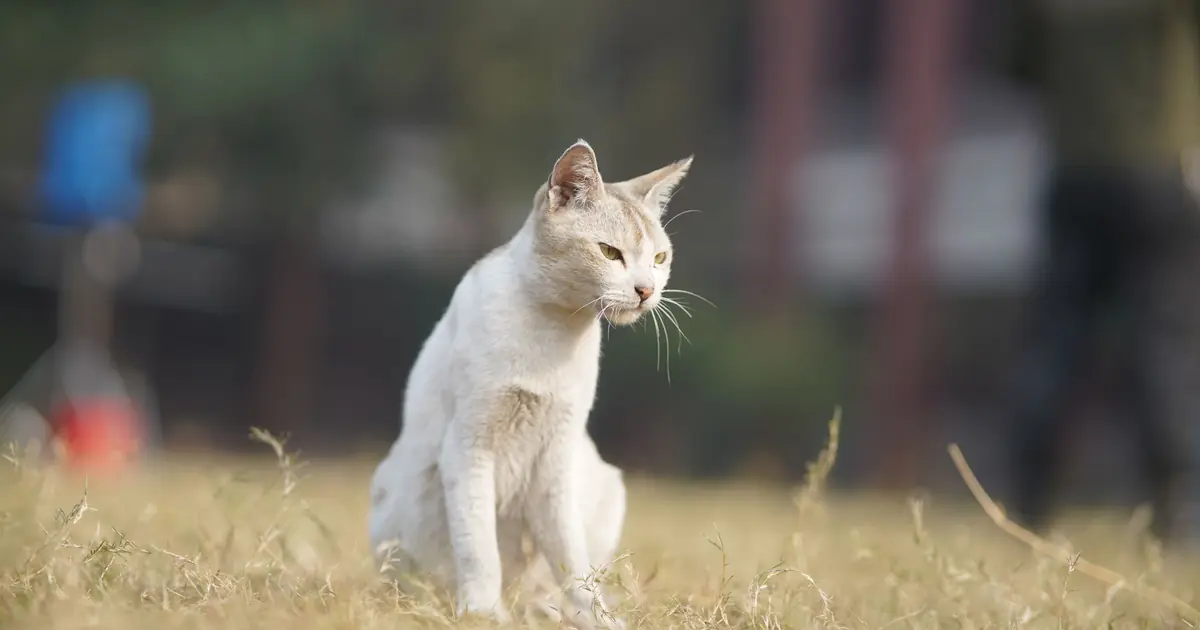
A cat’s knee sits partway down the hind leg, roughly at the midpoint between the hip and the hock, tucked in close to the body. It’s easy to miss because cats keep it folded up close to their belly fur most of the time, especially when they’re sitting or walking normally. If you gently feel along a relaxed cat’s back leg, you can find the stifle joint bending forward, the same direction a human knee bends. The Cornell Feline Health Center describes the stifle as the joint most comparable to the human knee, right down to the kneecap and supporting ligaments.
Do cats have knees on their front legs?
No, cats don’t have knees on their front legs. That backward-bending joint you see partway down a cat’s front leg is the wrist, called the carpus, the same joint that lets you bend your hand back and forth. A cat’s actual elbow sits much higher up, close to the body, mostly hidden under fur and often mistaken for a shoulder. So on the front leg, the order from top to bottom is shoulder, elbow, wrist, then paw. Nowhere in there is a knee. If your cat’s shoulder blades stick out when it’s lying down, that’s the true shoulder joint at work, one joint up from that misleading “backward knee.”
Why do cat legs look like they bend backward?
Cat legs look like they bend backward because you’re usually looking at an ankle or a wrist, not a knee. Cats are digitigrade animals, meaning they walk balanced up on their toes, the way a person would look walking on tiptoe permanently. That posture pushes the heel bone (part of the hock, or ankle) up off the ground and forward, so it reads visually as a knee pointing the “wrong” way. Dogs and birds share this same toe-walking build, which is part of why they’re fast, quiet, and springy on their feet. Compare that to humans and bears, who are plantigrade and walk flat on the whole foot.
What does a full tour of cat leg anatomy look like?
A cat’s front leg runs shoulder, then elbow, then wrist (carpus), then paw. The back leg runs hip, then stifle (knee), then hock (ankle), then paw. Cats also have a genuine equivalent to human thumbs, called dewclaws, though they don’t work the same way ours do; you can read more about that in our guide on whether cats have thumbs. The table below lines up each cat joint with its human match, so the whole picture clicks into place.
| Cat leg joint | Human equivalent | Where it is / how it bends |
|---|---|---|
| Shoulder (front leg, top) | Shoulder | High on the body, mostly hidden under fur |
| Elbow (front leg, middle) | Elbow | Close to the body, points backward like ours |
| Carpus (front leg, low) | Wrist | Often mistaken for a knee, bends backward |
| Hip (back leg, top) | Hip | High on the body, connects to the pelvis |
| Stifle (back leg, middle) | Knee | The real knee, has a kneecap, bends forward like ours |
| Hock (back leg, low) | Ankle | Held up off the ground, looks like a second backward knee |
What is a luxating patella in cats?
A luxating patella is a kneecap that slips out of its normal groove on the femur, and it’s the most common knee problem in cats. Normally the patella glides smoothly up and down a groove called the trochlea as the stifle bends. When that groove is too shallow, or the ligaments holding the kneecap are loose, the patella can pop sideways out of place. Vets grade the condition from I (mild, rarely causes symptoms) to IV (the kneecap stays out most of the time and affects how the cat walks). According to VCA Animal Hospitals, it can be present from birth or caused by an injury, and some cats manage fine for years while others need surgery. The Merck Veterinary Manual notes that leaving it untreated in more severe cases can lead to arthritis over time.
When should you see a vet about your cat’s knee?
See a vet if your cat suddenly starts limping, holds a back leg out to the side while walking, skips or hops on one leg, or you hear or feel a “pop” or click near the knee. A cat that’s suddenly reluctant to jump onto the couch, or that shakes out a back leg repeatedly, may also be dealing with a slipping kneecap or another joint issue. This article is meant to help you understand cat anatomy, not to replace an exam. Any new limp that lasts more than a day or two is worth a professional look, since a vet can grade the joint and tell you whether it just needs monitoring or something more. If your cat is already limping, our guide on why your cat is limping walks through the most common causes.
Frequently Asked Questions
Q: Do cats have knees on all four legs?
No, only on the back legs. The front legs have a shoulder, an elbow, and a wrist, but no knee. The bendy-looking joint on a front leg is the wrist, not a knee.
Q: What is a cat’s knee called?
A cat’s knee is called the stifle joint. It connects the thigh bone (femur) to the shin bone (tibia) and includes a kneecap, or patella, just like a human knee does.
Q: Why does a cat’s back leg look like it bends the wrong way?
The joint that looks backward is usually the hock, which is the cat’s ankle, not the knee. Cats walk up on their toes (a stance called digitigrade), which lifts the heel off the ground and makes the ankle look like a second knee pointed the opposite direction.
Q: Do cats have kneecaps?
Yes, cats have a kneecap called the patella on each hind leg, part of the stifle joint. It sits in a groove on the femur and slides up and down as the leg bends and straightens.
Q: What is a luxating patella in cats?
A luxating patella is a kneecap that slips out of its normal groove, causing intermittent limping or skipping on the affected back leg. Vets grade it from I to IV based on severity, and it can be present at birth or caused by injury.
Q: Is the joint on a cat’s front leg a knee or an elbow?
The visible bendy joint low on a cat’s front leg is the wrist, not the elbow. The true elbow sits higher up the leg, close to the body, and is usually hidden under fur.
Q: Why don’t cats walk flat-footed like humans?
Cats are digitigrade, meaning they walk balanced on their toes rather than on the full sole of the foot. This gives them extra spring for jumping and quieter, faster movement, unlike plantigrade animals such as humans and bears that walk flat-footed.
Q: When should I worry about my cat’s knee?
Worry if your cat starts limping suddenly, holds a back leg out to the side, skips on one leg, or seems hesitant to jump. These can be signs of a luxating patella or another joint problem, and a vet visit is the right next step.

Hello and welcome to The Ideal Cat!
We are some passionate cat owners from different professions. We love our cats and have a lot of experience in how to care for our pets. We are incredibly excited to share our knowledge, experience, and research with you. So you can take good care of your loving cat. We will answer most of the common questions about owning cats, taking care of them, etc. If you have any question contact with us. Thanks for visiting! Enjoy the content.
